Powered vs Passive Bookshelf Speakers: Which to Buy
A powered pair has its amplifier built in, a passive pair needs a receiver. Compare total cost, inputs, wiring and what happens when an amplifier fails.
 By BuyOnceChoice Editorial Team
Updated November 16, 2026
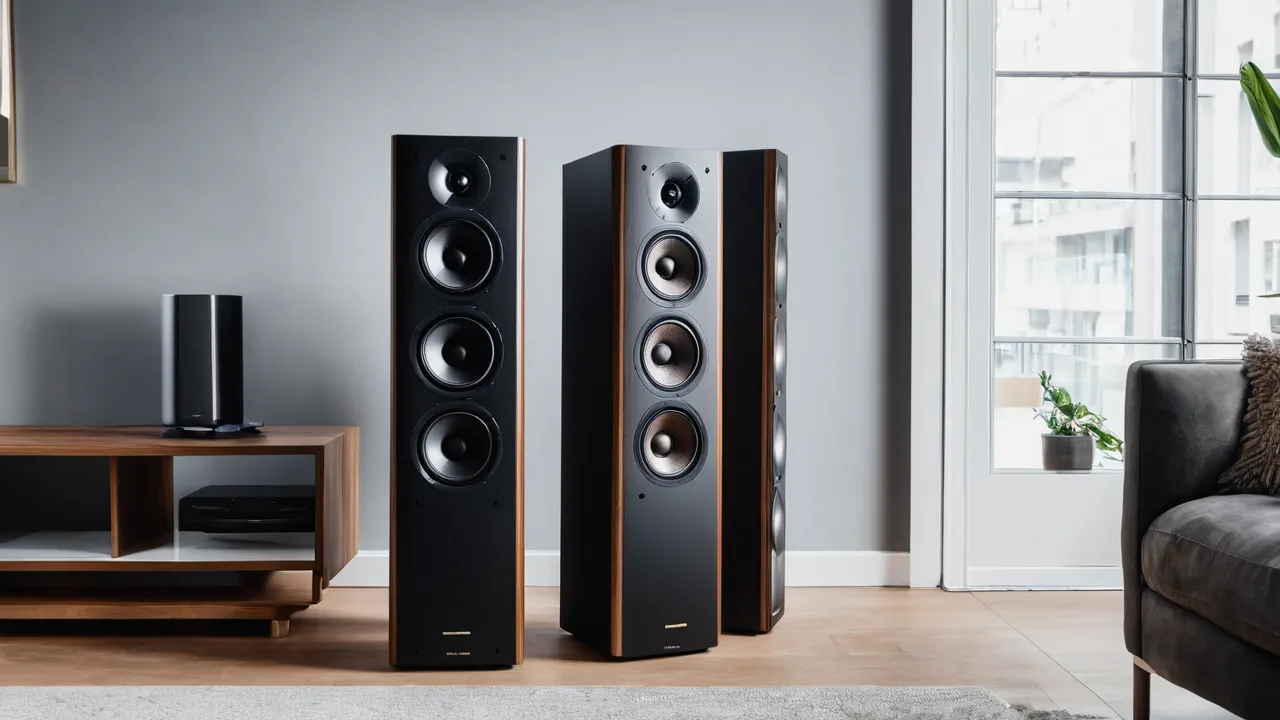
Choose powered bookshelf speakers if you want a compact system that connects straight to a TV, computer or phone with no receiver. Choose passive bookshelf speakers if you already own a receiver or plan a larger system, since passive speakers can be paired with any amplifier and tend to outlast the electronics that drive them. The long-term difference is simple: a failed amplifier in a powered speaker usually means repairing or replacing the speaker.
What powered and passive mean
Passive speakers contain only drivers and a crossover. They need an external amplifier or receiver to make sound. Powered speakers, also called active, have the amplifier built into the cabinet, and most also include inputs such as optical, analog, USB, Bluetooth or HDMI ARC. In many pairs, one speaker holds the amplifier and connects to the other with a cable, and some are fully wireless between speakers, with each one plugged into power.
Total cost of the system
Compare complete systems, not speaker prices. A passive pair needs an amplifier or receiver, speaker wire, and possibly a way to connect the TV. A powered pair needs a power cable for each speaker, an interconnecting cable, and whatever audio cable you use from the source. For a desk or TV setup with no existing receiver, the powered route often costs less in total and takes up less space. If you already own a suitable receiver, passive speakers add only the cost of the speakers themselves.
| Item | Powered pair | Passive pair |
|---|---|---|
| Amplifier | Built in | Separate receiver or amplifier |
| Wiring | Power cords plus a link cable | Speaker wire and a receiver |
| TV connection | Often optical or ARC on the speaker | Through the receiver |
| Expandable to surround | Usually limited | Yes, with a suitable receiver |
| Space | Compact | More boxes |
Inputs and convenience
Powered speakers are convenient because they carry their own inputs. Many include Bluetooth for music from a phone, USB for a computer, and an optical or ARC input for a TV. Some include a phono input, which suits a turntable. Check which inputs the model offers and what formats they accept, as capabilities differ. Passive speakers rely on the receiver for inputs, which gives more choice but means you must own or buy one.
What to look for on a powered speaker’s back panel
Read the back panel photos or the manual diagram before you buy. An HDMI ARC input lets the speaker work with a TV through one cable and often passes volume control from the TV remote. An optical input does the same job without remote control in many cases. Analog inputs suit a CD player or a computer’s headphone output, USB suits a computer, and Bluetooth suits a phone. A subwoofer output allows a subwoofer to be added, and a phono input suits a turntable. Few models carry every connection, so pick the one that has the inputs for your sources.
Wireless and cable details
Some powered pairs connect the two speakers with a cable, and others do so wirelessly. A cable link is usually reliable and carries the full signal, while wireless links add convenience but also need two power outlets and can be sensitive to interference or latency. For TV use, check that audio and picture stay in sync, and look for a delay setting. If the pair uses a proprietary link, remember that parts and replacement cables may not be available if you lose one.
Longevity and repair
Amplifiers, with their capacitors and boards, age faster than speaker drivers. In a passive system, a failed amplifier means replacing or repairing the receiver while the speakers go on working. In a powered system, a failed amplifier is inside the speaker, so you must repair that speaker or replace the pair. Many powered models are not designed to be repaired, and parts may not be available after the model is discontinued. Warranty terms vary, so read the terms for any model you consider. If you want gear that can last decades, passive speakers carry the advantage.
Consider what happens at the end of life. With a passive pair, you replace the receiver and keep speakers whose parts, such as woofers and tweeters, are often replaceable by service shops, and some manufacturers sell spares. With a powered pair, the amplifier board, the power supply and any digital input boards are part of the speaker, so the repair path depends on the maker. Ask the manufacturer or read the manual for service information before you buy, especially if you plan to keep the pair for many years.
A practical middle path is to buy powered speakers from a maker with a record of supporting its older models, or to buy passive speakers and a modest receiver, accepting that the receiver may be replaced once. Either way, buy the speaker as the long-term part, and treat electronics as the part that may change.
A worked cost comparison clarifies the choice. Suppose you want better sound for a TV in a living room. The powered route is a pair of speakers, one optical or ARC cable, and two power outlets. The passive route is a pair of speakers, a stereo amplifier or receiver, speaker wire, and a shelf with ventilation for the receiver. If you already own a receiver, the passive route is the cheaper of the two. If you do not, count its price in before you compare, and count the extra shelf space too.
Upgrade path
A passive pair can move from a stereo amplifier to a bigger receiver as your room and budget grow, and a later center channel and subwoofer can join them. A powered pair can be extended in a few cases with a subwoofer output, but most do not scale into surround. If you suspect your system will grow, passive keeps the door open. If you know the system will stay small, powered keeps it simple.
If you ever want to turn a powered pair into part of a larger system, check for a preamp output or a subwoofer output on the back, since without one you cannot add a subwoofer cleanly.
Power cords are a small practical point. A powered pair needs an outlet for each speaker, or one outlet plus a link cable, so check where the outlets are before you place the speakers. A passive pair needs only the speaker wire, and the receiver can sit anywhere with ventilation. If cord clutter bothers you, measure the distances first and choose the arrangement that keeps cables short and out of walkways.
Sound and tuning
Powered speakers have the advantage that the maker has matched the amplifier to the drivers, often with built-in tuning for the cabinet. That can give good results from a modest package. Passive speakers depend on the amplifier you pair them with, and a mismatch, such as low power for a low sensitivity speaker, can limit them. Our guide to speaker impedance and sensitivity walks through the matching steps, and the AV receiver picks show suitable amplifiers.
Verdict by Setup
- Desk, small room or TV only, no receiver: powered.
- You own or plan to buy an AV receiver: passive.
- Want to add a subwoofer and surround later: passive.
- Want fewest boxes and a clean look: powered.
- Value long-term repairability: passive.
- Need Bluetooth and streaming built in: powered, or passive plus a receiver with streaming.
Browse the home theater speakers category for both kinds, and see how we weigh long-term value on the How We Review page.
One last scenario: a bedroom or office with limited space. Powered speakers on a shelf with a single optical cable to the TV is about as simple as home audio gets, and many owners never feel the need for more. A passive pair with a small receiver would need more cabling, a place to put the receiver, and ventilation for it, which is overhead you may not want. In those places, powered is the sensible default.
Frequently Asked Questions
Are powered bookshelf speakers better than passive?
Neither is better overall. Powered speakers are simpler, compact, and often include inputs such as optical, USB, Bluetooth, or HDMI ARC. Passive speakers need a receiver but can be paired with any amplifier and tend to outlast the electronics. Choose by whether you own a receiver and plan to expand.
Do powered speakers last as long as passive speakers?
Often not. The amplifier inside a powered speaker ages faster than the drivers, and a failed amplifier usually means repairing or replacing the speaker. With passive speakers, you replace the receiver and keep the speakers. Read the warranty and ask the maker about service before you buy.
Can I connect powered speakers to a TV?
Yes. Many powered pairs offer optical or HDMI ARC inputs, and some pass volume control from the TV remote. Check the back panel and manual for the inputs and the formats they accept, and look for a delay setting if audio and picture drift.
Can I add a subwoofer to powered bookshelf speakers?
Only if the model has a subwoofer output or a preamp output. Many do, but some do not scale into surround at all. Check the back panel before buying. If you expect the system to grow, passive speakers with a receiver keep the door open.
Final Thoughts
Powered bookshelf speakers are the simple, compact route with convenient inputs, while passive bookshelf speakers are the flexible, long-lived route that fits a receiver-based system. Count the whole system cost, think about what you will upgrade, and choose the one that matches your plans.
Related buying guides
- Sealed vs Ported Subwoofers for Home Theater
- Home Theater Speaker Layout for a Small Room
- Soundbar vs Bookshelf Speakers for TV
About the author

The BuyOnceChoice Editorial Team researches durable products worth buying once. Our guides compare published specifications, warranty terms, expert review consensus, and verified owner feedback. We do not conduct our own product trials. See How We Review and our Editorial Policy for our standards.