Range Hood CFM Guide: How Much Airflow You Need
Retailer formulas disagree, so follow one method: size from burner output or range width, adjust for duct runs, and confirm certified airflow and makeup air.
 By BuyOnceChoice Editorial Team
Updated November 16, 2026
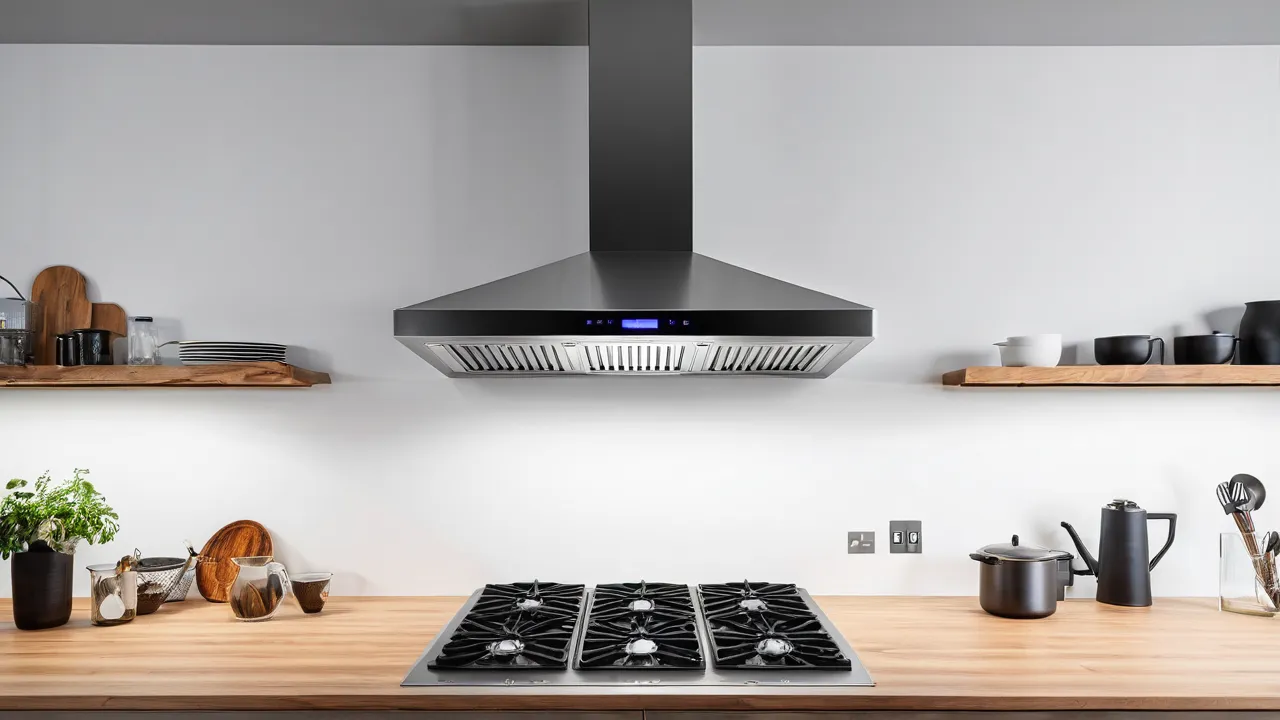
Divide the combined burner output of a gas range in BTU by 100 to get a starting CFM, or use about 100 CFM per foot of range width for a standard electric range, then add airflow to cover the duct losses between the hood and the outdoors. Most home kitchens land between 300 and 600 CFM, and the model residential code (IRC) ties makeup air to hoods above 400 CFM, with conditions that vary by edition and local adoption.
Why the Formulas You Find Do Not Agree
Search for range hood airflow advice and you will see several different rules. One retailer says use the width of your cooktop. Another says use burner output. A third says use the cubic feet of the kitchen. Each has a logic, but they measure different things.
The width rule treats the hood as a capture device that must move enough air across the cooking surface. The burner rule treats it as a heat and combustion load problem. The room volume rule treats it as air changes in the kitchen. None is wrong. The right answer comes from the largest of the figures that applies to your setup, then correcting for how the hood is actually installed.
Three Ways to Calculate the Starting Figure
Method One: Burner Output for Gas Ranges
Gas burners release heat and combustion byproducts, so sizing starts there. Add up the maximum BTU rating of all burners on the cooktop. The manufacturer’s specification page or the manual lists them. Divide the total by 100.
Example: a gas range with four burners rated 15,000, 12,000, 9,000 and 5,000 BTU totals 41,000. Divided by 100, that gives about 410 CFM. A professional style range with six burners and a total near 60,000 BTU would need about 600.
Some manufacturers and trade guides use a similar approach. Because you rarely run every burner on high, many households can accept a figure somewhat below the full sum, but if you cook with heavy, high heat methods like wok cooking or searing, size to the full number.
Method Two: Width of the Cooking Surface
For an electric or induction range, burner output is not the main concern, since there is no combustion. The usual guidance is about 100 CFM for each linear foot of range width. A 30 inch range then needs roughly 250 CFM, and a 36 inch range about 300. For a hood over an island, which is exposed to cross drafts, many guides recommend increasing that figure, often by about half.
Use the width figure as a minimum. For a family that fries, grills indoors or cooks strongly seasoned dishes, move up by 100 to 200 CFM.
If your numbers from the burner and width methods disagree, take the larger one for gas and the width figure for electric or induction. Then compare with the volume check. A result that is far higher than the others is a hint that your kitchen is open to a large space, not a reason to buy the biggest hood on the shelf.
Method Three: Kitchen Volume as a Check
Multiply the kitchen floor area by the ceiling height to get volume, then divide by 4. That gives a CFM that would change the room’s air about 15 times an hour. For a 200 square foot kitchen with an eight foot ceiling, the volume is 1,600 cubic feet and the check result is 400 CFM. Use this as a sanity check against the other two methods. If it is much higher than the others, your kitchen is open to a large space and a bigger hood may be warranted.
Account for Duct Losses
A hood’s rated airflow is measured under specific conditions, usually with little ductwork. Real ducts add resistance. Every foot of duct, every elbow, a wall cap and a damper reduce the airflow you get. As a rough planning figure, a 90 degree elbow behaves like several feet of straight duct. The manufacturer’s manual normally lists a maximum equivalent duct length for the hood.
Practical steps for ducting:
- Keep the run as short and straight as possible.
- Use the duct diameter the hood specifies. A smaller duct chokes the fan and raises noise.
- Use smooth metal duct, not flexible foil duct, which has high resistance.
- Vent to the outdoors, not into an attic or soffit.
If your run is long or has multiple elbows, step up the CFM, or choose an inline or remote blower, which handles resistance better.
A Worked Example With Duct Loss
Take a gas range with a burner total of 45,000 BTU. Divided by 100, that is 450 CFM. The hood will sit on an outside wall, but the duct needs two 90 degree elbows and a run of ten feet. The hood manual states a maximum equivalent duct length, and each elbow counts as several feet toward it. If the run sits close to that maximum, plan on the hood delivering noticeably less than its rating at the duct. In that case, choose a hood rated 100 to 200 CFM above your target, such as 600 CFM, and run it at a middle setting for everyday cooking.
At that capacity you are also past the 400 CFM makeup air threshold in the model residential code, so ask your building department what is required before purchasing. This is a common surprise for buyers who size the hood first and learn about the air supply afterward. The ranges and wall ovens guides cover the cooktop side of the same decision.
Check the Rating and the Noise
Ratings on the box are not all measured the same way. Look for airflow certified by an independent program, such as the Home Ventilating Institute, and check the CFM at the speed used for the figure. Also check the noise in sones. A hood that is loud on high will go unused. A rule of thumb is that lower sones mean quieter operation, and that a hood you can run at a medium setting for ordinary cooking is more useful than one that must run flat out.
Makeup Air and Safety
Strong exhaust removes air from the house, and that air must come from somewhere. The model residential code (IRC) requires makeup air for kitchen exhaust above 400 CFM, though conditions such as the presence of atmospherically vented gas appliances and the adopted edition vary by jurisdiction, so confirm locally. Gas appliances raise the stakes because weak ventilation can pull combustion gases back into the room. Confirm the requirement with your local building department.
Follow the manual and local code for everything involving gas or electrical work. Use a licensed professional for gas lines and for any 240 volt circuit, and for the makeup air system if one is required. Hoods should be mounted at the height the manufacturer specifies above the cooking surface, since too high reduces capture and too low is a fire and clearance hazard.
Decision Rules
- Electric or induction cooktop, light cooking: 250 to 350 CFM is usually adequate.
- Standard gas range: use the burner total divided by 100.
- Frequent high heat cooking: size to the full burner figure and add margin.
- Long or twisting duct run: raise the CFM or choose an external blower.
- Tight, newer home: plan for makeup air before choosing a hood above about 400 CFM.
- Open plan kitchen: favor a quieter hood that you will actually run.
Write down your target in a short note: the base figure, the duct allowance and the final CFM, with the date you measured the run. Take it with you when you compare hoods so you can read the certified airflow at each speed against your own number instead of being steered by a peak figure on a box.
Frequently Asked Questions
How many CFM do I need for a range hood?
For gas, divide the total burner BTU by 100. For electric or induction, use about 100 CFM per foot of range width, so about 250 for a 30 inch range. Add airflow for duct losses. Most home kitchens land between 300 and 600 CFM, and figures above 400 CFM may trigger makeup air rules.
Is 400 CFM enough for a gas range?
It can be, if the total burner output is around 40,000 BTU or less and the duct run is short and straight. Heavy high heat cooking, a long or twisting duct, or an island location calls for more. Compare your own burner total, then check the manual maximum duct length.
Do I need makeup air for a range hood?
The model residential code (IRC) requires makeup air for kitchen exhaust above 400 CFM, with conditions that vary by edition and jurisdiction. Confirm the requirement with your local building department before buying, and use a licensed professional for the system if one is required, since gas appliances raise the stakes.
Does a longer duct reduce range hood airflow?
Yes. Every foot of duct, each elbow, a wall cap and a damper add resistance, so you get less airflow than the rating. The manual lists a maximum equivalent duct length. Keep the run short and straight, use the specified diameter and smooth metal duct, and step up the CFM for long runs.
Final Thoughts
Pick the largest of the burner, width and volume figures that fits your kitchen, then add airflow for the duct run, and confirm the certified rating and noise level. A well sized hood moves enough air to capture cooking byproducts without forcing a makeup air system you did not plan for. For how we treat specifications and published standards, see how we review, and browse the range hoods category for the wider picture.
Related buying guides
- Range Hood Noise Sones: What Rating to Look For
- Wall Mount vs Under Cabinet vs Island Range Hoods
- Ducted vs Ductless Range Hoods: What You Give Up
About the author

The BuyOnceChoice Editorial Team researches durable products worth buying once. Our guides compare published specifications, warranty terms, expert review consensus, and verified owner feedback. We do not conduct our own product trials. See How We Review and our Editorial Policy for our standards.