Range Hood Noise Sones: What Rating to Look For
Range hood sones explained: the scale, why the high speed rating misleads, how blower type changes noise, and how to pick a quiet hood.
 By BuyOnceChoice Editorial Team
Updated November 16, 2026
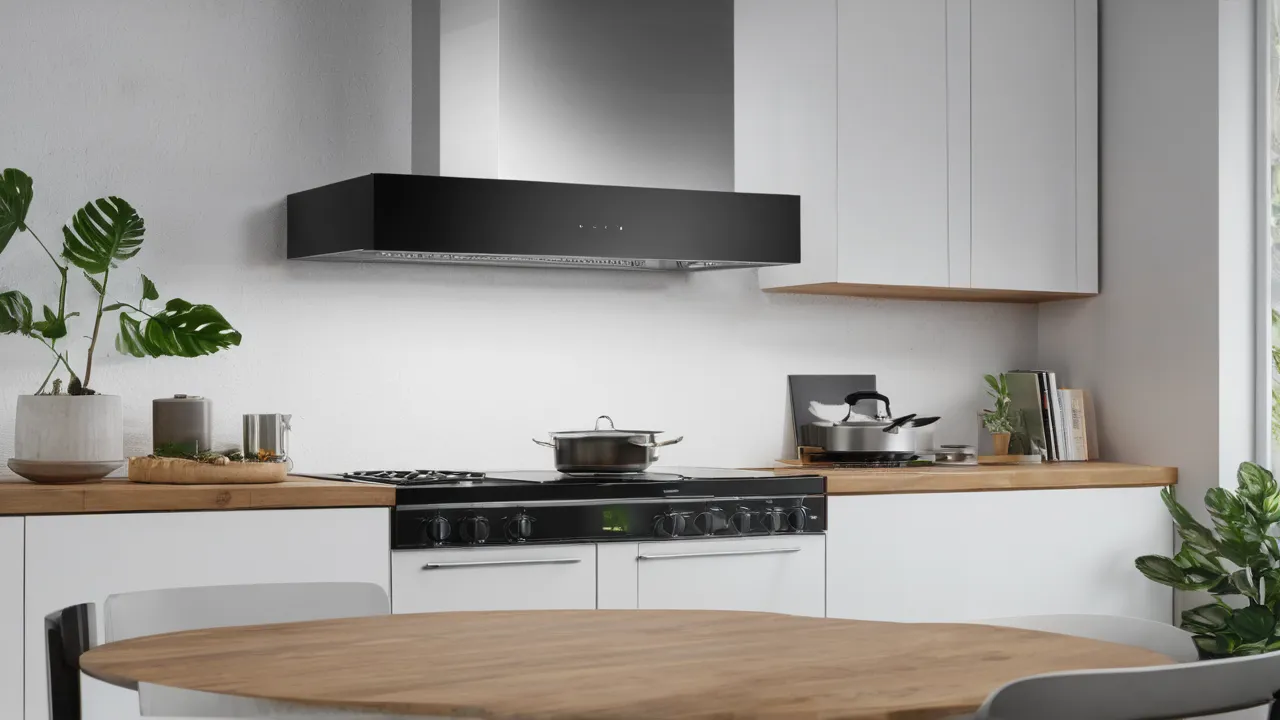
Range hood sones measure how loud a hood sounds to people. One sone is roughly the hum of a quiet refrigerator, and each doubling of the number is heard as about twice as loud. Compare sones at the airflow you will actually use, not only at maximum speed, and look at blower type and duct design.
What a Sone Is
A sone is a unit of perceived loudness. Unlike decibels, which measure sound pressure on a logarithmic scale, the sone scale is linear in how loud something seems. One sone is the loudness of a quiet refrigerator in a quiet kitchen, a common reference. Two sones sounds about twice as loud, four sones about four times as loud. That linear relationship makes sones easy to compare. A hood rated at 6 sones sounds roughly three times as loud as one rated at 2.
Manufacturers publish sones, often under a standard procedure used by the ventilation industry, which measures sound in a controlled setting at a stated airflow. Real kitchens have reflective surfaces, ducts with bends, and background noise, so a hood sounds different at home than in the rating. Treat the number as a tool for ranking models and not as a promise.
Why the High-Speed Number Can Mislead
Many listings show a single sone figure, often at the lowest speed, because that number looks good. Others show the maximum speed, which is the loudest. Neither alone tells you what you will hear while cooking. What matters is the sone rating at the airflow you actually need. If you need 300 CFM to capture fumes from your cooktop, look for the sones at or near 300 CFM. A hood that is quiet at 100 CFM may be loud at 300.
A quick illustration shows why. Suppose Hood A lists 3 sones at its lowest speed and 7 at its top speed, and Hood B lists 4 sones at its lowest speed and 6 at its top. If you need airflow near the middle of the range, neither number tells you which is quieter for you. Only a table that pairs sones with airflow at each speed answers that, and that table is what to ask for before you buy.
Check the spec sheet for a table of speeds with CFM and sones for each, and compare models at the same CFM. If the maker does not publish that, treat it as a sign of caution. A hood with a stronger blower may be quieter at a given airflow than a weaker blower pushed hard, which is why a bigger blower can actually produce a quieter kitchen.
What Sones Feel Like in Practice
These are general impressions, not strict standards.
| Sones | General impression |
|---|---|
| — | — |
| About 1 | Barely noticeable, like a quiet refrigerator |
| 2 to 3 | Soft background hum, conversation is easy |
| 4 to 5 | Clear noise, normal talk is still possible |
| 6 to 8 | Loud, you may raise your voice |
| Above 8 | Very loud, likely to be turned down |
If your kitchen opens onto a living room, aim for the low end of the airflow you need. If the kitchen is closed off, you can accept more noise at high speed, because you will use high speed only for short periods.
What Creates Range Hood Noise
Blower and motor
The motor and the fan blade make most of the sound. A larger blower moving the same air at a lower speed is usually quieter. Look for variable speed controls and well-balanced blowers.
Blower location
An internal blower sits in the hood body, close to you. An inline blower sits in the duct run between the hood and the exterior wall, and a remote or exterior blower sits outside the house or on the roof. Moving the blower away from the kitchen reduces noise, sometimes a lot. The trade-off is added cost and installation complexity. Ask a licensed professional to handle ducts, wiring, and any roof or wall work.
Duct design
Small ducts, many elbows, and long runs force the blower to work harder and create turbulence noise. Use the duct diameter the maker states, keep the run short and straight, and avoid crushing flexible ducts. A duct that is too small can double the noise at a given airflow.
Filters and baffles
Dirty or damaged filters cause rattles and whistles. Baffle filters can rattle if not seated. Check that filters sit tightly and keep them clean.
Vibration and mounting
A hood that is not firmly anchored can hum or rattle against cabinets and walls. Secure it to framing and add foam or rubber at contact points where the maker suggests.
Matching Sones to Airflow and Cooking
Your cooking style sets the airflow you need. Gentle simmering and light sautéing need less airflow, and you can run the hood on a low speed that is quiet. Searing, wok cooking, and frying need more, and you might use a higher speed for a short time. Our guide to range hood airflow for gas and induction explains how to choose CFM, and the range hood guides describe hood types.
Keep in mind that sones change with duct installation. A hood that reaches a quiet rating on the spec sheet with the specified duct can sound louder when connected to a smaller or longer duct. Ask the installer to use the diameter the maker states and to keep the run as short and smooth as the layout allows.
If your kitchen is open plan, choose a model that offers a good airflow at a low sone level, and consider an inline or remote blower. If your kitchen is separate, an internal blower is fine. If you cook for long periods at low heat, quiet low speeds matter more than high speed numbers.
Practical Tips for a Quieter Hood
- Choose the largest duct diameter the hood supports.
- Keep ducts short, straight, and smooth.
- Choose a variable-speed model with a good low-speed range.
- Consider an inline or remote blower for open-plan homes.
- Clean filters regularly, since clogged filters raise noise and lower airflow.
- Turn on the hood a bit before cooking and leave it on a bit after, at a low speed, and not only at full blast.
- Make sure makeup air is available, since a starved hood is noisy.
Reading a Spec Sheet Like a Buyer
A good spec sheet lists CFM and sones for each speed, the duct size, the blower type, and the filter style. Start by finding the speed that delivers the CFM you need, which you can estimate from your cooktop using the airflow rules for gas and induction. Then read the sones at that speed. Next, note the stated duct size. A hood that needs an eight inch duct but is installed on a six inch duct will not reach its rating and will make more noise.
Look at the number of speeds. A hood with three or four steps gives finer control than one with two. A hood with a continuous dial offers smoother adjustment. Also check for features that reduce noise indirectly, such as a delay-off timer, which lets the hood run a few minutes after cooking at a low speed, and a heat sensor that raises speed only when needed.
Setting Expectations
No hood is silent at full power. A very strong hood at maximum speed will be loud, and that is normal. What you can control is how often you need maximum speed. If your hood captures fumes well at a medium speed, you will rarely hit the top. A wide, deep canopy captures fumes more effectively than a narrow one, so a wider hood can be quieter in use even at the same CFM. Sones on a spec sheet are a part of the picture, and capture design is the other part.
Noise and Your Kitchen Layout
Hard surfaces such as tile, stone counters, and bare walls reflect sound, so a hood can seem louder in a kitchen with few soft materials. Add rugs, window treatments, or upholstered seating nearby to absorb sound. In an open-plan home, noise travels into the living area, so a lower sone rating matters more. If you can, listen to a hood in a showroom, running at the speeds you will use, and note how the sound changes with speed.
Think about how you use the kitchen. If you talk with guests while cooking or watch television nearby, you will turn off a noisy hood and lose its benefit. A slightly less powerful hood that you actually use will do more for air quality than a powerful one that stays off. Choosing a quiet model that fits your cooking style is a practical decision, not a luxury.
Decision Rules
- Open-plan kitchen: pick a low sone value at the CFM you need, and consider a remote blower.
- Closed kitchen: accept higher sones at the highest speed, but check the low speeds.
- Heavy cooking and a wok: choose a strong blower so that you do not have to push a small one hard.
- Condo with a short duct: check the maker’s sones at your needed CFM, since you cannot move the blower.
- Budget shopper: compare sones at the same CFM among models, and avoid any listing that hides the figure.
For more context, see the home appliances hub and the How We Review page.
Frequently Asked Questions
What is a good sone rating for a range hood?
Lower is quieter. Around 1 sone is barely noticeable, 2 to 3 sones is a soft background hum, 4 to 5 is clear noise with normal talk still possible, and above 8 is very loud. A good rating is one that is low at the CFM you actually need, not only at the lowest speed.
How many sones is a quiet range hood?
Roughly 1 to 3 sones at the airflow you will use is quiet enough for most open-plan kitchens. Remember that each doubling of the number sounds about twice as loud, so 6 sones is about three times as loud as 2. Compare models at the same CFM using the maker speed table.
Is sones or decibels better for comparing range hoods?
Sones are easier because the scale is linear in perceived loudness, so double the number sounds about twice as loud. Decibels are logarithmic. Most hood makers publish sones, so use them to compare models, but treat the figure as a ranking tool because your kitchen, duct and surfaces change what you hear.
How can I make my range hood quieter?
Use the largest duct diameter the hood supports, keep the run short and straight and use smooth metal duct. Clean the filters, since clogged filters raise noise, and secure the hood so it does not hum against cabinets. An inline or remote blower moves the motor noise away from the kitchen.
Final Thoughts: Look for Sones at the Speed You Use
Sones are a useful loudness scale, but only if compared at the airflow you need. Choose a model with a published table, favor larger blowers and good ducts, and keep filters clean.
Related buying guides
- Wall Mount vs Under Cabinet vs Island Range Hoods
- Ducted vs Ductless Range Hoods: What You Give Up
- Gas vs Induction: Range Hood Airflow Needs
About the author

The BuyOnceChoice Editorial Team researches durable products worth buying once. Our guides compare published specifications, warranty terms, expert review consensus, and verified owner feedback. We do not conduct our own product trials. See How We Review and our Editorial Policy for our standards.