Window vs Portable Air Conditioner: Which Is Better
A window unit usually cools more per watt and costs less to run, but portables win when windows or rental rules block installation. Here is the rule set.
 By BuyOnceChoice Editorial Team
Updated November 16, 2026
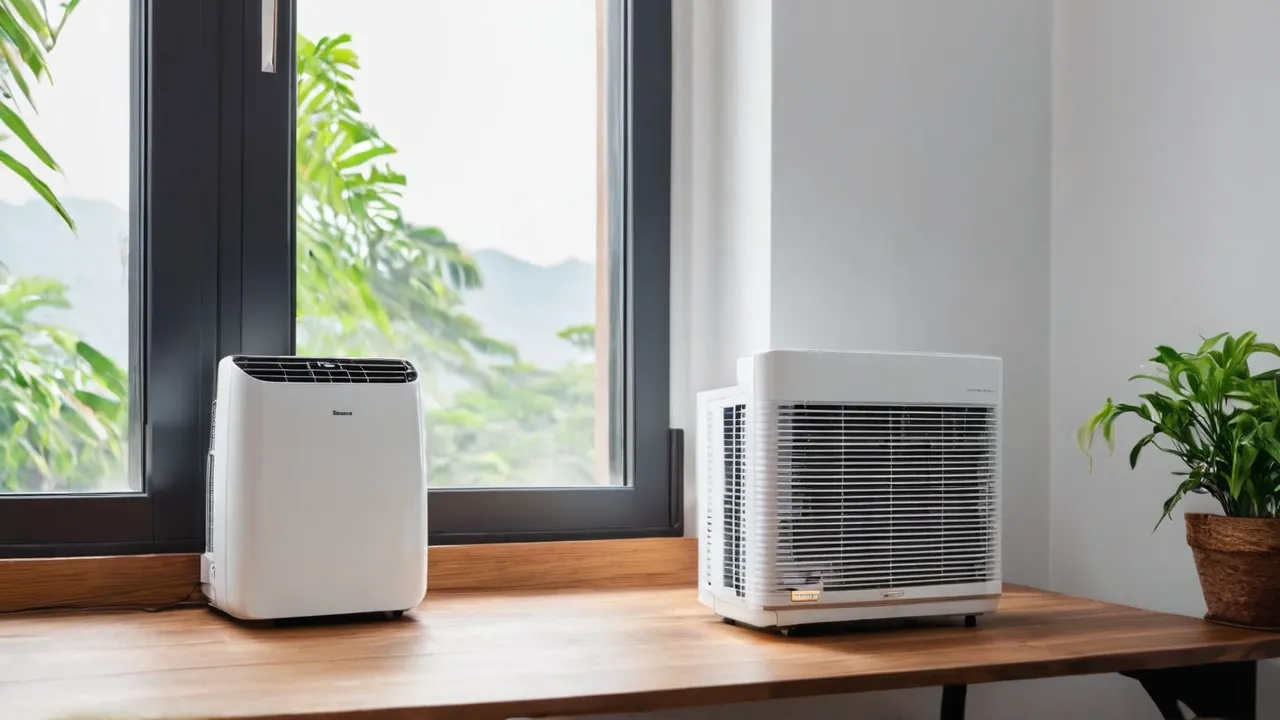
A window air conditioner is the better buy for most rooms because it keeps the noisy compressor outside, cools more for the electricity it uses, and has a simpler design to repair, while a portable unit makes sense only when your window, building rules or lease will not allow a window unit. Choose by installation limits first, then by noise and running cost.
How the Two Designs Actually Work
A window unit is a sealed package. Its hot side, with the compressor and condenser fan, sits outside the window, and the cold side faces into the room. Heat leaves the building without ever re-entering it.
A portable unit sits in the room. It must exhaust its hot condenser air through a hose that runs to a window kit, so the compressor, fan and condenser all hum inside your living space. Many portable models use a single hose that pulls room air over the condenser and blows it outside, which creates slight negative pressure. Warm air from elsewhere in the home is then drawn in through gaps and under doors. Dual hose designs bring outside air in for the condenser, which reduces that effect but costs more and needs two hoses.
Cooling Performance and Running Cost
For the same stated capacity, a window unit generally delivers more usable cooling. Portables lose some of their output to heat radiating from the hose and the body, and to the infiltration just described. Because of this, portable units often list two capacity figures, with the lower one reflecting the real room delivery. Always compare on the lower number when both are shown.
Running cost follows efficiency. Window units tend to carry a higher efficiency rating, so they draw less electricity for the same cooling. Over several summers, that difference can exceed the price gap between models. Check the efficiency rating on each listing and compare them within the same capacity class. If you are sizing a unit, our guide to air conditioner BTU sizing walks through the math.
Where the Cost Difference Comes From
Over several summers, three items add up: the purchase price, the electricity, and any extras. Portables often cost more for the same stated capacity, because they bundle a hose kit and a drain system. Their lower efficiency means higher electricity use during the same hours of operation. A window unit’s extras are a support bracket and a roll of foam, which are minor. When you compare, price the whole setup, not the unit alone, and estimate hours of use per day across the hot months.
Noise and Daily Living
Noise is where the two types differ most. A window unit’s compressor is outside, so what you hear is mainly the fan. A portable unit puts the compressor within a few feet of you. For a bedroom or a home office, that is a major drawback, and many owners who start with a portable later move to a window model for that reason alone.
Portable units also demand floor space, need their hose managed, and often have a tank or drain to deal with. Some models evaporate most of the condensate and exhaust it, but in very humid conditions they still need draining, and a full tank can shut the unit off. Check the manual for the drain method and whether continuous drainage is supported.
Repair, Parts and Expected Life
The buy once lens favors simplicity. A window unit has a short list of parts: compressor, fans, controls, a thermostat and a filter. Its fans and sealed system are the main long term risks. A portable adds a longer list: two fans in many designs, a condensate pump, hoses, a window kit and a more complex drain system. More parts means more places for something to fail.
We do not quote a specific lifespan, since it varies with use, climate and how often the filter is cleaned. Instead, evaluate three things before you buy: how long the warranty on the sealed system runs, whether the manufacturer sells replacement filters and kits, and whether the model is a mainstream design with parts that independent repairers can find. Both types are generally not repaired once the sealed refrigerant system fails, since sealed system work is costly relative to the unit and must be done by a certified technician.
Installation, Windows and Rental Rules
This is where portables earn their place. If your window is a casement, a sliding window, a skylight type or an unusual size, a standard window unit may not fit or may not be allowed. Some buildings and homeowner associations prohibit hanging units in windows for appearance or safety reasons. A portable with a hose kit that fits a sliding window can be the only practical option.
For renters, ask the landlord or read the lease before installing anything in the window. Window units can be heavy, so use the support bracket in the manual and have a second person help. Install the side panels and seal gaps with the supplied foam. Never rely on the sill alone to hold the weight.
If you rent, treat the installation as something you will reverse. Read the lease and ask the landlord in writing before you put anything in a window. Keep the original box and the foam, take a photo of the window before you start, and use the support bracket from the manual so no weight rests on the sash. Plan how you will remove the unit at move out, since a unit left in a window through winter lets in cold air and shortens its life. A portable stores in a closet in the off season, which some renters value more than the efficiency gap.
Other Formats Worth Knowing
Two relatives of the window unit are worth a look if a standard model does not fit. A casement style window unit is built narrower and taller for crank out windows. A through the wall unit sits in a sleeve cut into an exterior wall, which keeps the window free, but the sleeve needs a proper opening and sometimes a permit or landlord approval. Some newer window designs sit low in the sash and leave most of the glass clear, which helps if the room depends on that window for light.
Sizing applies to both types. Match the stated capacity to the room, then compare on the seasonal or conservative rating when a portable lists two. A portable unit that is exactly the right nominal size can still fall short on a hot afternoon, so size up slightly for sun, a kitchen, or a top floor room.
Electrical Safety Before You Plug In
Both types are large electrical loads. Check the amperage on the nameplate, and compare it with the circuit and outlet. Small units usually run on a standard household circuit, and large ones may need a dedicated or higher voltage circuit. Avoid extension cords and power strips, and do not use a unit with a damaged or warm plug. For new outlets or circuits, call a licensed electrician, and follow the manual’s instructions.
Verdict by Buyer Type
- Own the home, normal double hung windows: choose a window unit. It is quieter, more efficient and simpler.
- Renter with a permitted window: a window unit still wins, and the bracket and foam kit usually come out cleanly when you move.
- Casement or sliding windows, or a building ban: choose a portable, preferably a dual hose model, and size up slightly.
- Bedroom or office: lean toward the unit that keeps the compressor outside.
- Occasional use or short term stay: a portable’s flexibility can outweigh its efficiency penalty.
- Hot climate, daily summer use: efficiency and sealed system warranty matter most, which favors window units.
Frequently Asked Questions
Is a window air conditioner better than a portable?
For most rooms, yes. It keeps the compressor outside, usually cools more per watt, and has a simpler design to maintain. A portable is the better choice only when your window type, building rules, or lease rule out a window unit. Check the efficiency rating and noise figures for both.
Are portable air conditioners louder than window units?
Usually. A portable puts the compressor and fans in the room, a few feet from you, while a window unit keeps the compressor outside. Compare stated decibel ratings on the spec sheets, and weigh noise heavily for a bedroom or home office.
Can I use a portable air conditioner in a sliding window?
Yes, with a window kit made for sliding windows. Most portables ship with an adjustable panel, but check that the kit fits your window width and that the panel seals well. Gaps let warm air back in, so use the supplied foam and follow the manual.
Can I install a window air conditioner in a casement window?
A standard window unit does not fit a crank-out casement window. Some makers sell narrow, taller casement window models, and a through-the-wall unit is another option if the building allows it. If neither works, a dual hose portable is a practical fallback. Ask your landlord before modifying any window.
Final Thoughts
For most rooms, the answer is a window air conditioner. It cools better per watt, keeps compressor noise outdoors and has a simpler design to maintain. Choose a portable only when the window, the building or the lease rules out a window unit, and then prefer a dual hose design, compare capacity on the conservative rating, and confirm the drain method in the manual. For how we weigh these tradeoffs, see how we review, and for a broader look at household cooling, see the home appliances section.
Related buying guides
- Air Conditioner Maintenance Checklist for Summer
- CEER vs EER Ratings: Reading AC Efficiency Labels
- How Long Does a Window Air Conditioner Last
About the author

The BuyOnceChoice Editorial Team researches durable products worth buying once. Our guides compare published specifications, warranty terms, expert review consensus, and verified owner feedback. We do not conduct our own product trials. See How We Review and our Editorial Policy for our standards.