Single Hose vs Dual Hose Portable Air Conditioners
Single hose vs dual hose portable air conditioner explained, including negative pressure, efficiency, noise, and which design suits your room.
 By BuyOnceChoice Editorial Team
Updated November 16, 2026
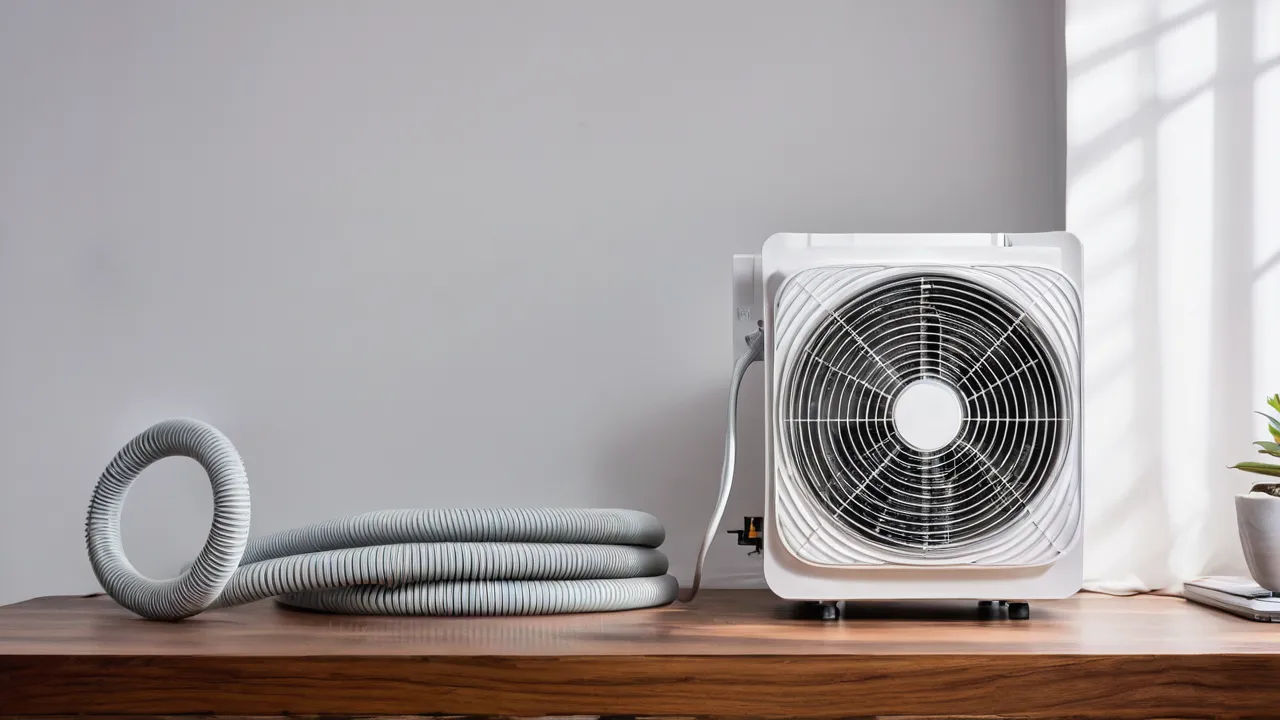
A single hose vs dual hose portable air conditioner differs in how it handles air. A single hose unit pulls room air over the hot coil and vents it outside, which draws warm outside air in through gaps, called negative pressure. A dual hose unit uses separate intake and exhaust hoses, which avoids that effect and usually cools more efficiently.
How a Portable AC Gets Rid of Heat
Every air conditioner moves heat from inside to outside. A portable unit does this with a compressor and two coils, and the hot coil has to be cooled with air. That air must come from somewhere and go somewhere. In a window or split system, the hot side sits outdoors. A portable unit keeps both coils inside the machine, so the hot air must be routed outdoors through a hose in a window or wall kit.
The difference between the two designs is where the hot coil gets its cooling air. In a single hose unit, it draws air from the room you are cooling. In a dual hose unit, it pulls air from outside through one hose and sends it back out through the other.
Negative Pressure, Explained Simply
In a single hose unit, the machine takes cooled room air and blows it out the window. That removes air from the room, and the room cannot sit at a lower pressure, so air leaks in from outside through gaps under doors, around windows, and through other rooms. That infiltrating air is warmer, so it works against the cooling you are paying for.
Think of it as filling a bath with the drain open. The unit keeps cooling, but part of its effort goes to chilling the replacement air. The effect is stronger in leaky homes and smaller in a tightly sealed room.
A dual hose unit has a closed loop for the hot side. It does not pull cooled air outdoors, so there is much less infiltration, and the room stays closer to neutral pressure. The result is generally better cooling per unit of electricity.
Comparing the Two Designs
| Factor | Single hose | Dual hose |
|---|---|---|
| Cooling efficiency | Lower | Higher |
| Infiltration of warm air | Yes | Minimal |
| Setup | One hose, simpler | Two hoses, bulkier |
| Price | Usually lower | Usually higher |
| Noise | Often similar | Often similar |
| Size | Often smaller | Often larger |
Efficiency ratings
Portable units are rated with a seasonally adjusted cooling capacity and an efficiency metric, and the numbers can differ from older labels. Compare units that state the same metric, and look at the manufacturer’s stated capacity in BTU rather than a large headline number. Our air conditioner guides explain the labels.
Noise
Both types have a compressor and a fan inside the room, so they tend to be louder than window or split units. Dual hose models can be a little louder because of additional airflow, but stated dBA on the spec sheet is the useful comparison.
Federal efficiency labeling for portable units reports a seasonally adjusted cooling capacity (SACC) in BTU per hour, which is meant to reflect the cooling you actually get after the unit’s own heat and air leakage are accounted for. That is why a single hose unit and a dual hose unit sold with the same older headline BTU number can land in different places on the newer rating. When two listings show both numbers, trust the adjusted figure and the efficiency ratio over the headline number, and confirm both on the manufacturer’s spec sheet or the manual rather than the retailer’s summary.
A quick worked example shows why the design matters. Picture a bedroom with a closed door, a sealed window kit, and a unit sized for the floor area. In a single hose model, the fan pulls cooled room air across the hot coil and pushes it out the window. The house replaces that air through the door gap and wall leaks, and it arrives warm from the hallway or attic side. The cooler keeps running to chill it, so the thermostat takes longer to be satisfied and the compressor spends more time on. A dual hose model brings its own cooling air from outdoors, so the room air stays inside.
Hoses, Kits, and Real-World Setup
Hose length and insulation matter. A long, uninsulated hose radiates heat back into the room. Keep hoses short and straight, avoid kinks, and use insulated hose covers if offered. Seal the window kit well, since a gap around the panel lets warm air flow in.
For dual hose units, both hoses go through the window kit, so check that the kit fits your window type, whether double hung, sliding, or casement. Some rooms lack a suitable window, and a wall vent kit is a job for a professional.
Condensate management also differs by model. Many modern units evaporate most moisture and expel it with the exhaust, while others need a periodic drain or a hose to a drain. Check the manual for your model’s approach.
When a Single Hose Unit Is Enough
A single hose model is reasonable in a small, well-sealed room used for short periods, such as a closet office or a small bedroom. It is also reasonable when budget is tight, when you want a lighter unit that you can move between rooms, or when you only need occasional cooling.
A dual hose model makes sense for rooms that are hot for long hours, for leaky older homes, or when the unit is your main cooling source. Hot afternoons with a closed door and a sealed window kit give a dual hose model its best chance.
When to Skip a Portable Altogether
A portable unit is the least efficient way to cool a room. If your window allows a window air conditioner, that is usually more efficient and quieter. If you can install a ductless mini split, it is better still. A portable makes sense for windows that do not allow a window unit, for renters with strict rules, or for rooms with casement or sliding windows. See our home appliances hub for related options, and the How We Review page for how we weigh efficiency claims.
Ways to Improve Either Design
Because portable units are inefficient by nature, small steps matter. Block sun with curtains or shades on the window kit side. Close doors to rooms you are not cooling so the unit only handles one space. Seal gaps under the door with a rolled towel when running a single hose unit, which reduces infiltration. Keep the filter clean, since a clogged filter forces longer runs. Place the unit close to the window so the hose stays short, and give it a few inches of clearance for intake.
Some owners add a small fan to move cooled air across the room, which helps comfort at the far side. Remember that a portable AC is rated for a stated floor area, and the rating assumes normal ceiling height and shading. A sunny room with a lot of glass, a kitchen, or a top-floor room may need a higher capacity than the label suggests. Choose the next size up in those cases.
Electrical and Safety Basics
A portable air conditioner is a heavy electrical load. Plug it directly into a wall outlet rated for the load, and avoid extension cords or power strips unless the manual allows them. Do not use a damaged cord. If the breaker trips, stop using it and have an electrician check the circuit. Keep hoses and cords out of walkways to prevent tripping.
Cost Over a Season
A dual hose unit often costs more up front, but it may use less electricity to reach the same temperature, particularly in hot spells. The saving depends on how leaky the room is and how long the unit runs, so do not expect a fixed amount. If you only run it a few weeks each summer, the price gap may never pay back. If you run it daily for months, the efficiency gain is more likely to matter. Compare the stated energy figures for both models side by side, and consider noise in the room where you sleep.
Verdict by Buyer Type
Use these rules as a verdict for each kind of buyer, and read the last one before spending extra on either design.
- Small bedroom, occasional use: single hose is acceptable.
- Large room, long hours, or main cooling: choose dual hose.
- Leaky older home: dual hose reduces infiltration.
- Window allows a standard window AC: consider that first.
- Tight budget but long hot spells: put money into sealing the window kit and shortening the hose, whichever design you choose.
- Whole-home or permanent cooling: skip portables and consult an HVAC professional.
Frequently Asked Questions
Is a dual hose portable air conditioner really better?
Usually yes for cooling efficiency, because it does not pull cooled room air outdoors and draw warm replacement air in. The advantage is largest in leaky rooms and long hot spells. It matters less in a small, sealed room used a few hours a day, where a single hose model can do the job at a lower cost and weight.
Can I add a second hose to a single hose portable air conditioner?
No, not safely. The unit is built around one exhaust path, and the fan, coil, and housing are not designed for a separate intake hose. Adding one can change airflow and strain the compressor. Instead, shorten the hose, insulate it, seal the window kit, and close the door gap, or buy a model designed with two hoses.
Does a portable air conditioner need to vent out a window?
Yes. The hot air from the condenser must leave the room through the hose, normally via a window kit or a wall vent. Venting into a closet or an attic space only moves the heat around. Check the manual for the maximum hose length and the kit sizes that fit your window type.
Do dual hose portable air conditioners cost more to run?
Generally they use less electricity to reach the same room temperature, though a larger motor and extra fan power can offset some of that. Compare the efficiency rating and stated wattage on each spec sheet. Your actual cost depends on room leakiness, sun exposure, and daily running hours.
Final Thoughts: Dual Hose Wins on Efficiency, Single Hose on Simplicity
Dual hose units avoid negative pressure and cool more efficiently, and single hose units cost less and set up faster. Choose by how hot the room gets, how leaky it is, and how long you run the unit, and seal the window kit well either way.
Related buying guides
- What Size Air Conditioner Do You Need: BTU Guide
- Window vs Portable Air Conditioner: Which Is Better
- Air Conditioner Maintenance Checklist for Summer
About the author

The BuyOnceChoice Editorial Team researches durable products worth buying once. Our guides compare published specifications, warranty terms, expert review consensus, and verified owner feedback. We do not conduct our own product trials. See How We Review and our Editorial Policy for our standards.