Dehumidifier Pint Ratings Explained: Old vs New Standard
The Department of Energy changed how pints per day are measured. Here is a conversion method so old and new labels can be compared fairly before you buy.
 By BuyOnceChoice Editorial Team
Updated November 16, 2026
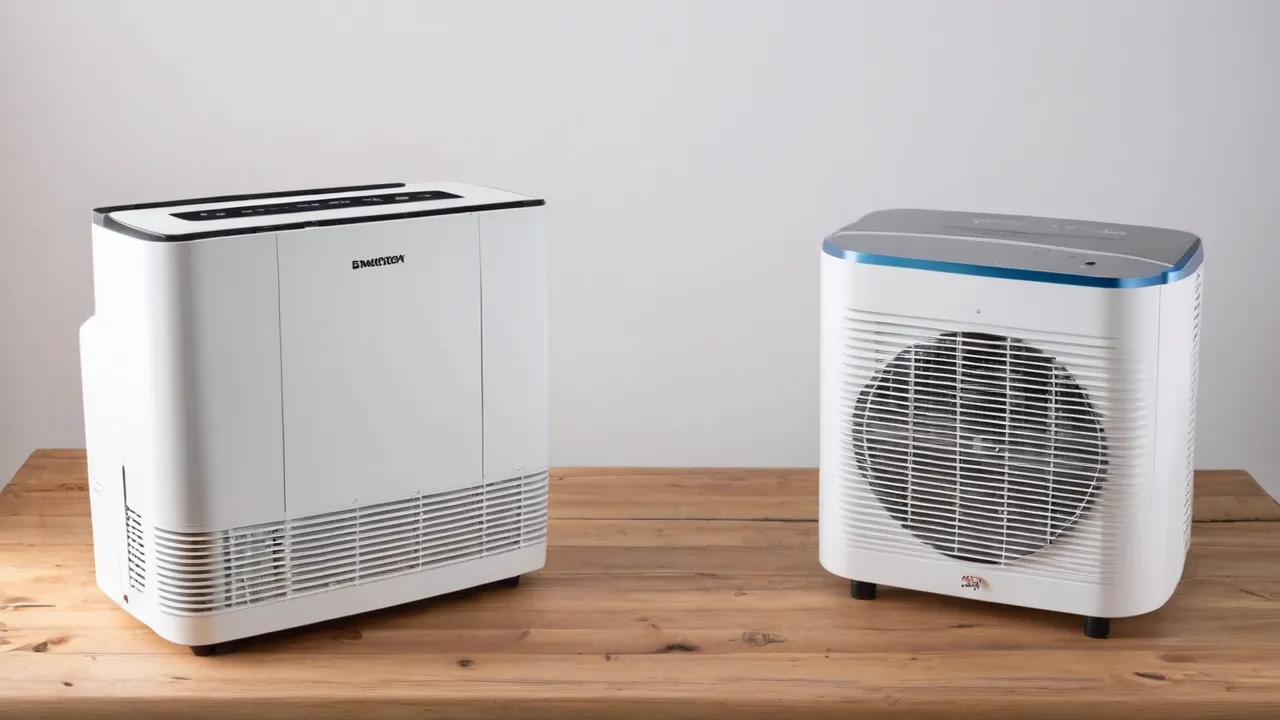
A dehumidifier pint rating is the amount of water a unit removes from the air in 24 hours under fixed conditions, and the conditions changed when the Department of Energy updated its procedure. A newer unit labeled 50 pints is generally comparable to an older unit labeled 70 pints, so you should only compare ratings that were measured under the same standard.
What Changed in the Rating Procedure
For years, manufacturers printed a pint rating measured at a warm, humid condition: roughly 80 degrees Fahrenheit and 60 percent relative humidity. That is a muggy summer room, and it flatters the number. The updated federal procedure measures capacity at a cooler condition, roughly 65 degrees Fahrenheit and 60 percent relative humidity, which is much closer to a real basement.
Cooler air holds less water, and a compressor-based dehumidifier pulls less moisture out of it per day. The same machine therefore earns a smaller number under the new method. Nothing about the hardware got weaker. The ruler changed.
This is why shoppers who go looking for a replacement for a 70 pint unit find that nothing is labeled 70 anymore. The category did not shrink. The labels were rescaled.
A Conversion Table You Can Use With Caveats
The table below shows the commonly cited equivalence between old labels and new labels. Treat the values as approximate bridges, not guarantees. Manufacturers round differently, and individual models land a few pints either side.
| Old label (warm condition) | Typical new label (cool condition) |
|---|---|
| 70 pints | about 50 pints |
| 60 pints | about 45 pints |
| 50 pints | about 35 pints |
| 40 pints | about 30 pints |
| 30 pints | about 22 pints |
| 25 pints | about 20 pints |
If your current unit shows a label in the left column, shop in the right column. If you are comparing a listing that does not say which standard applies, look for the efficiency label or the specification sheet, which usually states the rating condition. When it does not, assume the larger number is the older, flattering one and confirm in the product manual or the manufacturer page.
Why the Same Unit Can Appear Twice With Different Numbers
During the transition, retailers carried both ratings. A manufacturer might list a model as 50 pints on the box and an older version of the same model as 70 pints. Some third party sellers also keep stale titles, with the old number in the product name and the new number in the details.
Three signs help you spot a mismatch.
- The title promises a very large capacity from a small, light chassis. Bucket size and compressor size should roughly track pint capacity.
- The listed power draw is modest for the capacity claimed. Larger real capacity needs a larger compressor and more watts.
- The specifications list a rating condition that does not match the headline number.
The One Standard Rule When Comparing Models
The safest habit is simple: compare every candidate under a single standard before you look at price. Convert any old label into the new scale using the table, then rank on the new scale only. Anything you cannot convert, set aside.
Next, compare on efficiency, not capacity alone. The energy factor, listed as liters per kilowatt hour, tells you how much water a unit removes for the electricity it uses. Two units with the same pint rating can differ meaningfully in running cost, and a unit you will run for months each year should be judged on both numbers.
Use this short routine on any listing you are unsure about. It takes a few minutes and keeps you from ranking apples against oranges.
- Find the capacity figure and the condition it was measured at. If the page only shows a headline number, open the specification table or the manual.
- Find the energy factor in liters per kilowatt hour. A higher figure means more water removed for each unit of electricity.
- Compare the capacity with the stated power draw and the physical size of similar models. A claim that is far out of line with its peers deserves a second look.
- Check whether the unit carries an efficiency certification, then confirm it on the certifier site or the manual rather than trusting a badge in a photo.
Using the Converted Number to Size a Room
Once the rating is on the new scale, the sizing logic becomes straightforward. As a rough guide, small damp rooms are served by about 20 to 25 pint class units, typical basements by about 35 to 45 pint units, and large or very wet spaces by about 50 pint and above. Our companion guide on what size dehumidifier you need walks through the floor area math and the dampness tiers, so use this article only for translating labels.
If you are replacing an old unit and it kept up, pick the new label from the table that matches it. If it ran constantly and the space was still clammy, move up one step. A unit that runs without cycling off is telling you it is undersized or the space is leaky.
A Worked Replacement Example
Suppose your old unit is labeled 60 pints and you are replacing it in a finished basement that always felt a little damp. The table points you to a unit labeled about 45 pints. Before you buy, check three things on the candidate: that its listing states the cool condition rating, that it has a hose drain or a pump option, and that its operating range covers your coldest basement weather.
Now suppose the old unit cycled off for part of every day. That means it had spare capacity, so a unit one class smaller on the new scale could also work, and it would cost less to run. Suppose instead the old unit never shut off. Move one class up, and look at a unit with a better energy factor, because a machine that runs around the clock makes efficiency the biggest part of its lifetime cost.
Common Mistakes When Reading Labels
- Comparing a new 50 pint listing against an old 70 pint listing and assuming the second removes more water.
- Reading a “pints per day” claim in a marketing banner instead of the specification table.
- Treating a bigger bucket as bigger capacity. Bucket size controls how often you empty it, not how fast it dries the air.
- Ignoring that a unit sized for a damp room still needs air to circulate. Closed doors and furniture against the intake reduce what the rating promises.
What the Pint Number Still Does Not Tell You
Even a correct rating leaves gaps. It says nothing about the following, and each of them affects whether the machine lasts.
- Drainage. A bucket only holds so much. In a damp basement a large unit can fill it several times a day, so continuous drain through a hose or a built in pump matters more than a few pints.
- Low temperature behavior. Standard compressor units lose capacity as the air gets cold, and coils can ice. Check the manual for the lowest operating temperature and what the auto defrost does.
- Repairability. Compressors and fans are long lived parts, but the humidistat, sensors and boards are where many units fail. Look for a documented warranty length and parts availability on the product page.
- Noise. Fan and compressor noise differs between brands, and the rating tells you nothing about it.
Who Should Convert and Who Can Skip It
If you are replacing a unit that worked well, convert its label and buy one step in the same class. If you are buying for the first time, ignore the old numbers entirely and size on floor area and dampness. If a listing has no stated standard, set it aside until the manual or manufacturer page says what it measured. For checking how we weigh specifications generally, see how we review, and for a unit with built in drainage see our guide to the best dehumidifier for a basement with a pump.
Frequently Asked Questions
Is a 50 pint dehumidifier the same as a 70 pint dehumidifier?
Often, yes. A model labeled 50 pints under the current federal procedure is generally comparable to an older unit labeled 70 pints, because the new procedure measures at a cooler condition. Confirm which standard a listing uses on the specification sheet, since some listings still carry the old, larger number.
What temperature is the new dehumidifier pint rating based on?
The current procedure measures capacity at roughly 65 degrees Fahrenheit and 60 percent relative humidity. The older procedure used about 80 degrees and 60 percent. Cooler air holds less moisture, so the same machine earns a smaller number. Check the manual if you need the exact rating condition for a specific model.
How many pints do I need for a basement?
Most typical basements fall in the 35 to 45 pint class on the current scale, while small damp rooms suit about 20 to 25 pints and very wet or large spaces call for about 50 pints or more. Size by floor area and dampness, then move up a class if the unit would run nonstop.
Does a higher pint rating mean the room dries faster?
Up to a point, yes. A larger capacity pulls more water per day under the same conditions, so it can reach a target humidity sooner. It will not help if the unit cannot drain continuously, if air cannot reach the intake, or if the space has an active leak that keeps adding moisture.
Final Thoughts
The pint rating is a useful number only when every label is measured the same way. A modern 50 pint unit is not a downgrade from an older 70 pint one, and a listing that still shouts the larger old number is not offering more water removal. Convert to the current scale, check the efficiency figure, pick a drainage method that fits the space, and move up a step if you are between sizes. That approach avoids both the underpowered unit that never shuts off and the overbought unit that costs more to run than it needs to.
Related buying guides
- Dehumidifier with Pump vs Gravity Drain: Which to Choose
- How Long Does a Dehumidifier Last and When to Replace
- How to Clean and Maintain a Dehumidifier
About the author

The BuyOnceChoice Editorial Team researches durable products worth buying once. Our guides compare published specifications, warranty terms, expert review consensus, and verified owner feedback. We do not conduct our own product trials. See How We Review and our Editorial Policy for our standards.