Zero Turn vs Riding Mower: Which Fits Your Yard
A decision table for choosing between a lap-bar zero turn and a steering-wheel tractor, built around grade, obstacles, towing and dealer service nearby.
 By BuyOnceChoice Editorial Team
Updated November 16, 2026
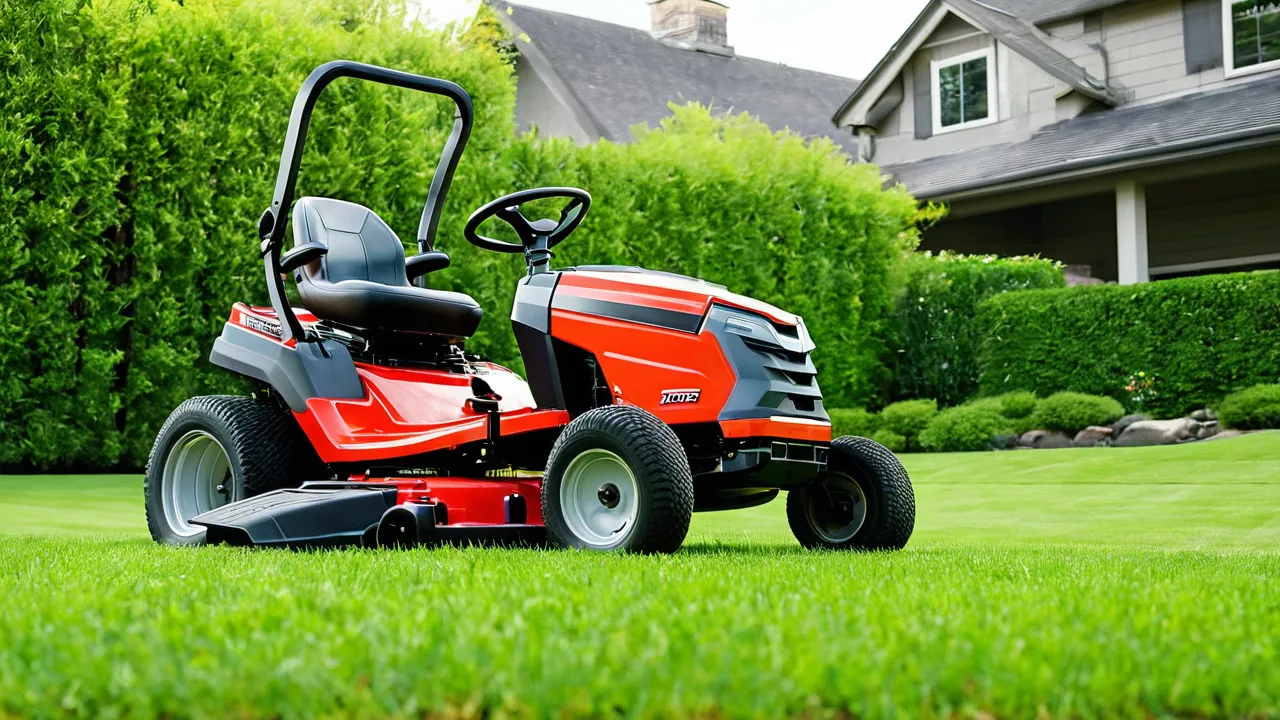
A zero turn mower steers with two levers, spins in place and cuts around obstacles faster, while a traditional riding mower or lawn tractor steers with a wheel, climbs slopes more comfortably and takes attachments for year round use. Choose a zero turn for large, open, mostly flat yards with many obstacles, and a riding mower for slopes, towing and multi season work.
How the Two Machines Steer and Why It Matters
A riding mower or lawn tractor has a steering wheel and front wheels that turn, like a small car. It needs a turning radius, so you make wider turns around trees and beds, and you often trim by hand where it cannot reach. A zero turn has independent drive wheels that let it pivot almost in place, so it can wrap around obstacles with fewer passes and less trimming.
The learning curve differs. A riding mower feels familiar to most drivers. A zero turn needs practice with the levers, and mistakes show up as gouged turf or erratic lines. Most people adapt within a few hours, but it is worth practicing in an open area. Steering also affects safety, especially on slopes.
Visibility and reaction differ too. On a riding mower you sit behind a hood and steer by looking ahead, while on a zero turn you sit forward over the deck and see the cutting area more directly, which helps when trimming close to beds. Reversing is also different: zero turn mowers back up easily and turn quickly, but you need to look behind you before every reverse move.
Where Each One Cuts Faster
Zero turn mowers often cut faster in practice because they turn tightly, travel at higher speed and have wide decks. On a large yard with trees, flower beds and curves, the time saved by not making wide turns and by cutting close to obstacles adds up. On a simple open rectangle, the difference is smaller, since the mowing time depends on deck width and speed.
A lawn tractor has a narrower deck on many models and slower travel speed, so it takes longer on a big yard. However, its steering is predictable and it is easy to line up along edges. Compare deck widths, listed speeds and your yard shape rather than relying on a general claim.
Estimate your own mowing time with a simple formula. Multiply the deck width in feet by the speed in miles per hour and by about 5,280 feet per mile, divided by 43,560 square feet per acre, to get acres per hour at 100 percent efficiency. A 54 inch deck, which is 4.5 feet, at 6 miles per hour gives about 3.3 acres per hour in theory. Real efficiency is lower, often around 70 to 80 percent, because of turns, overlap and obstacles. Do the same for a 42 inch tractor deck at 4 miles per hour, and the theoretical rate is about 1.7 acres per hour. The gap shows why large yards favor zero turns, while small yards see less benefit, since the time is dominated by trimming and turns.
Slopes and Stability
Slopes are where the two differ the most. A lawn tractor with front wheel steering and weight over the rear drive wheels is generally more stable and gives more control on a slope, though every model has a limit in the manual. A zero turn has caster wheels that do not hold the slope well, and its weight distribution can make it slide sideways. Many manuals set lower slope limits for zero turn mowers.
If your yard has slopes of more than a few degrees, a riding mower or a zero turn with a lower limit and ROPS may be needed, and you must follow the manual. Check the slope rating for any model you consider, and never mow wet grass on a hill. For very steep land, consider a different tool.
Check your slope with a simple method before shopping. Place a four foot level on the ground along the slope, lift the lower end until the level reads flat and measure the rise in inches. A rise of about 8 inches over four feet is roughly a 10 degree slope, which is a common limit for many mowers. Measure several places on your yard, especially near ponds, ditches and fences. Compare your worst slope with the limits in the manuals of the machines you are considering. If the number is close, choose the machine with the higher limit, or plan to trim the slope by other means.
Parts, Dealers and Long Term Service
A mower is only as good as the support behind it. Check where you can buy parts and get service. Look for the availability of belts, blades, spindles and hydraulic components, and whether a local dealer can service the machine. Zero turn mowers use hydrostatic drives and spindles that need regular care, and repair costs can be significant when they fail. Riding mowers also use transmissions, but many use simpler, more common parts. Ask about the warranty on the engine, the transmission and the deck, and read the terms.
Ask these questions before you buy. Where is the nearest authorized service center? How long does a typical repair take in spring, the busiest season? Are belts, blades and spindles stocked locally? What is the warranty on the transmission and the deck, and does commercial or residential use change it? A mower that is easy to service saves more over its life than a small price difference at purchase.
Towing, Attachments and Year Round Use
Lawn tractors are designed for towing and attachments such as carts, spreaders, aerators and sometimes snow blades or blowers. They fit more roles in the year. Zero turn mowers focus on mowing, though some accept a few attachments and tow light loads. Check the manual for towing limits and hitch availability. If you want a single machine for hauling mulch, spreading seed and clearing snow, a lawn tractor or garden tractor is the better fit.
Cost, Comfort and Operator Fit
Zero turn mowers usually cost more than comparable lawn tractors, especially with larger decks and commercial grade parts. They can save time, which matters on big properties. Comfort differs: a zero turn seat and lever position suit some people better than others, and the ride can be bumpier without suspension. Try both if you can, and check seat adjustment, controls and visibility. Consider storage space as well, since both machines need a sizeable shelter.
Think about the operator. Check that the seat fits your height and that you can reach the controls comfortably. Zero turn levers need a firm grip and small, steady movements, which some people find tiring on long cuts. Look for padded handles, a suspension seat and a comfortable footrest. Consider noise and vibration too, and use hearing protection with any engine powered mower. If more than one family member will use the mower, choose one with adjustable controls and clear safety instructions.
Decision Table by Yard Type
- Large open lawn with many obstacles, mostly flat: zero turn.
- Hilly or sloped lawn: riding mower or lawn tractor, within the manual’s limit.
- Need to tow or use attachments through the year: lawn tractor or garden tractor.
- Small to medium lawn with simple shape: lawn tractor, or a self propelled mower, see the cordless self-propelled mower roundup.
- Many trees, beds and tight corners with some flat open areas: zero turn with care.
Browse the lawn mower category and learn how we select products at How We Review.
Common regrets are useful to list. Buyers of zero turns for hilly lots regret the slope limits. Buyers of lawn tractors for big yards regret the time they spend on each cut. Buyers who skip the dealer check regret long waits for repairs. Match the machine to the main constraint on your property, whether that is time, slope, towing or service, and let that decide.
Frequently Asked Questions
Is a zero turn mower better than a riding mower?
It depends on the yard. Zero turns cut faster around obstacles on large, flat lawns, while riding mowers handle slopes and towing better. Compare your slope, obstacles, storage and attachment needs, and follow the manual’s slope limits for either machine.
Are zero turn mowers safe on hills?
They have lower slope limits than many riding mowers and can slide sideways because of the free swiveling casters. Check the manual, avoid wet grass, make slow turns and use another tool for steep slopes.
Can a zero turn mower tow a cart?
Some can tow light loads, but many are not designed for heavy towing. Check the manual for towing capacity and hitch options. If you tow often, a lawn tractor or garden tractor is usually a better fit.
How big of a yard needs a zero turn mower?
There is no exact cutoff, but zero turns shine on lawns of roughly half an acre or more with obstacles. On smaller or simple lawns, the time savings are smaller, and a lawn tractor or self propelled mower may be enough.
Final Thoughts
Pick a zero turn for big, open, obstacle filled lawns where speed matters, and a riding mower or lawn tractor for slopes, towing and year round jobs. Check slope ratings, parts support and storage space, and practice with the controls before you start.
Related buying guides
- Common Mower Buying Mistakes and How to Avoid Them
- Gas vs Battery Lawn Mower: Cost Per Mow and Lifespan
- How Long Lawn Mowers Last: Hours and Repair Rules
About the author

The BuyOnceChoice Editorial Team researches durable products worth buying once. Our guides compare published specifications, warranty terms, expert review consensus, and verified owner feedback. We do not conduct our own product trials. See How We Review and our Editorial Policy for our standards.