Work Boot Sizing Guide: How Your Boots Should Fit
Sources disagree on heel slip and toe room. Here is one rule you can follow at home, with the right socks, the right time of day, and common mistakes.
 By BuyOnceChoice Editorial Team
Updated November 16, 2026
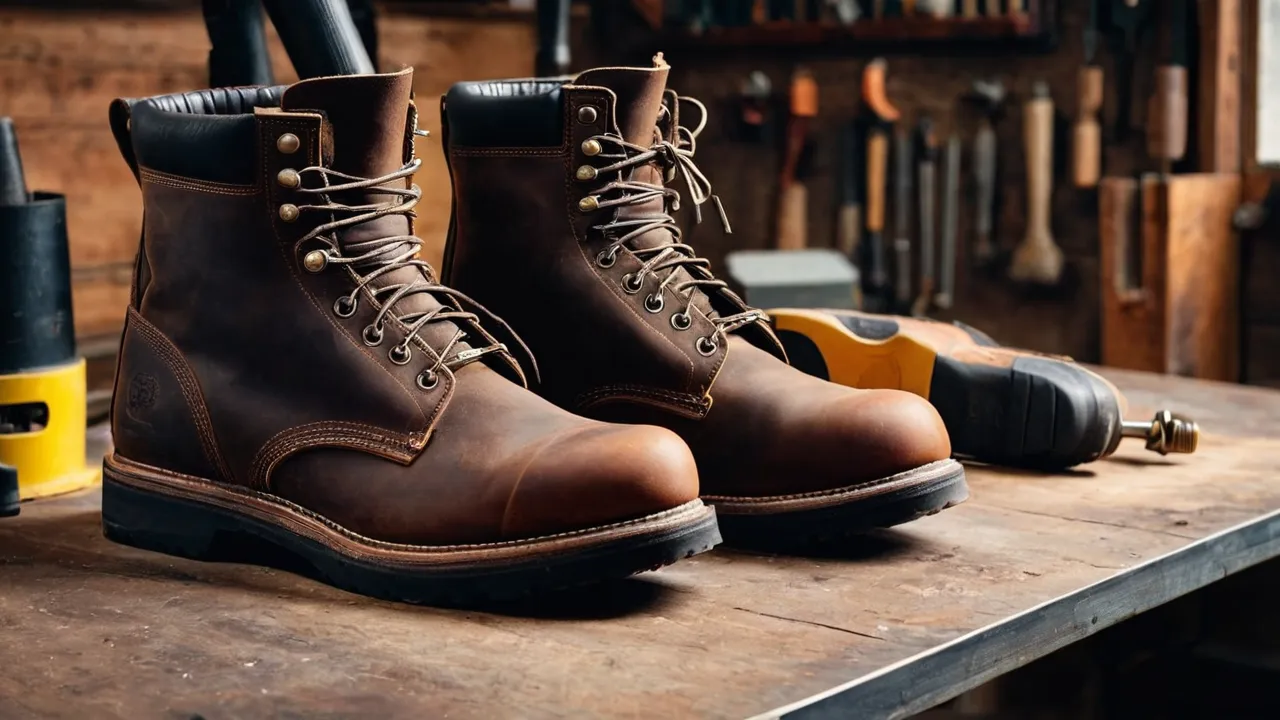
A work boot sizing guide comes down to one routine: measure both feet in the afternoon with your work socks on, choose the size where your longest toe has about a thumb’s width of room, and confirm that your heel stays down when you walk. Work boots fit differently from sneakers because the toe cap and stiff sole do not give, so the size you wear in running shoes is only a starting point.
Why Work Boot Sizing Differs From Sneaker Sizing
Sneakers flex, stretch and forgive a slightly wrong size. A work boot has a stiff sole, a firm heel counter and often a rigid safety toe, and none of these adapt much to your foot. The leather upper may relax over weeks, but the toe cap, shank and counter hold their shape. That makes the first fitting the one that matters.
Sizing also varies by brand and by last, the form the boot is built on. A size 10 in one maker’s boot can feel like a 9.5 or a 10.5 in another. Use your usual size as a hint and let the measurement and fit checks decide. Our work boots section has related guides on widths, lasts and fitting.
The Afternoon and Sock Routine
Feet swell during the day, and standing all day on hard floors makes it worse. A boot that fits at eight in the morning may be tight by three. Follow this routine.
- Fit boots late in the afternoon or after a few hours on your feet.
- Wear the socks you wear on the job. Thin socks hide a tight fit, and thick socks fill the boot.
- Bring any insoles or orthotics and use them in the fitting.
- Measure both feet, standing, and fit to the larger one.
- Lace the boot fully, from the bottom, and stand with your weight on both feet.
If you wear different socks in summer and winter, check the fit with each, or choose the boot for the sock you wear most.
The Heel and Toe Rule
Sources disagree on how much space is right, which causes a lot of confusion. A clear, workable rule is below. It is meant as a starting point, and a comfortable fit that passes the checks matters more than any one number.
Heel
With the boot laced, your heel should stay in the heel cup when you walk. A very slight lift, less than a quarter inch, is normal as the boot flexes. If the heel lifts more or you feel it rub, the boot is too big, the wrong shape or laced loosely at the ankle. Try heel lock lacing first. If the slip persists, move to another size or last.
Toes
Stand with your weight on the foot. There should be about a thumb’s width, roughly half an inch to three quarters of an inch, between your longest toe and the front of the boot. Your toes should wiggle freely and not press the top or sides. With a safety toe, be stricter: the cap does not stretch, so a boot that is tight now will stay tight. Walk down a ramp or stairs, and if your toes jam into the front, the boot is too short or the heel is loose.
Where sources disagree is on whether a bit more or a bit less is better. If you work on ladders or slopes, favor the lower end of toe room, with a snug heel, so your foot does not slide forward. If you stand on flat floors, you can afford a little more room, but not so much that the heel slips.
Width, Arch and Instep
Length is only one measurement. Width, arch length and instep height decide whether the boot is comfortable.
- Width: the ball of your foot should sit at the widest part of the boot without side pressure. If a boot is available in wide or extra wide, use the chart and a foot measurement.
- Arch: the boot’s arch should line up with your arch, not sit ahead of or behind it. If you feel a lump under the arch or a gap, try another last.
- Instep: a high instep needs a roomy lace area, and a low instep needs a snug tongue and a firm lacing. If you must lace tight to hold your foot, the boot is the wrong shape.
Mistakes That Lead to Returns
- Fitting in the morning, when feet are smaller.
- Wearing thin socks or none in the store.
- Choosing the size by your sneaker size without checking the chart.
- Ignoring width and judging only by length.
- Accepting heel lift because the boot will break in.
- Trusting that a safety toe will stretch.
- Ordering online without checking the return policy.
Each of these has a simple fix, and most are covered in the routine above.
Break-In and When to Move Up or Down
A well-fitting boot should feel comfortable within a few days, with a short break-in as leather softens at the flex point. If you get hot spots at the heel, the boot may be too big, and if the toes go numb, it may be too short or narrow. Wear the boots indoors for an hour or two at a time during the first days, and watch for pain that builds rather than fades.
Move up a half size if the toes touch the front, the boot feels tight across the ball and the width is not available. Move down a half size if the heel slips, you have a thumb or more of space at the toe and the lacing cannot fix it. If you are between sizes, think about which fault is easier to fix: a bit of extra length can be handled with a thicker sock or insole, and a bit too short cannot be fixed at all.
A Worked Example With Numbers
Say you wear a size 10 sneaker, and at three in the afternoon your longer foot measures about 10.5 inches from heel to longest toe, standing, in your work socks. A thumb’s width is roughly three quarters of an inch, so you want an inside boot length of around 11.25 inches. Many makers list an insole length for each size, and if the chart shows a size 10 at 10.9 inches and a size 10.5 at 11.2 inches, the half size up gets you closest. You would try the 10.5, and check the heel.
If the 10.5 gives you a quarter inch of heel lift, the measurement said size up but the fit said otherwise. Now you have two options. Use heel lock lacing and a slightly thicker sock, and walk on stairs again, or try a different last, ideally one with a narrower heel. If the heel stays down with the lacing change, the size is right. If it does not, the boot is the problem, not the size.
Record the result: the model, the size, the width and what you changed. Next time you buy from the same maker you will start from a better number. Foot size also changes over the years, with weight, pregnancy, injury or age, so remeasure every time you buy.
Who Should Size Carefully and Who Can Relax
Anyone with a safety toe, wide or narrow feet, orthotics or foot pain should size carefully and use the full routine. Workers on ladders or uneven ground need a firm heel hold. If your job is mostly standing on flat floors and you have an average foot, you have more room for error, but the routine still saves a return.
If you are buying online, check how the seller handles returns, and read the maker’s size chart. See our buying guides for related advice, and read about our review approach to see how we handle claims on fit.
If you are still unsure after all of this, ask a footwear specialist to measure both feet on a Brannock-style device and to watch you walk in two or three candidate sizes. A second pair of eyes often spots heel lift or toe crowding that you cannot see yourself, and the measurement gives you a reliable starting point for the maker’s chart. Write down the result and bring it with you the next time you shop.
Frequently Asked Questions
How much room should I have in the toe of a work boot?
About a thumb’s width, roughly half an inch to three quarters, between your longest toe and the front while standing. Your toes should move freely. Check with your work socks on and walk down a ramp or stairs to be sure they do not jam.
Should work boots be a half size bigger than sneakers?
Not automatically. Some people need a half size more because of thick socks or a stiff toe, and others fit the same size. Use your sneaker size as a hint, then measure and fit in the afternoon with work socks and check heel hold and toe room.
Is it normal for a work boot heel to slip a little?
A very slight lift when the boot flexes is normal. If the heel lifts more than about a quarter inch, rubs or comes out of the cup, the boot is too big or the wrong shape. Try heel lock lacing, then move to another size or last.
What if my feet are different sizes?
Fit the larger foot and adjust the other with an insole or a thicker sock. Measure both feet in the afternoon, since the difference can change. If the gap is large or painful, ask a clinician or a footwear specialist for advice.
Final Thoughts
Fit work boots in the afternoon with work socks, allow a thumb’s width at the toe, keep the heel down and check width and instep as well as length. Avoid the common mistakes, keep a return window open and move up or down by half sizes only after the checks tell you which fault you have.
Related buying guides
- Work Boot Socks: Material, Height and Cushion Guide
- Work Boot Warranty Guide: What Is Covered and What Is Not
- Work Boots for Standing on Concrete: What Features Matter
About the author

The BuyOnceChoice Editorial Team researches durable products worth buying once. Our guides compare published specifications, warranty terms, expert review consensus, and verified owner feedback. We do not conduct our own product trials. See How We Review and our Editorial Policy for our standards.