Women’s vs Men’s Work Boots: Sizing and Last Differences
Converting a women's size to a men's boot is simple on paper and tricky on the foot. Learn the rule, the pitfalls and when a men's last is the better fit.
 By BuyOnceChoice Editorial Team
Updated November 16, 2026
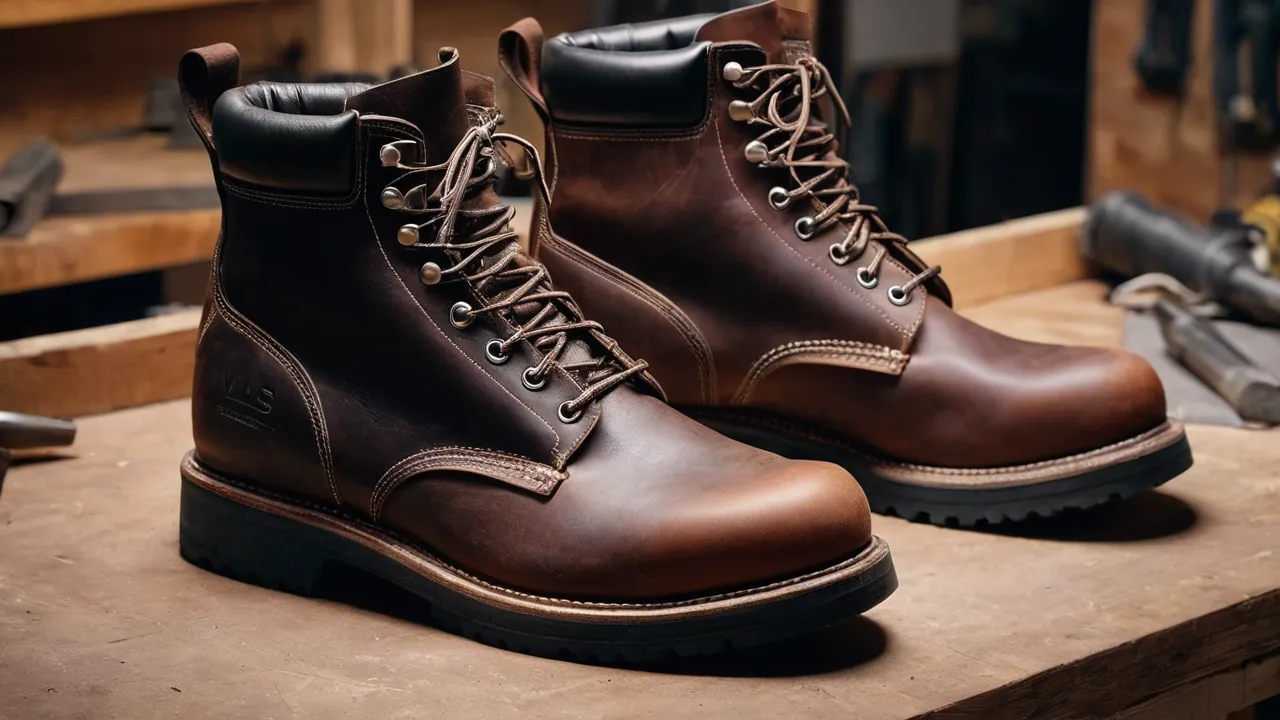
A woman’s size in men’s work boots is usually about one and a half sizes smaller in US sizing, so a women’s 8 often fits like a men’s 6.5. That conversion is a starting point only, because the last, the heel width and the volume of a men’s boot differ from a women’s boot in ways a size number cannot capture, and brands do not all follow the same rule.
The Conversion Rule and Where It Comes From
US sizing uses a different starting point for men’s and women’s sizes, and the common conversion subtracts one and a half from the women’s size to get the men’s size, or adds one and a half the other way. A women’s 9 is about a men’s 7.5. Some brands use a one-size gap, and some publish their own chart, so always check the chart on the product page and not the rule you remember.
The rule only describes length. A boot is more than length: it has a width, a heel and an instep volume, and a women’s last and a men’s last are shaped differently. The conversion tells you where to start looking, not what will fit.
Why Last Shape Breaks the Rule
A last is the form that a boot is built around. Men’s lasts are generally cut wider at the heel and forefoot and carry more volume across the instep. Women’s lasts are typically narrower in the heel relative to the forefoot and a little lower in volume. When a woman with an average or narrow heel wears a men’s boot in the converted size, the length may be correct, but the heel can feel loose and the boot can feel bulky across the top of the foot.
Width labels add confusion. A men’s medium width and a women’s medium width are not the same measurement, since the letter scales differ between men’s and women’s sizing. A women’s wide is closer to a men’s medium in many cases, which is why a woman with a wider foot may find a men’s medium works well. If you are already unsure about width, our wide foot sizing guide explains how widths work.
Measure and Compare
Instead of trusting a conversion, measure.
- Trace your foot on paper while standing, with the socks you will wear at work.
- Measure the heel-to-toe length of the longest toe and the width at the widest part of the foot.
- Compare those numbers with the maker’s size chart for the boot you want, using the men’s chart if you are looking at a men’s boot.
- Add the length allowance your guide recommends, which for work boots is commonly a thumb’s width of space beyond the longest toe, but check the manual or page.
- Check the chart’s width notes, and look at reviews or product details that mention whether the boot runs narrow or wide.
Compare the numbers, not the labels. Brands that publish length in inches or centimeters make this much easier. If they do not, ask the seller.
Verdict by Buyer Type
When a Men’s Boot Is the Better Choice
- You need a style or safety rating that is offered only in the men’s line, such as a particular toe type or a metatarsal guard.
- You need a size the women’s line does not reach, either very large or very wide.
- Your foot is wide, with a full forefoot and high instep, and women’s boots feel tight.
- You wear heavy socks or custom insoles and want extra volume.
- The women’s version is not offered in the model you like, and the men’s version has the construction you need.
If you choose a men’s boot, plan to manage the heel and the volume. A boot that is the right length but loose at the heel will rub and blister, so use the fitting steps below.
When to Choose a Women’s Boot
Pick a women’s boot if your foot is narrow in the heel, your calf and ankle are slim, or you tend to get heel slip in men’s boots. A women’s last often locks the heel better, and the lower instep volume means the laces pull down without gaps. Women’s boots may also have a different flex point that matches how many women’s feet bend. If the product line you want has a women’s version with the same safety rating, start there and use the men’s line as a backup.
Be careful about assuming a women’s boot is lighter duty. Check the actual rating and construction on the product page. A women’s boot may carry the same safety toe and electrical hazard rating as the men’s, but you should confirm and not assume, and confirm that it meets what your workplace requires.
Quick Verdicts
| If you are | Lean toward | Why |
|---|---|---|
| — | — | — |
| Narrow in the heel, average width forefoot | Women’s boot | Heel hold and lower instep volume |
| Wide forefoot and high instep | Men’s boot, medium width | More room across the foot |
| Need a specific safety rating only in the men’s line | Men’s boot | Rating matters more than last shape |
| Between sizes and wearing thick socks | Whichever model passes the heel check | Heel lift is the deciding fault |
| Buying online with no returns | Neither until you confirm the chart | A wrong guess is expensive |
A Worked Example
A woman who wears a women’s 9 finds a work boot she likes only in the men’s line. The conversion points to a men’s 7.5. She measures her foot at 9.75 inches and finds that the maker’s chart lists a men’s 7.5 at about 9.9 inches. The length is workable. Her heel is narrow, though, and the first fitting shows about half an inch of heel lift. Switching to a thicker sock helps a little, heel lock lacing helps more, and a thin insole closes the rest. If it had not, her next step would be the women’s version of the same model, or a half size down in the men’s boot, not another layer of padding.
A second shopper wears a women’s 10 wide and has always found women’s boots tight across the forefoot. The conversion points to a men’s 8.5, and a men’s medium matches her width. The boot fits well, the heel stays put, and she chooses it because the men’s line has the toe protection her job requires. Both shoppers used the conversion, then let the fit decide.
Fine-Tuning a Men’s Boot and Fixing Common Problems
Fine-Tuning for a Smaller Foot
You can often improve the fit of a men’s boot with small changes.
- Use thicker or cushioned socks to take up extra volume, and make sure the boot still closes without pressure.
- Add an insole that fills the space under the arch. Check that it does not push your heel too high.
- Use a heel lock lacing pattern to hold the heel without cranking the laces.
- Try a half size down and check the toe room, particularly if the boot has a roomy toe box.
- Ask whether the boot comes in a narrow width. Some men’s lines do.
If the heel still lifts more than a fraction of an inch with each step, the boot is too big. Moving on is better than adding more layers.
Common Problems and Fixes
Heel slip leads to blisters, so address it first. A boot that is too long wastes room and trips you on ladders. A boot that is too wide in the forefoot lets the foot slide forward on downhill steps and jams the toes. Pressure on the top of the foot is usually an instep problem, not a length problem, and loosening or relacing the eyelets often helps. Lacing, insoles and socks can adjust small issues, but they cannot fix a boot that is fundamentally the wrong shape.
Fitting Routine and Where to Try Boots On
Where to Try Boots On
If you can, try boots on in a shop, in the afternoon, with your work socks and your insoles. Ask for both the men’s and women’s versions of the same model, and walk on a hard floor. If you must order online, pick a seller with a clear return policy and order two nearby sizes. Try them indoors, on a clean surface, and keep the tags and packaging so you can return the pair that does not fit.
See our clothing and footwear section for related fit guides, and read how we review to learn how we treat sizing claims.
A Short Fitting Routine
- Put on your work socks and any insoles.
- Slide the foot forward until the toes touch the front, and check that a finger or two fits behind the heel.
- Lace the boot from the bottom and snug it over the instep.
- Walk, climb stairs and bend on your toes. The heel should stay down.
- Stand for five minutes and notice any pressure.
- Repeat with the other model or size.
Frequently Asked Questions
What size men’s work boot should a woman wear?
Start by subtracting one and a half from your women’s US size, then confirm with the maker’s size chart and a foot measurement. A women’s 8 is often a men’s 6.5. Check heel fit and width, because the length may match while the volume does not.
Are men’s work boots wider than women’s?
Generally yes. Men’s lasts tend to be wider in the heel and forefoot and carry more volume. A women’s wide can be close to a men’s medium, but widths vary by brand. Compare measurements in the size chart and read the width notes.
Can I wear men’s work boots with a women’s safety toe requirement?
Safety toe and hazard ratings depend on the boot’s labeling, not on whether it is men’s or women’s. Check the rating labels on the boot and your employer’s requirements. If the rating you need is offered only in the men’s line, that is a reason to choose it.
How do I stop my heel from slipping in a men’s work boot?
Use a heel lock lacing pattern, add a thicker sock or a low-volume insole, and check that the boot is not too long. If the heel still lifts, the boot is probably too big. Try a half size down or a women’s version of the same model.
Final Thoughts
Use the one-and-a-half conversion only as a starting point. Measure your foot, compare it with the maker’s chart and judge the heel and the instep, which matter as much as length. Choose a men’s boot for rating availability, width or volume, and a women’s boot for heel hold and a narrower fit.
Related buying guides
- Work Boot Buying Mistakes That Cost You Twice
- Work Boot Fitting Checklist: 12 Checks Before You Buy
- Work Boot Insoles: When to Replace and When to Skip
About the author

The BuyOnceChoice Editorial Team researches durable products worth buying once. Our guides compare published specifications, warranty terms, expert review consensus, and verified owner feedback. We do not conduct our own product trials. See How We Review and our Editorial Policy for our standards.