True HEPA vs HEPA-Type Filters: What Matters
True HEPA vs HEPA type explained: the capture standard, what marketing terms mean, and which claims on an air purifier box you can safely ignore.
 By BuyOnceChoice Editorial Team
Updated November 16, 2026
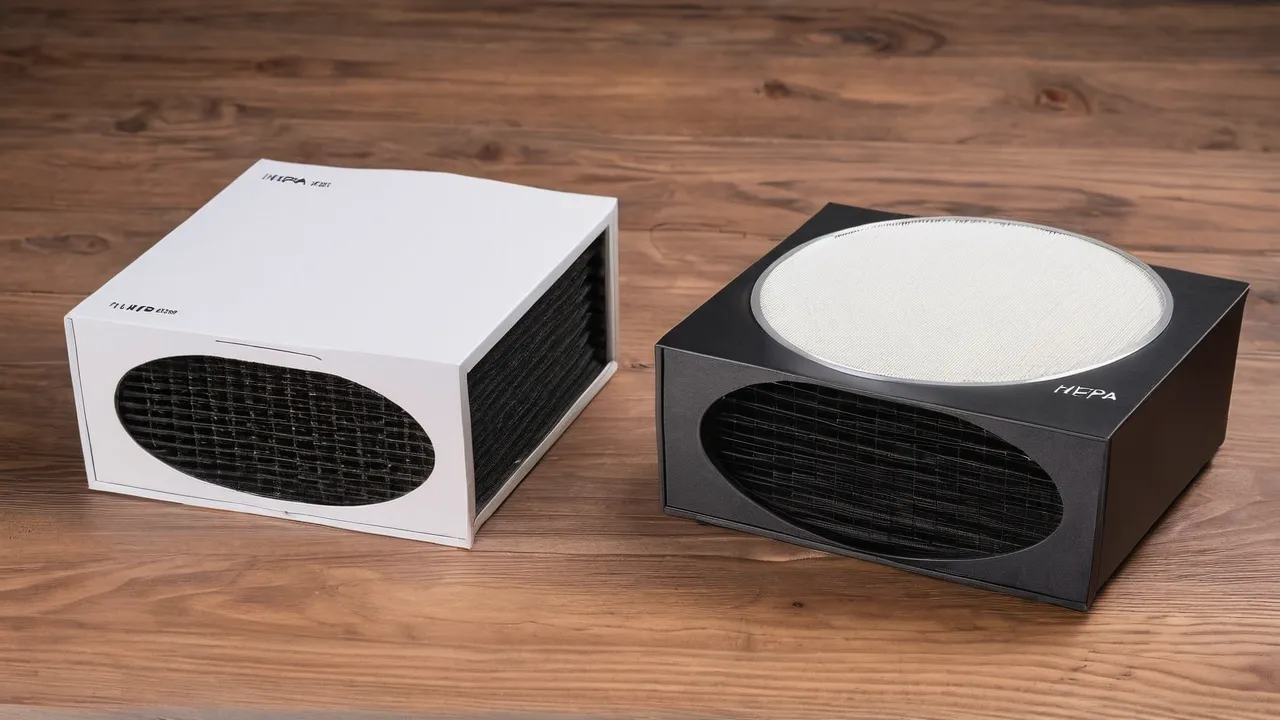
True HEPA vs HEPA type is a difference between a defined standard and a marketing phrase. A true HEPA filter is rated to capture at least 99.97 percent of particles at 0.3 microns, the most penetrating size. Terms like HEPA type, HEPA style, or HEPA-like carry no required performance, so you must look for the number.
What True HEPA Actually Means
HEPA stands for high-efficiency particulate air. In the United States the commonly cited definition comes from Department of Energy standards, and it requires a filter to remove at least 99.97 percent of particles at 0.3 microns in size. That size is chosen because it is the hardest to catch. Larger particles are caught by impact, and smaller ones by diffusion, and the trouble zone sits around 0.3 microns. A filter that captures that size well generally does better on the rest.
True HEPA also describes a filter medium and construction, not just a number. The media is a dense mat of glass microfibers, folded into pleats to increase surface area. A true HEPA filter should be sealed in its frame so air cannot slip around the edges. That is an important detail, because a perfect filter can fail if the air bypasses it.
What HEPA Type and Similar Terms Mean
Phrases such as HEPA type, HEPA style, HEPA-like, 99 percent HEPA, or “True HEPA technology” are marketing language. They suggest a high-efficiency filter without committing to the standard. A HEPA type filter may capture fewer fine particles, may be rated at a larger particle size, or may simply be a dense pleated filter. Some may perform decently, but you cannot count on it.
Be wary of claims that sound precise but skip the key facts. For example, a box may say that it captures a high share of particles at an unspecified size, which does not tell you whether it handles smoke, pollen, or fine dust. Ask the question: what size and what efficiency? If the box lacks a clear answer, the claim is vague.
Sealed Systems and Bypass
HEPA performance depends on the whole air path. If gaskets are missing, if the filter does not fit tight, or if the housing leaks, unfiltered air slips past. Reputable makers describe a sealed system, and the manual shows how to fit the filter correctly. After a filter change, check that the filter sits flat, the gasket is intact, and the door clips shut. A loose door or a cracked seal means you are paying for filtration you are not getting.
Things on the Box You Can Mostly Ignore
- “Medical grade” or “hospital grade” phrases, which have no single definition for consumer purifiers.
- “Up to” capture claims without a particle size.
- Large room coverage numbers that do not state the CADR behind them.
- Ionizer, plasma, or “photocatalytic” claims, which add features that may not improve particle capture and can produce unwanted byproducts.
- Filter life claims that are not tied to your actual air quality.
- Stacked terms such as “H13” or “H14” without clear identification of the standard used, since European grades follow a different grading scheme than the U.S. definition.
What to Look for Instead
CADR
The Clean Air Delivery Rate, published for many models under the AHAM Verifide program, tells you how fast the purifier cleans air of smoke, dust, and pollen, measured in cubic feet per minute. A strong HEPA filter with a weak fan still cleans slowly, so look for CADR relative to your room size. Our air purifier guides cover room matching in more detail.
Filter size and replacement cost
A large pleated filter has more surface area and tends to last longer. Check the replacement filter price and availability before buying, since some makers lock owners into expensive proprietary filters.
Noise on the speed you will really use
A machine that is quiet on low but loud on high may not be run at the speed needed for CADR. Check stated dBA at various speeds.
How HEPA Filters Capture Particles
Understanding the mechanics clears up several myths. A HEPA filter is not a sieve with holes the size of a particle. It is a tangled web of fibers, and particles are removed in three ways. Large particles such as pollen and dust follow the airflow but cannot turn quickly enough, so they crash into fibers. Mid-sized particles are caught when they touch a fiber as they pass. The smallest particles move erratically because of collisions with air molecules, and that random motion carries them into fibers. The size in between, around 0.3 microns, is the least efficiently caught, and that is why the standard uses it.
That means a filter rated at 99.97 percent for 0.3 microns performs better for both smaller and larger particles. It also means that cheap filters that skip the glass fiber mat and use a thin layer of synthetic media can lose efficiency quickly as dust loads up. A real HEPA filter is also thick enough to add airflow resistance, so a decent fan motor is required. Compare units by CADR and not by the filter claim alone.
Replacement Timing
Even a true HEPA filter loses airflow as it clogs. Many makers suggest replacement within a range of months to a couple of years, depending on air quality and run time. Homes with smokers, shedding pets, construction dust, or wildfire smoke will clog faster. Use the unit’s filter indicator as a rough guide, but check the filter by eye too. A visibly gray, matted pleat pack means it is time. Do not wash a true HEPA filter unless the maker says it is washable, because water can damage the glass fiber mat.
Many models pair the HEPA filter with a pre-filter that catches large debris. Vacuuming or rinsing the pre-filter on the maker’s schedule extends the life of the main filter. If you want lower running costs, choose a unit with a washable pre-filter and a standard-size HEPA filter that is widely available.
Should You Pay for True HEPA?
Here is a quick way to read a purifier’s box or product page. First, find the filter name and look for a statement of 99.97 percent at 0.3 microns, or a clear reference to the standard it meets. Second, find the CADR figures for smoke, dust, and pollen, ideally from an independent program such as AHAM Verifide, and match them to your room. A commonly cited AHAM rule of thumb is a smoke CADR of at least two thirds of the room’s floor area in square feet, for ceilings around eight feet, so a 300 square foot room points to a smoke CADR near 200. Third, find the replacement filter model and read how often the maker suggests changing it.
For allergies, smoke, pets, or dust, true HEPA is the right baseline. It gives you a defined capture standard and a better chance of real filtration. A HEPA type filter may be fine for light dust in a small room at a low cost, but you give up certainty.
If you have asthma, severe allergies, or other health concerns, follow your doctor’s guidance, since this guide is general information and not medical advice.
Verdict by Buyer Type
- Allergies, pets, wildfire smoke, or a baby’s room: choose a purifier that states true HEPA and publishes CADR.
- Light dust in a small office: a quality pleated filter may be enough, but verify the claimed particle size.
- Shopping on a tight budget: choose the true HEPA model with a smaller footprint rather than a larger HEPA type model.
- Skip any model that relies on ionizers or ozone claims in place of filtration.
- Planning long-term costs: price the replacement filters before you buy.
See also the How We Review page for how we weigh filter claims, and the home appliances hub for related buying guides.
Frequently Asked Questions
Is HEPA type as good as true HEPA?
Not reliably. HEPA type is a marketing phrase with no required capture standard, so performance can be anywhere from decent to weak. True HEPA names a defined target of 99.97 percent at 0.3 microns. If a listing gives no particle size and no percentage, treat the filter as an unknown and compare CADR instead.
Can I wash a true HEPA filter?
Usually no. Water can damage the glass fiber mat and the seal. Only wash a HEPA filter if the manual says it is washable. Pre-filters are different: many are washable or vacuumable, and cleaning them on the maker’s schedule helps the main filter last longer.
Is an H13 or H14 filter the same as true HEPA?
Not exactly. H13 and H14 come from a European grading scheme, while true HEPA is the U.S. definition. They are closely related in performance, but the rating methods differ. Check whether the listing states the efficiency and particle size, and do not treat the grade letters as a substitute for CADR.
How often should I replace a HEPA filter?
Many makers suggest a range from several months to a couple of years, depending on run time and air quality. Smoke, pets, and construction dust shorten it. Follow the maker’s schedule and indicator, and replace the filter sooner if the pleats look gray and matted or airflow drops.
Final Thoughts: Look for the Number, Not the Word
True HEPA means a defined 99.97 percent at 0.3 microns, sealed in the path. HEPA type does not promise that. Ask for the standard, check CADR for your room size, and ignore decorative marketing terms.
Related buying guides
- Air Purifier Filter Replacement Cost: Buy Once Math
- Air Purifier Placement: Where to Put It for Best Results
- Air Purifier Size Guide: CADR, Room Area, and ACH
About the author

The BuyOnceChoice Editorial Team researches durable products worth buying once. Our guides compare published specifications, warranty terms, expert review consensus, and verified owner feedback. We do not conduct our own product trials. See How We Review and our Editorial Policy for our standards.