Air Purifier Size Guide: CADR, Room Area, and ACH
Pick a purifier with the room math, not the box. Learn how CADR, ceiling height and air changes per hour combine into a size you can trust.
 By BuyOnceChoice Editorial Team
Updated November 16, 2026
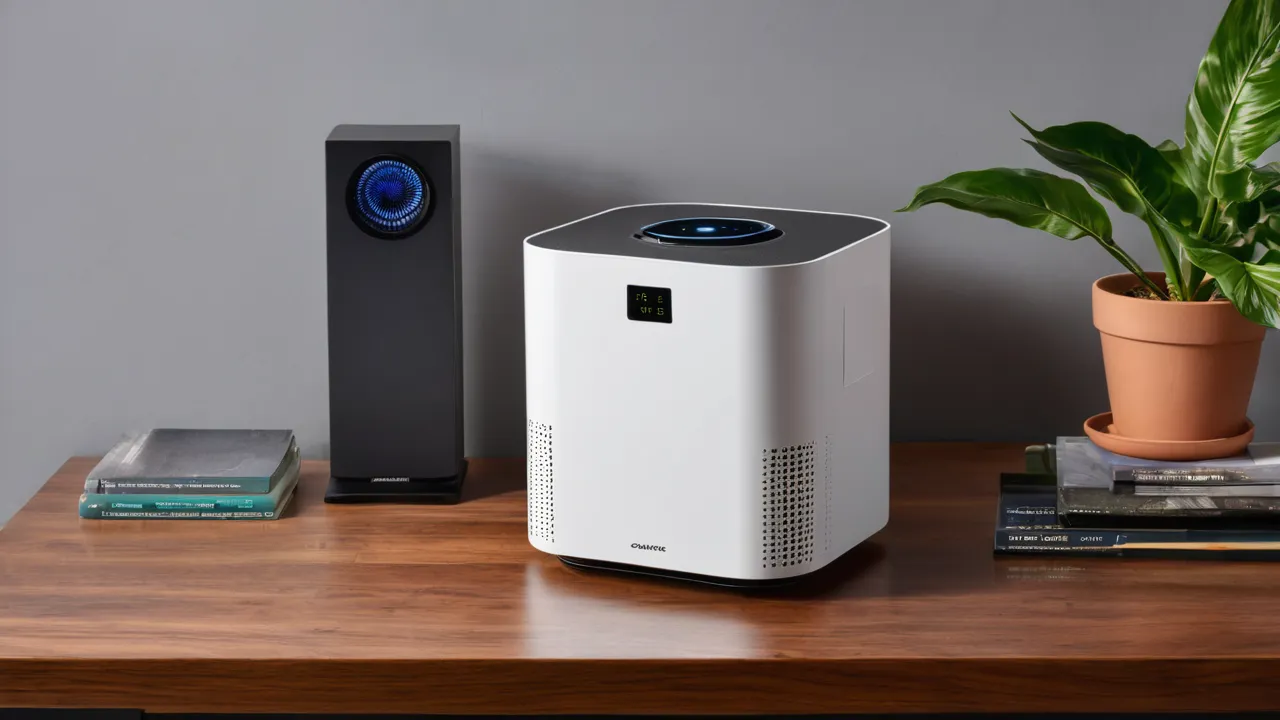
What size air purifier do you need? Measure your room in square feet, then choose a purifier whose CADR, the clean air delivery rate in cubic feet per minute, is at least two thirds of the floor area for standard eight foot ceilings. A 150 square foot bedroom needs a CADR of at least 100, and going higher gives you more margin and lets you run the unit on a quieter setting.
What CADR Means
CADR stands for clean air delivery rate. It describes how much filtered air a purifier delivers, measured in cubic feet per minute, or CFM, for three pollutants: smoke, dust, and pollen. A higher number means the unit cleans the air faster. The ratings come from a standardized procedure developed by the Association of Home Appliance Manufacturers, and many products carry a certification label that shows the three numbers.
CADR is the most useful number for sizing, because it describes real airflow through the filter, not the size of the box. Room coverage claims on packaging are derived from CADR, but they use assumptions that you should know about before you rely on them.
If a product lists only a coverage figure and no CADR, check the specifications or contact the maker. A purifier without a published CADR is harder to compare, and the coverage claim may not be based on the standard method.
The Two-Thirds Rule
The simplest sizing rule is the two-thirds rule from the industry’s guidance. Multiply your room’s floor area in square feet by two thirds, and look for a smoke CADR at or above that number. This rule assumes ceilings of about eight feet.
| Room size | Approximate floor area | Minimum smoke CADR by the rule |
|---|---|---|
| Small bedroom or office | 100 square feet | 67 |
| Average bedroom | 150 square feet | 100 |
| Large bedroom | 250 square feet | 167 |
| Living room | 350 square feet | 233 |
| Large open space | 500 square feet | 333 |
Use the smoke CADR because smoke particles are small, and it is the toughest of the three. If you are sensitive to dust or pollen only, the dust and pollen numbers are also useful. Round up when a model falls between sizes.
Method: Size by Air Changes per Hour
The two-thirds rule is a shortcut. For more control, use air changes per hour, or ACH, which tells you how many times the purifier cycles the room’s air each hour.
1. Measure the room length and width in feet and multiply to get floor area. 2. Multiply by the ceiling height to get volume in cubic feet. 3. Choose a target ACH. Four to five air changes per hour is a common target for allergy and general use. 4. Use this formula: required CADR equals volume times ACH divided by 60.
Worked Example
A bedroom is 12 feet by 15 feet, which is 180 square feet. With eight foot ceilings, the volume is 1,440 cubic feet. At 5 ACH, the required CADR is 1,440 times 5 divided by 60, which equals 120. The two-thirds rule also gives 120, so the methods agree. If the ceiling is 10 feet, volume is 1,800 cubic feet, and the required CADR at 5 ACH is 150. Choose a unit at or above those numbers, and favor the higher end if you have pets or allergies.
Adjust for Your Situation
- High ceilings: use the volume method, since floor-area ratings assume eight foot ceilings.
- Open doors or open floor plans: treat the connected space as one room, or close doors, or use more than one unit.
- Heavy pollutant load: pets, smokers, wildfire smoke, and construction dust call for a higher CADR and a higher ACH.
- Quiet needs: choose a higher CADR than the minimum so the unit can run on a low, quiet setting and still meet your target.
- Large rooms: consider two units in different locations instead of one very large unit.
For wildfire smoke or sensitive health conditions, follow the guidance of local health authorities and consider the highest practical ACH for the room you choose as a clean space.
Why Coverage Claims Can Mislead
Packaging often lists a room size, such as up to a certain number of square feet. Many of these claims are based on a high ACH, sometimes close to five, at the unit’s highest setting, so the room size is a maximum, not a comfortable fit. Some brands use their own methods. Others quote a lower air change rate than the allergy guidance suggests, so the stated room size may be larger than the unit can handle well. Compare CADR to your room using the methods above instead of trusting the coverage number on the box.
Also look at whether the CADR is for the highest speed. A purifier that meets your target only at its loudest setting will be less useful, because you will not want to run it there. Check the noise level at the speed that meets your target.
Other Factors Beyond CADR
- Filter type: choose a true HEPA filter for particles. Carbon helps with odors and some gases, but CADR ratings are for particles.
- Noise: check the stated decibel levels at low and high speeds.
- Filter cost and life: see our guide on filter replacement cost.
- Ozone: avoid purifiers that intentionally produce ozone, since ozone is a lung irritant.
- Humidity: a purifier does not remove moisture. If dampness is your problem, look at dehumidifiers instead.
- Placement: even a correctly sized unit performs poorly if it is blocked or in a corner.
Our air purifier guides compare models, and the home appliances hub covers related products. Our How We Review page explains how we evaluate products using research and specifications rather than claims of our own trials.
Common Sizing Mistakes
- Buying by coverage claim without checking CADR.
- Ignoring ceiling height.
- Sizing for a room, then leaving the door open.
- Choosing the minimum CADR and running it on the loudest setting.
- Using a purifier for a problem it does not solve, such as humidity or gas leaks.
- Assuming a bigger unit is always better regardless of noise.
Choosing a Target Air Change Rate
Your target ACH depends on why you are buying. For general freshness and light dust in a typical bedroom, a modest rate gives a noticeable benefit. For allergies, asthma triggers, or pets, four to five air changes per hour is a common goal. For wildfire smoke or after a construction project, a higher rate in a single sealed room helps more. Remember that a higher ACH means more airflow, so it can mean more noise, so a larger unit at low speed is often more comfortable than a smaller unit at high speed. If you are unsure, aim for the two-thirds rule, then check the noise level at the speed that delivers it.
Using the Dust and Pollen Numbers
Most certified products list three CADR values. Smoke is the smallest particle size, so it is the most demanding and is the number the two-thirds rule uses. Dust particles are larger, and pollen particles are the largest, so a unit with a good smoke rating usually does well on the others. If your goal is mainly pollen or dust control, you can use a slightly smaller smoke CADR, but you lose margin. If the three numbers are very different, that signals a filter or design tradeoff. In that case, rely on the lowest number that matches your pollutant, and avoid models that publish only one favorable figure.
Sizing Examples for Common Rooms
- Nursery or small office, around 100 square feet: a unit with a smoke CADR of about 70 to 100 gives comfortable margin on a low setting.
- Standard bedroom, around 150 square feet: look for a smoke CADR of 100 to 150.
- Primary bedroom, around 250 square feet: look for 170 to 250.
- Family room, around 400 square feet: look for 270 to 350, or two smaller units.
- Open kitchen and living area, around 600 square feet: consider two units or a very high CADR model, and place it centrally.
These examples follow the two-thirds rule with extra margin. Adjust for ceiling height, door habits, pets, and noise preference, and always check the manual for the maker’s recommended area.
Frequently Asked Questions
What CADR do I need for a 300 square foot room?
By the two-thirds rule, you need a smoke CADR of at least 200 for a 300 square foot room with standard eight foot ceilings. Choose a higher number if you have pets, allergies, or a smoke concern, so the unit can run on a quieter setting.
Is a higher CADR always better?
A higher CADR cleans the air faster and lets you run the unit on a lower speed, which is quieter. Beyond a certain point you pay for capacity you do not need, so match the CADR to your room and noise preference.
How do I size an air purifier for high ceilings?
Calculate the room’s volume by multiplying length, width, and ceiling height, then use the formula CADR equals volume times target ACH divided by 60. Four to five air changes per hour is a common target. Higher ceilings need a higher CADR than floor-area ratings suggest.
Can one purifier clean my whole house?
Rarely. A purifier sized for a single room only cleans that room well, especially with doors closed. For several rooms, use a unit in each key room, or choose a very high CADR unit for an open space and place it centrally.
Final Thoughts: Size for Air Changes, Not for the Box
Measure your room, choose a CADR that meets the two-thirds rule or your target ACH, and give yourself headroom for quiet operation. Treat packaging coverage claims as maximums, and keep doors closed so the machine works on one room.
Related buying guides
- Air Purifier vs Dehumidifier: Which One Do You Need
- Air Purifiers for Wildfire Smoke: What to Look For
- CADR vs Room Size Claims: How to Read Air Purifier Specs
About the author

The BuyOnceChoice Editorial Team researches durable products worth buying once. Our guides compare published specifications, warranty terms, expert review consensus, and verified owner feedback. We do not conduct our own product trials. See How We Review and our Editorial Policy for our standards.