CADR vs Room Size Claims: How to Read Air Purifier Specs
Label claims and CADR do not always agree. Use a quick division check to see whether a purifier's stated room size holds up before you buy.
 By BuyOnceChoice Editorial Team
Updated November 16, 2026
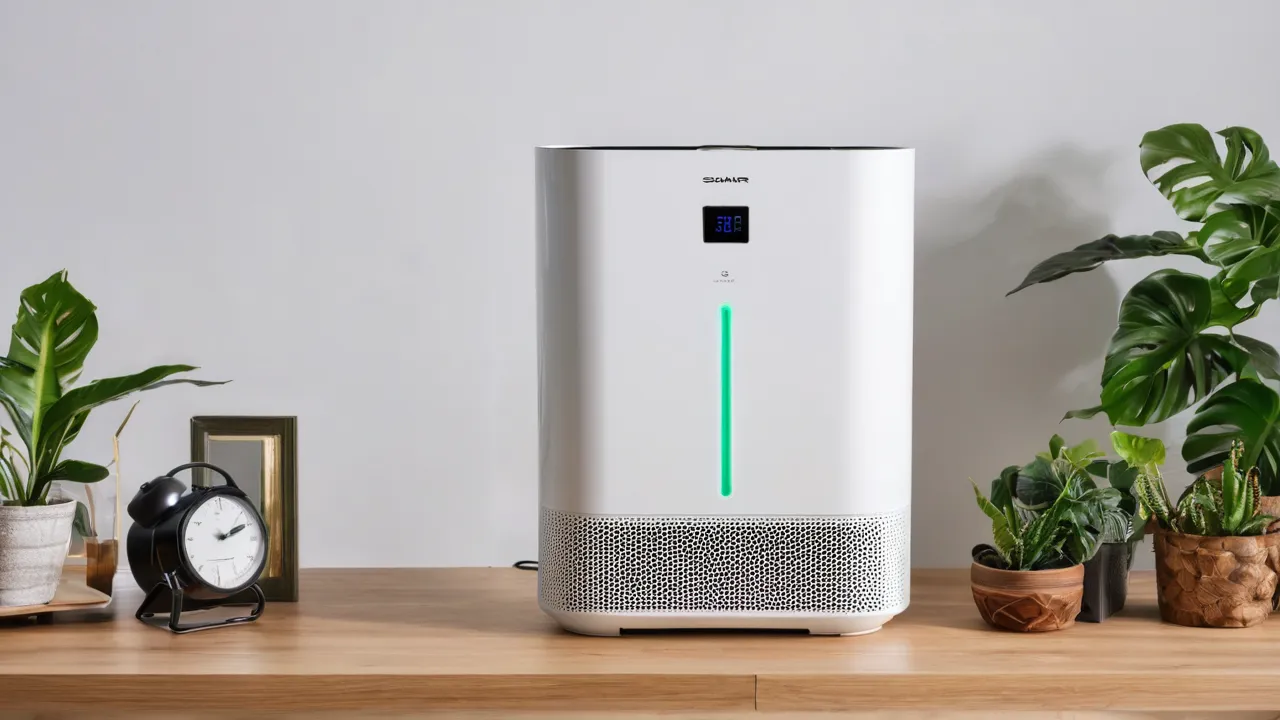
When comparing air purifier CADR vs room size claims, trust the CADR and treat the room size on the box as a rough ceiling. CADR measures how much filtered air the unit delivers per minute, while a room size claim depends on assumptions about how many air changes per hour the maker used. Compare the smoke CADR to your room using a simple rule, and ignore bigger coverage claims unless the assumptions are stated.
What Each Number Tells You
CADR, the clean air delivery rate, is a measured airflow of filtered air, in cubic feet per minute, for smoke, dust, and pollen. It comes from a standardized procedure, and it is the only number that describes how fast a purifier cleans air in a way you can compare across models.
A room size claim, such as covers up to a number of square feet, is a calculated figure. It starts from some CADR or airflow value and divides it by a chosen number of air changes per hour and an assumed ceiling height. Change the assumed air changes, and the claim changes. That is why two purifiers with similar CADR can carry very different room size claims on the box.
This makes the room claim marketing and the CADR engineering. Use the CADR for decisions, and use the claim only after you know its assumptions.
How the Same Purifier Gets Different Room Claims
Imagine a purifier with a CADR that cleans a certain volume of air per minute. If a maker assumes the air should be fully replaced about five times each hour, which is a common allergy-oriented target, the claim is a modest room size. If the maker assumes it should be replaced only once each hour, the same machine is claimed to cover a much larger room, roughly several times the area. Both numbers can be arithmetically correct, but the second leaves your air changing slowly, so the benefit is much smaller.
Some claims also assume eight foot ceilings, some use the highest fan speed, and some quote the largest of the three CADR values. Always check which speed and which pollutant the claim refers to. If the box does not say, the claim is not very useful.
A Simple Way to Check Any Claim
1. Find the smoke CADR, the lowest of the three values for most units, on the product page or label. If only a single number or a coverage figure is given, the product is harder to judge. 2. Multiply your room’s floor area in square feet by two thirds. That gives the smoke CADR you want for eight foot ceilings. 3. Compare. A unit with a smoke CADR at or above your number fits the room. 4. For high ceilings, use volume: CADR required equals length times width times height times target air changes, divided by 60. 5. Compare the speed at which the CADR is stated with the speed you will actually run, and check the noise at that speed.
Worked Example
A bedroom is 200 square feet with eight foot ceilings. Two-thirds of 200 is about 133, so you need a smoke CADR of at least 133. Purifier A lists a smoke CADR of 150, which fits. Purifier B lists a coverage of 500 square feet with no CADR on the box. Checking the specifications, its smoke CADR is 120, which is below your target. The big coverage number on Purifier B was based on a low air change assumption, and it would clean your bedroom more slowly than you want.
Red Flags in Marketing Claims
- Coverage figures with no CADR published.
- Claims of covering large areas with a small, low-power unit.
- Coverage that states air changes as once per hour or less without saying so.
- Quoting only the best of the three CADR numbers.
- CADR stated at maximum speed with no noise figure at that speed.
- Vague claims like medical grade or hospital grade, which are not defined standards.
- Terms like HEPA-type or HEPA-like, which are not the same as true HEPA.
- Ionizers or ozone-generating features presented as extra cleaning power.
Look for independent certification of CADR, such as the AHAM Verifide label, and check the data on the label against the product page. A certified label does not guarantee fit for your room, so still do the math.
Beyond CADR: Other Numbers That Matter
- Noise: look for decibels at low, medium, and high speeds. A unit that meets your CADR only on its loudest setting will not be used.
- Filter type: true HEPA for particles, and carbon for odors. CADR does not measure gas removal.
- Filter cost and life: running cost matters over time. See our guide on replacement cost.
- Energy use: check watts at your running speed.
- Ozone: avoid units that emit ozone on purpose, and look for low-emission certification.
- Size and placement: a unit needs clearance around intakes and outlets.
Our air purifier guides cover features and sizing. For related products, see the home appliances hub. Our How We Review page explains how we evaluate products using research and specifications rather than claims of our own trials.
What If a Product Lists No CADR?
Contact the maker or check the manual, since some brands publish CADR in a technical sheet. If you cannot find it, consider a model that does list it. A missing CADR is not proof of a bad purifier, but it makes comparison guesswork, and you may be paying for a claim you cannot verify.
Common Mistakes
- Buying by room claim instead of CADR.
- Ignoring ceiling height.
- Running a small unit at maximum speed for hours.
- Leaving doors open and expecting full coverage.
- Using smoke CADR for a pollen-only problem without checking the other values.
- Forgetting that filters wear out and reduce airflow.
Why Smoke CADR Is the Number to Use
The three CADR values reflect three particle sizes. Smoke particles are the smallest, pollen the largest, and dust sits in between. Small particles are harder to capture and stay airborne longer, so the smoke value tends to be the lowest of the three for a given unit. If you size by the smoke number, you give yourself a safety margin for the other two. If you size by the pollen number, which is often the highest, you may overestimate how well the purifier will clean fine particles. When a maker lists only one number on the box, it is often the most flattering one. Look for all three on the label or the specification sheet, and use the lowest that matches your concern.
How Room Shape and Layout Change the Picture
A claim assumes a closed, regular room. In practice, air patterns matter. A purifier in a long narrow room may clean the near end quickly and the far end slowly. A room with an open doorway acts like a larger room. Furniture, closets, and alcoves create pockets of stale air. Ceiling fans and HVAC vents mix air, which helps or hurts depending on the airflow. Place the purifier with clearance and an open path, close doors, and consider a second unit in a large or awkward room. Do not assume that a coverage claim guarantees an even result across the space. If you are unsure, round up the CADR.
Using CADR to Compare Two Products
Suppose you are choosing between two purifiers. Write down each smoke CADR, the noise at the speed that reaches your target, the filter type, the filter cost, and the warranty. Divide each CADR by your room’s area to see how much margin it gives. A unit that meets your target at a medium speed will usually be quieter and longer-lived than one that only meets it at maximum. If two units are close on CADR, choose the one with lower noise, a true HEPA filter, and clear filter availability. Let the room claim be a tiebreaker at most.
Frequently Asked Questions
Is CADR or room size more reliable?
CADR is more reliable, because it is a measured airflow. A room size claim is calculated from assumptions about air changes and ceiling height. Use CADR to size your purifier, and use the room claim only when you know how it was derived.
Why do two purifiers with similar CADR have different room claims?
Because makers choose different air change assumptions and ceiling heights when converting CADR to a coverage figure. A lower assumed air change rate produces a larger claimed room. Compare CADR to your room with the two-thirds rule instead, and check the speed behind the number.
What is a good CADR for a 300 square foot room?
A smoke CADR of at least 200 by the two-thirds rule, assuming eight foot ceilings. Go higher for allergies, pets, smoke, or higher ceilings, which lets you run the purifier at a lower, quieter speed. Check that the CADR is the smoke value and measured at the speed you will actually use.
Does a higher room claim mean better filtration?
No. A higher claim often means the maker used a lower air change assumption or a higher fan speed, not that the filter is better. Filtration quality depends on the filter type and seals. CADR and noise tell you more.
Final Thoughts: Do the Math Yourself
Treat room size claims as marketing and CADR as the number to trust. Multiply your floor area by two thirds, compare to the smoke CADR, and check noise at your running speed. Skip products that hide their CADR.
Related buying guides
- How Long Do Air Purifiers Last and When to Replace
- Ozone and Air Purifiers: Which Features to Avoid
- True HEPA vs HEPA-Type Filters: What Matters
About the author

The BuyOnceChoice Editorial Team researches durable products worth buying once. Our guides compare published specifications, warranty terms, expert review consensus, and verified owner feedback. We do not conduct our own product trials. See How We Review and our Editorial Policy for our standards.