Stand Mixer Size Guide: Quarts for Your Baking
Turn your recipes into flour weight and batch size, then match them to bowl quarts and storage height. A method, not a guess, for sizing a stand mixer.
 By BuyOnceChoice Editorial Team
Updated November 16, 2026
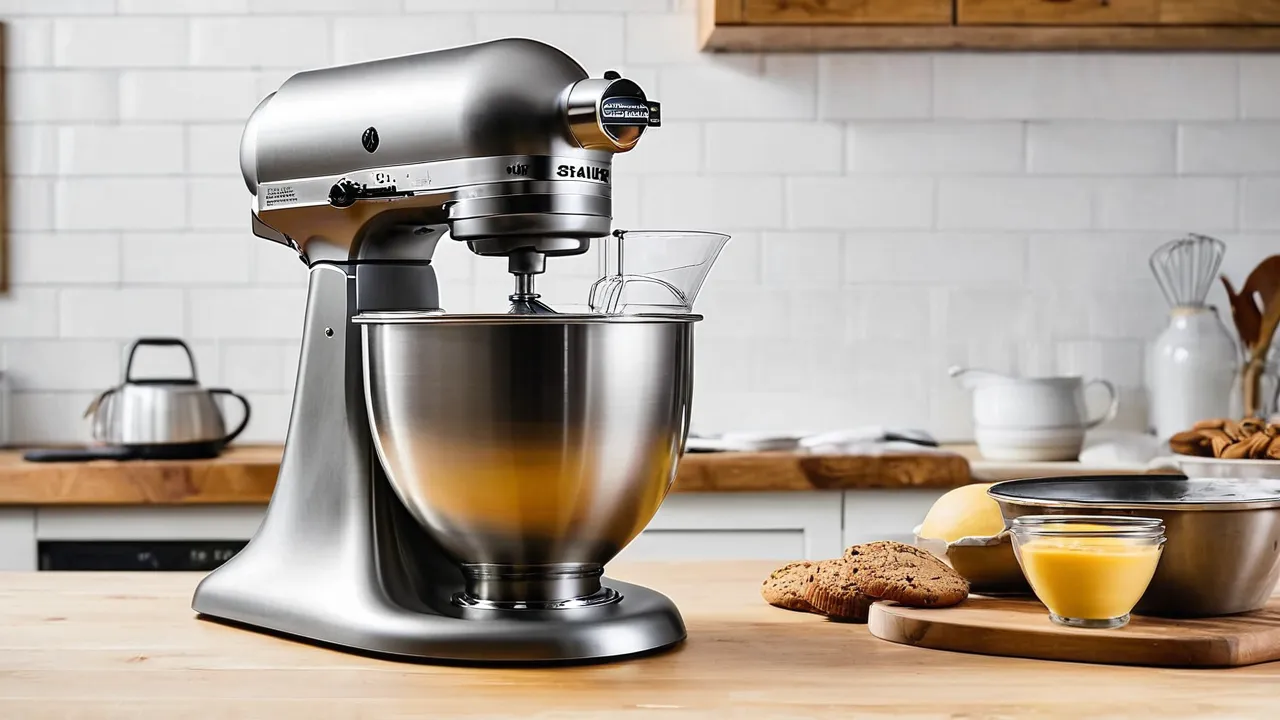
A stand mixer size guide should start from your recipes, not from the quart number. Work out the flour weight of your heaviest regular dough, compare it with the maker’s stated dough capacity, and then check that the mixer fits your cabinet. Quarts describe the bowl, so they tell you less than the maker’s limits do.
What the Quart Number Means
The quart rating is the bowl’s volume when filled to the brim. Nobody fills a mixing bowl that way, and the beater cannot work properly when the bowl is full. What matters is how much of a given food the machine can mix well.
Two mixers with the same bowl size can have different capacities, because the motor, gearing, and head design determine how much load they can carry. A stiff dough takes more power than the same volume of cake batter. For this reason, makers publish separate figures for dough, often as a flour weight or a loaf count. Those figures are far better for sizing than quarts, and you can usually find them in the manual or on the maker’s product page. If a listing gives none, treat it as unknown.
Step by Step Sizing From Your Recipes
Follow this method.
1. **List your regular recipes.** Choose the three you make most, such as a sandwich loaf, a batch of cookies, and a layer cake.
2. **Find the weight of flour in each.** For dough, flour weight is the key figure. Recipes often list it in cups or grams. Convert cups to ounces using a kitchen scale, since a cup of flour varies with how you scoop.
3. **Take the heaviest regular dough and add a margin.** A margin keeps you from straining the motor.
4. **Compare with the stated dough capacity.** Pick a model whose stated limit comfortably exceeds your number.
5. **Check batter volume against the bowl.** Batter and whipped cream expand when mixed. The bowl should hold the finished volume, not just the ingredients.
6. **Check small jobs.** Look for guidance on minimum amounts, since a very large bowl may not whip a small amount well.
Converting Recipes to Flour Weight
Many American recipes list flour in cups, and a cup of flour can vary by a meaningful amount depending on whether it is scooped or spooned. A kitchen scale solves this. Weigh the flour once for your favorite recipes, write the weight on the recipe card, and use that number for sizing. When a recipe already lists grams, you can use it directly, and you can convert to ounces if the maker’s limit is in ounces. Keep the unit consistent, since a mismatch is a common source of sizing mistakes.
Do not forget the other ingredients. A dough also carries water, and the total dough weight is higher than the flour weight. If the maker states a limit as flour weight, compare against flour. If it states total dough weight, add the water and other ingredients before comparing. When the manual is unclear, stay below the limit with room to spare.
Batters, Creams, and Meringues
For batters, whipped cream, and meringue, volume is what matters. Whipped egg whites can grow several times in size, so the bowl needs headroom. A bowl filled to the brim before whipping will overflow. Check the manual’s guidance for maximum fill, and for the minimum amount the whisk can reach.
The small batch problem is real. A large bowl with a wide whisk may leave a thin layer of liquid out of reach, so one or two egg whites do not whip. Some bakers work around this by moving to a smaller bowl or whisking by hand, which is a reason not to size for rare giant batches.
Cookie Dough and Heavy Mixes
Stiff cookie dough and dense mixes like bagel dough load the motor more than batter. Keep batches below the stated limits for these, and mix at the speed the manual advises. A mixer that struggles or smells hot is overloaded, and the cure is a smaller batch, not more patience.
Rough Guidance by Baker Type
These are starting points. Always use the maker’s stated limits.
- **Occasional baker, cakes and cookies for a few people:** a smaller to mid sized bowl is usually enough.
- **Regular baker, cookies by the dozen and one loaf at a time:** a mid sized bowl and a tilt head or bowl lift design with stated dough capacity for a single loaf.
- **Frequent bread baker or large family:** a larger bowl with a high stated dough capacity, probably a bowl lift design.
- **Small batch baker who often makes one egg white or a small cream whip:** avoid a very large bowl, since small amounts may not reach the whisk.
Do Not Overbuy
A larger mixer is not automatically better. A big bowl suits big batches, but it takes more counter and cabinet space, weighs more, and may handle small batches poorly. Buying the largest model for the occasional holiday batch means you live with its size every other day. For the rare big batch, you can mix in two rounds.
The reverse mistake is buying too small. A mixer that runs at its limit every time wears faster and may stall. If your heaviest regular dough is near the maker’s limit, size up.
Questions to Ask Before You Buy
- What does the maker state as the largest dough batch, in flour or dough weight?
- What does the maker state for batters and whipped mixtures?
- How tall is the mixer with the head raised, and how much does it weigh?
- Is a second bowl sold, and does it fit?
- Is the warranty clear on motor and gear coverage?
Storage Height and Weight
A size guide that stops at quarts misses the practical question of where the machine will live. Measure the height of the spot where you will store or use it, with the head tilted up if it is a tilt head, or with the bowl raised if it is a bowl lift. The manual lists dimensions, and the maker may state the clearance needed.
Weight matters too. Stand mixers are heavy, and bigger models more so. If you plan to lift it from a cabinet each time, check whether you can do that comfortably. A machine you do not want to lift gets used less, and one left on the counter takes space permanently.
Households change over time, so think a few years ahead. If you expect to bake more bread, cook for a growing family, or start a small side business selling baked goods at local markets, leaving some capacity margin makes sense. If your baking is likely to shrink, a smaller machine that you will actually use beats a large one in a cabinet. The goal is a mixer you reach for often, because use is what justifies the price and the space.
A Short Worked Example
Suppose your heaviest regular recipe is a pair of loaves, using a total flour weight you calculate from your recipe. You find a model whose manual states a dough capacity above that number, with some room to spare. You measure your cabinet and confirm the head can tilt. You decide the machine is a fit. Another model with a larger bowl but a similar stated dough capacity offers no benefit for dough, so you skip it. That is the process in miniature, and it works because it relies on stated limits and your own measurements.
For options by type, see the stand mixer category and the best stand mixer roundup.
The Same Method With Numbers
A cup of all purpose flour, spooned and leveled, weighs roughly 120 to 125 grams, though scooping packs more in. Suppose your heaviest regular recipe is two sandwich loaves that call for about six cups of flour, which is roughly 750 grams. Add a margin of about twenty percent for safety, giving about 900 grams. Now compare that with the maker’s stated dough capacity for each model, in cups of flour or pounds of dough, and keep only those whose limit comfortably exceeds your number. Next check the bowl: the finished dough weighs more than the flour because it carries water, so confirm the dough fits with room to rise and turn. These figures are an illustration, so use your own recipes and the maker’s stated limits.
Frequently Asked Questions
What size stand mixer do I need for bread dough?
Start from the flour weight in your heaviest regular dough, add a margin, and compare with the maker’s stated dough capacity. A larger bowl helps but does not set the limit, because the motor and gearing do. Bowl-lift designs are often built for heavier doughs.
How many quarts is a good stand mixer for home baking?
For many home bakers a mid sized bowl handles cakes, cookies and a loaf of bread, but quarts alone mislead. Compare the maker’s dough and batter limits with your heaviest recipe. If you bake rarely or in small amounts, a smaller bowl may work better.
Is a bigger stand mixer always better?
No. Larger mixers take more counter and cabinet space, weigh more, and may not whip small amounts well. A mixer that is too small can strain, but one that is too large goes unused. Match the size to your heaviest regular recipe, with a margin for growth.
Can I convert flour cups to weight for sizing a stand mixer?
Yes, but cups vary depending on how you scoop. A cup of all purpose flour is roughly 120 to 125 grams when spooned and leveled, and more when scooped. Use weights from the recipe if given. Convert to weight, add margin and compare with the maker’s stated limit.
Final Thoughts
Size a stand mixer by flour weight, stated dough capacity, and storage height, not by quarts alone. Match the machine to your heaviest regular batch, avoid buying large for rare occasions, and check small batch performance guidance in the manual. If you want to see how we weigh these factors, read how we review.
Related buying guides
- Stand Mixer vs Bread Machine for Dough
- Stand Mixer vs Food Processor for Dough and Chopping
- Stand Mixer vs Hand Mixer: Which Do You Need
About the author

The BuyOnceChoice Editorial Team researches durable products worth buying once. Our guides compare published specifications, warranty terms, expert review consensus, and verified owner feedback. We do not conduct our own product trials. See How We Review and our Editorial Policy for our standards.