Speaker Size by Room Size: A Sizing Guide
Multiply length, width and ceiling height to get room volume, then pair it with seating distance to choose speaker size. Figures are starting points only.
 By BuyOnceChoice Editorial Team
Updated November 16, 2026
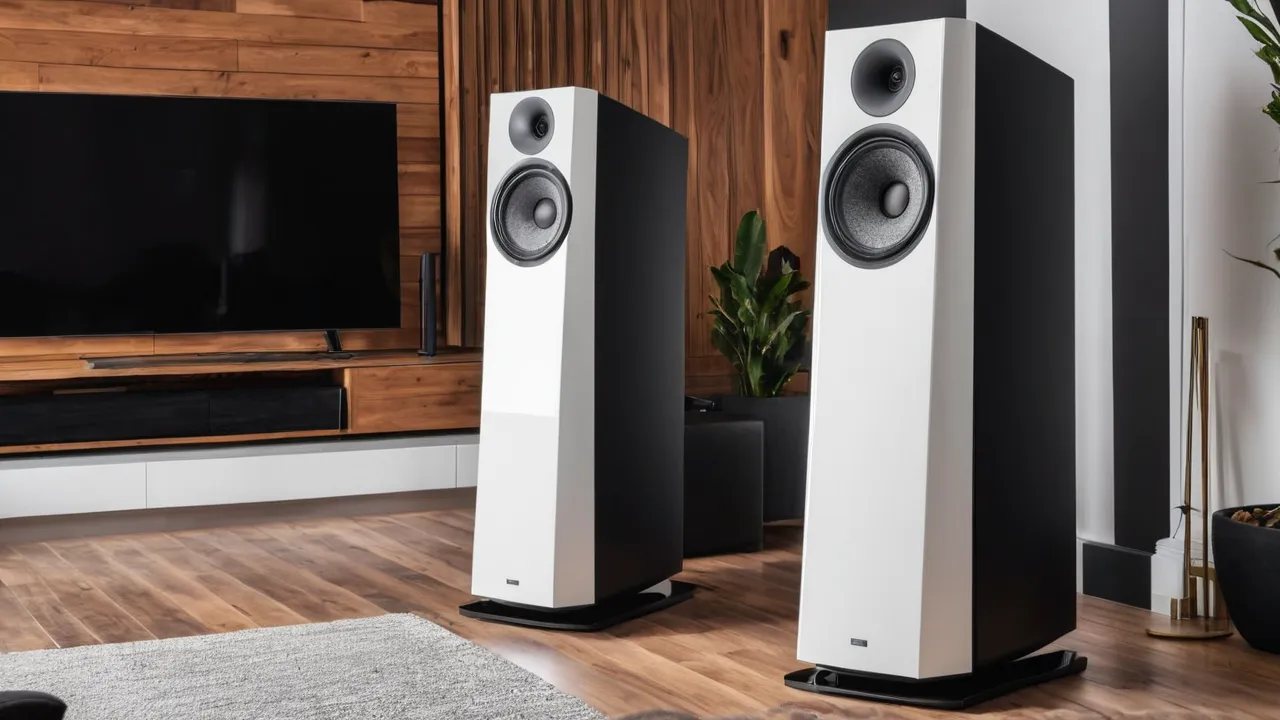
To choose speaker size for your room, multiply length, width and ceiling height to get cubic feet, then match that volume to a speaker class: compact bookshelf for small rooms, larger bookshelf or slim towers for medium rooms, and full size floorstanders for large ones. The figures below are starting points, not standards. Seating distance and your listening level can move the answer.
Step one: measure the room volume
Measure the length, width and ceiling height in feet, then multiply the three. A room 12 feet by 14 feet with an 8 foot ceiling holds 1,344 cubic feet. For an open plan room, measure only the area where the sound must reach, and add some volume for the open sides, since sound escapes into the connected space.
If the room has a sloped ceiling, use the average height. For alcoves or a bump out, add the extra volume. Write down the result, because the later steps use it.
Step two: match volume to a speaker class
No source publishes a formula that works for every speaker, so treat this table as a rule of thumb that you adjust with the later steps.
| Room volume (cubic feet) | Typical room | Speaker class to start with |
|---|---|---|
| Under about 1,000 | Small bedroom, den | Compact bookshelf, or small satellites with a subwoofer |
| About 1,000 to 2,000 | Average living room or bedroom | Standard bookshelf, or slim towers |
| About 2,000 to 3,500 | Large living room | Large bookshelf on stands, or floorstanders |
| Over about 3,500 | Great room, open plan | Floorstanders with a subwoofer, plus strong amplification |
These bands overlap on purpose. A room at the edge of a band can go either way, which is why seating distance and listening level matter next.
Step three: consider seating distance
Seating distance changes how loud the speakers must play and how much sound reaches you directly. Sit close to the speakers, and small models are enough. Sit far from them, and you need more output.
A common starting layout puts the seat roughly as far from each front speaker as the speakers sit from each other, forming a triangle. In a small room that is perhaps six to eight feet. In a large room, it may be ten to twelve feet or more, and the speakers need more output to fill the space at that distance.
Each doubling of the distance drops direct sound by about 6 dB in open space, and rooms soften the drop through reflections. If your seat is far from the speakers and the room is large, step up one class from the table.
A worked example
Suppose the room is 14 feet by 18 feet with a 9 foot ceiling. That is 2,268 cubic feet, which falls in the third band. The seat sits 11 feet from the TV wall, and the speakers sit 8 feet apart. The seat is a little farther than the triangle suggests, so the room calls for either large bookshelf speakers on stands or slim floorstanders with a subwoofer. Choosing a compact bookshelf here would likely run out of output at movie volume, and a very large tower would be more than the room needs.
Where bass fits in
Speaker size and bass are linked, though a subwoofer changes the plan. A small speaker with a subwoofer can fill a medium room, since the subwoofer carries the deep bass. Without a subwoofer, larger speakers reach lower and carry more of the low end. If you plan a subwoofer, you can choose smaller speakers and put more of the budget into them and the subwoofer. Our guide to watts per channel helps you pair them with an amplifier.
Step four: adjust for ceiling height and room shape
Height changes volume without changing floor area, so a tall ceiling raises the class. A 9 foot ceiling in a room that looks small can push it into a larger band, and a vaulted ceiling adds air that speakers must fill. A very high ceiling can be less demanding than the volume suggests, since sound near the seat is what you hear, so treat the volume as a guide.
Room shape matters too.
- Long, narrow rooms behave differently from squarish rooms, which tend to have stronger bass peaks.
- Rooms with hard surfaces, such as tile or large windows, reflect more sound, so speakers can sound louder and harsher.
- Rooms with carpet, curtains and furniture absorb sound, so speakers may need more output.
- Open plan rooms lose sound into the next space, so step up a class.
Why oversized speakers hurt
Bigger is not always better. Large floorstanders in a small room can overload it with bass and sound boomy. They dominate the space and can block sight lines. They also need space from walls, according to most manuals, and in a small room that space is not there.
Oversized speakers also cost more, and a receiver may not have power to drive them well. If the room is small and you listen at moderate levels, a good compact speaker with a subwoofer usually sounds cleaner than a towering pair. Choose the size that fits the room volume, and invest in placement.
Matching to your receiver and layout
Speaker size also ties to the amplifier. Large, inefficient speakers need a receiver with strong power, while efficient speakers work with a modest one. Check the speaker’s recommended amplifier power and impedance in its manual. Our AV receiver picks help you pair them.
For a surround layout, the front three channels should match in tone. Pick a center from the same line as the fronts when you can, and use smaller speakers for the surrounds. See our home theater speakers category for matched sets. If you plan Atmos, include the height speakers in your volume thinking, since they add channels but not much in size.
Final check and decision rules
- Under about 1,000 cubic feet: compact bookshelf, with a subwoofer if you want bass.
- About 1,000 to 2,000: standard bookshelf or slim towers.
- About 2,000 to 3,500: larger bookshelf on stands, or floorstanders.
- Over about 3,500: floorstanders and a subwoofer, with a strong receiver.
- Seat far from the speakers, hard surfaces, or open plan: move up one class.
- Seat close to the speakers, soft furnishings, or low listening level: move down one class.
- Always confirm the receiver’s power and the speaker’s impedance.
For the way we weigh these choices, see our How We Review page. Remember that the table is a starting point, so use the return window to confirm that the speakers suit the room.
Quick sanity checks before buying
Check that the speaker fits the space physically, including height with stands. Check that the cabinet depth leaves room behind it for the port, if it has one. Check that the speaker color and finish suit the room. If you can, listen to a speaker in a shop or ask about the return policy, because room fit is hard to judge from a specification.
What to do if the room is between two sizes
If your volume lands near a band edge, choose the smaller speaker and add a subwoofer. This is cheaper than the larger speaker and gives you more control over bass. If the room is clearly large and you listen loud, choose the larger class.
A second worked example
Take a bedroom that measures 11 feet by 12 feet with an 8 foot ceiling, which is 1,056 cubic feet. The bed sits 7 feet from the TV wall. This lands at the lower edge of the middle band, and the seat is close to the speakers, so a compact bookshelf pair is enough. Spending extra on floorstanders would add bass that the room already boosts through its walls, and the speakers would crowd the furniture. A small subwoofer, if wanted, gives better control than larger speakers would. Run the same arithmetic on your own room before you compare models, and write the number on the shopping list, since it is easy to forget once you start reading product pages.
Common sizing regrets
Owners who sized up too far report boomy bass, speakers that dominate the room and receivers that run hot. Owners who sized down too far report running out of output at movie volume or in a larger seating distance. Both groups usually skipped the seating distance step. Measure the distance from the seat to the front speakers before you decide, and let that number move you one class either way when it differs from the triangle guide in step three.
Frequently Asked Questions
What size speakers do I need for a 12 by 14 foot room?
With an 8 foot ceiling, that room holds 1,344 cubic feet, so a standard bookshelf speaker or a slim tower suits it. Add a subwoofer if you want deeper bass. Seating distance and hard surfaces can shift the choice up or down one class.
Are floorstanding speakers better than bookshelf speakers?
Not automatically. Floorstanders usually reach lower and play louder, which helps in large rooms. In small rooms they can overload the bass. A good bookshelf speaker with a subwoofer often sounds cleaner and gives more placement choices. Choose by room volume and seating distance.
Can speakers be too big for a room?
Yes. Oversized speakers can make bass boomy, dominate the space and need clearance from walls. They also demand more from the receiver. If the room is small and you listen at moderate levels, smaller speakers with a subwoofer usually sound better.
Does ceiling height matter for speaker size?
It does, because height adds volume. A tall ceiling increases the cubic feet that sound must fill, which can raise the speaker class. A very high ceiling matters less than the number suggests, since you hear the sound near the seat. Treat the volume as a guide.
Final Thoughts
Measure the room in cubic feet, match it to a speaker class, then adjust for seating distance, ceiling height and room surfaces. Treat every figure as a starting point, avoid oversized speakers in small rooms, and confirm the receiver’s power. A well placed mid size speaker beats a large one that the room cannot hold.
Related buying guides
- Spikes, Isolation Pads and Decoupling: Do They Help?
- Speaker Stand Height and Weight Guide
- Speaker Warranty and Parts Support: Buy Once Checklist
About the author

The BuyOnceChoice Editorial Team researches durable products worth buying once. Our guides compare published specifications, warranty terms, expert review consensus, and verified owner feedback. We do not conduct our own product trials. See How We Review and our Editorial Policy for our standards.