Solar Panel Shading: How Much Output You Lose
How a small shadow drags down a whole panel, what bypass diodes and optimizers do, and how to map shade before you choose a layout.
 By BuyOnceChoice Editorial Team
Updated November 16, 2026
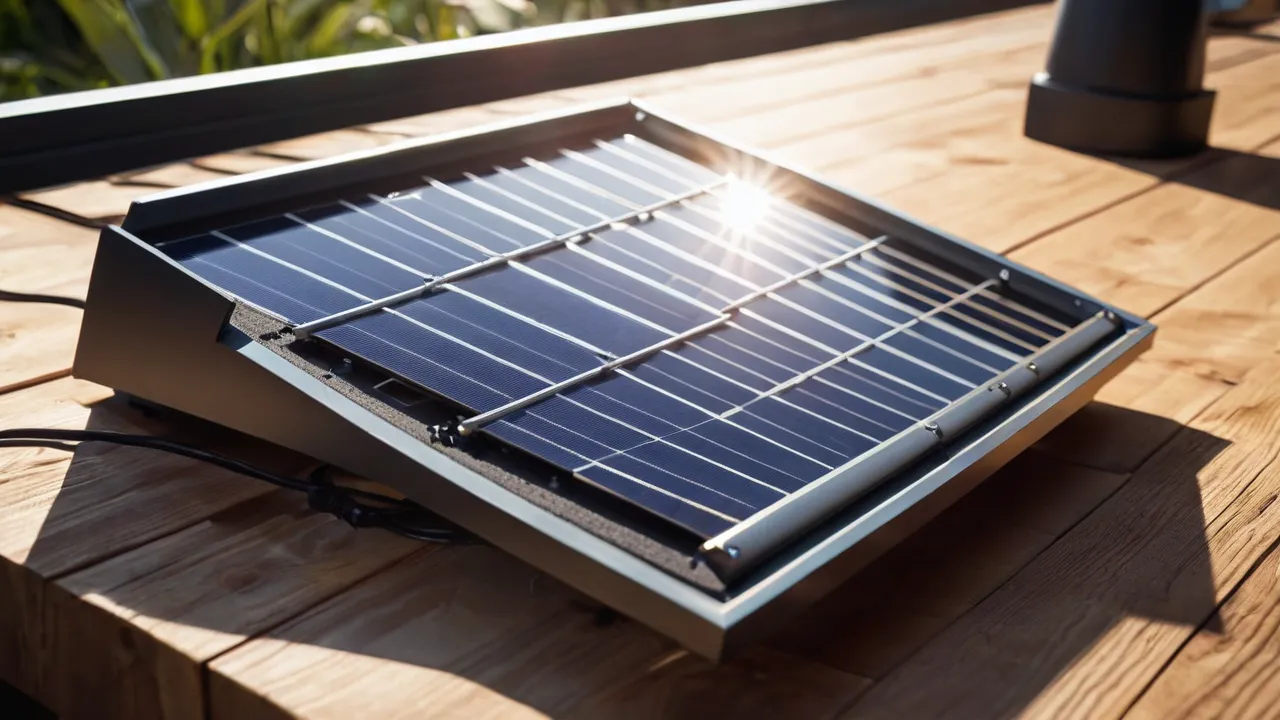
Shading cuts solar panel output far more than the shaded area suggests, because cells in a panel are wired in series, so a small shadow on one cell can pull down a whole group of cells, and in a string of panels one shaded panel can limit the rest. Bypass diodes inside panels reduce the loss, and optimizers or microinverters isolate it further, but the best fix is to site and wire the panels so that shade falls on as little of the array as possible.
This guide explains why a small shadow hurts, what bypass diodes do, how string layout spreads or contains the loss, and how to map your own shade before you buy. Figures are illustrations, so ask installers for a site-specific estimate. Browse our solar panels category and solar generator guides for equipment, and read how we review for how we treat specifications.
Why a Small Shadow Hurts a Whole Panel
A typical panel has dozens of solar cells connected in series, and current has to flow through every cell in the series chain. A shaded cell cannot generate as much current as its sunlit neighbors, so it limits the current of the entire chain, like a kink in a hose. That is why covering a single cell of a panel can cut output far beyond one cell’s share.
The effect depends on the pattern. A shadow that falls across one row of cells in the wrong direction can hurt more than a larger shadow that covers whole cells from end to end. Soft shade from haze or thin leaves reduces output smoothly, while hard shade from a chimney or pole creates sharp losses.
What Bypass Diodes Actually Do
Most panels include bypass diodes, usually three, each wired across a group of cells. When a group is shaded, its diode lets current flow around the group instead of through it. The panel gives up the shaded group’s voltage and keeps running at a reduced level. Without a diode, a shaded group could heat and be damaged, forming a hot spot.
Diodes limit damage but do not restore the lost power. With three diodes, shading one group may drop output by roughly a third, and shading all three can drop it to almost nothing. Panel cell layout matters: some panels have groups arranged vertically, and others horizontally, which changes how a shadow from a rail, a bird, or a roof edge affects them. Datasheets and manuals may describe this, so check for shade-tolerant designs if shade is a problem.
String Layout: Where Shade Spreads Between Panels
Panels connected in series form a string, and the string behaves like a long chain of cells. Shade on one panel lowers the current of the whole string, so every panel in the string loses output, not only the shaded one. In parallel wiring, shade on one panel reduces only that panel’s contribution, but low-voltage arrays need heavy wire.
Designers group panels by orientation and shade. Panels on the east roof and the west roof should be on separate strings, or on separate inverter inputs, since their output peaks at different times. Panels that get shade at the same time of day belong in the same string, so that only that string suffers.
A Worked Example
Suppose a string of eight panels, each producing 300 watts in full sun, so 2,400 watts total. A chimney shades two panels on one end for two hours in the afternoon. With simple series wiring and no module-level electronics, those two hours may lose a large share of the string’s output, perhaps by half or more depending on diode action. The same shade with microinverters or optimizers loses only the output of the two shaded panels, about 600 watts less in that moment. Over a year, the difference depends on how many hours of shade occur, which is why a shade analysis is worth the effort.
Optimizers, Microinverters, and Tracking Shade Over the Year
Module-level power electronics, either optimizers or microinverters, let each panel operate at its own best point, so shade on one panel does not pull down the others. They add cost, complexity, and parts that can fail, though they also provide panel-level monitoring. For fully sunny arrays, they bring little benefit. For arrays with partial shade, mixed orientations, or complex roofs, they often pay off.
Shade moves through the day and through the year. A tree shadow that misses the array in July may cover it in December when the sun is low. Check shade at several times, and consider the future growth of trees.
Mapping Your Own Shade Before You Buy
- Photograph the roof or yard from the panel locations at several times of day.
- Use a sun path app or a solar pathfinder tool to see shade through the year.
- Note trees, chimneys, vents, neighboring buildings, and utility lines, plus their heights.
- Check winter, when the sun is lowest and shade is longest.
- Ask installers for a shade analysis report, with a percentage of annual loss for each array.
Compare reports on equal assumptions, and ask what layout they chose and why. A good report states the shade percentage by month, not only a yearly average, because winter shade can be heavy even when the annual number looks small.
Portable Panels and Camp Shade
Portable panels face the same physics, and the shade is often unpredictable. A single cell covered by a strap, a branch, or your own shadow can cut output sharply. Place portable panels in full sun, away from trees and vehicles, aim them at the sun, and move them every few hours. Check the unit’s manual for how its solar input behaves when voltage drops. For several panels, consider parallel connections so that a shaded panel does not pull down the others, within the unit’s current limit.
Kinds of Shade and How Bad Each Is
- Hard shade from poles, chimneys, and vents: sharp, narrow, and predictable, so layout can avoid it.
- Soft shade from thin leaves, haze, or distant trees: reduces output broadly, but less sharply.
- Soiling shade from bird droppings, leaves, and snow: local but severe on the covered cells, and fixable by cleaning.
- Row shading, where front rows shade back rows on a ground or flat-roof array: a design issue solved with spacing and tilt.
Treat each differently. Hard shade can be designed around, soiling is solved by maintenance, and row shading is solved in the layout stage by the installer. Only soft, persistent shade from large trees may need a bigger change, such as trimming, relocating panels, or accepting lower production.
Hot Spots and Why They Matter for Safety
When a cell is shaded or damaged and current is forced through it, it can heat up, forming a hot spot that can damage the panel’s materials over time. Bypass diodes limit this, but a failed diode or severe, repeated shading can still cause trouble. Signs include browned or burned cell areas, discolored back sheets, and a sudden drop in one panel’s output. If you see them, have a professional inspect the panel, and do not touch overheated panels or wiring. Keep debris from sitting on panels, and fix recurring shade rather than ignoring it.
Thinking About Cost and Benefit
Module-level electronics cost more than a plain string inverter setup, and trimming a tree costs little. Compare the options by expected annual energy recovered per added cost. An installer with a shade report can estimate the loss under each layout. If shade costs only a few percent of annual output, extra hardware may not pay back. If it costs ten or twenty percent, it likely does. Ask for the numbers, not assurances, and compare at least two quotes.
Who Needs Shade Hardware and Who Can Skip It
- Fully sunny, single-orientation roofs: standard string wiring is usually fine.
- Partial shade for part of the day: optimizers, microinverters, or separate strings.
- Multiple roof orientations: separate strings or module-level electronics.
- Heavy shade all year: reconsider the location, or trim trees, before adding hardware.
Panels, wiring, and roof work should be done by licensed professionals. Follow the manual, and never work on a roof or wiring without proper training and safety gear.
Frequently Asked Questions
How much does shade reduce solar panel output?
It depends on the pattern. A small shadow on one cell can cut a panel’s output sharply, and in a string it can limit other panels too. Annual loss depends on how many hours of shade occur and how the system is wired. Ask for a site-specific shade analysis before buying.
Do bypass diodes fix shading problems?
They reduce damage by routing current around a shaded group of cells, so the panel keeps producing, but output still drops. Bypass diodes do not restore lost power. For heavy or varied shade, module-level electronics isolate the loss to the shaded panel.
Are microinverters better than string inverters in shade?
Often yes, because each panel works independently, so shade on one panel does not drag down the others. They add cost, so they make the most sense for partly shaded or complex roofs. In full sun, a string inverter may be enough.
Final Thoughts
Shade costs more output than its area suggests, because cells and panels are wired in chains. Map your shade through the year, group panels by sun exposure, and consider optimizers or microinverters for partial shade. Avoid the problem first when you can, and use licensed professionals for installation.
Related buying guides
- 12V vs 24V vs 48V Solar Systems: Which Voltage
- How Long Do Solar Panels Last: Warranty Guide
- How Many Solar Panels Do You Need for a Home
About the author

The BuyOnceChoice Editorial Team researches durable products worth buying once. Our guides compare published specifications, warranty terms, expert review consensus, and verified owner feedback. We do not conduct our own product trials. See How We Review and our Editorial Policy for our standards.