Smart Luggage Battery Rules: Removable Power Banks
A suitcase with a built-in battery may be refused on a flight. Understand removable versus fixed batteries, cabin carriage and what to verify before you fly.
 By BuyOnceChoice Editorial Team
Updated November 16, 2026
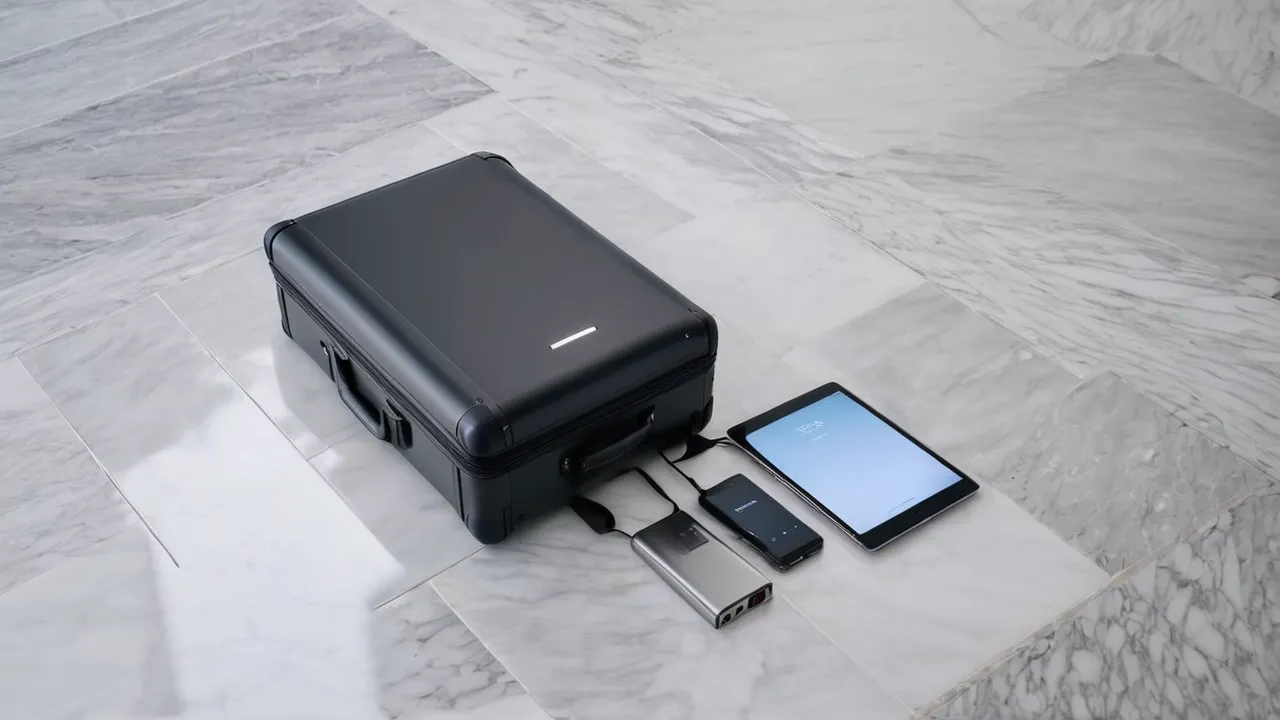
Smart luggage battery rules come down to one idea: lithium batteries are a fire risk in the cargo hold, so they must be carried in the cabin. If a smart bag’s battery can be removed, remove it and bring it with you. If it cannot be removed, many airlines refuse the bag in checked baggage, so confirm the airline’s policy before you travel.
Safety Note on Lithium Batteries
Lithium batteries must be handled with care. Spare lithium batteries, including one removed from a smart bag, must travel in the cabin under FAA guidance and airline rules, so confirm current requirements with your airline and the Federal Aviation Administration before you fly. Follow the manufacturer’s manual, do not use a damaged or swollen battery and keep spare cells protected from short circuits. If a battery overheats on board, tell the crew immediately. This article gives general guidance only, so rely on the official pages for the final word.
Why Airlines Care
Lithium-ion batteries can overheat and ignite if damaged or shorted, and a fire in a cargo hold is harder to detect and fight than one in the cabin, where crew can respond quickly. That is the reasoning behind the rule: spare lithium batteries belong in carry-on baggage, and batteries in checked bags need to be removable so they can be carried in the cabin.
Smart luggage includes features such as a charging port, a built-in scale, a tracker or a motorized system, all of which need a battery. Because the battery is part of the bag, it is a regulated item as soon as the bag is checked.
Removable vs Fixed Batteries
The difference between removable and fixed batteries determines whether a smart bag can fly in the hold.
| Type | Checked bag | Carry-on |
|---|---|---|
| Removable battery | Remove it, carry it in the cabin | Usually allowed with battery in the bag or removed, depending on the airline |
| Fixed battery | Often not allowed, per many airline policies | Often allowed only if it meets size limits, depending on the airline |
Policies vary by airline, so treat the table as a guide for what to ask, not as a final answer. Several major carriers announced bans on smart bags with non-removable batteries in checked baggage, and some bags have been redesigned with a quick-release battery for this reason.
What to Check Before Buying
If you plan to fly with a smart bag, check these items on the product page:
- Whether the battery is removable and how it is released.
- The battery capacity, usually given in watt-hours. Airlines commonly set limits on spare batteries, and a common threshold is 100 watt-hours without airline approval. Confirm the figure that applies to you.
- Whether the maker states compliance with airline rules, and how it describes them.
- How the bag behaves when the battery is removed, since some features stop working.
- Whether replacement batteries are available.
Capacity is printed on the battery label or in the manual. If the figure is not listed, contact the maker. Our luggage section includes general guidance for choosing bags that suit your trips, and our best travel luggage set roundup covers ordinary options without electronics.
Reading the Watt-Hour Rating
Battery capacity is the number airlines care about. If the label gives watt-hours, use that figure. If it gives only volts and milliamp-hours, convert: multiply the voltage by the amp-hours, where amp-hours equal milliamp-hours divided by 1,000. A 3.7 volt battery rated 10,000 milliamp-hours works out to 3.7 times 10, or 37 watt-hours. A 3.7 volt battery rated 30,000 milliamp-hours works out to 111 watt-hours.
FAA guidance for spare batteries generally treats batteries up to 100 watt-hours as allowed in the cabin without airline approval, treats batteries above that up to 160 watt-hours as needing airline approval and limits how many you can carry, and does not allow larger ones. Airline rules can be stricter, so read the current FAA page and your carrier’s policy rather than relying on this summary.
Write the rating on a card with the model name and keep it with the battery. If a smart bag’s battery is installed and cannot be removed, ask the maker for the capacity in watt-hours and for a statement about airline acceptance, and check whether your carrier accepts the bag at all. When any detail is missing, treat the bag as unconfirmed.
What to Do at the Airport
Before you head to the airport, locate the battery release and practice removing it. At check-in, if the bag is checked, remove the battery and carry it in your cabin bag. If the airline staff ask, show that the battery is out. Keep the battery in a protective pouch, or in its original packaging, to prevent short circuits, and tape over exposed terminals if the manual recommends it. For carry-on use, be prepared to show the battery or remove it if asked.
If your bag has a fixed battery and your airline refuses checked carriage, you have limited choices: carry it on, if size permits and the airline allows it, or leave the bag behind. Arrive with extra time, because discovering the problem at the counter is stressful.
Alternatives to Smart Features
Many smart features are available in other ways. A separate power bank in your cabin bag charges your devices without a battery in the suitcase. A standalone tracker can follow your bag, and our related guide on luggage trackers covers button-cell rules. A manual luggage scale weighs a bag without electronics. Keeping the bag simple removes the regulatory issue and reduces the number of parts that can fail.
Questions to ask your airline
Because policies differ and change, a short list of questions saves trouble. Ask whether bags with removable batteries may be checked with the battery out, whether bags with fixed batteries are accepted in the cabin, and whether any capacity limit applies to the bag’s battery. Ask whether a power bank over a certain capacity needs approval, and whether you need to show proof of capacity. Save the answer with the date and the name of the agent, or use the airline’s written policy page.
Related batteries in your bags
Smart luggage is not the only source of lithium cells. Power banks, camera batteries, e-cigarettes and tracker cells all fall under similar rules, and the common requirement is carry-on only for spare cells. Pack them in the cabin bag, protect the terminals and keep them out of overhead bins when possible so you can reach them if one overheats. Button-cell trackers are small, yet still contain lithium, so check the tracker’s own instructions.
Who Should Choose Smart Luggage
Choose smart luggage with a removable battery if you travel with a bag you can carry on or are willing to remove the battery for checking. Skip bags with fixed batteries if you check bags often. Skip smart features entirely if you value simplicity or travel with airlines that have strict policies. Read our how we review page to see why we favor durability and clear information.
Plan for the return leg as well. Batteries you removed on the outbound flight must be reinstalled, charged and removed again at the end of the trip, and a bag that arrives with its battery still in place at a connection can cause delays. Keep the battery in your personal item, charged only to a level the manual recommends, and label it so you do not leave it at a hotel or a security tray. A small checklist in your phone, covering remove, carry, reinstall and recharge, keeps the routine from slipping when you are tired.
Finally, remember that rules differ outside the United States. Many countries follow similar international guidance for lithium batteries, but enforcement and wording vary, and some security staff are unfamiliar with smart luggage. Carry the manual or a printout of the battery specifications, including capacity, so that you can answer questions quickly. A calm, documented answer prevents most disputes at the counter, and it keeps your bag with you instead of in a lost-and-found box.
Plan one more step for the trip home. Souvenirs, damp clothes and a wet towel all change what is in the bag, so re-weigh and re-check the cabin items before the return flight. If a battery was removed for the outbound leg, put it back in your personal item rather than a pocket, and confirm that the bag still passes the same airline checks on the way back, since rules can differ between carriers on a round trip.
Frequently Asked Questions
Can I check a smart suitcase with a battery?
Only if the battery is removable, and then you remove it and carry it in the cabin. Many airlines refuse smart bags with non-removable batteries in checked baggage. Confirm your airline’s current policy and the FAA guidance before you travel.
What size battery is allowed in carry-on luggage?
FAA guidance generally allows spare lithium batteries up to 100 watt-hours in carry-on bags without airline approval, with larger ones needing approval and the biggest not allowed. Rules vary by airline and change over time, so check the current FAA page and your carrier.
Should I put a power bank in checked luggage?
No. Spare lithium batteries and power banks belong in carry-on baggage, with the terminals protected from short circuits. Keep them in a pouch or original packaging, and follow the manufacturer’s manual and your airline’s rules. Carry it with you through security.
Final Thoughts
Smart luggage works only if its battery fits airline rules. Choose removable batteries, know the capacity, practice removal at home and carry spare cells in the cabin. When rules look unclear, ask the airline in writing and consult the FAA guidance before you fly. If you want to avoid all of this, a simple bag with a separate power bank is often the easiest path.
Related buying guides
- Spinner vs Two-Wheel Luggage: Pick by Your Route
- How to Store Luggage and Prevent Mold
- TSA Approved Luggage Locks: What They Do and Do Not Do
About the author

The BuyOnceChoice Editorial Team researches durable products worth buying once. Our guides compare published specifications, warranty terms, expert review consensus, and verified owner feedback. We do not conduct our own product trials. See How We Review and our Editorial Policy for our standards.