Single vs Two vs Three Stage Snow Blower: Which Stage
Learn how stages work, why a rubber auger paddle suits pavement and an impeller suits gravel, and how three stage models add a faster discharge path.
 By BuyOnceChoice Editorial Team
Updated November 16, 2026
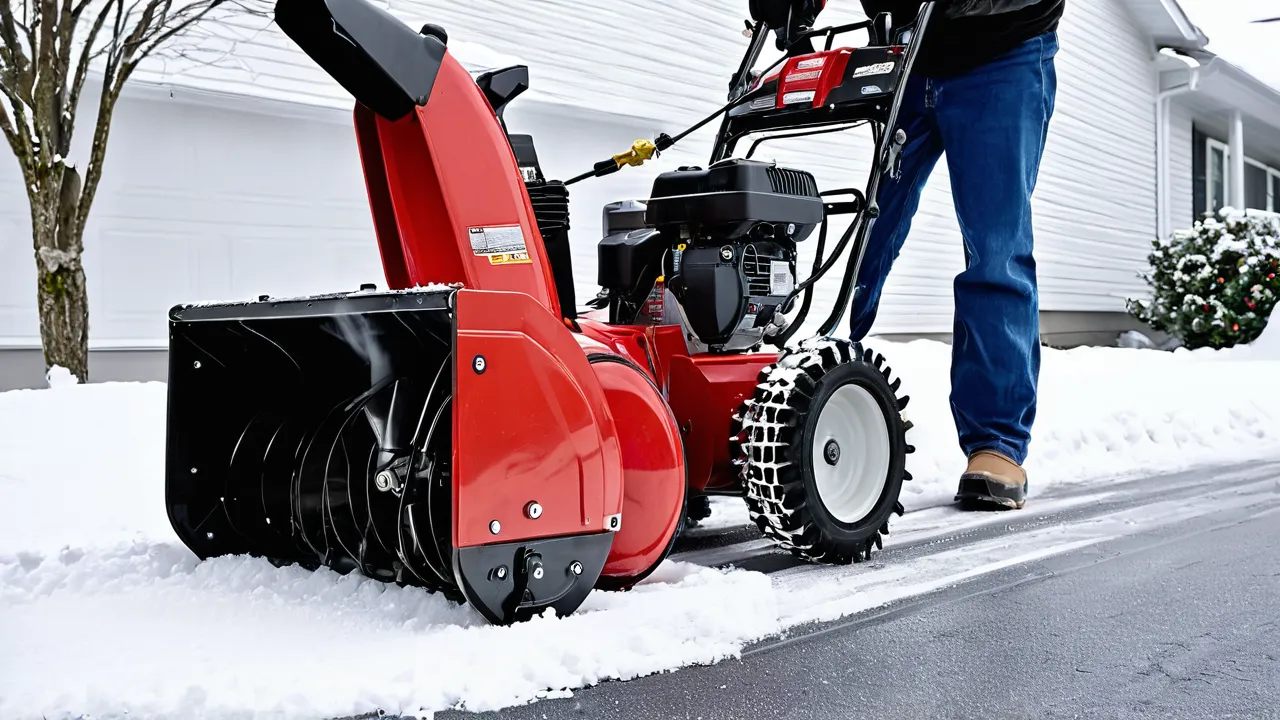
The difference between single stage, two stage and three stage snow blowers is how many mechanisms move the snow. A single stage uses one auger to scoop and throw snow, a two stage adds an impeller that throws it farther, and a three stage adds an accelerator that feeds snow into the impeller. Choose by snow depth, surface and clearing width, with single stage for light snow on paved drives and two or three stage for deep, heavy or long jobs.
How Each Stage Design Moves Snow
A single stage machine has a rubber edged auger that touches the ground, pulls snow in and throws it out of the chute in one motion. The auger also helps propel the machine on many models, so they are light and easy to handle. Because the auger scrapes the surface, it cleans down to the pavement, but it is not meant for gravel.
A two stage machine uses a metal auger that sits slightly above the surface and breaks up and feeds snow to a separate impeller, a fan like wheel that throws the snow out the chute. Wheels or tracks drive the machine, so it climbs deep snow and carries its own weight. It throws farther and handles heavier snow than a single stage.
A three stage machine adds an accelerator, a second auger like element that chops ice and packed snow and feeds it to the impeller faster. It is built for very deep, wet or icy snow and for large clearing jobs, and it is the heaviest and most expensive of the three.
Snow Depth and Type
Manufacturers list a maximum clearing depth, but real performance depends on snow type. Light, dry snow moves easily with any design. Wet, heavy snow overloads the smallest machines and clogs chutes. Packed snow left by a plow at the end of the driveway is hard for single stage machines, since the rubber auger bounces off it.
As a rough guide, single stage machines are generally intended for snowfalls up to around 8 to 12 inches, though ratings vary. Two stage machines are designed for deeper snowfalls, and some are listed for 20 inches or more. Three stage models target the deepest storms. Read the manual or product page for the figures, and remember that clearing more often during a storm is easier than waiting for a deep layer.
Use a worked example. Suppose your area gets storms of 6 inches or less most winters, with a few larger ones, and you have a paved two car driveway about 40 feet long. A single stage at about 21 inches wide handles the common storms with ease and cleans down to the pavement. For the occasional 14 inch storm, clear in two passes: take the top layer first, then the bottom, or clear during the storm. Now suppose you get regular lake effect or mountain storms of 12 to 24 inches, and the snowplow leaves a heavy windrow at the end of the driveway. A two stage machine of 28 inches or more, with wheel drive or tracks, is the practical choice, since it climbs into the pile and throws the snow clear.
Moisture content matters as much as depth. Wet, heavy snow weighs several times as much as light powder, so a machine that copes with 8 inches of powder may struggle with 6 inches of slush. If your region sees mostly wet snow, size up.
Surface and Driveway Type
Single stage machines suit paved surfaces such as asphalt and concrete, where the scraper can run close to the ground. They are not recommended for gravel because the auger can throw stones. Two stage and three stage machines ride on adjustable skid shoes, so the auger housing sits slightly above the surface. This makes them suitable for gravel and uneven drives when you raise the shoes as the manual directs.
If your driveway is gravel, dirt or has cracked pavement, choose a two stage with adjustable skid shoes. If it is smooth pavement, a single stage works well and clears more cleanly. Pavers and stamped concrete need care with any machine, so check the manual and raise the shoes where recommended.
Slope and layout also change the answer. A steep driveway is harder for a single stage that relies on its auger for traction, so a two stage with wheel drive or tracks is safer. A driveway that turns or ends at a street where plow snow collects needs a machine that can bite into hard windrows. If you clear a long walkway as well as a driveway, make sure the chute can be rotated quickly and the machine can fit through gates or narrow paths. Measure the narrowest gap before you buy.
Driveway Length and Clearing Width
Consider how long the job takes. A single stage with a 20 to 24 inch width is a good fit for a one or two car driveway and short walks. A two stage in the 24 to 30 inch range suits longer drives and heavier snow, and three stage machines and wider models help on large lots. Wider means fewer passes, but it also adds weight and a larger turning area.
Estimate passes: divide your driveway width by the machine’s clearing width, then multiply by length. If the number feels like an hour or more of work, a larger machine pays off. Remember that each pass needs room to throw snow, so plan where it will land.
Weight, Handling and Ownership
Single stage models are lighter and easier to turn and store, and many are electric or battery powered. Two stage models weigh more, need storage space and routine care such as oil changes and skid shoe checks. They also have more parts to maintain: shear pins, belts, drive discs and gearboxes. Three stage models add more weight and complexity. Check whether the machine has power steering, heated grips or electric start, since these make a difference on cold mornings. Look at how well the chute adjusts, and whether you can control it from the handle.
Think about owner effort and upkeep. A single stage self propels with its auger, so on a slope or in deep snow it can feel like it wants to run away, and it is easy to steer around. Two stage machines have wheel drive with several forward speeds and a reverse, and you may need to learn to pivot them with the drive disengaged. Tracked two stage machines grip slopes well but cost more and turn more slowly. Ask yourself how much you can lift and push, where the machine will be stored and whether you can manage routine tasks like changing oil and replacing shear pins. If not, an electric or battery single stage with minimal upkeep may suit you better.
A Decision Rule
Use these questions in order:
- Is the surface gravel or uneven? Choose a two stage or three stage.
- Does your area get more than about a foot of snow at a time, or heavy wet snow? Choose a two stage or three stage.
- Is the driveway short and paved, with light to moderate snow? A single stage is enough.
- Is the driveway very long, steep or plowed in at the end? Choose a two stage or three stage with a wide clearing width.
- Do you need to store it in a small space or carry it? Single stage is lighter.
For models, see the snow blower category, the small gas powered snow blower roundup and How We Review.
Here are some common regrets worth avoiding. People who buy a single stage for a long gravel drive learn that stones get thrown and the machine is wrong for the surface. People who buy a large three stage for a short walkway find it heavy and awkward to store. People who buy a machine sized for an average storm discover that the biggest storm of the year is the one that matters. Choose for your hardest realistic storm, within your strength and storage limits, and keep a shovel for edges. Also check engine or battery details, electric start and headlights if you often clear in the dark.
Frequently Asked Questions
Is a two stage snow blower better than a single stage?
It depends on your snow and surface. A two stage handles deeper, heavier snow and gravel, and throws farther. A single stage is lighter, cleans paved surfaces more closely and costs less. For short paved driveways with moderate snow, a single stage often works well.
Can a single stage snow blower handle gravel?
It is not recommended. The rubber auger scrapes the surface and can throw stones. A two stage or three stage with adjustable skid shoes sits above the surface and is better for gravel. Check the manual for how to set the shoes.
What is a three stage snow blower for?
A three stage adds an accelerator that chops ice and packed snow and feeds the impeller faster. It is meant for very deep, heavy or icy snow, and large jobs. It weighs more and needs more upkeep, so many homeowners find a two stage enough.
How much snow can a single stage snow blower handle?
Many are rated for roughly 8 to 12 inches in a single pass, though ratings vary, and wet snow reduces that figure. Check the manual, and clear snow often during a storm instead of waiting for a deep layer.
Final Thoughts
Match the stage design to your snow and surface: single stage for light snow on paved drives, two stage for deeper snow and gravel, and three stage for the toughest conditions. Check clearing width, handling and storage space, and follow the manual for adjusting skid shoes and clearing clogs safely.
Related buying guides
- Snow Blower Safety: Clogs, Chutes, Carbon Monoxide
- Snow Blower Shear Pins and Skid Shoes: Maintenance
- Snow Blower Size Guide: Clearing Width by Driveway
About the author

The BuyOnceChoice Editorial Team researches durable products worth buying once. Our guides compare published specifications, warranty terms, expert review consensus, and verified owner feedback. We do not conduct our own product trials. See How We Review and our Editorial Policy for our standards.