Snow Blower Size Guide: Clearing Width by Driveway
A step by step method to match clearing width and intake height to driveway length, snow depth and storage space, with a pass-count example.
 By BuyOnceChoice Editorial Team
Updated November 16, 2026
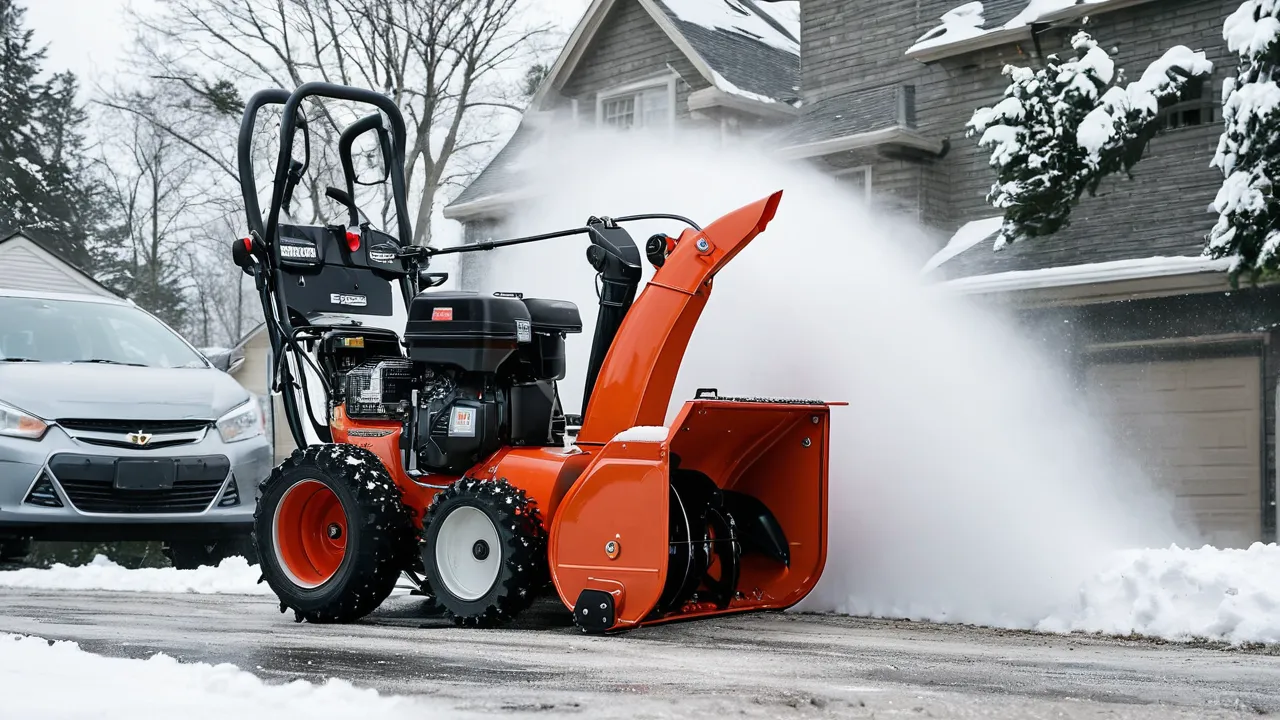
A snow blower size guide starts with your driveway: measure the area you actually clear, divide the width by the machine’s clearing width to count passes, and estimate time from walking speed. As a rough guide, a 20 to 24 inch single stage suits a short one or two car driveway, and a 26 to 30 inch two stage or wider suits long or wide drives and deep snow.
Step One: Measure the Area You Actually Clear
Walk the areas you shovel now and write down their length and width in feet: the driveway, the walk to the door, the path to the mailbox, the area beside the garage and any steps or patios. Include turnaround space if you park more than one car. Pace it off if you do not have a tape: an adult step is about two and a half feet.
Add the numbers up. A typical one car driveway is about 10 to 12 feet wide, a two car driveway about 18 to 24 feet and the length can range from 20 to over 100 feet. Note slopes, curves and gates, since they affect which machine fits.
Also note where the snow will go. A machine can only throw it so far, and a narrow driveway with a fence and little lawn may require repeated passes, or a longer throw distance.
Step Two: Count Passes by Clearing Width
Divide the driveway width by the clearing width of the machine. For example, an 18 foot wide driveway is 216 inches wide. A 24 inch machine needs about nine passes at full width, while a 30 inch machine needs about seven, and a 36 inch machine needs about six. Overlapping each pass by a few inches adds a pass or two.
Multiply passes by driveway length to find the distance you will walk. A 40 foot driveway with nine passes means about 360 feet, plus turns. Wider machines reduce passes, but they weigh more, turn wider and need more space to maneuver.
Work through a complete example. Suppose your driveway is 20 feet wide and 50 feet long, plus a 3 foot wide, 30 foot walk to the door. The driveway is 240 inches wide. With a 24 inch machine and a 2 inch overlap, each pass clears an effective 22 inches, so you need about 11 passes of 50 feet, or 550 feet of walking. With a 28 inch machine and the same overlap, you need about 9.2, so ten passes and 500 feet. With a 32 inch machine you need about eight passes and 400 feet. The walk adds one pass of 30 feet. Because turns and clogs take time, double those distances as a rough guide to total time. Seeing the numbers side by side makes it clear when an extra four inches of width is worth the extra weight and cost.
Throw direction changes the count too. If you throw snow only to one side, you work in a spiral from the outside in or in strips that move the snow across the full width, which can mean a long throw. If you can start in the center and throw to both sides, you cut the walking and the throw distance. Plan the pattern before the storm, and decide where the snow piles will go so that they do not block your sightlines at the street.
Step Three: Estimate Time from Speed
A snow blower is limited by the snow, not only by walking speed. In light snow, a walking pace of one to two miles per hour is possible, which is about 90 to 175 feet per minute. In deep or wet snow, the machine slows down. Using a conservative pace of 50 feet per minute, 360 feet takes about seven minutes, and turns and clogs add more. Compare the number with how long you are willing to spend, and size up if the time exceeds about 30 minutes for routine storms.
Remember that time includes more than clearing. Add time for starting the engine, positioning, clearing the end of the driveway where a plow left a heavy windrow and for stopping to clear the chute. If you plan to clear twice during a long storm, estimate each session separately. Choosing a machine that finishes a typical session in about 20 minutes makes it more likely you will use it often, and clearing early and often is the best way to prevent heavy, packed snow.
Intake Height and Snow Depth
Clearing width is only one dimension. Intake height, the height of the opening at the front, limits how deep a layer the machine can take in one pass. A machine with a 20 inch width and a 12 inch intake height will not clear a 20 inch drift in one pass, although the snow may fall into the intake in layers. If your region sees deep storms or drifts, check the intake height listed on the product page and consider a machine with a taller housing. Wet snow reduces what any machine can handle, so use the figures as upper limits.
Size Bands by Driveway
These bands are broad guides and depend on snow type and surface.
- Short walks and small decks, under about 20 feet: a 16 to 21 inch electric or small single stage.
- One car driveway, up to about 30 feet: a 20 to 24 inch single stage.
- Two car driveway, 30 to 60 feet: a 24 to 28 inch single or two stage, depending on snow depth.
- Long or wide driveway, 60 to 100 feet or more: a 28 to 32 inch two stage or larger.
- Very large lots, gravel, or heavy snowfall: a wide two or three stage, with tracks or good wheel drive.
Practical Limits That Cap Size
Bigger is not always better. Check these limits before you buy:
- Storage: measure the space and the door opening, and allow room to turn the machine around.
- Weight: heavy machines are hard to move on ice, and can be hard to load or lift.
- Gate and path widths: a 30 inch machine may not fit a 30 inch gate.
- Slope: heavy machines on steep drives require traction and care.
- Throw distance: wide machines throw farther, but you still need a place for the snow.
- Budget and upkeep: larger engines cost more to buy and service.
Take the narrowest choke point in your route and subtract a few inches to see the widest machine that fits.
Consider the physical side. A 100 pound machine on ice is harder to control than a 60 pound one, and a machine that is too big for you becomes a safety problem. Check the handle height and whether controls can be reached comfortably. If more than one person will use the machine, consider the weight and starting method, since a pull start can be hard in cold weather and electric start helps. Think about cold weather storage: batteries and fuel behave differently in the cold, and the manual lists limits.
A Simple Decision Rule
Use this sequence. First, measure the area and count passes with two or three candidate widths. Second, pick the smallest machine that keeps routine clearing under about 30 minutes. Third, check intake height against your typical storm depth. Fourth, check storage, weight and gate width. If two sizes both work, choose the one that handles your worst storm, not just your average.
If your area has light snow and your driveway is short, you may not need a snow blower at all: a good shovel can be quicker than getting a machine out of storage. See the snow blower category, the small gas powered snow blower roundup and How We Review.
Here are common regrets so you can avoid them. Buyers of small machines for large drives wish they had bought wider. Buyers of very wide machines wish they had checked the storage door width. Buyers who focused on clearing width alone found that a short intake limited them in deep storms. Buyers who ignored the slope of the driveway found that a light machine slid on ice. Write down your driveway size, worst storm depth, slope and storage size, and compare each candidate against that list.
Frequently Asked Questions
What size snow blower do I need for a two car driveway?
A two car driveway is about 18 to 24 feet wide, so a 24 to 30 inch machine keeps passes to about seven to ten. Choose single stage for lighter snow on pavement, and a two stage if you get deep snow or have gravel.
Is a wider snow blower always better?
No. Wider machines need fewer passes but weigh more, need more storage space and may not fit through gates. Pick the smallest width that keeps clearing time reasonable, then check intake height, weight and the narrowest point on your route.
How wide of a snow blower do I need for a one car driveway?
A one car driveway is about 10 to 12 feet wide, so a 20 to 24 inch machine usually takes five to seven passes. A narrower machine works for short drives. For deeper snow, consider a taller intake or a small two stage.
How do I measure the clearing width on a snow blower?
Look at the product page or manual for the clearing width or housing width, usually in inches. It is the width of the path cleared in one pass. Remember to overlap each pass slightly, so your effective width is a bit smaller.
Final Thoughts
Measure your driveway, count passes at a few widths and pick the smallest machine that keeps routine clearing short and handles your deepest storms. Then confirm storage, weight, gate width and intake height before you buy.
Related buying guides
- Snow Blower vs Snow Thrower: Terms and Real Differences
- Track vs Wheel Drive Snow Blowers: Slopes and Gravel
- Gas vs Battery Snow Blower: Cold Weather Trade Offs
About the author

The BuyOnceChoice Editorial Team researches durable products worth buying once. Our guides compare published specifications, warranty terms, expert review consensus, and verified owner feedback. We do not conduct our own product trials. See How We Review and our Editorial Policy for our standards.