How to Break In Leather Work Boots Without Blisters
Safe break-in takes short sessions and patience. Heat and soaking shortcuts can ruin leather and glue, and no routine fixes a boot that is the wrong size.
 By BuyOnceChoice Editorial Team
Updated November 16, 2026
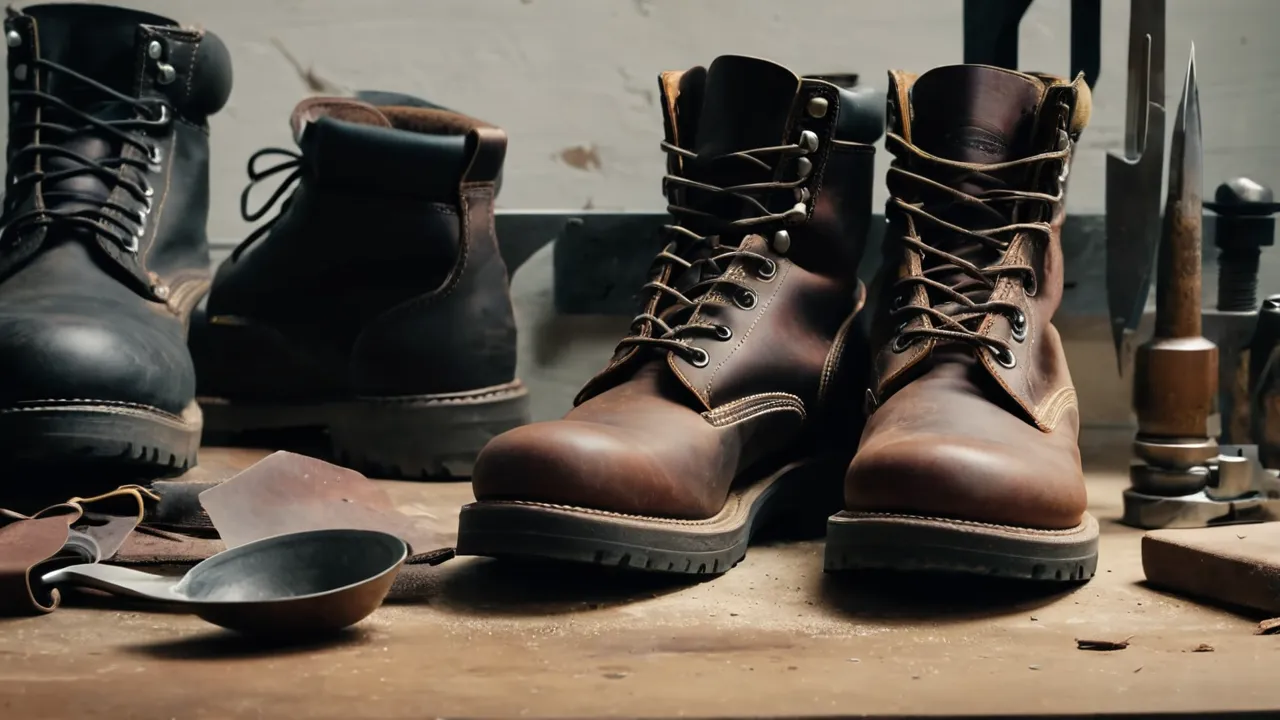
To break in work boots, wear them for short sessions around the house with your work socks, add more time each day and keep the leather lightly conditioned. Avoid shortcuts such as soaking, baking or hot hair dryers, which can damage glue and leather. Stiffness should ease after a couple of weeks of regular use, but pain, rubbing in one spot or heel slip means the size or last is wrong, and no routine will fix it.
Stiff is normal, painful is not
New leather work boots feel rigid because the leather is thick, the midsole is firm and the shank resists bending. The boot has to relax into the shape of your foot, and your foot has to adapt to the boot. That is break-in, and it usually involves some stiffness across the flex point and a snug feel at the collar.
The difference between stiffness and a fit problem is where and how it feels. Stiffness is broad and fades as the leather flexes. A fit problem is specific: a hot spot over the same bone every time, toes pressed against the cap, or the heel lifting with each step. If you feel those symptoms after a few short sessions, stop and reassess the size before you force the issue.
A two week routine, step by step
Timing varies with leather thickness, boot height and how stiff the shank is. Some boots feel comfortable almost immediately, and heavier full grain boots can take longer. Use this schedule as a guide, not a deadline.
Days one to three
Wear the boots indoors for one to two hours, over the exact socks you use at work. Walk, climb stairs and squat. Take them off the moment a hot spot starts, and check your skin.
Days four to seven
Extend to half a day, adding short walks outside on varied surfaces. Lace firmly through the ankle but not tight across the top of the foot. Condition the leather lightly once if it feels dry.
Days eight to fourteen
Wear them for full shifts on lighter tasks if you can. Keep a second pair of shoes within reach. By the end of this stretch, a correctly sized boot should feel supportive, not punishing. If one spot still hurts, treat that as a fit signal, not a break-in problem.
Methods that help
- Wear the socks you use at work, since sock thickness changes fit.
- Flex the boot by hand at the ball of the foot before wearing it, bending it gently.
- Wear the boots around the house while doing normal chores.
- Lace properly, with the heel locked and the instep not crushed.
- Condition lightly on dry leather to keep it supple, not saturated.
Our guide to work boot lacing styles shows how to lock the heel and ease instep pressure, which solves many apparent break-in problems.
Socks, insoles and lacing
Sock thickness is the easiest variable to control. If you try the boots on in thin dress socks and then wear thick work socks, you have changed the fit by a noticeable margin. Choose your work socks first and keep them consistent. Wool blends and synthetics wick moisture better than cotton, which holds sweat and increases friction.
The factory insole is often a flat foam piece that compresses fast. Replacing it can change the volume of the boot, which affects heel slip and toe room, so treat any insole swap as part of fitting. Skip the top eyelets for the first few days if the ankle collar feels harsh, then add them back as the leather softens. Use a heel lock lacing pattern if the heel lifts, and loosen the middle section if the top of the foot is pinched.
Different leathers break in differently
Thick, oil tanned or heavy full grain leather needs the longest routine, because the fibers are dense and the shaft resists creasing. Chrome tanned leather and lighter hiker style uppers usually soften faster. Boots with a membrane liner can feel stiffer through the ankle, since the lining does not stretch the way leather does. Boots with a stiff shank or a metatarsal guard flex less at the ball of the foot, and that part of the boot may never feel as flexible as a plain boot.
Plan the routine around the stiffest part of your boot. If the shaft is the issue, spend more time walking stairs and squatting. If the toe box is the issue, check the toe cap, since a safety toe will not stretch, and no amount of wear changes its shape. A cap that touches the toes while you walk downhill is a size problem, and it should prompt a size change rather than more wear.
Shortcuts to avoid
Several popular tips can shorten the life of a boot. Soaking the leather and wearing it dry stretches the leather but can strip oils, weaken stitching and soften glue in cemented builds. Using a hair dryer or leaving boots by a heater can crack leather and degrade adhesives. Pounding the leather with a mallet can crack finishes and distort the cap area. Heavy oiling just before wearing softens the leather but can also soften the structure that supports the foot.
If you need to stretch a specific spot, a cobbler or boot repair shop can use a controlled stretcher on the leather. That method is more predictable than home tricks, though it does not work on a rigid toe cap. Our companion guide on steel toe boots that are too tight covers what can and cannot be stretched.
Reading the signals your feet send
- Burning at the back of the heel: the heel is sliding, often from loose lacing through the ankle or a heel counter that is too wide.
- Pressure across the top of the foot: laces pulled too tight at the instep, or a tongue that is too thick for the volume of the boot.
- Pain at the outside of the little toe: a last that is too narrow at the forefoot.
- Numbness: stop wearing the boot and reassess, in every case.
Blisters deserve a quick fix, not a tough-it-out attitude. Cover hot spots with a friction patch or moleskin before they form, and wear a snug, moisture wicking sock under the thicker one if you need it. Moisture is the main driver of friction, so changing damp socks at lunch can transform an afternoon.
When it is the wrong boot
Some boots never break in because the shape does not match your foot. Signs include heel slip that does not improve, toes touching the cap when walking downhill, a collar that digs into the ankle bone, or numbness after short wear. Check the width, the length and the last. A different brand or last often solves what weeks of wear cannot.
Most retailers allow returns on unworn or lightly indoor worn boots, but policies vary. Read the return policy before you start wearing the boots outside, and keep the box. Returning a bad fit early costs less than keeping it.
Who should break them in slowly
- New heavy full grain boots: go slowly, since they are stiffest and benefit most from a gradual routine.
- Plantar sensitivity or foot pain: see a clinician and avoid forcing break-in.
- Anyone starting a new job on concrete: break boots in before the first full shift, not during it.
- Cold weather boots: allow extra time for the liner and insulation volume.
- Wide or narrow feet: confirm the width first, and consider boots made for wide feet if you feel pinching.
Our clothing and footwear section has related fit guides, and how we review explains the standards behind them.
Care during the first weeks
New boots usually ship with a light factory finish. A thin coat of a conditioner suited to the leather type can keep the surface from drying while the boot flexes, but heavy oiling in the first week is rarely necessary. Wipe off dirt promptly, stuff wet boots with paper and let them dry at room temperature away from heaters, then rotate between two pairs when you can. Rotation gives the leather and the lining time to dry out between shifts, which keeps boots from getting sour and the stitching from rotting early.
Keep a short log for the first two weeks: hours worn, where it rubbed and what you changed. Changing one thing at a time, such as socks, lacing or insole, tells you what actually helped.
Frequently Asked Questions
How long does it take to break in leather work boots?
Often about two weeks of regular wear, but it varies with leather thickness and boot construction. Heavy full grain boots may take longer. If one spot still hurts after a week of short sessions, the size or last may be wrong.
Should I wear new work boots with thick socks?
Wear the socks you will actually use at work. Thickness changes fit, so breaking in with thin socks and then switching to thick ones can create new pressure points. Pick your socks first and keep them consistent through break-in. Change only one variable at a time.
Can I soak work boots to break them in faster?
It is not recommended. Soaking can strip oils, weaken stitching and soften glue, especially in cemented boots. Gradual wear and light conditioning are safer. If one spot needs stretching, ask a cobbler to use a controlled stretcher. Skip heat shortcuts as well.
What if my new work boots give me blisters?
Stop wearing them as soon as a hot spot appears and cover it with a friction patch. Change damp socks and adjust lacing. If the same spot rubs again after a few sessions, the boot probably does not fit, and a different size or last is the fix.
Final Thoughts
Break-in is a short, controlled process, not an endurance contest. Use the right socks, increase wear gradually, condition lightly and avoid heat or soaking. If the same spot hurts after a week, trust that signal and change size or style. A boot that fits properly will soften on its own, and one that does not fit rarely improves.
Related buying guides
- How to Choose Work Boots: A Buy Once Decision Guide
- Lace Up vs Pull On Wellington Work Boots: Which Is Better
- Leather vs Synthetic Work Boots: Durability and Cost
About the author

The BuyOnceChoice Editorial Team researches durable products worth buying once. Our guides compare published specifications, warranty terms, expert review consensus, and verified owner feedback. We do not conduct our own product trials. See How We Review and our Editorial Policy for our standards.