Empty Suitcase Weight: Why It Eats Your Baggage Allowance
Your airline allowance is not your packing allowance. Follow the worked calculation to see how shell weight eats into 50 lb and 23 kg checked limits.
 By BuyOnceChoice Editorial Team
Updated November 16, 2026
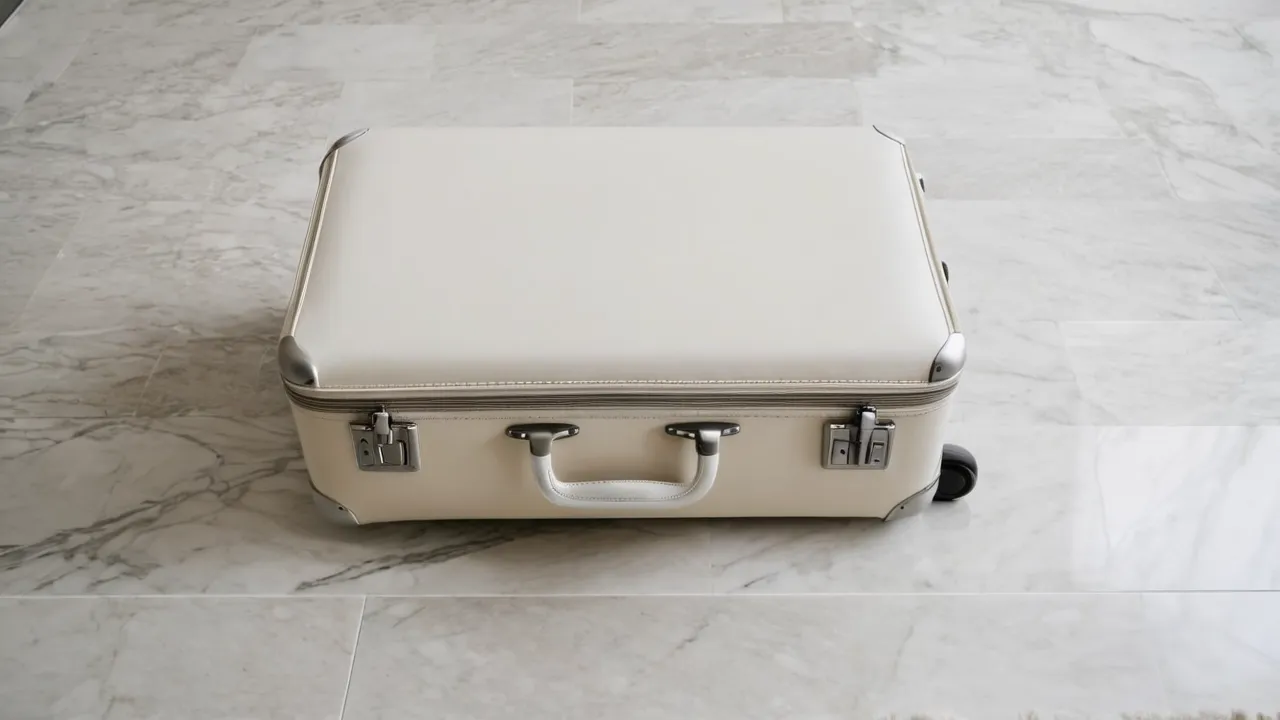
A lightweight suitcase weight limit works out simply: take your airline’s checked allowance, subtract the empty weight of the bag, and what remains is the weight you can actually pack. With a 50 pound or 23 kilogram allowance, a bag that weighs 7 pounds empty leaves about 43 pounds for contents, while a 12 pound bag leaves 38. That five pound gap decides whether you pay an overweight fee.
Allowance Versus Usable Weight
Airlines state a limit for the whole bag, not for what is inside it. The scale at the check-in counter does not subtract the suitcase. Many US carriers set standard economy checked allowances at 50 pounds, and many international carriers use 23 kilograms, though premium cabins, loyalty status, route and fare class can change this. Always read the current baggage page for your exact ticket before you pack.
Think of the empty suitcase as a fixed cost deducted before you pack a single sock. The heavier the shell, the smaller your real allowance. Shoppers often compare bags by volume and price, but if you routinely fly with full bags, empty weight is the specification that quietly controls your trip.
Carry-on limits work the same way on airlines that weigh cabin bags. Those limits are usually much lower than checked limits and vary widely by carrier, so a heavy carry-on shell can eat a large share of what you are allowed to bring on board. Check the weight rule for the airline and fare you booked, and treat the manufacturer’s empty weight as the first number in your calculation.
The Worked Calculation for 50 Pounds
Use this method with the manufacturer’s stated empty weight for the bag you are considering. The weights below are placeholders to show the arithmetic, not claims about any model.
- Write down the allowance: 50 pounds.
- Subtract the empty bag. For a 7 pound case, usable weight is 43 pounds.
- Subtract a safety margin of 2 to 3 pounds, because home scales and airport scales rarely agree exactly. Usable target: about 40 pounds.
- Compare to the same steps for a 12 pound case: 38 pounds usable, 35 pounds after margin.
The difference between those two bags is 5 pounds of contents. For reference, a pair of jeans, a pair of leather shoes and a toiletry bag together often account for that much. Whether it matters depends on how full you pack.
The Worked Calculation for 23 Kilograms
Metric allowances follow the same logic. A 23 kilogram limit equals roughly 50.7 pounds, so it is very slightly more generous than 50 pounds. Say the empty case is 3.2 kilograms. Usable weight is 19.8 kilograms. Take off a margin of 1 kilogram and your packing target is 18.8 kilograms. A 5.4 kilogram case would leave 17.6 kilograms before margin and 16.6 after.
If you move between systems, use one unit consistently. Convert pounds to kilograms by dividing by 2.2, or kilograms to pounds by multiplying by 2.2. Rounding errors of a few ounces matter when you are near the limit, so measure in the unit your airline uses.
What Makes a Suitcase Heavy
Empty weight comes from several components, and knowing them helps you read a product page.
- Shell material: polycarbonate tends to be lighter than aluminum, and softside fabric can be lighter still. Thin shells save weight but may flex more.
- Frame and handle: a heavy telescoping handle with a thick metal tube adds weight, as does a reinforced frame.
- Wheels: large, double spinner wheels add mass compared with small single wheels.
- Hardware: heavy locks, large zippers and expansion systems each add ounces.
- Lining and dividers: padded compression panels and zipped dividers are useful but add weight.
A pound saved on the shell is a pound gained for your shoes. But very light bags often trim hardware that protects them, so balance weight against durability. Our luggage set category shows a range of builds so you can compare stated weights side by side.
How to read a stated weight
Look for the weight on the product page or in the specification table, and check whether it refers to the bag alone or to a set. A listing for a three piece set may quote the combined weight, so divide by the piece you will use. Some pages give a range because sizes differ; use the figure for the exact size. If the page gives no empty weight at all, treat that as missing information and look for the manual or ask the seller before you buy.
Weigh Before You Leave Home
Do not trust the airport scale as your first reading. Weigh the loaded bag at home on a bathroom scale. If you do not have a luggage scale, stand on a bathroom scale holding the bag, then subtract your own weight. A hand-held luggage scale costs little and gives a direct reading, but check its accuracy against a known weight, such as a sealed bag of flour or a water jug of known size.
Pack a few pounds under the limit and leave room for souvenirs on the return leg. Place heavy items, like shoes and toiletries, near the wheel end so the bag rolls stably, but keep an eye on total mass. If you carry a laptop or fragile electronics, move them to your carry-on, which lowers the checked weight and keeps valuables with you.
A Packing Example Across Three Trip Types
Numbers become real when applied to trips. Imagine a weekend city break, a two week summer holiday and a winter trip with bulky layers, each flown on a 50 pound allowance with a 9 pound bag. The weekend trip rarely troubles the scale, because a few shirts, one pair of shoes and toiletries stay well under 20 pounds. The two week summer trip gets closer: swimwear, sandals and light fabrics are not heavy individually, but a second pair of shoes, a hair dryer and gifts bring a bag toward the mid 30s. The winter trip is the stress case. A single wool coat can weigh several pounds, boots weigh more, and thick sweaters are dense, so a 9 pound bag can reach the limit with surprisingly few outfits.
This is why shell weight matters most to winter and long-trip packers. If you mostly take weekend trips, shell weight is a minor concern and durability, wheel quality and warranty may deserve your attention more. If your habit is to fill the bag, treat each pound of empty weight as a pound you cannot pack, and choose accordingly.
Strategies When You Are Over the Limit
If your scale says you are over, you have several options before paying a fee. Move dense items, such as books, shoes and chargers, to a personal item or backpack. Wear the heaviest shoes and a jacket on board. Replace bulky toiletry bottles with travel-size containers, and leave behind duplicates. Check whether your airline weighs carry-ons; some do, especially on international and low-fare routes, and their limits are usually far lower than checked limits.
Do not rely on the counter agent to be lenient, since policies differ by airline and by day. Another option is to split items between two smaller bags if the airline allows two checked pieces on your fare, since the allowance applies to each bag. Confirm the count and fees first, because a second bag can cost more than a modest overweight fee.
Who Should Choose Which
Choose a lightweight shell if you fly with full bags, frequently hit the allowance or lift your suitcase into overhead compartments, trains or car trunks. Choose a heavier, sturdier build if you pack lightly, check bags often and value durability over gram counting. Skip ultralight marketing that gives no stated empty weight, because without the figure you cannot do the math. To learn how we treat manufacturer figures, see the how we review page, and compare roundups in our best travel luggage set guide.
Frequently Asked Questions
How much does an empty suitcase usually weigh?
It varies by size and material. Carry-on cases often fall somewhere around 5 to 9 pounds, while large checked cases can exceed 12 pounds, especially in hardside or aluminum builds. Use the manufacturer’s stated empty weight for the exact size you plan to buy, because ranges between brands are wide.
Does the suitcase count toward the airline weight limit?
Yes. The checked allowance applies to the whole bag as it sits on the scale, so the shell, wheels and handle all count. A 50 pound allowance with a 9 pound bag leaves 41 pounds for contents. Read your airline’s baggage page for the exact limit on your fare.
Is a lighter suitcase always the better choice?
No. Lighter bags help when you pack near the limit, but ultralight builds may use thinner shells, smaller wheels or lighter zippers. If you pack lightly or check bags rarely, durability and wheel quality can matter more than a pound or two of empty weight.
Final Thoughts
The airline limit is a ceiling on the whole bag. Subtract the empty weight, subtract a margin and treat what is left as your true packing allowance. A five pound difference in shell weight is real money on trips where you pack near the limit, and trivial when you do not. Use the manufacturer’s stated figure, weigh at home and choose the build that matches how you actually pack.
Related buying guides
- Expandable vs Non-Expandable Suitcases: Trade-Offs
- How to Fix a Stuck or Split Luggage Zipper
- Soft Luggage vs Hard Luggage for Fragile Items
About the author

The BuyOnceChoice Editorial Team researches durable products worth buying once. Our guides compare published specifications, warranty terms, expert review consensus, and verified owner feedback. We do not conduct our own product trials. See How We Review and our Editorial Policy for our standards.