Dishwasher Capacity: Place Settings vs Real Loads
Dishwasher capacity place settings explained, with a household-size guide, rack layout tips, and when a compact or large model fits.
 By BuyOnceChoice Editorial Team
Updated November 16, 2026
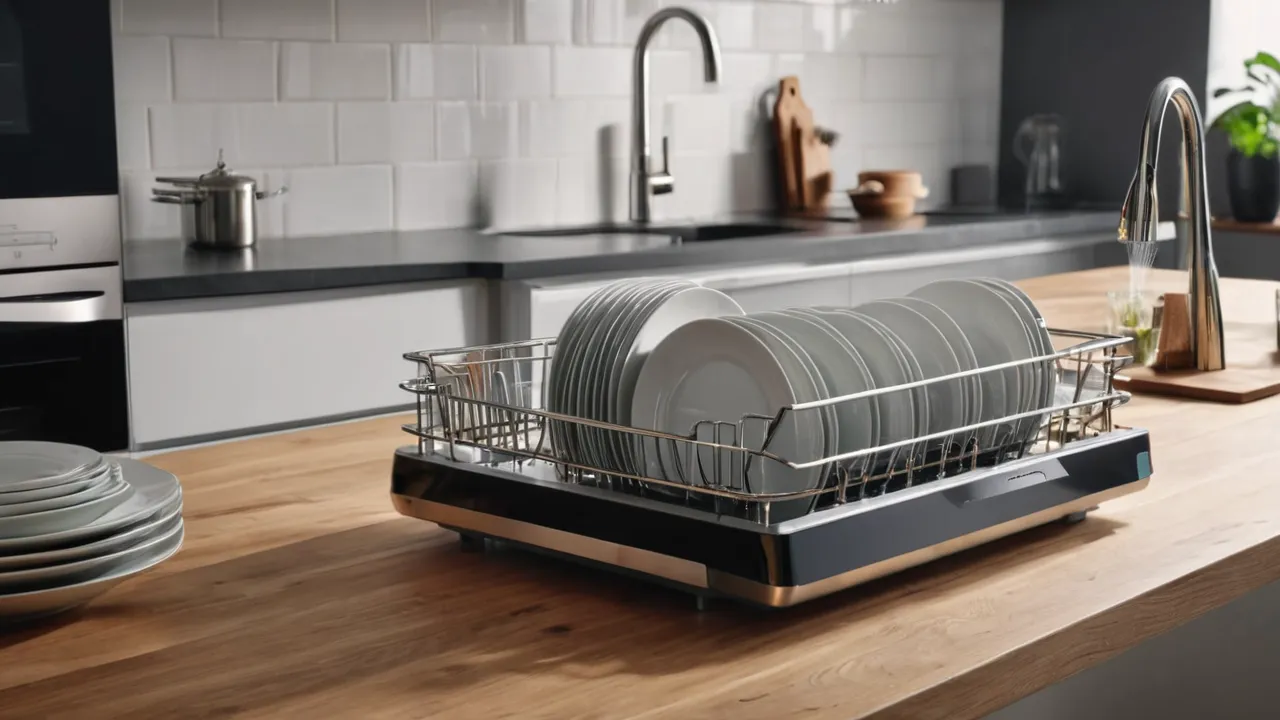
Dishwasher capacity place settings describe how many standard sets of dishes a dishwasher holds, and a typical full-size 24 inch unit lists around 12 to 16. A household of one or two usually needs far less than the maximum, while a family of four to six benefits from a full-size model with flexible racks.
What a Place Setting Means
A place setting is a standard set of dishes for one person, defined for rating purposes. It usually includes a dinner plate, a salad plate, a bowl, a cup, a saucer, a glass, and cutlery. The number of place settings a dishwasher can hold is a standard way for manufacturers to describe capacity, and it is used by organizations that rate appliances.
Your real loads do not look like a standard setting. Pots, pans, mixing bowls, cutting boards, and large platters take up room and are not counted. So the stated capacity is useful for comparison, but actual capacity depends on what you wash.
Standard Sizes
Dishwashers come in several widths. The standard width is 24 inches, which is the common built-in size in the United States, and its capacity is stated in the low-to-mid teens of place settings. Compact or slim models, around 18 inches wide, hold roughly half as many, often in the high single digits. Countertop and portable models are smaller still and suited for apartments. Our dishwasher guides describe these types, and our portable 18 inch dishwasher round-up covers compact options.
Capacity claims vary between brands even for the same width, since design details such as rack height, tine layout, and third racks change what fits. Check the manufacturer’s stated number, and read the description of the racks.
Household-Size Guide
| Household | Typical fit |
|---|---|
| — | — |
| One person | Compact or countertop, or a full-size run every few days |
| Two people | Compact to full-size, depending on cooking |
| Family of three to four | Full-size, running most days |
| Family of five or more | Full-size with a third rack or large capacity |
| Entertaining often | Full-size with flexible racks |
This table is a starting point. Cooking style matters more than head count. A single person who cooks big meals produces more pots and pans than a family that eats out. A family that uses paper plates for lunch loads fewer dishes.
How Often Do You Want to Run It?
A way to decide is to think about run frequency. A full-size machine that is run once a day is a good match for a family of four. A single person with a full-size machine may run it every few days, and dishes can sit dirty, which some people dislike and which may cause odors. A compact machine that fills quickly will run more often, using more water per dish in total. Match capacity to how long you can tolerate waiting.
A Sizing Method You Can Follow With Numbers
Start with a rough count of place settings used per day. One setting per person per meal is a reasonable starting estimate, so three meals at home means about three settings per person. A household of four eating most meals at home generates around 12 settings a day, and a couple eating dinner at home generates around 4 to 6.
Next, decide how many days you will wait between runs and multiply. Then divide by 0.75, because pots, pans and bowls take up about a quarter of the racks and the standard setting count is never fully usable. Four people running daily need about 12 divided by 0.75, or 16 settings, which points to the top of the full-size range. A couple running every second day need roughly 10 divided by 0.75, or 13, which fits a standard 24 inch machine, while a single person running every third day needs about 9 divided by 0.75, or 12, so an 18 inch model can be a tight fit. These figures are estimates, so adjust them for your own habits.
Rack Layout Matters More Than the Number
Rack design decides whether big items fit. Look for adjustable upper racks that can move up or down, fold-down tines that make room for pots and cutting boards, a deep lower rack, and a third rack or cutlery tray on top. A third rack frees up space in the main racks by taking utensils, small cups, and serving tools. Check the clearance between the upper rack and the lower rack, since tall glasses and large plates need space.
Also check the spray arm positions and the position of the filter, which affect how you can load. Dishes blocking a spray arm come out dirty. A rack that looks roomy but forces odd loading is less useful than a smaller but flexible one.
Efficiency, Loading and Real-World Capacity
A bigger machine uses more water and energy per cycle, but it can be efficient per dish when full. A half-empty large machine is wasteful, so do not buy more than you need. Look at the yearly energy and water figures on the label and compare units of the same capacity. Eco cycles use less water, and take longer.
Practical Tips for Loading
- Load large items on the sides and back so they do not block the spray arms.
- Place bowls face down and angled, and cups on the top rack between tines.
- Keep plastics on the top rack, away from the heating element on models that have one.
- Do not nest spoons together in the basket.
- Leave a gap between items so water can reach all surfaces.
- Run the machine when it is full, but not overfilled.
Matching Capacity to Cooking Style
Think about the real objects you wash. A household that cooks from scratch uses cutting boards, mixing bowls, sheet pans, and pots, and these items need deep racks and flexible layouts. A household that eats simple meals mostly uses plates, bowls, and cutlery, and a smaller rack system works. Do you drink a lot from tall tumblers, or use baby bottles and sippy cups, which need small-item baskets? Do you wash large serving platters when you entertain? Write down the five largest items you wash regularly, and then check that any machine you consider can hold them.
Pans and pots are the usual problem. Many dishwashers cannot hold large stockpots or roasting pans. If you often wash large cookware, consider hand washing those items and using the machine for the rest, or look for a model with a deep lower rack and fold-down tines. Compare the rack height numbers if the maker gives them.
Examples
A couple who cook most dinners finds that a full-size machine fits their pots, and they run it every other day. A single person in a studio chooses an 18 inch model, runs it every three days, and appreciates the smaller footprint. A family of five with teenagers runs a full-size machine daily and sometimes twice, and chooses one with a third rack because cutlery and small items otherwise crowd the baskets. A host who throws large dinner parties looks at the maximum capacity, then plans to run two loads after the party.
Water Use and Cycle Choice
Capacity and water use interact. A large unit run half full uses the same water as when full, so it is less efficient per dish. If you have a large machine and a small household, use the delay start to accumulate dishes, and rely on the eco cycle, which uses less water. If your machine has a half-load option, it can help. Check the maker’s stated water use per cycle and compare it between models.
The third rack, adjustable racks, and cutlery baskets matter for efficiency too, since better loading means fewer partial loads. Keep the filter clean and the spray arms free of scale so that wash performance does not drop as the machine fills.
Decision Rules
- One or two people in a small kitchen: compact or an 18 inch model.
- Couple who cooks daily: full-size 24 inch with flexible racks.
- Family of four or more: full-size with a third rack.
- Hosts large gatherings: look for deep racks and a high place setting count, and consider a second wash.
- Rental or short stay: whichever size fits the opening.
See also the home appliances hub and the How We Review page.
Frequently Asked Questions
How many place settings does a standard dishwasher hold?
A standard 24 inch dishwasher is usually listed at around 12 to 16 place settings, while compact 18 inch models hold roughly half as many. Manufacturers state their own number, so check the product page or manual and read how the racks are described, because rack design changes what really fits.
How many place settings do I need for a family of four?
A family of four generally fits a full-size machine at the higher end of the typical range, run about once a day. Use the sizing method above: estimate daily settings, multiply by days between runs, and divide by 0.75 to leave room for pots. A third rack helps when cutlery crowds the baskets.
Does a bigger dishwasher use more water?
Per cycle, usually yes, but a full large machine can be more efficient per dish than a half-empty small one. A large unit run half full wastes water and energy. Compare the yearly water and energy figures on the label for models of the same capacity, and use eco cycles or delay start to build full loads.
Do pots and pans count toward place settings?
No. The standard place setting covers plates, bowls, a cup, a glass and cutlery, so pots, pans, cutting boards and platters are extra. If you cook from scratch, expect them to take a share of the racks, and check the lower rack depth and fold-down tines before choosing a model.
Final Thoughts: Count Your Pots as Well as Plates
Place settings are a useful yardstick, but daily life includes pots, pans, and platters. Choose capacity by household size and cooking style, favor flexible racks, and avoid buying a machine that never fills.
Related buying guides
- Dishwasher Noise Levels: What Decibel Rating to Pick
- Dishwashers and Hard Water: Fixes That Work
- How Long Does a Dishwasher Last and Repair vs Replace
About the author

The BuyOnceChoice Editorial Team researches durable products worth buying once. Our guides compare published specifications, warranty terms, expert review consensus, and verified owner feedback. We do not conduct our own product trials. See How We Review and our Editorial Policy for our standards.