Rotisserie Air Fryers: Are They Worth the Extra Space
Decide if a rotisserie air fryer earns its counter space by checking spit capacity, cleanup, noise and the extras you will actually use.
 By BuyOnceChoice Editorial Team
Updated November 16, 2026
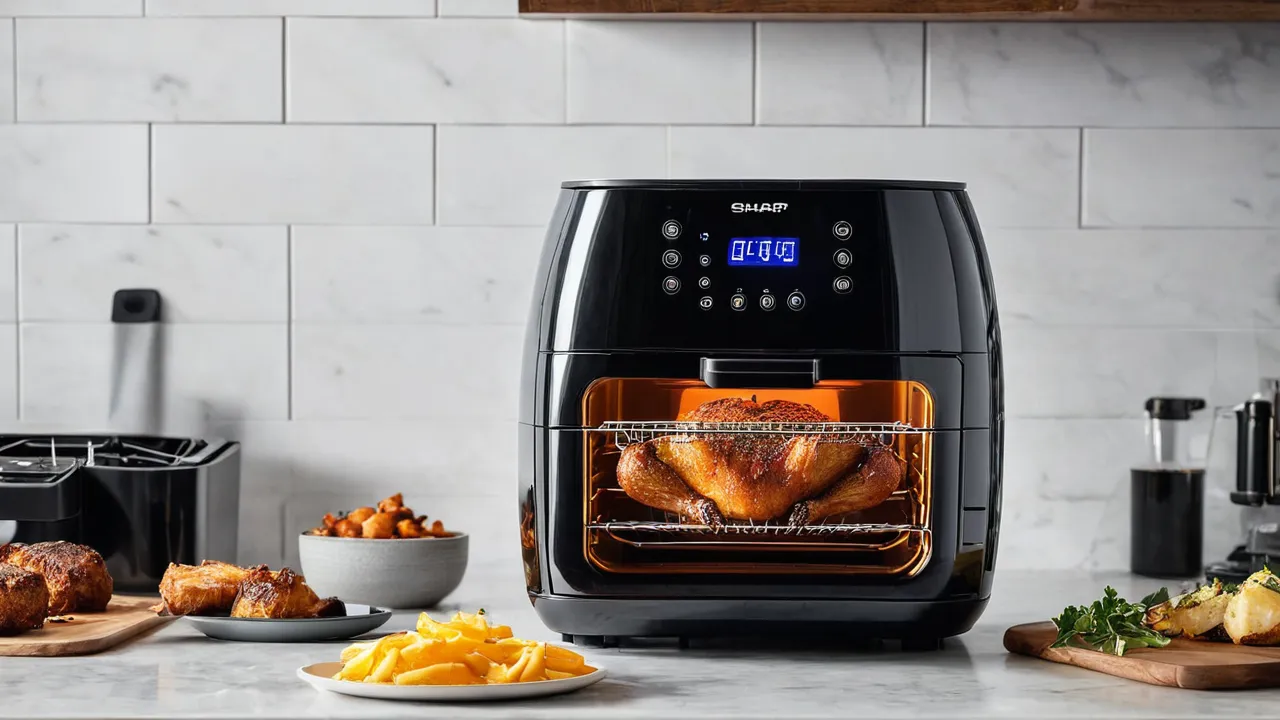
A rotisserie air fryer is worth the extra space only if you regularly cook whole chickens, roasts or kebabs and have counter room for a larger oven style unit. The spit turns food in the hot air, which browns it evenly, but you pay in size, cleanup and a motor that can be noisy. If you mostly cook fries, vegetables and reheated leftovers, a standard basket model is simpler, smaller and easier to clean. Check the stated spit capacity against the size of birds you buy.
Rotisserie functions show up on large oven style air fryers, often alongside dehydrating, baking and other modes. They look versatile, but extra modes are only worth paying for if you will use them. This guide covers capacity, cleanup, noise and the habits that decide whether you will use the spit.
What a Rotisserie Air Fryer Is
Most rotisserie air fryers are oven style, with a door, shelves and a motorized spit that rotates food horizontally in the cavity. Some basket models have a rotating basket instead, which tumbles smaller items. The true spit model holds a whole chicken or a roast on a rod secured with forks, and rotates it while hot air circulates.
The format needs a larger body than a basket air fryer, so it takes more counter space and weighs more. It usually includes trays, racks and the spit set, which you need to store when not in use. The rotation lets fat drip off and keeps the surface browning evenly, which many people like for whole poultry.
Spit Capacity and Food Size
Capacity is the first thing to check. Manufacturers state the maximum weight or size of food the spit can hold, and the chamber limits how large a bird fits. A medium chicken may fit in many models, but a large roasting chicken, a turkey breast or a small turkey may not. Measure the food you plan to cook, and compare it with the interior dimensions and stated limits.
Some points to confirm:
- Maximum weight on the spit, and whether the motor is rated for that load.
- Internal width and height, so the food clears the walls and heating elements as it turns.
- Whether the spit forks hold the food securely, and whether you need butcher’s twine to truss it.
- Clearance between food and the heating element, since fat spatter and scorching can result.
A bird that touches the element can burn and smoke. If a recipe calls for a larger bird, an oven is the safer tool.
How to Check That a Bird Will Fit
Weigh the bird and measure its width and height. Compare those numbers with the maximum spit weight and the interior width in the manual. Leave room for the bird to rotate without touching the element, the walls or the drip tray. Truss the bird so wings and legs stay close, since a loose wing can catch. If the numbers are close to the limit, choose a smaller bird. These checks use only your measurements and the maker’s stated limits.
Drip, Cleanup and Smoke
Rotisserie cooking produces drippings, and the cavity gets greasy. Most units include a drip tray to catch fat, which you must empty and wash. Splatter reaches the walls, the glass door and the heating elements, and these surfaces are harder to wipe than a basket.
Plan on a cleaning routine after each use. Let the unit cool, remove the spit and tray, and wash them by hand or in the dishwasher if allowed. Wipe the interior and door with a damp cloth and mild soap, and avoid abrasive pads on coatings. Do not immerse the main body. The same coating care rules that apply to basket models apply here: soft sponges, mild soap and no steel wool.
Smoke is a concern when fat drips onto a hot tray. Add a small amount of water to the tray only if the manual says to, and never cook with an empty or overfull drip tray.
Noise and Motor Wear
The spit motor and fan produce noise. Motors on lower cost units can whine or grind, particularly under load. Rotisserie motors turn slowly but with significant torque, and an unbalanced bird or a loose fit strains them. A well trussed, balanced load helps.
Noise is hard to judge from a product page, since manufacturers rarely publish consistent sound figures. Read the manual and product details for any stated rating, and consider where the unit will sit. In an open plan home, a loud fan plus a motor can be a nuisance. The motor is also a part that can fail, so ask about replacement parts and warranty.
Extras That Often Go Unused
Large oven style air fryers advertise many functions: dehydrate, proof, bake, broil, roast, rotisserie and more. In practice, owners use a few. Before paying for extras, think about which you will use at least monthly. If you already own an oven and a dehydrator, a unit that duplicates them adds little.
Accessories add up too. Rotisserie baskets, kebab racks and extra trays are often included, but they need storage. Keep what you use and give away the rest. Our guide on air fryer accessories lists the add-ons that earn their place.
Counter Space and Placement
A rotisserie unit needs a counter spot with clearance on all sides and above. Heat and steam escape from the vents, and the door opens outward, so you need front space. Most are too big to leave under wall cabinets. Measure the unit including the open door, and check outlet access. Large units draw high wattage, so plug directly into a wall outlet and avoid sharing the circuit with a kettle or toaster.
Questions to Ask Before You Buy
- What is the maximum weight on the spit, and is the motor rated for it?
- Is the spit removable and easy to wash, and does it have a basket for small items?
- How much clearance does the chamber leave around a typical whole chicken?
- Does the manual describe how to handle drippings and smoke?
- Is the interior coated, and can the racks and spit be washed in the dishwasher?
- Are replacement parts such as spit forks and trays sold separately?
Rotisserie Versus Oven Roasting
Many buyers ask whether the spit does anything an oven cannot. The honest answer is that results are similar in kind and different in degree. An oven roasts a chicken in a pan, with the skin browning where it faces the heat, and you may baste or turn it. A spit turns the bird continuously, so fat bastes the surface and browning is even. The result can be a crisper, more uniform skin, though a well managed oven roast comes close.
Speed differs. A compact chamber heats fast and moves air quickly, so a bird may cook sooner than in a full size oven, and you skip the long preheat. Capacity differs too: an oven can roast a larger bird or several pieces at once. If you cook for a crowd, the oven wins.
Convenience favors the spit for people who like hands off roasting, since the rotation does the basting. Cleanup favors the oven for people who line pans with foil. The right choice depends on how often you roast and on the room you have, so think about the number of times a month you would reach for the spit. If the answer is under once, a standard air fryer plus your oven covers you.
Safety Notes
Large oven style air fryers draw substantial current, so use a grounded outlet and no extension cord. Keep clearance from walls and cabinets, and never place the unit on or near a heat source. Hot surfaces, including the door, can burn. Use oven mitts for the spit and tray, and let the unit cool before cleaning. Cook poultry to the safe internal temperature recommended by food safety authorities, and use a thermometer. Follow the manual for all operation.
Who Should Buy One
- Buy a rotisserie unit if you cook whole chickens, roasts or kebabs often and have the space.
- Skip it if you mostly cook small batches, since a basket model is simpler.
- Skip it if counter space is tight or you dislike cleaning grease.
- Skip it if you already own a good oven and rotisserie features are a curiosity.
- Consider a basket model plus the oven for roasts.
Browse the air fryers category and read how we review for how we weigh size and upkeep.
Frequently Asked Questions
Is a rotisserie air fryer worth it?
It is worth it if you regularly roast whole chickens, roasts or kebabs and have counter space for a large unit. If you mostly cook small portions, a basket air fryer is simpler, cheaper to store and easier to clean. Compare spit capacity and cleanup before buying.
How big a chicken fits in a rotisserie air fryer?
It depends on the model, so check the maximum spit weight and the interior dimensions in the manual. The bird must rotate freely without touching the element or walls. Smaller birds fit most units, and larger birds may not. Measure and weigh yours before you buy.
Is a rotisserie air fryer hard to clean?
It is more work than a basket model. Drippings land on the tray and the cavity gets greasy, so wash the tray, spit and racks after each use and wipe the interior once cool. Check which parts are dishwasher safe in the manual.
Does a rotisserie air fryer replace an oven?
For a whole chicken or a small roast, it can, and it may cook faster in a compact chamber. For large roasts, multiple dishes or baking at volume, a full oven is still the better tool. Treat it as a second oven that saves heating the big one.
Final Thoughts
A rotisserie air fryer rewards people who roast whole birds regularly and have room for a large unit. For everyone else, the spit is an extra that adds size, noise and cleaning. Check spit capacity, clearance for the food, cleanup access and warranty before buying. If you only occasionally want a roast chicken, your oven or a smaller basket model may serve better.
Related buying guides
- Air Fryer Accessories Worth Buying and Ones to Skip
- Air Fryer Basket Materials: Nonstick, Ceramic, Steel
- Air Fryer Buying Mistakes That Waste Money
About the author

The BuyOnceChoice Editorial Team researches durable products worth buying once. Our guides compare published specifications, warranty terms, expert review consensus, and verified owner feedback. We do not conduct our own product trials. See How We Review and our Editorial Policy for our standards.