Luggage for Couples: Sharing Bags or Buying Two Sets
A shared case saves fees on short trips, while separate sets keep two people independent on long ones. Compare both by trip length, space and airline rules.
 By BuyOnceChoice Editorial Team
Updated November 16, 2026
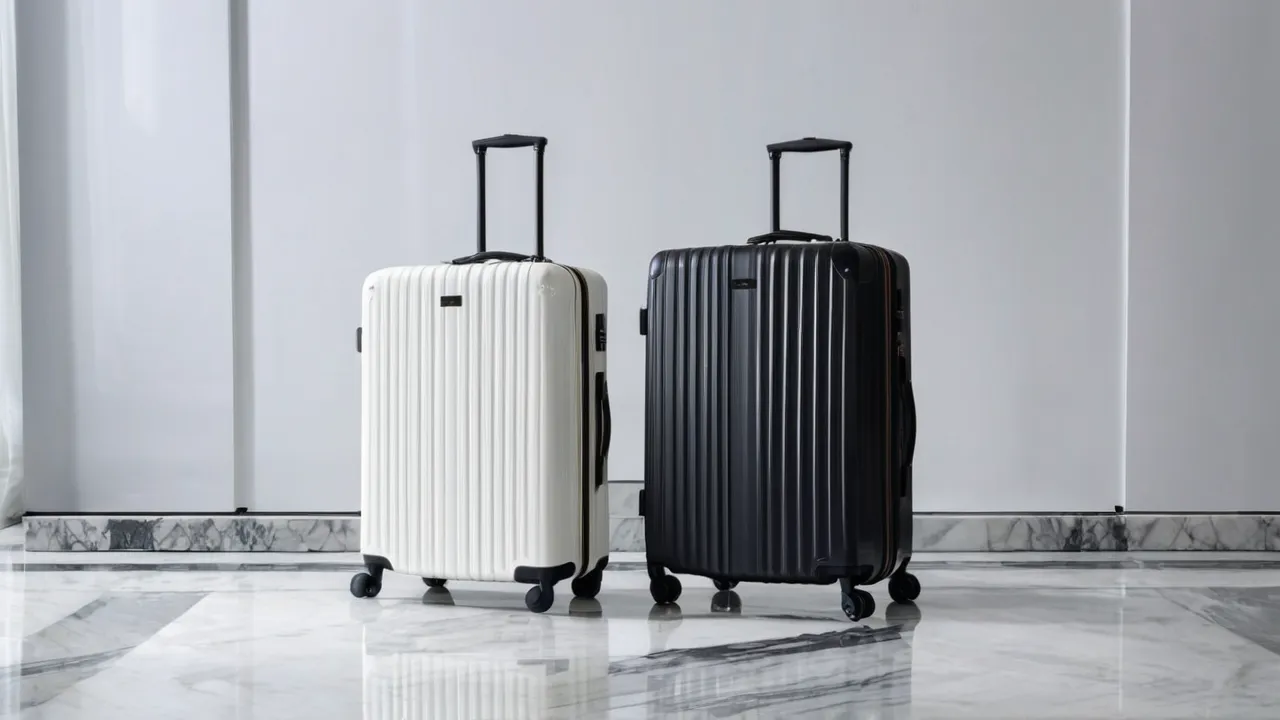
For most couples, a shared large case plus two carry-ons works on trips up to a week, while two separate matching sets suit longer trips, mixed itineraries or very different packing styles. The right choice depends on how many bags you will lift, what your airline charges to check bags and how much floor space your hotel rooms offer.
Two Common Setups
The first setup is one large checked case shared by both travelers, plus a carry-on each. The shared case holds bulky items, shoes and toiletries, and each carry-on holds a personal outfit, documents and valuables. This reduces the number of checked bags, which can lower fees on airlines that charge per bag.
The second setup gives each person a complete set: a checked case and a carry-on each. It adds capacity and independence. Each person controls their own packing, and you can split up at an airport or hotel without negotiating over one case. Our luggage set category shows sets in both arrangements.
Trip Type Decides
Weekend city trips
Two carry-ons and nothing checked is the lightest approach. Each person packs for two or three days. You skip baggage claim and avoid any checked bag fee. If you need extra room for gifts or shopping, a collapsible tote fits in a carry-on.
One week beach or resort trips
A shared large case and two carry-ons fits most needs. Swimwear and light clothes are compact, so one case holds both partners’ main clothes. Keep sunscreen and electronics in the carry-ons.
Cold weather trips
Winter clothes are bulky, so a shared case fills fast. Two checked cases or one large plus a duffel may be needed. Compression cubes help, though they add wrinkles. Pack your heaviest coat on your body instead of in a case.
Multi-city or road trips
Separate sets can be easier, since each person can move independently and only open what is needed. For rental cars, soft bags fit better into trunks. Our softside luggage set roundup is a good place to look at flexible bags.
Fee and Weight Math
Airlines typically charge per checked bag, and weight limits apply to each one. Splitting clothes between two cases keeps each under the limit, while a shared case can easily go over, and the overage is charged once but may be costly. Use a home scale: pack the shared case, weigh it and compare it with the airline’s limit on its site. If the case is near the limit, move heavier items such as shoes to a carry-on.
Remember also that policies change by fare class and route, so check the carrier’s page before you book. Do not assume that one case and one fee will be cheaper unless you confirm your airline’s rules.
Choosing at a glance
| Trip | Setup that usually fits | Reason |
|---|---|---|
| Weekend city break | Two carry-ons only | No baggage claim, no checked fee |
| One week warm destination | Shared large case plus two carry-ons | Light clothes pack compactly |
| Cold weather trip | Two checked cases or one large case plus a duffel | Bulky layers fill space fast |
| Multi-city or road trip | Two separate soft cases | Independence and trunk fit |
Use the table as a starting point and adjust for your airline’s fees and your own packing style. If one partner always packs heavy, favor separate cases even on shorter trips, so the lighter packer does not carry the overage.
Worked example: two travelers each pack about 20 pounds of clothes and 5 pounds of toiletries and shoes. A shared case with a 9 pound shell would hold about 59 pounds in total, which is over a 50 pound allowance, so one fee would apply and an overweight charge might follow. Two cases with 8 pound shells would each hold about 33 pounds, well under the allowance, though two bags may mean two fees. Check the airline’s bag fee rules before deciding which risk is cheaper.
Hotel and Room Space
Hotel rooms can be small. A single large case needs floor space to open, and two partners may block each other. Two smaller cases can be stacked, parked in a corner or left closed on a stand. If you travel often to small rooms, choose cases that open on the side or that can be used as a bedside table.
Also think about elevator and stair logistics. One heavy bag requires one strong person, while two lighter bags let you share the load. Wheels that glide silently help at night.
Packing Strategy for Two
Divide items by function rather than by owner. Put toiletries, chargers and shared items in the case that is easiest to access. Spread each person’s essentials across both bags so a delayed or lost case does not leave one person with nothing. Pack at least one change of clothes for each person in the carry-ons. Use color-coded cubes so you can find items fast, and keep documents together in a cabin bag with a clear pocket.
Valuables such as medication, electronics and jewelry belong in carry-ons. If a checked bag is delayed, you still have essentials. This approach is among the most sensible ways to reduce stress on a shared trip.
Matching, Mixing and Identifying Bags
Matching sets look tidy, but identical bags are hard to tell apart on a belt. Add a bright strap or tag to each, or choose different colors in the same line. Mixed sets let you size each bag to the person: a smaller case for one partner and a larger one for another. Check that handles suit each person’s height, because a handle that is too short forces a stoop.
If one partner packs light and the other does not, give the heavy packer the larger case and keep the lighter case for shared items. See how we assess such trade-offs on our how we review page.
Sample Packing Splits for a Seven Day Trip
Consider a week at a warm destination. The shared large case holds the bulk of clothes in cubes, two pairs of shoes each, a swim bag, a shared toiletry kit and a small laundry bag. Each carry-on holds a complete change of clothes, medication, chargers, a power bank, documents, a light jacket and a refillable bottle. If the large case goes missing, each partner still has a day or two of essentials.
For a seven day trip to a cooler climate, move one set of sweaters into each carry-on cube, wear the heaviest shoes on the plane and put the lighter pair in the case. This spreads weight, keeps the shared case under the airline limit and lets either partner reach a warm layer on a chilly flight. Rotate who carries the heavy items each leg so neither person ends up with sore shoulders.
Communication and Compromise
Packing styles clash often. One partner packs a bag at the last minute, and the other lists everything a week ahead. A shared list, kept in a phone note, resolves much of this. Agree on a limit for each person, such as one carry-on and one personal item, and who will carry the shared toiletries. Decide in advance who handles check-in, who watches the bags at the curb and who manages documents, which reduces friction when the trip gets busy.
Gate Checks and Shared Responsibility
At the airport, one partner can watch the bags while the other handles the counter or the restroom. Agree on a simple rule: never leave bags unattended, and keep a photo of each bag on both phones. If a bag is delayed, both partners then have the same description to give the airline. Tag each bag with both phone numbers so that either can be reached if one phone is off.
Who Should Choose Which
Choose a shared large case plus two carry-ons if you take short or medium trips, pay per checked bag and travel with similar packing styles. Choose separate sets if you take long trips, have different packing needs or want independence. Choose two carry-ons only if you travel light and can live with limited clothes. Skip a single enormous case if you often climb stairs or travel by train.
Frequently Asked Questions
Should couples share one suitcase or have separate ones?
Share one large case plus two carry-ons for short and medium trips when you pack similarly and your airline charges per bag. Use separate sets for long trips, mixed itineraries or different packing needs. Weigh the packed case at home before you decide.
How many suitcases should a couple bring for a week?
Often one large checked case and two carry-ons, which keeps the checked count low while each person keeps essentials in a cabin bag. Cold climates or heavy packers may need two checked cases. Check your airline’s bag fees and weight limits.
Is it a good idea to pack some of each person’s clothes in both bags?
Yes. Splitting essentials across both bags means a delayed or lost case does not leave one person with nothing. Keep medication, documents and valuables in carry-ons, and pack at least one change of clothes for each person in the cabin.
Final Thoughts
Decide by trip length, airline rules and room space. A shared case reduces the number of bags and fees, while separate sets increase flexibility and reduce the risk of a lost case ruining two trips at once. Weigh your packed bags at home, split essentials across cases and keep valuables on you.
Related buying guides
- Luggage for Women Travelers: Fit, Weight, and Handle Height
- Luggage Set vs Single Suitcase: When a Set Pays Off
- Luggage Size for International Travel: Airline Variations
About the author

The BuyOnceChoice Editorial Team researches durable products worth buying once. Our guides compare published specifications, warranty terms, expert review consensus, and verified owner feedback. We do not conduct our own product trials. See How We Review and our Editorial Policy for our standards.