Luggage Size for International Travel: Airline Variations
The 62 linear inch rule is a US habit, not a global standard. Use this four-step routine to confirm size and weight limits for each airline on your itinerary.
 By BuyOnceChoice Editorial Team
Updated November 16, 2026
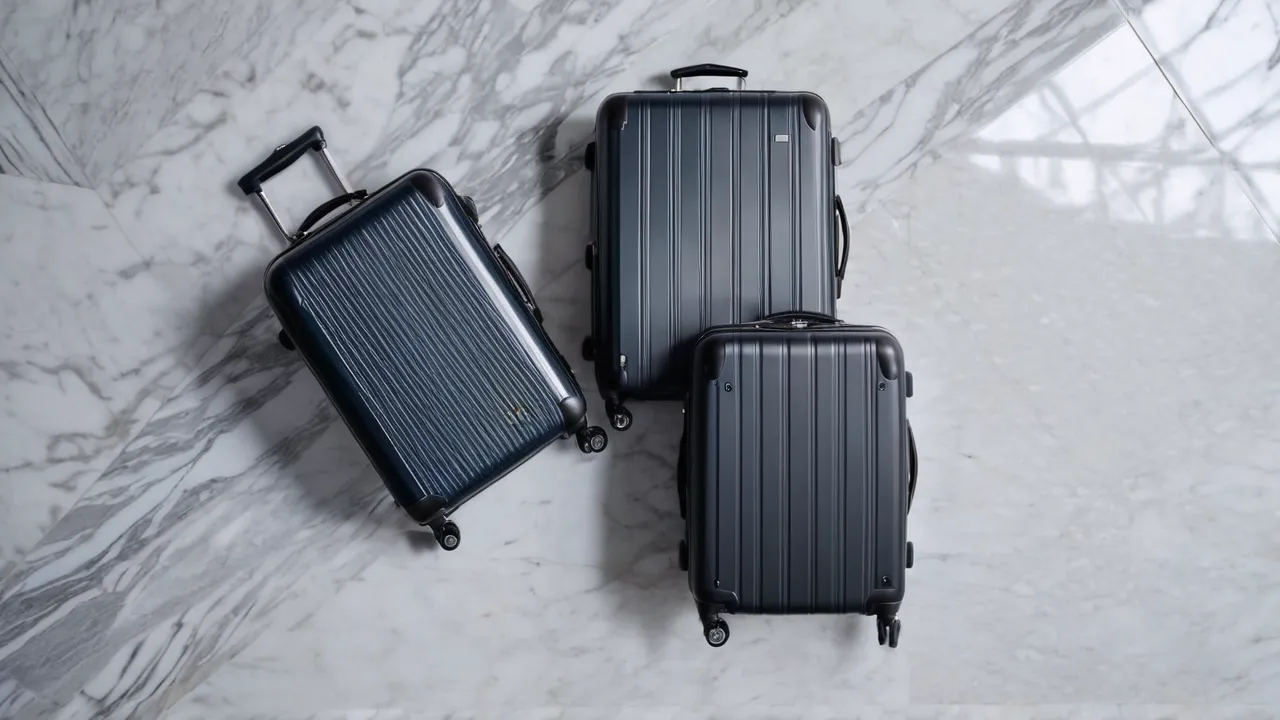
International luggage sizes are not standardized. The 62 linear inch checked bag rule, which adds height, width and depth, is common on US airlines, but other carriers use different dimensions, weight limits or piece counts. The reliable approach is to check each airline on your itinerary, including partner carriers, and measure your bag against their stated numbers.
Why 62 Linear Inches Is Not Universal
Linear inches are the sum of a bag’s three dimensions: height plus width plus depth. Many US carriers set 62 inches as the standard for a checked bag, and 22 by 14 by 9 inches is a common carry-on size. These figures are habits, not laws, and they vary by airline, by fare and by route.
Outside the US, many airlines use a weight-based allowance, such as 23 kilograms per bag in economy, or a piece concept, such as two bags per passenger on certain routes. Some budget carriers allow only a small personal item unless you pay for more. Metric dimensions are often stated per side instead of as a sum, such as a maximum for each side in centimeters.
What Varies Between Airlines
When you travel internationally, these elements change:
- Weight: from 20 kilograms to 32 kilograms or more, depending on class and carrier.
- Dimensions: a linear total, or a per-side cap.
- Piece count: one, two or a weight pool.
- Carry-on size: often smaller on regional and low-cost carriers.
- Carry-on weight: some airlines enforce a weight limit that US airlines do not.
- Personal item size: under-seat dimensions vary.
If your trip includes more than one airline, the strictest rule effectively sets your limit for the whole trip, because you may be checked again at a connection or on a partner flight. Mixed itineraries sold on separate tickets are the most likely to apply different rules.
A Four-Step Verification Routine
- List every flight and its operating carrier. The operating airline, not the one you bought from, decides the baggage rules.
- Open each airline’s baggage page and record carry-on size, carry-on weight, checked size, checked weight and piece count for your fare class.
- Take the lowest figure in each category across all flights. That becomes your working limit.
- Measure your bag including wheels, handles and any exterior pockets, and weigh it loaded at home.
Save a screenshot of each rule in case an agent disagrees. Recheck close to departure, because airlines change their policies.
Worked example: one trip, three carriers
Imagine a trip that starts on a US carrier, connects through a European hub and ends on a regional airline. The first airline allows one checked bag at a stated weight and linear size, the second counts pieces and weight pool, and the regional airline allows a smaller cabin bag with a weight cap. Your working limits become the smallest carry-on dimensions, the lowest carry-on weight and the lowest checked weight among the three. If the regional airline caps carry-ons at a low weight, you may need to move heavy items to your checked bag even though the first airline never weighs carry-ons. This is the type of surprise the routine prevents.
Measuring Correctly
Measure the bag at its widest points, including wheels, feet, handles and bulging pockets. Airlines count what you present at the counter or gate, not the nominal size in the product listing. Product listings often quote shell size without wheels and handles, so the real exterior size may be larger by an inch or two. Use a soft tape and stand the bag upright.
Check that expandable bags are measured in their zipped and unzipped state. Some airlines measure with the expansion open if the zipper is open. Our luggage set category shows bags with different depth and expansion features that affect these measurements.
Converting and adding dimensions
Linear inches are simple arithmetic. Add height, width and depth, all measured with wheels, handles and pockets. A case measuring 28 by 18 by 11 inches totals 57 linear inches, which is under a 62 inch limit with a few inches to spare. A case measuring 30 by 20 by 13 inches totals 63 inches and is over by one inch, even though each side looks reasonable.
To convert, multiply inches by 2.54 to get centimeters. A 62 inch total is about 157 centimeters. To convert pounds and kilograms, divide pounds by 2.2 to get kilograms: 50 pounds is about 23 kilograms, so the two common allowances are close but not identical. If an airline states a per-side cap in centimeters, convert each side of your bag separately and check that none exceeds it. Round measurements up, not down, because the sizer will not round in your favor.
Choosing Luggage for Mixed Itineraries
If you often fly different carriers, pick a bag that complies with the strict end of the range. For carry-on, that is typically a bag in the low 20s of inches tall, with a depth near 9 inches, and light enough that you can lift it. For checked bags, think about weight first; a bag that is too large will tempt you to fill it beyond the 23 kilogram line used by many airlines.
Consider a soft-sided case that compresses to fit sizers, but only if a stiff frame is not required by your needs. A bag that fits the smaller of two limits provides flexibility. If you have a connection on a smaller aircraft, the cabin bin may be smaller than on mainline jets, and a gate agent may ask you to check the bag.
Soft and hard shells at sizers
Many airports have sizer frames at the gate. A soft-sided bag can squeeze into a sizer if it is not overfilled, while a rigid shell cannot compress. If your bag is close to the limit, a soft bag gives more tolerance. A hard bag that is already at the limit has no margin, so choose one with a lower stated size than the limit rather than one that matches it exactly. Remember that wheels and handles count, which is the most common reason a bag that looks acceptable gets flagged.
Round every measurement up and keep a margin of about an inch on each side if the bag is soft, since a full soft case bulges. If the result is within an inch of the limit on any airline, treat the bag as a risk and consider a slightly smaller model.
When Rules Conflict at the Airport
If staff apply a different rule than the website shows, stay calm and show your saved rule. If the bag is forced to the hold, remove valuables, medications and power banks and keep them with you, because spare lithium batteries must travel in the cabin. Ask whether the gate check is free and ask for a tag. Keep the receipt for any fee in case you want to dispute it later.
Keeping your documentation handy
Store your baggage rules where you can find them offline. Screenshots in a folder on your phone work even without a signal. Include the page that shows your fare class, since allowances differ between fare types on the same airline. If you bought a ticket through a travel agent or a partner airline, keep the operating carrier’s rules as well, because the booking site may show a different allowance than the one the airline applies at the airport. When in doubt, call or message the airline before departure and note the date and the agent’s name.
It also helps to photograph your bag next to a tape measure at home. A picture of the bag’s measured dimensions can settle a dispute quickly, and it reminds you to check size again if you add pockets or straps. Finally, weigh the bag again after you buy souvenirs, since many return flights use the same limits as the outbound leg but with a fuller bag.
Who Should Choose Which
Choose a bag built to the strictest carry-on size you expect if you travel on mixed airlines and want to avoid fees. Choose a larger checked case only if you routinely fly carriers with generous weight allowances and pack heavy. Skip assuming a bag that fit last month will fit this trip, since each airline and fare is different. For our approach to such claims, see the how we review page, and browse the wider travel and luggage section for related bags.
Frequently Asked Questions
Is 62 linear inches the same on every airline?
No. Many US carriers use 62 linear inches for a checked bag, but other airlines use different dimensions, weight limits or piece counts. Check each airline on your itinerary, including partner carriers, and use the strictest figures as your working limit.
How do I measure luggage for an international flight?
Measure height, width and depth at the widest points, including wheels, handles and bulging pockets, and add them for linear inches. Weigh the loaded bag at home. Convert to centimeters or kilograms if the airline states metric limits. Round measurements up and keep a small margin.
Are carry-on sizes different in Europe and Asia?
Often yes. Many airlines outside the US set smaller cabin dimensions or a cabin weight limit, especially low-cost and regional carriers. Check the operating airline’s baggage page for your fare class before you pack, since the booking site may show different rules.
Final Thoughts
Treat the 62 linear inch rule as a US convention and verify limits for every carrier on your itinerary. Record the strictest figures, measure your bag with wheels and handles, weigh it loaded and save screenshots of the rules. A few minutes of checking before you pack costs far less than a fee at the counter.
Related buying guides
- Telescoping Handle Guide: What Makes One Last
- Luggage Trackers: AirTag vs Tile for Checked Bags
- Luggage Warranty Checklist: Questions Before You Buy
About the author

The BuyOnceChoice Editorial Team researches durable products worth buying once. Our guides compare published specifications, warranty terms, expert review consensus, and verified owner feedback. We do not conduct our own product trials. See How We Review and our Editorial Policy for our standards.