Do Packing Cubes Save Space? How to Use Them
Packing cubes rarely add a lot of room, but they change how a case is organized. Learn when they help, when they waste space and how cube size matters.
 By BuyOnceChoice Editorial Team
Updated November 16, 2026
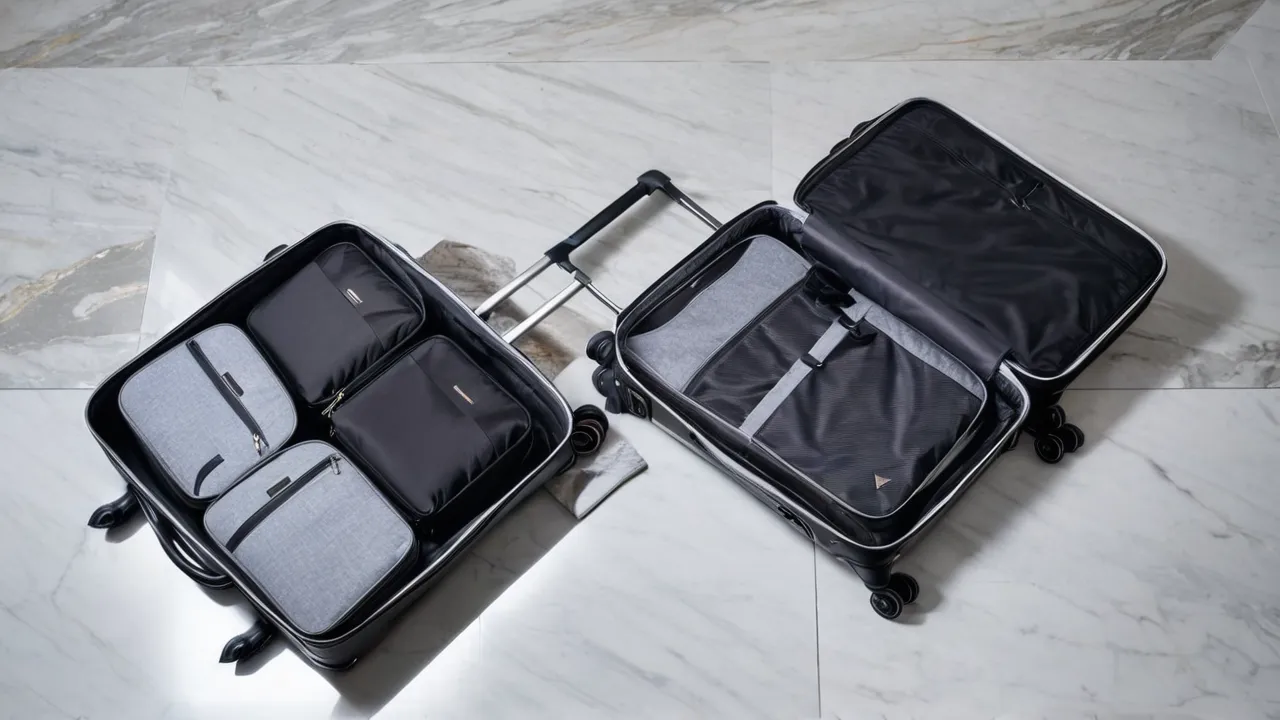
Are packing cubes worth it? They are worth it for organization and quick unpacking, but they rarely create much extra room on their own. Real space savings appear mostly when you use compression cubes for bulky items or choose cube sizes that match your suitcase interior. If you pack many small loose items or hate digging through clothes, cubes help. If your case is already a perfect fit, they add little. This guide shows how to judge the benefit with simple arithmetic and a home experiment.
What cubes change and what they do not
A cube does not remove volume from clothes. A shirt folded flat in a cube takes about the same space as the same shirt folded flat in the case. What changes is layout. Cubes turn awkward piles into blocks, remove gaps, and keep items from migrating during transit.
That structure can recover small pockets of space between items, and it makes the case easier to close. It also helps you see what you have, which cuts down on overpacking. If you tend to pack extra shirts because you cannot see what you own, a cube system helps indirectly.
Where cubes waste space, with numbers
Cubes add fabric, zippers, and stiffener, and each cube has dead space at its seams. If the cube widths do not match the case interior, gaps appear. A set of three equal cubes that leaves a one inch gap along the case wall wastes space compared with soft clothes that fill it.
Here is an illustration with assumed numbers. Suppose a case has an interior about 13 inches wide. Two cubes that are each 6 inches wide leave a one inch gap, which is about 8 percent of the width unused along the whole length of the cube row. Two cubes that are 6.5 inches wide fill it. The same arithmetic applies to height and depth, so a cube that is an inch too tall can stop the lid from closing flat. Your interior will differ, so measure it and do the same division.
Cubes also make irregular items harder to fit. Shoes, toiletry kits, and sweaters do not always slot into a rectangular grid. Compression cubes add weight, and weight can matter more than volume with airline limits. Maker claims about how much compression cubes shrink clothing vary, so treat any percentage on a listing as a claim to check, not a result you are owed.
A method to measure your own savings
You can decide with a small experiment at home.
- Pack your usual trip into your case without cubes. Close it and note whether it bulges, how much room remains, and the weight.
- Unpack and repack using cubes sized to the interior width. Close and compare.
- Time how long it takes to find a specific shirt in each version.
- Repeat with compression cubes for sweaters and note how far the lid sits from closed.
Record your results in a notebook. The point is to compare your own case and clothes rather than trust a general claim. The luggage set category lists cases whose interiors you can compare. If the cube version leaves you with the lid closing more easily, or you saved time finding items, the cubes are doing a job. If both layouts look the same, keep your money.
A useful rule when you shop is to buy one cube first, place it in the empty case, and see how it sits against the walls and under the lid. Leave about half an inch of slack in each direction, since a full cube grows slightly when you zip it. If the first cube sits flush and the zipper closes without strain, buy the matching sizes. If it does not, you have saved yourself an entire set that would not fit.
Who gains most, who gains little, and alternatives
Who gains most
- Families: cubes keep each person’s clothes together, and a color system makes unpacking fast.
- Multi-stop travelers: moving between hotels is easier when you can lift a cube from the case into a drawer and leave the case closed.
- Carry-on only travelers: compression cubes can fit a few extra items into limited depth, though you should check weight and carry-on dimensions. The best travel luggage set roundup shows common sizes.
Who gains little
If you travel for a weekend with a duffel, cubes add little. If you carry few clothes and one case, rolling items may work fine. If you pack unpredictable items, such as gear or gifts, the cube grid may not fit. If you hate wrinkles, compression may cost you more in ironing than it saves in space.
Alternatives
Packing folders hold shirts flat and wrinkle-free, and vacuum bags shrink bulky items though they need a pump or a roll. Simple zip-top pouches handle small items. A rolled-clothes method fills gaps without added gear. Choose according to the problem you want to solve.
Cube sizes and a packing plan that works
Many carry-on interiors are roughly the width of two medium cubes placed side by side, with a little to spare, but interiors differ by bag. Use your own measurements, then pick cube dimensions that divide the interior width without leftovers. Slim cubes can fill a gap along the side, while a half-height cube fits in the gap under a lid. Do not buy a large set before you check how one cube sits inside your case.
For backpacks, choose cubes that are narrower, since the interior is tall rather than wide. A pair of slim cubes plus a small pouch usually works better than a set sized for a rolling case. The backpack category lists packs where you can compare interior shapes.
Divide clothes by use, not by day. Put tops in one cube, bottoms in another, underwear and socks in a small cube, and sleepwear in the last. Fold items in the same direction and fill each cube evenly so it does not bulge on one side. Zip each cube and place the largest at the bottom near the wheels. Put shoes at the sides with socks tucked inside. Keep a spare cube empty for laundry on the return trip. If a cube bulges, remove one item and try again, because overfilled cubes are hard to stack and a stressed zipper tends to fail first.
Common regrets, trip length, and weight
Owners often mention three regrets: buying too many cubes so the case is full of fabric, buying a set whose sizes match no bag they own, and compressing too much and finding clothes deeply creased on arrival. The cure for each is the same: start with two or three cubes, measure the fit, and add more only if you need them.
For a weekend, one medium cube and a small cube hold everything, and you may not need cubes at all. For a week, plan on three cubes: tops, bottoms, and small items. For two weeks or more, add a cube for outerwear and one for laundry. Beyond that length, laundry stops are usually more effective than bigger cubes.
Because a cube makes it easy to pack more, many travelers arrive at the airport with a heavier bag than they planned. Weigh the packed case at home and compare it with the allowance printed on your ticket, since fees apply above the limit and carry-on weight caps are enforced on some carriers. If the bag is heavy, remove one cube of low-value items rather than compressing everything harder.
Cubes are inexpensive compared with the suitcase itself, and a small set can last years. The real cost is the time spent learning your own system. Give a set one trip, and if you reach for items faster and your case closes more easily, keep it. If not, return it and try a different size or a folder instead of buying more. The how we review page explains how gear value is assessed.
Frequently Asked Questions
Do packing cubes really save space in a suitcase?
Not by themselves. A cube does not shrink clothes, so space savings come from tidier layout, fewer gaps, and compression cubes used on bulky items. Cubes that do not match your suitcase interior can even waste room. Run a home comparison with and without cubes to see your own difference.
Are compression packing cubes better than regular ones?
Compression cubes help with bulky layers like sweaters and jackets, but they add weight and can crease clothes. Regular cubes are better for organization and light clothing. Choose compression only if your bag is tight on depth, and keep an eye on the airline weight limit.
How many packing cubes do I need for a week?
Three is a common starting point: one for tops, one for bottoms, and one small cube for underwear, socks, or accessories. Add a fourth for laundry if you want a separate bag for the return trip. Start small, measure how they fit, and add more only if you need them.
Do packing cubes keep clothes from wrinkling?
Not reliably. Cubes keep clothes in place, which can reduce shifting, but tight packing or compression can add creases. Folding flat, using a packing folder for dress shirts, and hanging items on arrival work better for wrinkle control. Do a trial pack at home before an important trip.
Final Thoughts
Packing cubes are an organizing tool first. They help most when you share a case, move between stops, or pack bulky items. They help least when your case already fits and you pack light. Match sizes to the interior and decide by your own habits.
Related buying guides
- Double vs Single Spinner Wheels: What Actually Matters
- Empty Suitcase Weight: Why It Eats Your Baggage Allowance
- Expandable vs Non-Expandable Suitcases: Trade-Offs
About the author

The BuyOnceChoice Editorial Team researches durable products worth buying once. Our guides compare published specifications, warranty terms, expert review consensus, and verified owner feedback. We do not conduct our own product trials. See How We Review and our Editorial Policy for our standards.