Leatherman vs Swiss Army Knife: Which Fits Your Daily Use
A pliers-style multi tool brings real gripping and cutting, while a slip joint army-style knife is lighter and slimmer. See which type fits your carry and jobs.
 By BuyOnceChoice Editorial Team
Updated November 16, 2026
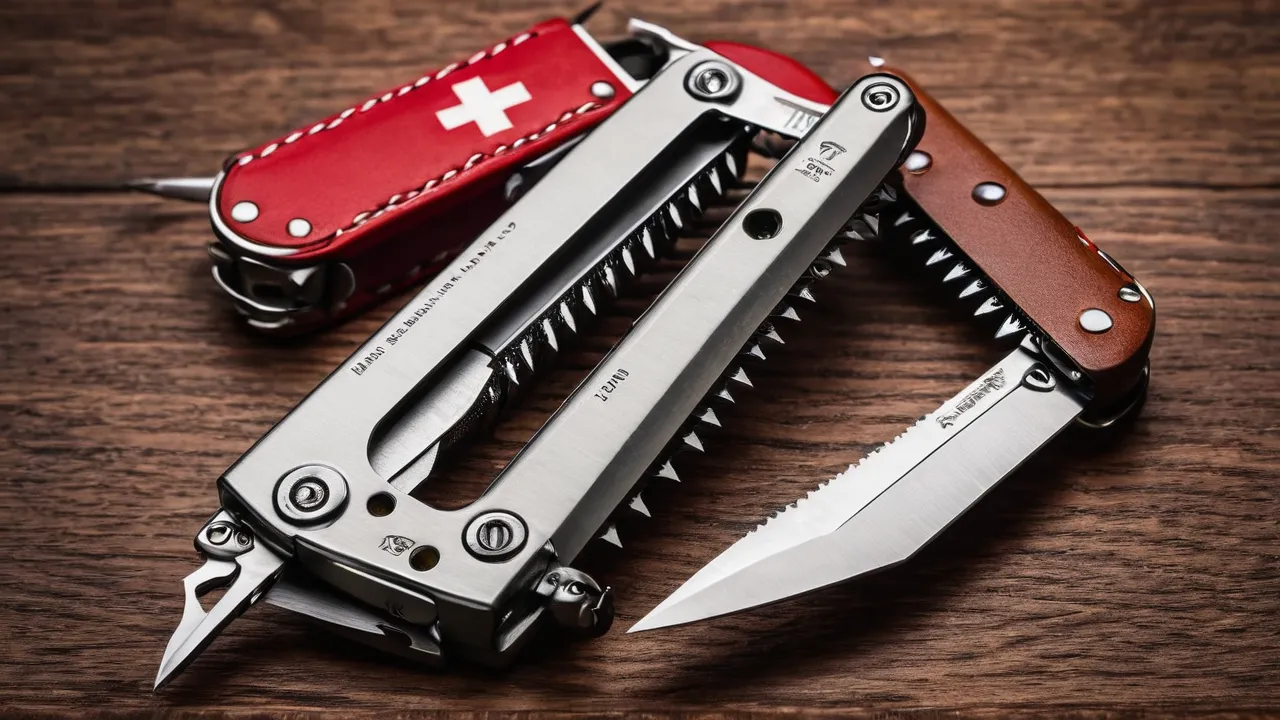
A multi tool versus a Swiss Army knife is a comparison between two folding tool types: a pliers-based multi tool, which hides a locking blade, screwdrivers and a file inside a pair of handles, and a slim slip joint knife that layers small blades and implements on each side of the body. Choose the multi tool if you grip, cut wire or fix things, choose the Swiss Army style knife for light daily cutting and low carry weight, and check local carry rules before taking either one anywhere.
What each type is
A multi tool folds out from a pair of pliers handles. The pliers are the core of the design, and a knife blade, screwdrivers, a file, scissors and other tools are stored inside the handles. Most good designs lock the blade and the main tools open. The result is a compact workshop that is heavier than a knife and meant to be used for real work.
A Swiss Army style knife has a slim body with tools layered on both sides, such as one or two blades, a can opener, scissors, a small screwdriver and tweezers. The blades are slip joint on most models, and a few have a lock. It is light and easy to carry, but the tools are small and give less leverage.
Variations exist inside each type. Compact multi tools have shorter pliers and fewer tools, and suit a pocket or a key ring. Full size models have longer handles and often one hand opening features. Swiss Army style knives range from tiny key ring versions to large models with a dozen or more implements. Decide how many tools you will really use, because extra implements add thickness without adding value if you never open them.
Gripping, leverage and blades
The pliers on a multi tool give you grip, wire cutting and a way to turn small fasteners. The handles are shaped to take force, though the tools inside them are less comfortable than full size versions. A slim army style knife has no pliers, so holding a nut, straightening a bent pin or cutting a wire is awkward and sometimes damages the small tools. For repairs on a bike, a car or around the house, the multi tool earns back its extra weight.
Handle design affects comfort. Many multi tools have flat or squared handles that dig into the palm under heavy force, and some models have rounded or contoured handles that spread the pressure. Check how the closed handles feel in your hand, and how each tool opens. A tool that is hard to open is frustrating, and one that opens too easily may pop open in a pocket. Handle one in person if you can.
Both types carry knife blades, but the design differs. Multi tool blades are usually a single locking blade of moderate length, meant for general cutting. Army style knives often offer two or more blades, and the main blade tends to be smaller. A locking blade is safer in heavy use because it will not close on your fingers. Look at how well the lock holds and whether the blade has side play when you wiggle it.
| Factor | Multi tool | Swiss Army style knife |
|---|---|---|
| Pliers and gripping | Yes | No |
| Weight | Heavier | Lighter |
| Carry | Belt sheath or pack | Pocket friendly |
| Tool access | Often needs two hands | Quick one hand access to the main blade |
| Blade lock | Common | Only on some models |
| Best for | Repairs and field fixes | Light daily tasks |
Blade shape and steel matter more than the number of tools. A straight edge with a plain grind is easy to sharpen and useful for general work. A serrated section helps with rope and webbing. Keep the edge sharp, since a dull blade needs more force and slips. Stainless steel is the usual choice because it resists rust from pocket sweat and damp garages, even if it needs touching up more often than harder carbon steels.
Matching the tool to the job
The fastest way to decide is to list the five things you cut, grip or turn most often. Write them down for a week, then match them against what each type can do.
Jobs that point to a multi tool
- Tightening a loose bolt or nut with the pliers
- Cutting or stripping thin wire, or pulling a stubborn staple or cotter pin
- Camping and bike fixes where you need a screwdriver, a file and a blade in one place
- Vehicle glove box duty, where weight is not a concern
Jobs that point to a Swiss Army style knife
- Opening boxes, packages and food packaging
- Cutting string, tape and fruit at a desk or picnic
- Removing a splinter with the tweezers or reaching a tiny screw on glasses
- Anywhere you want the tool in a pocket all day without noticing it
If both lists look familiar, you probably need both, and the cheapest path is to buy the pocket knife first and add a multi tool when a job shows you what was missing.
Carry, comfort and everyday use
A knife fits in a pocket and is easy to forget. A multi tool is bulkier, often carried on a belt or in a bag. If you want a tool that is always with you, the knife wins. If you want a tool for a project day, the multi tool wins. Some people carry a small knife in the pocket and keep the multi tool in the toolbox or car.
Think about where each one lives. A multi tool in a sheath on the belt is easy to reach but may be restricted at some workplaces. A knife in a pocket can be a nuisance with keys and coins, which scratch it and dull the edge. A small pouch or a separate pocket helps. In a car or toolbox, either type sits quietly. The real question is how often you will reach for it, and how quickly.
Weight is the number people underestimate. A full size multi tool feels fine in the hand but drags on a belt over a long day, while a compact one is closer to a thick knife. If you plan to carry it every day for months, hold both in your pocket for an afternoon around the house before you decide.
Legal and travel considerations
Laws on carrying knives and tools vary by state, city and venue, and rules cover blade length, lock type and carry method. Airports, schools, courthouses, many government buildings and a lot of venues restrict blades and tools. Commercial flights in the United States generally do not allow knives or multi tools with blades in a carry-on bag, so pack them in checked luggage or leave them home, and confirm the current rule on the airline and TSA websites before you fly. Check local and venue rules before you carry, and see our guide on multi tools and knives for pointers. Do not rely on any summary, including this one, for legal advice.
A practical habit is to keep a plain, small tool without a belt sheath for everyday errands, and leave the larger one in the vehicle or bag. If you are unsure whether a place allows it, the safe choice is to leave it in the car or at home.
Care and durability
Both types need cleaning and light lubrication. Debris in the pivots and locks wears them. Check screws for tightness and wipe off moisture. A tool that is kept clean and oiled works smoothly for years. Look for stainless steel for corrosion resistance and a warranty that covers repair. The hand tools category has related help.
Warranty and repair are worth a look. Some makers offer repair or replacement for defective tools, which supports a buy once approach. Read the terms in the paperwork and keep your receipt. A hard fall or a bent plier can end a tool’s life, and a heavier, simpler design may survive abuse better than a complicated one with many small parts, so consider your own use pattern.
Clean the pivots with a small brush and a drop of light oil, work the tools open and closed a few times, and wipe off the excess. Tools used around food should be washed, dried and re-oiled with a food safe lubricant. Check each locking mechanism before heavy use by pressing on the spine of the opened blade, with the edge pointed away from you, to confirm it holds.
Sharpen blades with a stone or a rod, keeping a steady angle. A dull blade is more dangerous than a sharp one, since it needs extra force and can slip. A few strokes on a sharpening tool after heavy use keep the edge keen and spread the wear.
Who should choose which
- Choose a multi tool if you do repairs, camping, bike or vehicle work
- Choose a Swiss Army style knife for desk, kitchen and light daily use
- Choose both if you want a pocket knife and a repair tool
- Skip a multi tool if you never need pliers
- Skip the small slip joint knife if you need a strong locking blade for hard cutting
Another factor is how you use tools around other people. A knife that folds small and looks mild is more socially acceptable in an office or at a family gathering than a pair of pliers on your belt. Context matters, so think about where you will carry the tool and who will see it.
Frequently Asked Questions
Is a multi tool better than a Swiss Army knife for everyday carry?
It depends on what you do. A multi tool is better if your day includes gripping, tightening or wire work, because the pliers do jobs a slim knife cannot. A Swiss Army style knife is better for opening packages, cutting string and light chores, and it is far easier to forget in a pocket.
Can I take a multi tool on a plane?
Generally not in a carry-on. US airport security rules currently do not allow knives or multi tools with blades in the cabin, though they can usually travel in checked baggage. Rules change and differ abroad, so check the TSA and airline websites before packing, and leave the tool at home if you are unsure.
Do Swiss Army knives have locking blades?
Most classic models use slip joint blades that do not lock, so the blade can fold on your fingers under pressure. Some larger models have a locking main blade. If you plan to cut anything tough, look for a lock on the product page and check that it holds without side play.
Is a smaller multi tool enough for a car or bike kit?
A compact model covers small screws, light cutting and a little gripping, but short pliers and handles limit leverage. For roadside or trail repairs, a full size multi tool with longer handles and a locking blade is the more useful choice, and it weighs little in a kit bag.
Final Thoughts
The comparison comes down to pliers or no pliers. Pick a multi tool when you want gripping power and a lockable blade, and a slim knife for light everyday cuts. Check carry rules, keep the tool clean and choose quality steel and locks. For how we weigh durability claims, read how we review.
If you are undecided, start with the smaller and cheaper type you will actually carry, then add the other when a job shows what was missing. Many owners find that one of each ends up in regular use, with the knife in a pocket and the multi tool in the garage drawer.
Related buying guides
- Multi Tool Care and Repair: Keep It Working for Decades
- Pocket Knife Laws and Carry Basics for US Buyers
- Pocket Knife Steel Guide: What Blade Steel Means
About the author

The BuyOnceChoice Editorial Team researches durable products worth buying once. Our guides compare published specifications, warranty terms, expert review consensus, and verified owner feedback. We do not conduct our own product trials. See How We Review and our Editorial Policy for our standards.