Ozone and Air Purifiers: Which Features to Avoid
Do air purifiers produce ozone? Learn which types make it, why ozone irritates lungs, and how to verify a safe model with certification checks.
 By BuyOnceChoice Editorial Team
Updated November 16, 2026
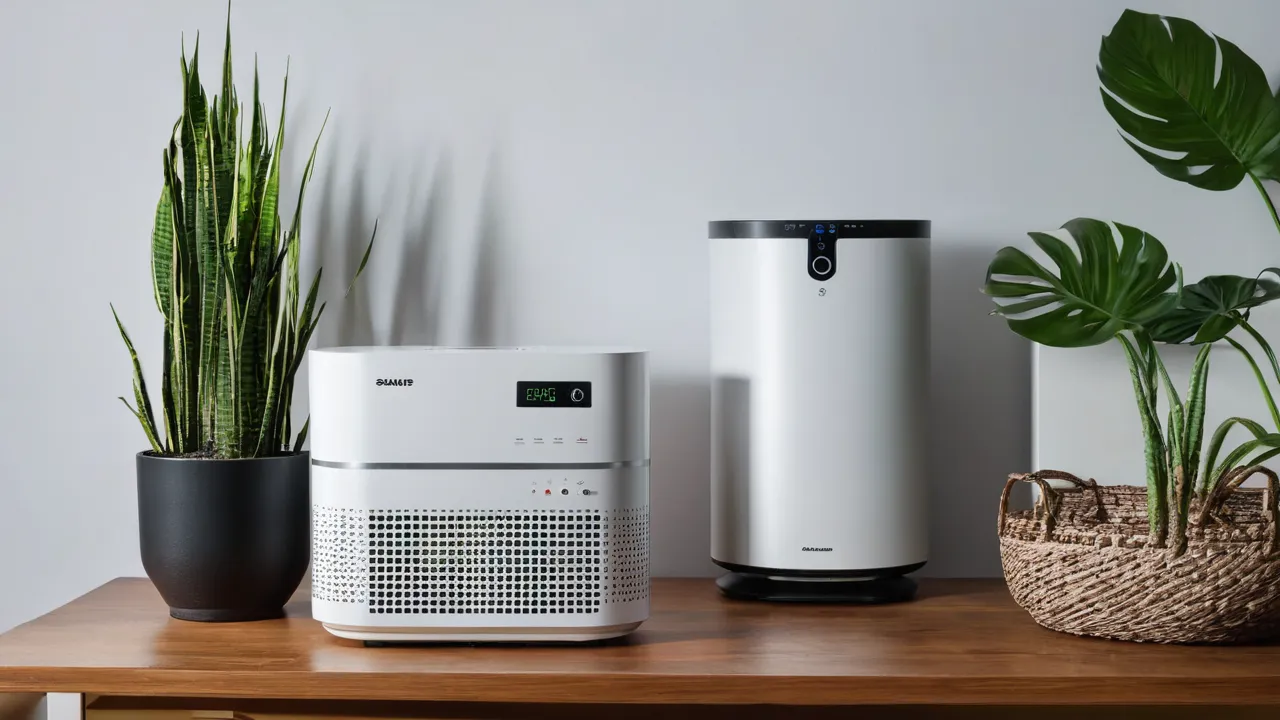
Do air purifiers produce ozone? Some do. Ozone generators make it on purpose, and some ionizers, plasma, and UV-C units can produce it as a byproduct. Filter-only models with a HEPA filter and a fan do not. Ozone is a lung irritant, so choose filter-based purifiers and verify low ozone emission through certification.
Safety First: Why Ozone Matters
Ozone is a lung irritant. Breathing it can cause coughing, throat irritation, chest tightness, and worsen asthma. This is why indoor air quality agencies advise against using purifiers that intentionally generate ozone in occupied spaces. People with asthma, children, and older adults are generally more sensitive. This is general safety information, and a doctor is the right source for health advice. Follow the manual and avoid operating any ozone-producing device in a space where people or pets are present.
Which Purifier Types Make Ozone
Ozone generators
These are made to produce ozone, usually for odor or smoke treatment. They are sometimes sold as air purifiers or “air sanitizers.” They are not appropriate for living spaces while occupied, and they do not clean particles in a meaningful way.
Ionizers and electrostatic units
Ionizers release charged ions that attach to particles so they settle out of the air. Some produce small amounts of ozone as a byproduct. Electrostatic precipitators use charged plates to collect particles, and some can also emit ozone. The amount varies by design and maintenance.
Plasma, photocatalytic, and UV-C units
Plasma and photocatalytic designs create reactive molecules to break down contaminants, and some UV-C lamps emit wavelengths that can form ozone. A well-designed UV-C unit shields the lamp and uses ozone-free lamps, but the claim should be verifiable.
Filter-only HEPA and carbon purifiers
A fan pushes air through a mechanical filter. There is no electrical field or lamp to create ozone. These are the lowest-risk design for people who want to avoid it entirely.
How to Check a Purifier
Marketing terms like “natural,” “fresh air,” or “safe ozone” are red flags. Use verifiable steps instead.
- Look for California Air Resources Board certification. California limits ozone emissions from air cleaners sold in the state, and a CARB listing for the model is a useful, public check.
- Search for a model on the CARB list of certified air cleaners. If the model is not listed, ask why.
- Look for compliance with the ozone limits in UL standard 867 for electrostatic air cleaners, as stated on the product page.
- Read the manual. Reliable makers state that the unit does not intentionally produce ozone, and describe how any ionizer function can be turned off.
- Prefer designs where the ionizer is optional. Turning it off removes the main ozone source.
If a seller refuses to give certification details, assume the answer is no.
For context on the numbers, California regulation limits ozone emissions from indoor air cleaning devices to no more than 0.050 parts per million, which is 50 parts per billion. A CARB listing tells you the model is certified to that limit. It does not tell you how well the unit cleans, so use a separate measure such as CADR for cleaning speed and a filter description for what the unit captures.
What About UV and Ionizer Add-Ons?
Many HEPA purifiers include an optional ionizer or UV lamp. The filter does the heavy lifting, so the add-on is rarely needed. UV-C inside a sealed chamber has limited effect on airborne microbes because air passes too quickly for enough exposure time. If you buy a unit with an ionizer, check that you can switch it off, and consider leaving it off. Our air purifier guides list models by filter type so you can focus on the mechanical designs.
Understanding Certification Labels
Several labels show up on purifier pages, and they mean different things. A CARB certification addresses ozone emission limits for air cleaners sold in California, and many makers apply it nationwide because it is easy to check. A listing under AHAM Verifide reports CADR, which measures cleaning speed for smoke, dust, and pollen, but it says nothing about ozone. Energy labels address power use. A safety listing from a recognized safety organization covers electrical safety.
The point is to match the label to the question. If your concern is ozone, look for CARB. If your concern is cleaning speed, look at CADR. If a page uses an impressive-sounding certificate that you cannot trace to a standard or a public list, treat it as decoration. Where possible, check the public list yourself rather than relying on a badge image.
Odor, Smoke, Warning Signs and Use Habits
Ozone is sometimes sold as a way to remove odors, but it reacts with surfaces and can leave byproducts. For odors, ventilate, remove the source, and use activated carbon filters, which adsorb gases rather than reacting with them. Carbon filters have limits, and a thin carbon layer will saturate quickly, so heavy odor or smoke calls for a deeper bed. For smoke after a fire, professional cleanup is the correct route.
Signs Your Current Unit May Be Making Ozone
Ozone has a sharp, clean smell, similar to the air after a thunderstorm or around a photocopier. If a purifier gives off a noticeable electric or chlorine-like smell, especially in a small room, switch it off and ventilate. Irritation of the throat or eyes when the unit runs is another reason to stop using it. If your model has an ionizer switch, turn the function off and see whether the smell goes away. If the smell comes from the unit with all add-ons off, contact the manufacturer and consider replacing it. These are general warning signs, and a doctor can advise anyone with health symptoms.
Placement and Use Habits
If you own a unit with an ionizer, keep it in a ventilated area, do not run it in a closed small room for long, and switch off the ionizer when sleeping nearby. Do not run an ozone generator while anyone is in the home. Keep fresh air flowing during any cleaning work.
Special Cases Worth Knowing
Car and portable units
Small plug-in or car purifiers often rely on ionization because a real filter is too bulky. Their output is tiny, and the same ozone concern applies in a small cabin. Prefer filter-based portable units when you can, and ventilate the car with outside air.
Commercial ozone generators
Contractors sometimes use ozone machines for fire, smoke, or pet odor remediation in unoccupied buildings. This is a specialized practice with its own safety rules, and it is not a substitute for a household purifier. Never operate such equipment while people or pets are inside, and air the space out fully afterward as the maker directs.
HVAC-installed air cleaners
Some whole-home systems add UV lamps or electronic cleaners inside the duct. Ask the installer for the model name and certification, and confirm in writing that it does not emit ozone beyond accepted limits. Have a licensed HVAC professional handle installation and any electrical work.
Babies and nurseries
For a nursery, keep it simple. A sealed true HEPA purifier running quietly on a low speed is a sound plan. Skip scented, ionizing, or “freshening” functions, which add chemicals or reactive species to the air the baby breathes. Check the manual for clearances, keep cords out of reach, and place the unit where a child cannot touch the grille.
Decision Rules
- Asthma, allergies, young children, pets: pick a filter-only true HEPA purifier and skip ionizers.
- Wanting a feature-rich model: choose one with a switchable ionizer, certified by CARB, and leave the ionizer off.
- Odor problems: use carbon and ventilation, not ozone.
- Marketing says “ozone safe” with no certification: skip it.
- Already own an ionizer unit: check the manual for an off switch and consider replacing it if you cannot disable ionization.
See the How We Review page for how we treat unverified claims, and the home appliances hub for related buying guides.
If you are unsure about a unit you already own, check the manual and the maker support page first. A clear statement that the unit does not intentionally produce ozone, plus a switch to turn off any ionizer, answers most questions. Where a maker will not say, treat the answer as no and choose a filter-based model.
Frequently Asked Questions
Do air purifiers produce ozone?
Some do. Ozone generators make it on purpose, and some ionizers, plasma and UV-C units can produce it as a byproduct. Filter-only purifiers with a HEPA filter and a fan do not, because they have no electrical field or lamp to create it. Check the manual and a public certification list.
Is a CARB certified air purifier safe from ozone?
CARB certification means the model meets California limits on ozone emissions, which is a useful public check. It does not measure how well the unit cleans, and it does not mean you must run an ionizer. Look the model up on the CARB list yourself rather than trusting a badge image.
Are ionizers in air purifiers safe?
Ionizers release charged ions, and some produce small amounts of ozone as a byproduct, with the amount varying by design and maintenance. If a purifier has an optional ionizer, confirm you can switch it off and consider leaving it off, since the filter does the heavy lifting. Anyone with asthma should skip ionizing functions.
Can ozone generators clean the air in my home?
Not in a safe or meaningful way for living spaces. Ozone is a lung irritant, it reacts with surfaces and can leave byproducts, and it does not clean particles well. Use carbon filters and ventilation for odor, and use professional cleanup after a fire. Never run an ozone generator while people or pets are present.
Final Thoughts: Filters Clean Air, Ozone Does Not
Avoid devices that make ozone on purpose and be cautious with ionizers and plasma. A filter-only HEPA purifier with CARB certification is the simplest safe choice. Verify claims through public lists rather than wording on a box.
Related buying guides
- True HEPA vs HEPA-Type Filters: What Matters
- Air Purifier Filter Replacement Cost: Buy Once Math
- Air Purifier Placement: Where to Put It for Best Results
About the author

The BuyOnceChoice Editorial Team researches durable products worth buying once. Our guides compare published specifications, warranty terms, expert review consensus, and verified owner feedback. We do not conduct our own product trials. See How We Review and our Editorial Policy for our standards.