Personal Item Size Guide: What Fits Under the Seat
A practical way to choose a personal item that will fit under the seat on strict carriers, what to do when no numbers are published, and how to pack it.
 By BuyOnceChoice Editorial Team
Updated November 16, 2026
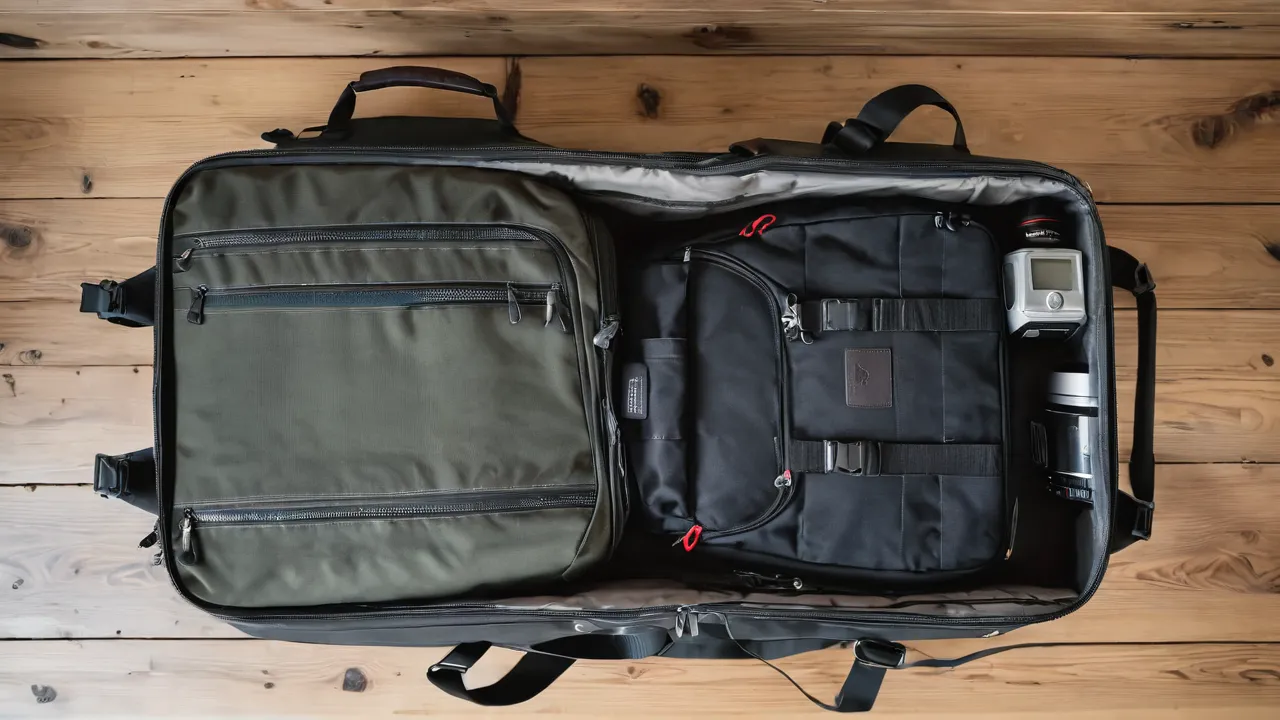
Personal item size is set by each airline, and the safest bag is a soft, compressible one that stays within the strictest published limit among the carriers you use. Some airlines publish exact dimensions, a few publish only a description such as fits under the seat in front of you, and some change the number for different fares. Because the numbers differ, this guide shows you how to choose a bag that works across carriers and how to confirm the rule for your flight before you leave for the airport.
Why there is no single size
There is no industry standard for a personal item. Each airline defines its own, and the definitions have shifted over time as carriers adjust fees and bin policies. Some state a width, height, and depth; some state a linear total; and some simply say the item must fit under the seat.
A number that is fine for a roomy seat on a large jet may not fit under the seat of a regional aircraft, where the space below the seat in front is shallower and may contain equipment boxes. That means two travelers with the same bag can have different experiences on the same airline, depending on the aircraft type.
Some carriers publish a personal item limit close to seventeen by ten by nine inches, but that is an example of what a strict carrier might say, not a rule for all. Always read the page for your carrier and fare.
What goes under the seat in practice
The space is bounded by the seat in front, the floor, the seat rails, and sometimes a bar or a box. Soft bags can deform to fit; rigid items cannot. A structured bag that is within the stated size on paper can still fail if its shape is boxy and the space is tapered.
Choose a bag that is soft on the sides and that can be compressed. Keep the profile low and avoid hard corner guards or thick base plates. The bottom of the bag should be flat enough to slide in, because the front lip of the seat can catch a bulge.
Packing strategy matters too. Pack heavy items on the bottom and keep the top flat. A bag filled evenly slides in; a bag with a lump at the top will catch. Remove the items you need during the flight and keep them in a small pouch so that you can stow the bag and still reach them.
What to do when no numbers are published
When a carrier gives no numbers, assume the strictest case. A bag near seventeen by ten by nine inches is a conservative target for a personal item, since several carriers use limits close to it. Treat that as a planning figure, not a guarantee, and check whether the carrier uses any sizers.
Look for a policy statement on the carrier page. If there is none, the next step is to contact customer service in writing and save the reply. Gate agents have discretion, and a written answer helps you if there is a dispute.
If you cannot get clarity, choose a bag that you can compress or empty into a larger bag. A bag that can fold to a smaller size under pressure gives you a way to comply on short notice.
A simple method to confirm your bag
Follow these steps at least a few days before you fly.
- Measure the packed bag in height, width, and depth at the widest points.
- Check the personal item page on every carrier in your itinerary and note the strictest.
- Compare each number with the limit, leaving a margin of at least half an inch.
- Do a trial fit at home by sliding the packed bag under a chair of roughly standard height.
- Prepare a plan B, such as a smaller tote you can move items into if asked.
Do the home fit with a typical economy chair, since the seat height differs from a sofa. If the bag needs to be forced, it will not slide in on a plane.
A worked measuring example
Say you plan to use a soft backpack as a personal item. Packed, it measures 16 inches high, 11 inches wide and 8 inches deep at the widest points. Compared with a strict example limit of 17 by 10 by 9 inches, the width is one inch over, so it may fail even though height and depth pass. Soft sides may compress, but you should not count on it. The fix is to remove a bulky item, use a compression strap or move to a slimmer bag. If you add the three numbers for a linear total, 16 plus 11 plus 8 equals 35 inches, which is useful when a carrier states a total rather than three limits. Always check both the sum and each side.
Note the aircraft type as well. On smaller regional jets the space under the seat can be shallower than on larger planes, so a bag that fits on one flight may need to go in the overhead bin on another.
Choosing the bag type
Backpacks, tote bags, and small duffels all work as personal items if they stay soft and compact. Backpacks distribute weight better and keep your hands free, but a stuffed backpack tends to bulge in the front. Totes are easy to stow but have an open top that can spill.
A small laptop backpack with a slim profile is a common choice for work travel. Browse the backpacks category if you want a pack designed for that role, and see the best executive backpack page for how those are usually organized. For the larger carry-on that goes in the bin, our overview of rolling carry-ons and sets lists what to check.
A bag with a trolley sleeve lets you slide the personal item onto the handle of a rolling bag, which helps in the terminal. Remember that you will need to separate them at the seat.
Packing the item so it survives the walk and the stow
A personal item gets moved more than any other bag. It goes from the floor to your lap to the cabin floor, and it goes through the security belt. Pack the items you need at the top, such as a charger, headphones, and a water bottle you filled after security. Keep documents in a pocket that closes with a zipper, not an open sleeve, so they do not fall out while you reach under the seat.
Weight matters here as well. A heavy personal item is awkward to push under the seat and strains your shoulder in the terminal. Keep it to what you can lift with one hand, and move dense items, such as books or spare shoes, into the carry-on when you can.
If your carrier requires the personal item to sit on the floor in front of you for takeoff, remember that your legroom shrinks. A flatter bag leaves more room for your feet, which matters on a long flight.
Who should choose what, and who should relax
Travelers on ultra-low-fare carriers, where the personal item is the only free bag, should be strict and choose the smaller size. Those traveling on carriers with generous personal item policies can use a larger bag but should still keep it soft. Business travelers who carry a laptop should choose a slim bag that carries the laptop upright.
Skip a rigid bag as a personal item unless you know the carrier allows it. Skip a bag whose maker does not publish exact dimensions. If you are traveling with children, remember that each child may be limited to the same item, so choose a lightweight bag they can carry themselves.
If you plan to rely on the personal item for a week or more, think about what you pack. Dense items such as shoes and chargers take the most space; pack them at the bottom and wrap fragile items in clothing. For the broader method we use when judging bags, see the how we review page.
Frequently Asked Questions
What size is a personal item for a flight?
It depends on the airline. Some publish exact dimensions, some give only a description such as fits under the seat in front of you, and limits can differ by fare. A strict example limit is close to 17 by 10 by 9 inches, but check your carrier’s page for the real number.
Can a backpack count as a personal item?
Yes, if it is soft, compressible and within your airline’s size rule when packed. Overstuffed backpacks bulge in front and may not fit under the seat, so pack evenly and keep the profile low. Measure it packed, and try sliding it under a chair at home before you fly.
What happens if my personal item is too big?
The gate agent may ask you to pay for a larger bag, check it or move items into a smaller bag. Measure the packed bag before you fly, try it under a chair, and keep a backup tote in case you need to repack.
Final Thoughts
A personal item that works is a bag that is soft, low in profile, and sized to the strictest rule you will meet. Treat published numbers as the source of truth, and when the numbers are missing, plan for the smaller case. Measure the bag packed, try the fit under a chair, and keep a backup tote for the moment a gate agent says it will not fit.
Do these things before each trip, because airline rules change, and the one-minute check is cheaper than a fee at the gate.
Related buying guides
- Rolling Backpack vs Wheeled Duffel for Carry-On Trips
- Travel Backpack Size Guide: Liters for Every Trip Length
- Travel Backpack vs Duffel Bag vs Suitcase
About the author

The BuyOnceChoice Editorial Team researches durable products worth buying once. Our guides compare published specifications, warranty terms, expert review consensus, and verified owner feedback. We do not conduct our own product trials. See How We Review and our Editorial Policy for our standards.