Luggage Set vs Single Suitcase: When a Set Pays Off
Count the pieces you actually use per year and over a decade to see when a matched set saves money and when one well-built suitcase costs less to own.
 By BuyOnceChoice Editorial Team
Updated November 16, 2026
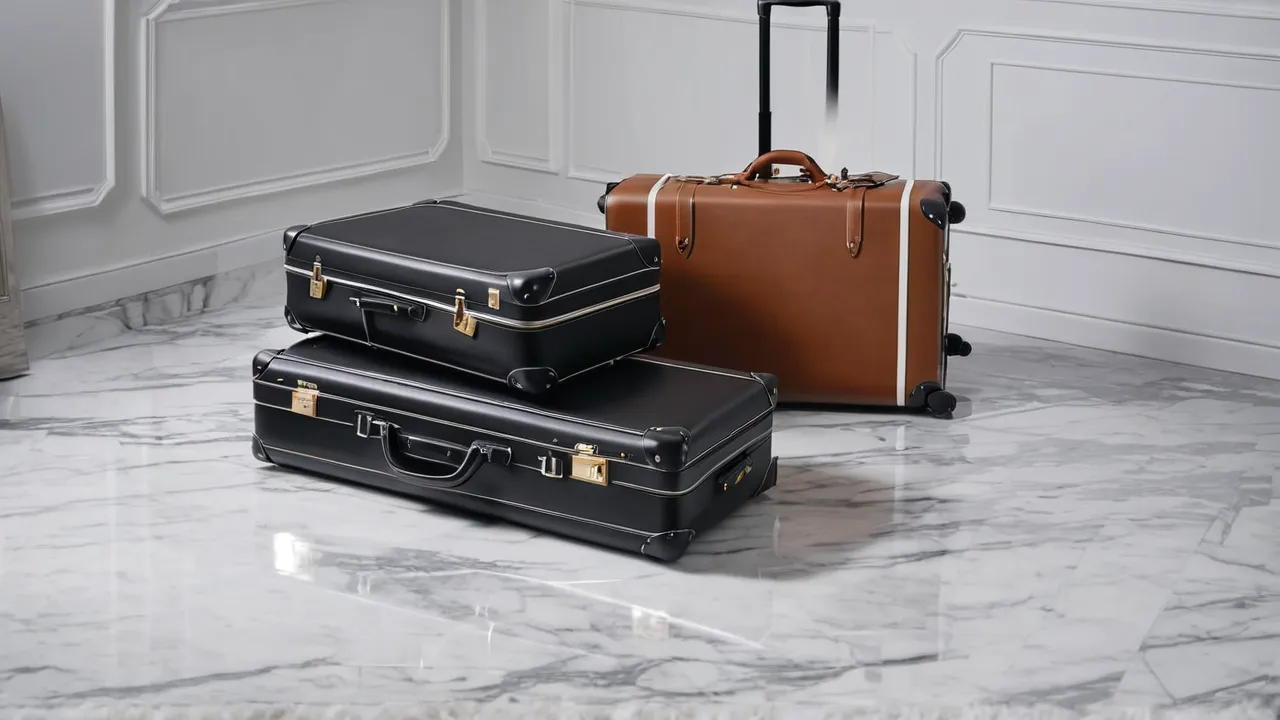
A luggage set pays off only when you will regularly use most of the pieces in it, typically a family or a couple who travels together and needs a carry-on plus one or two checked bags at the same time. For a solo traveler or someone who takes one or two trips a year, a single well-built suitcase usually costs less over ten years and leaves less unused bulk in the closet. The honest way to decide is to count the pieces you would actually take on your typical trips, then compare that number against what the set contains.
Why sets are sold the way they are
A set bundles two to four sizes, often nested so they store inside each other, at a lower price per piece than buying each size separately. That is real value if every piece gets used. Brands also push sets because matching bags look good in a photo and because a bundle raises the order total.
The trouble starts when the set includes a size you never take. The smallest piece may be too small for a weekend, the largest may be too big to lift, and the middle piece may be the only one you actually use. A set price spread over unused pieces is not a saving. It is a bigger purchase with the same single useful bag inside it.
Another common issue is that a set is built to a single quality level. If the carry-on is the piece you use most and it wears out first, the other two matched pieces stay in storage, which defeats the buy-once idea.
The usage math, step by step
Use this method before you buy anything. Write down your trips for a typical year and answer four questions for each.
- How many people are traveling with luggage from this household?
- Will you carry on, check, or do both?
- How many nights will you be away?
- Which airline rules apply, for example free carry-on but paid checked bags?
Count how many bags you needed per trip. Multiply by the number of trips. A couple who takes two trips with one carry-on and one checked bag each uses four bag-uses per trip, which a three-piece set can cover. A solo traveler who takes one carry-on on every trip uses one bag-use per trip, and a single carry-on covers that.
Then ask what the extra pieces would do for you. If the answer is “stay in the closet”, they are not savings. If the answer is “stop us from borrowing a bag every holiday”, that has genuine value.
Finally, compare cost per piece you will use. Divide the set price by the number of pieces you would actually use, then compare that with the price of the single bags you would buy instead. If the set wins only when you count pieces you would not use, a single piece is the better buy.
Here is the math with relative units, not prices. Say a three-piece set costs six units and the carry-on you would buy alone costs two units, the medium bag three units and the large bag four units. Buying all three singles costs nine units, so the set saves three units. If you would only ever use the carry-on and the medium bag, the singles cost five units and the set costs more than the pieces you need. If you would use all three, the set wins. The numbers change with your sales and brands, but the structure does not: compare the set price with the price of the pieces you would actually use.
What changes over ten years
A set stores neatly, but it ages together. Bags handled by baggage crews wear differently from bags that ride in a car, so pieces fail at different times. A well-made single suitcase can be repaired and kept, and when a carry-on of the set fails you may be left with mismatched pieces.
A single suitcase lets you spend more on a better build. With the same money that buys a basic three-piece set, you could buy one carry-on with a repairable frame, a good zipper, and an accessible wheel assembly. Many travelers find that a good carry-on and a good checked bag, bought separately when needed, outlast a matched set of the same total cost.
There is also the question of what changes in your life. A new baby, a move abroad, or a change of job can change the bags you need. A set bought for one pattern of travel can be wrong for the next, whereas single pieces can be added as needs change.
Where a set clearly helps
Some situations favor the bundle. Families who travel together and need matching bags that are easy to spot on a carousel can benefit. Students who pack for a move and for later trips can use the large piece for the move and the small pieces afterward. Couples who share bags and want nesting storage in a small apartment have a real use for a nested design.
Another case is a set sold with a single warranty across all pieces. That can simplify claims, but read the terms; our guide to what to look for in a warranty describes how we think about support terms. If you are comparing sets in particular, the luggage sets category gathers the styles in one place and the best travel luggage set roundup lists how they are typically composed.
Where a single suitcase wins
Solo travelers, minimalists, and people who mainly fly with carry-on bags are better off with a single piece. So are travelers who regularly stay in small spaces and cannot store nested pieces. The same goes for anyone who has found that they use the same bag every time and ignore the others.
A single suitcase also makes sense if you prefer different styles for different jobs, such as a hard carry-on for business trips and a soft checked bag for family holidays. Mixing is not a flaw. It lets each bag be chosen for the job instead of the matching look. For soft-sided options, see the best softside luggage set page for how those are usually built and which sizes they come in.
Hidden costs that change the comparison
Look beyond the sticker. Sets usually include a large checked bag, and many airlines charge for checked bags on lower fares, so a set encourages a spending pattern you may not want. Larger bags are also easier to overpack, and some carriers apply extra fees when a bag passes the stated weight limit, which is commonly around fifty pounds for standard economy but varies by carrier and route.
Storage has a cost as well. Nested sets store compactly, but only if you keep them nested. Once one piece lives in the car and another in the attic, the space benefit disappears. A single bag stored on a closet shelf is simpler.
Resale and hand-me-down value matter too. A single quality carry-on can be passed to a family member when you upgrade. A set tends to be passed on as a bundle, which is harder to do when one piece has already failed.
A quick decision rule
- Buy a set if two or more people share the pieces and at least three sizes will be used within a typical year.
- Buy two singles, a carry-on and a larger checked bag, if you are one or two people and want to spread the cost over time.
- Buy one single carry-on if your trips are short, you fly carry-on only, or you want the simplest storage.
Skip the set if one of the pieces is a size you already own, since you would be paying for a duplicate. Skip singles if you need to outfit a group at once and cannot spare time to match pieces.
Frequently Asked Questions
Is a luggage set worth it?
Yes when you will regularly use most of the pieces, such as for a family or a couple who travel together. For a solo traveler or someone who takes one or two trips a year, a single well-built suitcase usually costs less and leaves less unused bulk.
Is it cheaper to buy a luggage set or single suitcases?
A set often costs less per piece, but only the pieces you use count. Compare the set price with the price of the specific singles you would buy. If the set wins only when you count pieces you would not use, singles are cheaper.
Do luggage sets last as long as single suitcases?
Not always. Sets are built to one quality level, and pieces wear at different rates depending on use. A single suitcase with replaceable wheels, a good zipper and a clear warranty can outlast a matched set of the same total cost.
Final Thoughts
A set is a convenience product, and convenience is valuable only when it is used. Count your trips, count your bags, and divide the cost by the pieces you actually need. If that math supports the set, buy it and check the warranty details. If it does not, buy one excellent carry-on first and add a checked bag only when a trip demands it.
The buy-once principle is simple here: spend your money on the pieces you will use most, choose repairable construction, and avoid paying for bulk that sits in the closet.
Related buying guides
- Luggage Size for International Travel: Airline Variations
- Telescoping Handle Guide: What Makes One Last
- Luggage Trackers: AirTag vs Tile for Checked Bags
About the author

The BuyOnceChoice Editorial Team researches durable products worth buying once. Our guides compare published specifications, warranty terms, expert review consensus, and verified owner feedback. We do not conduct our own product trials. See How We Review and our Editorial Policy for our standards.