Leaf Blower CFM vs MPH: Which Number Matters
CFM measures air volume and MPH measures air speed. See how each affects dry leaves, wet leaves and stuck debris, and how to read manufacturer ratings.
 By BuyOnceChoice Editorial Team
Updated November 16, 2026
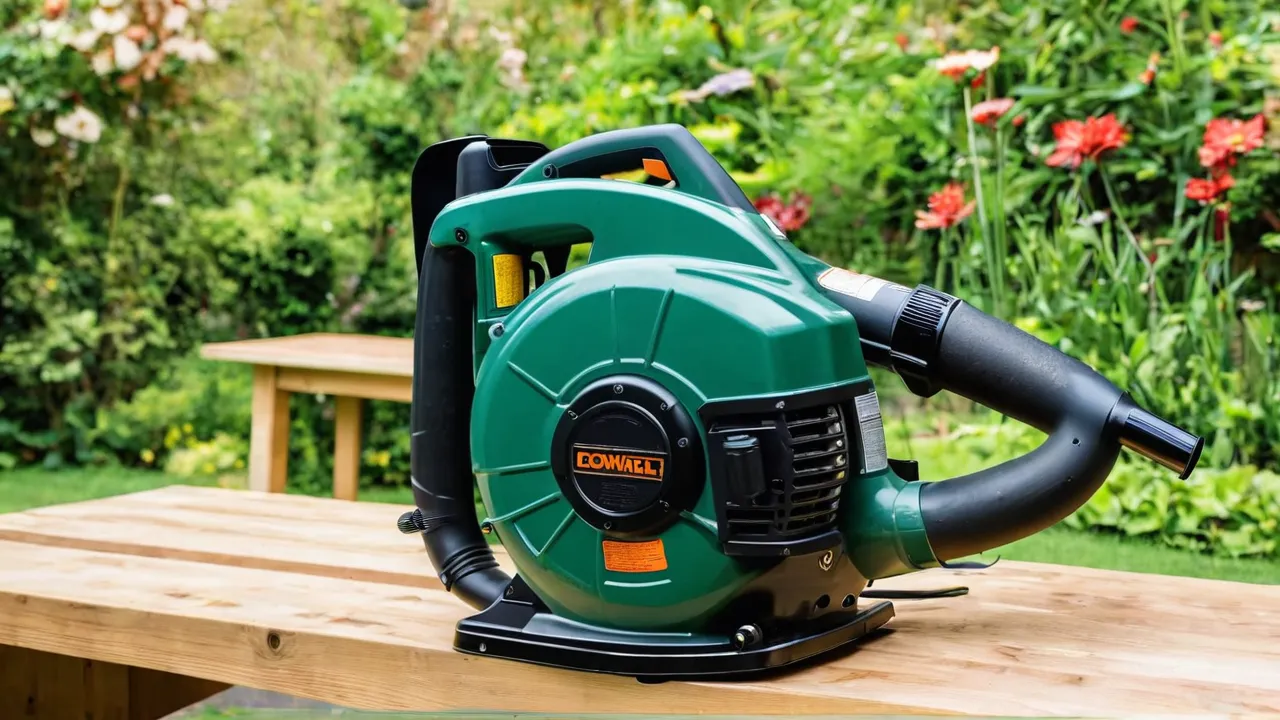
In a leaf blower CFM vs MPH comparison, CFM (cubic feet per minute) measures how much air the blower moves, and MPH (miles per hour) measures how fast that air leaves the nozzle. For pushing large piles of dry leaves across a lawn, CFM matters most; for lifting wet, matted or stuck debris, MPH does the breaking loose, and the best result comes from a sensible balance of both.
Neither figure tells the whole story, because manufacturers measure them under different conditions and with different nozzles. This guide explains what each number does, why a single high figure can mislead, and how to match both to the debris you actually have.
What CFM and MPH measure
CFM is a volume figure. Imagine the amount of air passing through the nozzle opening each minute. A higher value means a wider, more voluminous stream, which carries a large pile of leaves along the ground like a broom with a wide head.
MPH is a speed figure. It describes how fast the air moves at the nozzle outlet. A higher value means a narrower, faster jet that can pry leaves off the grass, push out debris from under shrubs and dislodge wet clumps. Speed drops quickly with distance from the nozzle, so the useful range is shorter than the headline suggests.
These two numbers are related by the nozzle opening. A smaller opening raises speed and lowers volume at the same fan output, and a larger opening does the opposite. This is why a blower with a narrow concentrator nozzle can show a very high MPH while its CFM looks modest.
How the ratings are produced
Ratings are manufacturer-stated and usually come from standard procedures, but conditions vary. Some brands quote the highest figure measured with a particular nozzle attached, and others quote the figure with a different accessory. Some quote with the blower on its boost setting and with a fully charged battery, which a real-world run will not always match.
Compare ratings from the same brand carefully and treat cross-brand comparisons with caution. Where a manual or product page lists both a nozzle configuration and a rating, prefer it. If it lists only a peak figure without conditions, treat it as a ceiling and not an average.
Watch for numbers that look unusually high for a given class of tool. A battery handheld with a very large figure may only reach it for a short time on a boost button. Our best battery leaf blower and vacuum page explains how we think about boost modes.
Matching the numbers to your debris
| Debris | Most useful number | What to look for |
|---|---|---|
| Dry leaves on a lawn | CFM | A wide stream to move volume |
| Wet, matted leaves | MPH plus CFM | Enough speed to lift, enough volume to move |
| Pine needles and small twigs | Balanced | Moderate speed with good volume |
| Gravel, mulch spillover | MPH | Focused speed, controlled at low throttle |
| Cleaning a driveway or deck | Balanced | Variable trigger for control |
| Light grass clippings | CFM | Volume to sweep across hard surfaces |
Dry leaves are the easy case. Volume sweeps them in a wide path, and a large pile moves with less effort if CFM is good. Wet leaves are the hard case, because moisture makes them cling to turf and to each other. Here you need enough speed to peel them up, and then enough volume to move the mass.
If most of your work is hard surfaces, a high MPH with variable control is useful and avoids scattering gravel. If most of your work is on lawns, favor CFM and a nozzle that spreads the air.
Why one number alone misleads
You will see a blower advertised with a very high MPH and a moderate CFM, and another with the reverse. The first can look strong on paper but moves little air, so piles of leaves are not pushed far. The second can sweep large piles but may not loosen stuck debris.
Some owners and writers use a combined figure, multiplying CFM by MPH, as a rough indicator of overall power. Use it only to compare tools with similar nozzles. It does not account for ergonomics, nozzle shape or how long the blower sustains the number.
Look at the product page for both figures, and see whether the manufacturer gives the conditions. Where a manual states the rating at a certain setting, compare at that same setting.
Handheld, backpack and battery differences
Handheld blowers trade output for weight. Backpack blowers can carry a larger fan and a bigger engine or battery on the operator’s back, so they generally deliver higher volume for the same effort. Battery models vary widely, and runtime on the highest setting is much shorter than on a lower one.
If your yard is small and your debris is light, a handheld with moderate ratings is enough. If you have many trees or a large lot, look at higher volume models, and consider whether the weight is manageable for the time you need to work. The leaf blower category separates these formats.
Noise, runtime and what you give up
More power uses more energy and makes more noise. A tool run at full output drains a battery quickly and increases hearing risk. Many communities limit hours or sound levels for leaf blowers, so check local rules. Wear hearing protection, as the manual recommends, and eye protection too.
On battery models, ask for runtime at the setting you will really use. A manufacturer might quote runtime at a low speed and power at a high one, and no single run delivers both. If you need strong output for long periods, a gas or higher-capacity battery model may fit better than a compact handheld.
Nozzle design also shifts the balance. A round, tapered nozzle focuses the air into a tight jet, and a flat or wide nozzle spreads it into a sheet that sweeps a path. Some blowers ship with several nozzles, and the rating on the box may apply to only one of them. If a nozzle is removable, ask which one the figures describe. A variable speed trigger or dial is just as valuable as the headline numbers, because it lets you drop to a gentle setting near flower beds, cars and loose mulch instead of scattering everything.
Finally, think about how you will hold the tool. A powerful blower that is awkward or tiring will be used less often and with less care, so weight, balance and handle position belong in the decision alongside the ratings.
A Quick Worked Comparison
Imagine two blowers from different brands. Blower A lists a high speed and a modest volume, and Blower B lists a modest speed and a high volume. On a lawn covered in dry leaves, B moves the pile in fewer passes. On a patio with wet leaves stuck to the stone, A peels them loose faster. If your yard has both, look for a model whose two figures are both mid to high and whose speed can be dialed down. That is why neither number should be read alone.
A simple rule for choosing
First, identify your dominant debris: dry leaves, wet leaves, or hard surface cleanup. Second, choose the format that suits your yard size and strength. Third, look for a balance of CFM and MPH appropriate to the debris, using the table above. Fourth, check how the manufacturer states the figures, and prefer clear conditions.
Skip a blower with only one huge figure and no conditions. Skip a high-output backpack if you have a small patio and a few leaves. Skip a low-output handheld if you have a big, wooded lot, because you will spend hours on a job that a stronger tool finishes quickly.
Frequently Asked Questions
Is CFM or MPH more important for a leaf blower?
It depends on the debris. CFM matters most for moving large piles of dry leaves, while MPH matters for lifting wet, matted, or stuck material. A balanced pair of figures works best for mixed yards. Check how the maker states each number before comparing models.
What CFM and MPH do I need for wet leaves?
Wet leaves need enough speed to peel them off turf and enough volume to move the mass. Rather than chasing one number, look for mid to high figures on both and a variable speed control. Check the product page for the conditions behind the stated ratings.
Can I multiply CFM and MPH to compare blowers?
It gives a rough indicator of overall power, but only for tools with similar nozzles and stated conditions. It ignores nozzle shape, ergonomics, and how long the blower holds the output. Use it as one clue alongside weight, runtime, and noise rather than as a verdict.
Why do two blowers with the same CFM clear differently?
Nozzle design, speed, weight, and how the rating was stated all change real results. A tapered nozzle focuses air into a jet, while a wide nozzle sweeps a sheet. Ratings may apply to one nozzle on a boost setting, so check the manual for the conditions.
Final Thoughts
CFM moves the pile; MPH lifts what is stuck. Match them to your debris, compare ratings only when conditions are stated, and balance power against weight, noise and runtime. See How We Review for how we approach product assessments.
Related buying guides
- Leaf Blower Maintenance: Carburetor, Fuel, Spark Plug Care
- Leaf Blower Noise Ratings and Local Bans: What to Check
- Two Stroke vs Four Stroke Leaf Blowers: Fuel and Upkeep
About the author

The BuyOnceChoice Editorial Team researches durable products worth buying once. Our guides compare published specifications, warranty terms, expert review consensus, and verified owner feedback. We do not conduct our own product trials. See How We Review and our Editorial Policy for our standards.