Mower Size Guide: Deck Width by Yard Acreage
Work out mowing time from deck width, ground speed and obstacles, then pick a size that fits your gate, shed and storage space as well as your lawn.
 By BuyOnceChoice Editorial Team
Updated November 16, 2026
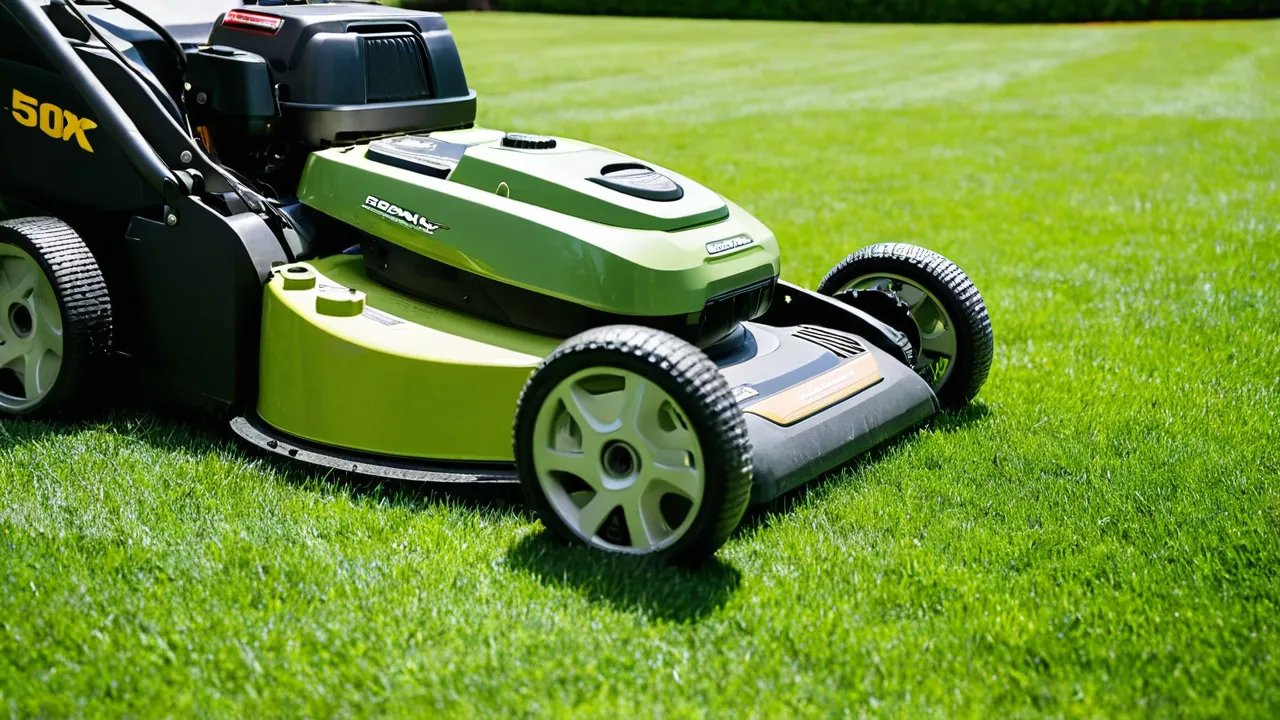
The answer to what size lawn mower do I need depends on mowable area, not lot size: a push mower with a narrow deck suits a small lawn, a wider self-propelled or rider fits larger open ground, and the right deck width is the one that finishes in a time you accept and still fits through your gates. Obstacles, slopes and storage matter as much as acreage.
Published acreage thresholds disagree because they assume different speeds, overlap and tolerance for mowing time. Instead of trusting a chart, use the method below to calculate your own number, then check it against the practical limits that no chart shows.
Measure the mowable area, not the lot
Start with the lot size from your property records or a map tool, then subtract everything that is not grass: the house, driveway, patio, garden beds, pool and wooded areas. What remains is your mowable area. People often discover it is half of the lot or less, which changes the sizing completely.
A simple way to measure is to pace out or measure each lawn section in feet, multiply length by width for each rectangle, and add the sections. One acre is 43,560 square feet, so you can convert your total to acres by dividing. Keep sections separate, because a lawn with a front yard, back yard and side strips behaves very differently from a single open field.
Note what separates the sections. A narrow side gate, a fence opening or a set of steps limits which mower can reach each area, regardless of deck width.
A timing formula you can fill in
Cutting rate is the area a mower clears per hour. Multiply deck width in feet by ground speed in feet per hour, then apply an efficiency factor to account for overlap and turns. Efficiency is about how often you stop, turn and trim, so use a lower factor for cluttered lawns and a higher one for open ones.
For ground speed, use the manufacturer stated speed range from the manual, but note that most people mow slower than the top figure, especially in thick grass. Walk-behind mowers move at walking pace, while riders run faster. Divide your mowable area by cutting rate to estimate mowing time.
The formula shows why doubling deck width does not halve mowing time. Turning and trimming scale with the number of obstacles, not with deck width, so a wide deck saves less time in a cluttered yard than in a field. Run the numbers for two deck sizes and see whether the saved minutes justify the larger machine.
Typical size bands and what they suit
Use the table as a rough starting guide for deck width by mowable area. Treat the ranges as soft, since your obstacles and your tolerance for mowing time will shift them.
| Mowable area | Common mower type | Deck width range | Notes |
|---|---|---|---|
| Small lot, up to about a quarter acre | Push or self-propelled | Roughly 20 to 22 inches | Easy storage, battery or gas |
| Quarter to half acre | Self-propelled or small rider | Roughly 21 to 30 inches | Self-propel helps with slopes |
| Half to one acre | Rider or tractor | Roughly 30 to 42 inches | Check gate width |
| One to three acres | Tractor or zero turn | Roughly 42 to 54 inches | Check engine and service access |
| Larger open ground | Zero turn or tractor | Roughly 50 inches and up | Plan storage and trailer |
The overlap of ranges is intentional. A half acre with many obstacles may suit a self-propelled mower, while a half acre of open grass might justify a small rider. Decide using the timing formula and your tolerance for the work.
Obstacles, gates and storage that cap deck width
A wide deck must fit through every gate, between every pair of trees and around every bed edge. Measure your narrowest passage and subtract a few inches for clearance, since decks are wider than the stated cutting width on some models when you include wheels and discharge chutes. Check the overall width in the manual, not only the cutting width.
Storage is the other cap. A rider needs a garage bay or shed with a clear door width and a place to park it, and a tractor needs ramps or a level threshold. If storage is tight, a smaller machine you actually use beats a large one you avoid mowing with.
Consider slope as well. Self-propelled walk-behind mowers handle moderate slopes better than a large deck on a rider in some cases, and the manual for each machine gives a maximum slope. Read the lawn mower category for how types differ before deciding.
Resolving conflicting acreage advice
You will see advice such as one source saying a push mower is fine up to a half acre, and another saying a rider starts at a quarter acre. Both can be right. The first assumes a patient owner and a flat, open lawn; the second assumes limited time and a lot of obstacles. Your own situation sits somewhere between them.
Reconcile them by asking how long you are willing to mow in one session, whether you mow in the heat, and how often you cut. If you can accept ninety minutes weekly, you can push a surprisingly large area. If you want to finish in thirty minutes, you need a wider deck or a rider. Use your personal tolerance as the deciding input.
Power source and size interact
Battery mowers have a runtime limit that effectively caps the mowable area per charge, so size the battery to the area, not just the deck. Check the runtime on the product page for the packs it includes and whether a second pack fits. The cordless self-propelled mower roundup discusses how battery capacity limits the practical lawn size.
For gas, runtime is limited only by the fuel tank, so deck width becomes the main variable. For a wide deck, make sure the engine is rated for the load, which you can confirm in the manual under engine power and mowing capacity.
Here is a worked example with round numbers. Suppose your mowable area is 20,000 square feet, which is a little under half an acre. A 21 inch deck cuts about 1.75 feet per pass. At a walking speed of about 3 miles per hour, which is about 15,800 feet per hour, the theoretical rate is roughly 27,700 square feet per hour. With a modest efficiency factor for turns, overlap and stops, you might finish in well under two hours, and a cluttered yard will add to that. A 30 inch deck on the same lawn would cut the pass count by about a third, but only if the gates allow it. The point is to see how much time you actually save before paying for width.
A quick decision rule
Calculate your mowable area, run the timing formula for two deck widths, check your narrowest gate and your storage space, and pick the largest mower that clears all three limits. If the timing is acceptable with a smaller deck, choose the smaller one, since it costs less to buy and maintain. If the time is not acceptable, move up one class rather than two.
Skip a rider if your lawn is under half an acre and cluttered; skip a push mower if you cannot accept the time or the effort; skip a large deck if a gate or slope limits it.
Common Owner Regrets
- Sizing by lot size. The mowable area is often half the lot or less.
- Buying width the gate cannot take. Check overall width, not only cutting width.
- Ignoring storage. A mower that is hard to get out gets used less.
- Forgetting growth. If you plan to add beds, subtract that area before you size.
Frequently Asked Questions
What size lawn mower do I need for a half acre?
It depends on mowable area, obstacles, and how long you will tolerate mowing. Many owners use a self-propelled mower or a small rider at this size. Run the timing formula for two deck widths, check your narrowest gate and your storage space, and pick the largest machine that clears all three limits.
How do I measure my lawn for a mower?
Start with the lot size, then subtract the house, driveway, patio, beds, and wooded areas. Measure each grass section as length times width, add them, and divide by 43,560 to get acres. Keep sections separate, since gates, fences, and steps limit which mower can reach each one.
Does a wider deck always mow faster?
Not always. Turning and trimming scale with obstacles, not deck width, so a wide deck saves less time in a cluttered yard than in an open field. Run the numbers for two widths and see whether the minutes saved justify the larger machine, the higher cost, and the extra storage space.
When should I move from a push mower to a rider?
When the time or effort of walking the lawn becomes more than you will accept, usually on larger or open lawns. Decide by how long you will mow in one session and how often you cut, then confirm gates, slopes, and storage allow a rider.
Final Thoughts
Size a mower by mowable area, deck width, obstacles and storage, in that order, and use the formula rather than a chart. Confirm overall width, slope limits and battery runtime in the manual or product page, and see How We Review for how we rate mowers.
Related buying guides
- Mowing Slopes Safely: Mower Types and Grade Limits
- Mulching vs Bagging vs Side Discharge: Pick for Grass
- Robotic vs Riding Mower: When Automation Pays Off
About the author

The BuyOnceChoice Editorial Team researches durable products worth buying once. Our guides compare published specifications, warranty terms, expert review consensus, and verified owner feedback. We do not conduct our own product trials. See How We Review and our Editorial Policy for our standards.