Speaker Impedance and Sensitivity: Matching Your Receiver
Learn what impedance and sensitivity mean, how to read the labels on a receiver and speakers, and what low impedance loads can do to an amplifier.
 By BuyOnceChoice Editorial Team
Updated November 16, 2026
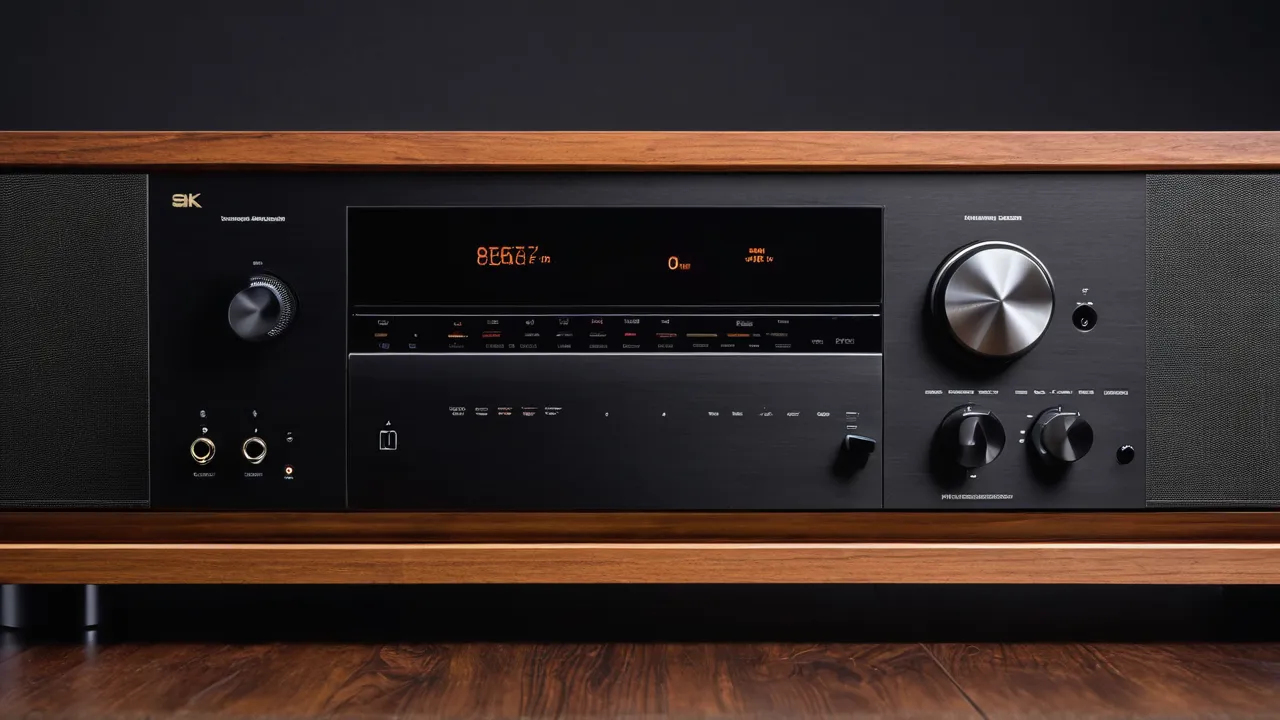
Speaker impedance is the electrical load a speaker puts on an amplifier, measured in ohms, and sensitivity is how loud the speaker plays for a given amount of power, measured in decibels. Match them to your receiver by checking the receiver’s rated minimum impedance in the manual, then choose speakers with a sensitivity that suits your room and your amplifier power.
What impedance means in plain terms
Impedance is the resistance a speaker presents to the amplifier. A lower number draws more current from the amplifier. Speakers are usually labeled with a nominal impedance, such as 4, 6 or 8 ohms. The label is a simplification, because the real impedance changes with frequency and can dip below the nominal value at certain frequencies.
A 4 ohm speaker is harder to drive than an 8 ohm one, because it asks the amplifier for more current. Amplifiers with strong power supplies handle this well, and weaker ones run hot or shut down. That is why manuals state the speaker impedance the receiver is designed for. The number on the speaker is only half of the answer, and the receiver’s rating is the other half.
What sensitivity means in plain terms
Sensitivity tells you how much sound a speaker produces from a standard input, commonly one watt measured at one meter, expressed in decibels. A speaker with higher sensitivity plays louder than one with lower sensitivity on the same power. Some makers measure with a fixed voltage instead of a fixed power, so a quick note in the manual on the method helps when you compare.
Decibels work on a ratio scale. A difference of 3 dB means the lower speaker needs about twice the amplifier power for the same volume. A difference of 10 dB means about ten times the power. This is why an efficient speaker in a modest room can sound lively on a small receiver, while an inefficient one can leave a receiver straining.
| Sensitivity difference | Power needed for equal volume |
|---|---|
| 3 dB | About twice as much |
| 6 dB | About four times as much |
| 10 dB | About ten times as much |
How to read the rear panel and the manual
Use this checklist when you match speakers to a receiver.
1. On the receiver’s back panel or label, look for the rated speaker impedance. It might say a range such as 6 to 16 ohms, or it may list 4 ohm operation with a special setting.
2. In the receiver manual, look for a section on speaker connection or specifications. Note the minimum impedance and any conditions, such as a different limit when you use many speakers at once.
3. On the speaker, find the nominal impedance on the back plate or in the manual, and note whether the maker states a minimum value.
4. Find the sensitivity rating in the speaker specifications and note the measurement method.
5. Compare. The speaker’s nominal impedance should fall inside the range stated by the receiver. If it sits at the edge, read the notes carefully.
6. Some receivers have an impedance selector switch or a menu setting. Set it to match the speakers, as the manual directs.
If a manual lacks a clear statement, ask the maker. Do not guess when the equipment can overheat.
What happens when a receiver faces a low impedance load
A receiver driven into a load below its rated minimum has to supply more current than it was designed to. The power supply and output stage work harder, and they produce more heat. Possible results include the receiver shutting down in protection mode, distortion at moderate volume and, in the worst case, damage to the amplifier.
Multichannel receivers are more sensitive to this than stereo amplifiers, because the power supply is shared among all channels. A load that is fine with two channels playing may stress a receiver when seven channels run at once. This is why some manuals state a higher minimum impedance when all channels are in use.
Low impedance loads can overheat a receiver. Check the rated minimum in its manual, give the receiver ventilation, and keep volume moderate if you suspect a mismatch. If the receiver shuts down, turn it off, allow it to cool, check wiring for shorts and review the impedance settings before you try again.
Reading the signs of a mismatch
- The receiver gets very hot to the touch at moderate volume.
- It shuts down or enters protection mode during loud scenes.
- Sound distorts at levels where the speakers should be comfortable.
- A fan runs constantly on a model that normally stays quiet.
- The speaker has a very low stated minimum impedance and the receiver manual does not mention that value.
Any of these deserves attention. Stop and check the manual before you continue.
Pairing logic by situation
| Situation | What to look for |
|---|---|
| Modest receiver, medium room | Speakers rated around 8 ohms with moderate to high sensitivity |
| Strong receiver, large room | Wide choice, including 4 ohm speakers if the receiver allows |
| Small room, low volume | Almost any pairing works, so choose by sound and fit |
| Old receiver with unknown ratings | Choose 8 ohm speakers, and confirm the rating with the manual |
| Multiple speakers per channel | Check the combined load, since wiring in parallel lowers the impedance |
Wiring two speakers to one channel in parallel halves the combined impedance, so two 8 ohm speakers become a 4 ohm load. Receivers with a selector for this may handle it, others do not. Check the power ratings in our AV receivers category to estimate how much power you need.
A worked pairing example
Suppose a receiver manual states a rated range of 6 to 16 ohms. A pair of bookshelf speakers is labeled 8 ohms with a sensitivity of 87 dB. That fits the range, and the sensitivity is average, so a medium room is fine. Now suppose a floorstanding pair is labeled 4 ohms with a sensitivity of 84 dB. The impedance falls outside the receiver’s range, and the low sensitivity means the receiver has to supply a lot of current for loud levels. That pairing needs a different receiver, or an external amplifier rated for it.
Common mistakes to avoid
- Reading the nominal impedance and ignoring the receiver’s minimum.
- Wiring two speakers per channel without checking the combined load.
- Assuming a higher watt rating on a speaker means it needs a bigger amplifier.
- Buying low sensitivity speakers for a small receiver and a big room.
- Ignoring ventilation, since heat is the main risk.
- Switching an impedance selector without reading the manual first.
Decision rules and safety
Choose speakers whose nominal impedance falls inside the receiver’s rated range. For a modest receiver, prefer 8 ohm speakers with average or higher sensitivity. For demanding speakers, use a receiver or amplifier that states support for them. Follow the manual, give the receiver space to breathe, and consult a qualified technician if the unit overheats or shuts down repeatedly. Compare receivers in our AV receiver picks, and see our How We Review page to learn how we weigh specifications.
Why impedance changes with frequency
A speaker’s impedance curve rises and falls across the frequency range. The nominal figure is a rounded summary, and the real minimum can sit well below it. A speaker labeled 8 ohms may dip to a lower value in the bass or in the upper midrange. Makers sometimes publish the minimum, and reviews of speakers sometimes include a curve. If the speaker is known to dip, give the receiver extra headroom.
What to do if you are unsure
When the numbers are unclear, pick the safe option. Choose speakers rated at 8 ohms, keep the volume moderate and watch the receiver’s temperature. Contact the receiver maker for a statement on your speaker model. A quick question costs less than a repair.
Frequently Asked Questions
Can I connect 4 ohm speakers to an 8 ohm receiver?
Only if the manual allows it. Many receivers state a minimum impedance, and some provide a switch for 4 ohm operation. If the manual does not mention it, assume the receiver is rated for 8 ohm use, ask the maker, and keep volume moderate. Low impedance loads can overheat a receiver.
Is higher sensitivity better?
For a given amplifier, higher sensitivity means louder sound from the same power, which helps in large rooms or with small receivers. It does not guarantee better sound quality. Choose sensitivity that matches your room and amplifier, and weigh it with tone, size and impedance.
What happens if my speakers are 6 ohm and my receiver says 8 ohm?
It depends on the manual. Many receivers list a range that includes 6 ohm speakers, and the mismatch is minor. If the manual states 8 ohm only, ask the maker. Keep the volume moderate, allow ventilation and watch for heat or shutdowns.
How much power do I need for speakers with low sensitivity?
More than for efficient speakers. Each 3 dB drop in sensitivity requires about twice the power for the same volume. Check the speaker’s recommended amplifier power and the receiver’s rating, then judge your room size and listening level. Our watts per channel guide gives a method.
Final Thoughts
Check the receiver’s rated impedance range, compare it with the speaker’s nominal impedance, and read the sensitivity in the context of room size and amplifier power. Give the receiver ventilation, keep the volume moderate while you learn the combination, and use a qualified technician when something overheats. A few minutes with the manual protects the equipment.
Related buying guides
- Stereo Receiver vs AV Receiver: Which Do You Need?
- Surge Protector vs Power Conditioner for Home Theater
- Virtual Atmos Without Height Speakers Explained
About the author

The BuyOnceChoice Editorial Team researches durable products worth buying once. Our guides compare published specifications, warranty terms, expert review consensus, and verified owner feedback. We do not conduct our own product trials. See How We Review and our Editorial Policy for our standards.