Stereo Receiver vs AV Receiver: Which Do You Need?
Phono input, HDMI and eARC, channel count and TV use decide between a stereo receiver and an AV receiver. Here is a rule for homes that mix TV and music.
 By BuyOnceChoice Editorial Team
Updated November 16, 2026
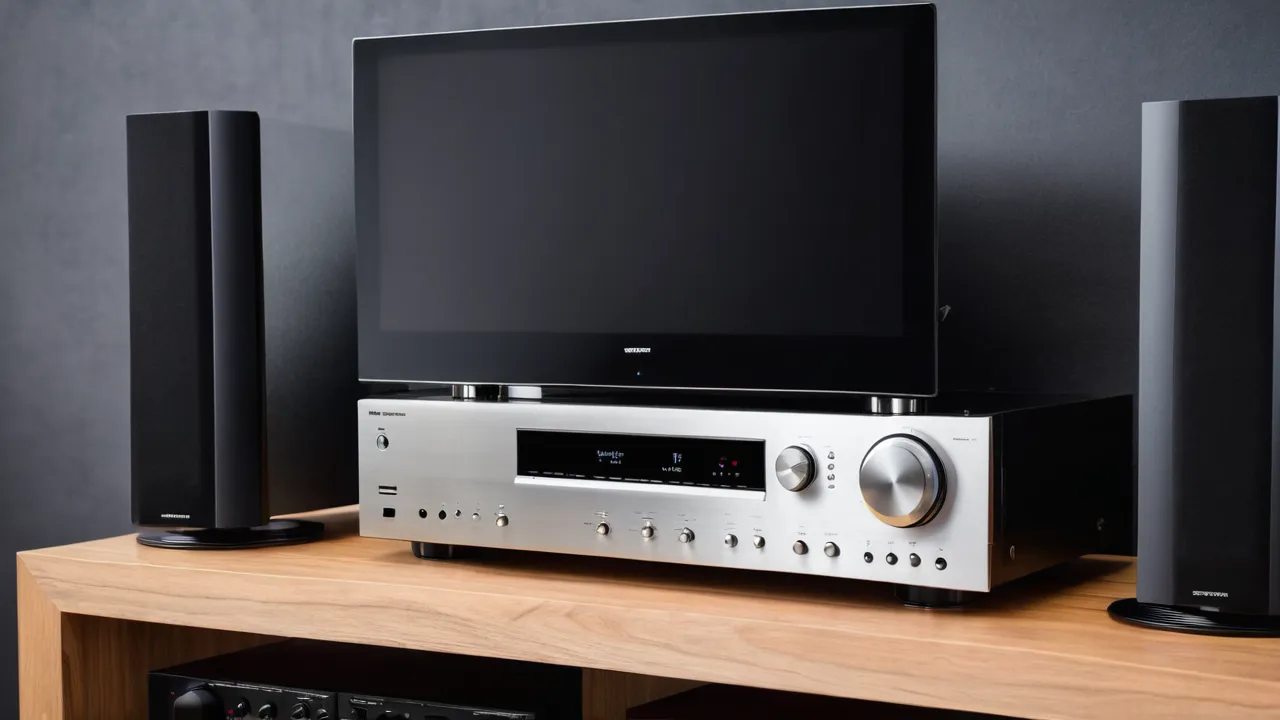
A stereo receiver powers two speakers and focuses on music, while an AV receiver powers five or more speakers and adds video switching through HDMI. Choose a stereo receiver for music, a turntable and a simple setup. Choose an AV receiver for a TV system with surround sound, several HDMI sources and eARC. A household that does both needs a rule, which you will find below.
What each type is built to do
A stereo receiver combines a tuner or streamer, a preamplifier and a two channel amplifier in one box. Inputs are mostly analog, with a few digital connections. It often has a phono input for a turntable and a straightforward set of controls.
An AV receiver adds a surround processor, several amplifier channels, HDMI inputs and outputs and room correction. It decodes formats such as Dolby and DTS, and passes video from your sources to the TV. Some models include phono inputs, though many do not.
The difference is in purpose. A stereo receiver is a music machine, and an AV receiver is a home theater hub. Both can play music, and both can feed a TV, but each does the other’s job less well. Read our AV receiver category to see what the current models offer.
The phono input question
If you own a turntable, a phono input on the receiver saves you buying a separate phono stage. Many stereo receivers include one, and it is a common reason to choose them. Many AV receivers have dropped the phono input, though some keep it.
Check the specification sheet for a phono input and the cartridge type it supports. Most inputs suit moving magnet cartridges. If your receiver lacks a phono input, you can add a separate phono preamp and connect it to a line input. That works fine, and it adds a box and a cable. Our guide to speakers for a turntable walks through the options.
HDMI and eARC trade-off
This is the main trade-off for a TV household. A stereo receiver often has no HDMI at all, or has a limited HDMI connection with eARC for the TV only. An AV receiver has several HDMI inputs and an output with eARC, so your consoles, streamers and disc players connect to the receiver and the picture goes to the TV.
Without HDMI on the receiver, you connect sources to the TV and send sound out through optical, analog or eARC if the receiver supports it. This works for a simple system, and it adds limits. Some TV outputs reduce audio quality, and switching sources depends on the TV.
If you want the receiver to be the center of your TV system, an AV receiver is the better tool. If your TV already handles your sources and you want a clean music system with a TV link, a stereo receiver with eARC or optical input can be enough.
Cost and what you pay for
An AV receiver contains more processing, more amplifier channels and more video hardware, so it costs more than a stereo receiver with similar amplifier quality in the main channels. If your goal is music quality per dollar, a stereo receiver spends more of its budget on the parts that matter for two channel sound.
Think about what you will actually use. Buyers sometimes pay for nine channels, a dozen HDMI features and Atmos that they never connect. Other buyers choose a stereo receiver and find that they need HDMI after they buy a game console. The cost question is really a question about your sources and your room.
A closer look at what you actually use
Make a list of the devices you will connect and the way you will listen. Count the sources that use HDMI, whether you use a turntable, whether you stream music, and how many speakers the room will hold. If the list has more than two or three HDMI devices, or you plan surround speakers, an AV receiver is justified. If the list is mostly music sources and a TV, a stereo receiver fits.
Streaming and network features
Both types often include network streaming, Bluetooth or AirPlay and similar features. Support varies, so check the specification for the services and formats you use. Stereo receivers sometimes put more effort into the music app and the digital to analog conversion, while AV receivers include more setup tools for rooms. Firmware updates change features over time, so confirm that the maker supports the model.
Heat and longevity
AV receivers pack many amplifier channels and video electronics into one chassis, so they run warmer and need ventilation. Give any receiver space around it, and do not stack equipment on top of it. Stereo receivers have fewer channels to cool, and they often last a long time because the circuits are simpler.
Longevity has two parts. The amplifier can last for many years if kept cool. The video features age faster, so an AV receiver may feel dated before it fails. A stereo receiver with analog inputs does not age in the same way. If you want a unit to last, ventilation and moderate volume matter more than the type.
Decision rules for common households
- Music first, turntable, two speakers: stereo receiver with a phono input.
- TV first, consoles and streamers, surround sound: AV receiver.
- Small room, TV and music, few sources: stereo receiver with eARC, or a good soundbar.
- Large room with many sources: AV receiver, with pre outs if you may add amplifiers.
- You want to grow into surround later: AV receiver.
- You rent and move often: the simpler of the two that meets your needs.
Estimate the power you need with our watts per channel guide, and see our AV receiver picks for current models.
How to run TV plus music in one system
If your household watches TV and listens to music, there is a rule that works well: choose the receiver that matches the more demanding use, then adapt the other use around it.
1. If the TV use is demanding, with several HDMI sources or surround sound, buy an AV receiver. Add a separate phono stage if you need a turntable.
2. If the music use is demanding, with a good turntable and a pair of quality speakers, buy a stereo receiver. Connect the TV with eARC or optical, and accept that the picture and sources stay on the TV.
3. If both are demanding, consider an AV receiver with a phono input, or two systems, one for music and one for TV.
Whichever you choose, set the TV to send audio to the receiver and check the volume control. Our How We Review page explains how we weigh these trade-offs.
A worked example for a mixed household
Imagine a family with a TV, a game console, a streaming box and a turntable. They sit in a medium room and want better dialogue and decent music. An AV receiver with enough HDMI inputs handles the console, the streamer and the TV, and a small phono preamp handles the turntable. They run a 3.1 layout at first, and add surrounds later. A stereo receiver would have left the console and streamer plugged into the TV, with weaker control over audio formats.
What to check on the spec sheet
For a stereo receiver, check the phono input, the digital inputs, the eARC or optical connection and the power rating at the speaker impedance. For an AV receiver, check the HDMI inputs, the eARC output, the channel count, the pre outs and the video formats supported. For both, check ventilation requirements and network features.
Common regrets after buying
Buyers who chose a stereo receiver for a TV system often regret the missing HDMI inputs once a console or a streamer joins the room. Buyers who chose an AV receiver for music alone sometimes regret the size, the menus and the cost, and they miss a phono input they assumed was present. Both groups could have avoided the regret by writing down their sources before shopping. A third regret affects both: buying a model with too little power for the speakers. Check the amplifier rating against your speakers and the room, and keep room for a subwoofer.
When to pick a middle option
Some stereo receivers include HDMI with eARC and a few inputs, which suits a music system that also handles a TV. Some AV receivers include a phono input and a pure stereo mode. These hybrids cost a little more, and they can end the either or question for a mixed household. Read the specifications closely, since the labels differ, and confirm that the features you need are present on the exact model.
Frequently Asked Questions
Can I use a stereo receiver for my TV?
Yes, if the TV connects through eARC, optical or analog audio. You get good two channel sound, and the receiver may not switch HDMI sources. For a simple TV and music system it works well. Check the receiver’s inputs against your TV’s outputs.
Do AV receivers have phono inputs?
Some do, and many do not. Check the specification sheet for a phono input and the supported cartridge type, usually moving magnet. If the receiver lacks one, add a separate phono preamp and plug it into a line input. This works well, and it costs a small box and one extra cable.
Is an AV receiver better for music?
Not necessarily. An AV receiver plays music well, though a stereo receiver often puts more of its budget into two channel quality. The best choice depends on your system. If you also watch movies with surround sound, the AV receiver adds more than it costs in music quality.
Which receiver lasts longer?
Both can last for many years with good ventilation and moderate volume. Stereo receivers have simpler circuits, while AV receivers have video features that age faster than the amplifiers. Check the maker’s firmware support, leave space around the unit and keep it cool, since heat is the main enemy of any receiver.
Final Thoughts
Choose a stereo receiver for music, a turntable and a simple setup. Choose an AV receiver for HDMI sources, surround sound and a TV centered system. If your home does both, buy for the more demanding use and add a phono stage or a TV link for the other. Check the specification sheet before you buy.
Related buying guides
- Surge Protector vs Power Conditioner for Home Theater
- Virtual Atmos Without Height Speakers Explained
- How Many Watts Per Channel Do You Need?
About the author

The BuyOnceChoice Editorial Team researches durable products worth buying once. Our guides compare published specifications, warranty terms, expert review consensus, and verified owner feedback. We do not conduct our own product trials. See How We Review and our Editorial Policy for our standards.