How Many Watts Per Channel Do You Need?
Skip the spec-sheet wattage race. This guide walks through decibel math that turns speaker sensitivity and seating distance into a realistic power target.
 By BuyOnceChoice Editorial Team
Updated November 16, 2026
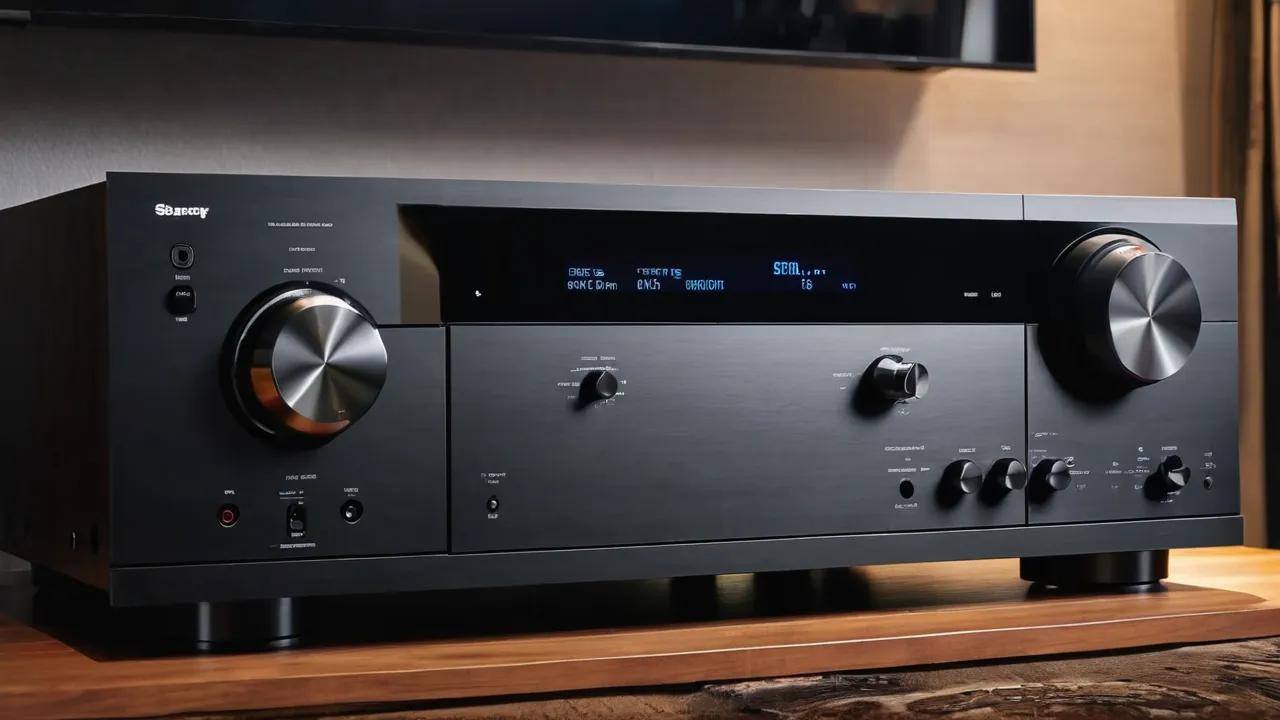
How many watts per channel you need depends on speaker sensitivity, listening distance and how loud you play, not on room size alone. Most living rooms with efficient speakers need only tens of watts per channel for comfortable peaks. Large rooms, long distances and low sensitivity speakers can call for 100 watts or more. The decibel math below lets you work out your own number.
Why the wattage on the box is a weak guide
Receiver boxes advertise a single power figure, often measured with one or two channels driven, over a narrow frequency range and with generous distortion limits. Real movie use drives several channels at once, and many receivers deliver less per channel under that load. The manual often lists a second figure with all channels driven, which is more useful.
The number also tells you nothing about the speakers. An efficient speaker can reach loud levels with a few watts. An inefficient one needs ten times as much. So the right question is how much power your speakers need to reach the level you want at your seat, and then whether the receiver can supply it cleanly.
Because doubling power adds only about 3 dB, large changes in wattage produce modest changes in loudness. That is why a receiver with twice the rated power does not play twice as loud.
The decibel math in plain steps
Use four numbers: speaker sensitivity, listening distance, target peak level and a power conversion.
1. Find the speaker sensitivity in the manual, in decibels for one watt at one meter.
2. Subtract the distance loss. In open space, sound drops about 6 dB each time the distance doubles from one meter. Convert your listening distance to meters (feet divided by 3.28), then subtract 20 times the base ten logarithm of that number. Rooms add some level back, so this is a conservative estimate.
3. Pick a target peak level at the seat. Movie peaks are much louder than average dialogue, and a moderate home target is around 95 to 100 dB peaks. Quiet listening needs less.
4. Subtract the level you get from one watt from your target. The difference in decibels converts to power: 3 dB is double, 10 dB is ten times, 20 dB is one hundred times.
If you prefer, use the table that follows, which applies the steps for a 10 foot listening distance, about 3 meters, where the loss is roughly 10 dB.
| Speaker sensitivity | Level from 1 watt at 10 feet | Power for 95 dB peaks | Power for 100 dB peaks |
|---|---|---|---|
| 85 dB | About 75 dB | About 90 watts | About 300 watts |
| 88 dB | About 78 dB | About 45 watts | About 150 watts |
| 91 dB | About 81 dB | About 25 watts | About 75 watts |
These are single speaker figures. When two speakers play the same bass, they add, which lowers the power each needs. The numbers are conservative, since room reflections add some level back.
A worked example you can copy
Say your front speakers list a sensitivity of 88 dB, and you sit 10 feet away.
- Distance: 10 feet is about 3.05 meters. The loss is about 9.7 dB.
- Level from one watt at the seat: 88 minus 9.7 is about 78.3 dB.
- Target: peaks of 95 dB for lively movies.
- Gap: 95 minus 78.3 is 16.7 dB.
- Power: 16.7 dB is about 47 watts.
Add a margin for clean headroom and your receiver should deliver comfortably more than 47 watts per channel under real use. If you want peaks of 100 dB, the gap becomes 21.7 dB, which is about 148 watts. That one choice, how loud you play, changes the answer more than anything else.
Now change the speaker to a sensitivity of 85 dB in the same room. The gap for 95 dB peaks is 19.7 dB, about 93 watts. The same receiver that suits the first pair strains with the second.
How sensitivity and room size shift the answer
Sensitivity is the biggest lever. Each 3 dB of sensitivity is worth a doubling of power. A speaker that is 6 dB more efficient needs a quarter of the power for the same level.
Room size matters through distance and absorption. A larger room puts you farther from the speakers, which raises the distance loss. Soft furnishings absorb sound, and bare rooms reflect it. A small room with hard surfaces needs less power than the free field math suggests, and a large, open room needs more.
Rules of thumb:
- Small room, efficient speakers, moderate volume: a modest receiver is enough.
- Medium room, average speakers: a mid range receiver gives comfortable headroom.
- Large room, low sensitivity speakers, loud peaks: look for a receiver with strong power, or add an external amplifier.
Check the speaker’s impedance as well. Low impedance speakers draw more current, and the receiver’s rating must allow it. See our AV receiver category for models with ratings listed.
Why more watts rarely means better sound
More power gives more headroom, which means the amplifier handles peaks without clipping. Beyond what the speaker and room need, extra watts bring no benefit. A receiver does not sound better just because its rating is higher, and the quality of the amplifier and the processing matter more than the number.
Many owners play at average levels that use a fraction of a watt, with only brief peaks drawing more. A modest amplifier that stays clean on those peaks is enough. A high power receiver can also tempt you to turn the volume up beyond what is safe for your speakers and your hearing.
What you do need is clean power, which means low distortion at the levels you play. A receiver that clips on peaks sounds harsh, and clipping can damage tweeters. This is why headroom matters more than the largest number on the box.
Safety and protecting your speakers
Do not overdrive or clip speakers. Clipping sends distorted signals that can overheat voice coils, especially in tweeters, and it can damage them even from a modest amplifier. If the sound turns harsh or fuzzy at a given volume, turn it down.
Follow the speaker and receiver manuals. Match the speaker’s recommended amplifier power range and impedance, give the receiver ventilation and keep the volume at a level where the sound stays clean. Protect your hearing too, since sustained high levels can cause damage.
Decision rules by buyer type
- Apartment or small room, quiet listening: choose by features, since power is rarely the limit.
- Average living room, efficient speakers: a mid range receiver is plenty.
- Average living room, low sensitivity speakers: aim for a receiver with strong power per channel under load.
- Large room or loud movies: use the math, and consider pre outs for an external amplifier.
- Mixed or unknown speakers: calculate with the sensitivity in the manual, and choose the receiver with headroom.
Compare models with our AV receiver picks, and read our How We Review page to see how we weigh power claims.
Estimating with limited information
If you do not know the sensitivity, assume an average of around 86 to 88 dB for bookshelf speakers and slightly higher for floorstanders, and check the manual to confirm. If the room is large, assume you will need more power than the table suggests. Err toward headroom, but do not pay for power you will never use.
Checking what the receiver actually delivers
Look in the specifications for power with all channels driven, at the impedance of your speakers. A figure for two channels at 8 ohms tells you less than one for five or seven channels. If the maker lists only one figure, treat it as a best case. Reputable makers note the measurement conditions, so read them.
Two more quick cases
For a bedroom with bookshelf speakers rated at 87 dB, a bed 7 feet away and peaks of 90 dB, the distance loss is about 6.6 dB, so one watt gives roughly 80 dB, and the 10 dB gap needs about 10 watts. Almost any receiver covers that. For a large open room with floorstanders rated at 89 dB, a seat 14 feet away and peaks of 100 dB, the distance loss is about 12.6 dB, one watt gives about 76 dB, and the 24 dB gap calls for roughly 250 watts, which suggests a strong receiver or an external amplifier. Working both cases shows how distance and target level move the answer far more than the logo on the box.
Frequently Asked Questions
How many watts per channel do I need for a home theater?
It depends on speaker sensitivity, listening distance and peak level. For efficient speakers in an average room, tens of watts per channel are enough. For low sensitivity speakers or large rooms, 100 watts or more gives headroom. Work through the decibel steps with your own numbers.
Does 100 watts sound twice as loud as 50 watts?
No. Doubling power adds about 3 dB, which is a small but noticeable change. A tenfold increase adds 10 dB, which sounds roughly twice as loud. Speaker sensitivity changes loudness the same way, so a more efficient speaker can matter more than extra watts.
Can too many watts damage my speakers?
Power alone does not, but overdriving does. Clipping and extreme volume can overheat and damage drivers. A larger amplifier running clean is usually safer than a small one pushed into clipping. Follow the speaker’s recommended power range and keep the sound clean.
What is more important, watts or speaker sensitivity?
Sensitivity often matters more. A 3 dB difference equals doubling the power. A speaker that is 6 dB more efficient needs a quarter of the power. Consider both together with impedance, room size and listening level before you choose a receiver.
Final Thoughts
Work out your own number with sensitivity, distance and target level, and choose a receiver that delivers clean power with margin. More watts rarely improve sound beyond what the room needs, so spend on speakers, placement and features. Keep levels clean, follow both manuals and protect your hearing.
Related buying guides
- 5.1.2 vs 7.1.4 Atmos: How Many Speakers You Need
- Audyssey vs Dirac Live vs YPAO: Room Correction
- AV Receiver Buying Mistakes That Cost You Later
About the author

The BuyOnceChoice Editorial Team researches durable products worth buying once. Our guides compare published specifications, warranty terms, expert review consensus, and verified owner feedback. We do not conduct our own product trials. See How We Review and our Editorial Policy for our standards.