Goodyear Welt vs Cemented Construction: Which Lasts Longer
A cost per year model for work boots: how many resoles a welt can earn, which jobs repay the extra cost, and who is better off buying cemented.
 By BuyOnceChoice Editorial Team
Updated November 16, 2026
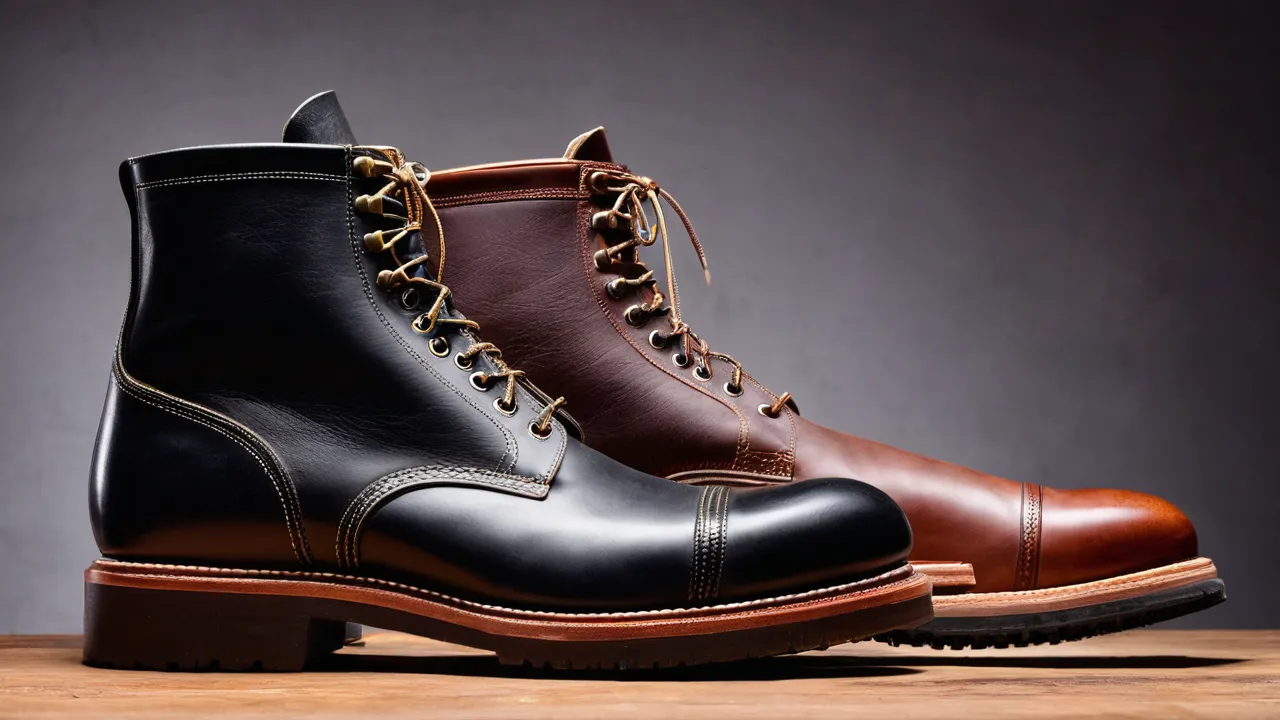
Goodyear welt vs cemented construction is a question of how the sole is attached. A Goodyear welt boot has its sole stitched to a leather strip that a cobbler can unpick and replace, so it usually lasts longer. A cemented sole is glued on and is rarely worth rebuilding. The welt pays off only if you wear boots hard enough to wear out soles before the uppers fail, and only if you actually send them for resoling.
What each construction actually is
A Goodyear welt boot has a strip of leather or synthetic material, the welt, stitched around the edge of the upper and insole. The outsole is then stitched, or cemented and stitched, to that welt. Because the stitching holds the sole to the welt rather than to the upper itself, a cobbler can remove the worn outsole and midsole, fit new ones, and leave the upper and insole structure in place.
A cemented boot attaches the outsole to the upper with adhesive, often with heat and pressure, and sometimes with a few reinforcing stitches. It is a simpler build with fewer steps and lighter materials. Many modern work boots use it, and the quality range is wide, from disposable to genuinely robust.
There is a third group worth naming so you can recognize it on a product page: stitchdown, Blake and Blake Rapid constructions. Each has its own repair profile, but the practical question for most buyers is the same. Can this boot be rebuilt by someone other than the maker, and is it worth it?
The cost per year model
Brand marketing talks about durability. A buyer needs a number they can compare. Use this simple model, with your own figures filled in from product pages and local shop quotes:
- Cost per year equals the purchase price plus the total of all resoles, divided by the total years of service.
- A welted boot has a higher purchase price and one or more resole costs, but a longer service life.
- A cemented boot has a lower purchase price, no resole cost and a shorter service life.
The welt only wins when the extra years it buys are worth more than the extra money you spend. Here is how that plays out in three illustrative patterns, described in relative terms rather than exact prices.
| Pattern | Welted boot | Cemented boot | Likely winner |
|---|---|---|---|
| Daily wear on hard surfaces, sole wears out first | One purchase plus one or two resoles, roughly double the service life | Replaced each time the sole wears | Welt |
| Three or four days a week, mixed indoor and outdoor | Resole once, upper may outlast the sole twice | Replaced when sole or upper gives out | Usually welt, narrowly |
| Occasional wear, weekend projects | Sole rarely wears out before age and storage affect the boot | Replaced rarely and cheaply | Cemented |
The pattern repeats: the more the sole wears out before the upper does, the more a welt earns its premium. If the upper cracks, the lining tears or the safety toe fails before the sole wears down, the welt has nothing to rescue.
A worked example with relative numbers
Suppose a welted boot costs twice what a cemented one does and a resole costs about a third of the welted price. One welted pair with one resole costs roughly 2.33 units and lasts about two cemented lifetimes. Two cemented pairs cost 2 units. In that case the cemented route is slightly cheaper on paper, and the welt wins only if it lasts longer than twice as long, or if the fit and comfort of a broken in boot are worth the difference. Add a second resole and the welt pulls clearly ahead, which is why the upper’s condition decides the outcome.
Replace the units with real quotes from your local shop and the maker’s list before you decide.
How many resoles is realistic
A well built welted boot can often take a resole or two, and some owners get more when the upper leather is thick and cared for. That figure depends on the leather, how often you condition it, how much you flex it, and the heat and moisture it sees. Treat any promised number of resoles as a best case, and ask the maker what their own recraft program allows.
Three things limit resole count:
- The welt itself wears or gets nicked after repeated stitching passes.
- The insole and footbed compress and mold to your foot, which is good for comfort but also means the boot is a fitted object and not a blank slate.
- The upper creases and cracks at the flex point, which no cobbler can reverse.
For that reason, plan on the first resole as the main value driver. A second is a bonus, not a budget assumption.
Which jobs justify a welt
Welt construction tends to repay itself when the work is hard on soles and moderate on uppers. That includes:
- Trades with lots of walking on abrasive surfaces such as concrete, gravel or rough framing lumber.
- Linemen and electrical crews, where a heel and shank structure that stays stable over years matters, along with EH marked options.
- Farm, ranch and outdoor work where you wear one pair most days.
- Any job where your employer supplies no boot stipend and you pay for your own pairs.
Cemented construction fits where the job is lighter, the replacement cycle is fast, or the environment destroys any boot quickly. Chemical exposure, standing in caustic washdown, hot asphalt and very wet conditions can ruin even leather welted boots before a resole is due. In those settings a cheaper cemented boot, or a purpose built rubber boot, can be the sensible buy.
Comfort, weight and break-in
Welted boots are often heavier and stiffer at first. The welt, a stitched layer and typically a leather or composite midsole add structure. Many owners report a longer break-in, followed by a boot that molds to the foot. Cemented boots often feel comfortable out of the box, especially with cushioned midsoles, but those foams compress over time and the boot may feel worn out well before the sole tread is.
This matters for a buy once decision: comfort in the first week and comfort in the second year are different questions. If you stand on concrete all day, check how replaceable the cushioning is, not just how soft it feels in the shop.
How to check what you are buying
Product pages are often vague. Use these checks:
- Look for the words Goodyear welt, storm welt or stitchdown in the spec list. If the page only says “durable construction,” assume cemented.
- Look at the bottom edge photos. A visible row of stitching on the outside edge of the sole suggests a welt or stitched sole. Stitching on the visible face alone can be decorative.
- Ask whether the maker offers factory recrafting or has a list of authorized cobblers.
- Check whether the safety toe and any EH or other markings stay valid after resoling. Recrafting can change the build, so confirm with the maker before assuming a resoled boot keeps its original markings.
If you are comparing models for your trade, start from the Work Boots category page and use the construction line as a filter, not the only criterion. Our review approach explains how we weigh durability claims against what a buyer can verify.
Who should skip a welt
Skip the welt if any of these apply:
- You replace boots because of a job change, a new site rule or injury risk long before the sole wears out.
- You cannot reach a competent cobbler or recraft service, since a boot you cannot resole is just a heavy cemented boot.
- Your work involves chemicals, heat or constant standing water that attack leather and stitching.
- You need the lightest possible boot for all day walking and are willing to replace pairs.
Skip cemented if you wear one pair near daily, plan to maintain it, and want a repairable boot you can keep for years.
Frequently Asked Questions
Is a Goodyear welt boot always better than a cemented boot?
No. A welt lasts longer only if the upper holds up and you actually resole it. For light use, fast replacement cycles or chemical and heat exposure, a good cemented boot can be the better value. Compare cost per year with real quotes.
Can cemented work boots be resoled?
Sometimes, but often not cleanly. Many cemented soles cannot be removed without damaging the upper, and patch style repairs may not last. Ask a cobbler to inspect the boot before you count on a resole, and assume a cemented boot is a replace when worn product.
How can I tell if a boot is Goodyear welted?
Check the spec list for Goodyear welt, storm welt or stitchdown, and look for a row of stitching on the outside edge of the sole. If the listing only says durable construction, assume cemented and ask the maker to confirm.
How many times can a welted boot be resoled?
Often once or twice, sometimes more, depending on the leather, the welt and your care. Treat the first resole as the main value and any further resole as a bonus. Ask the maker or cobbler what the boot can realistically take.
Final Thoughts
Goodyear welt versus cemented is a question of wear pattern, not prestige. If your soles wear out before your uppers, and a competent resole is available near you, the welt usually delivers a lower cost per year. If your boots die from chemicals, heat or job changes, a good cemented boot is a fair purchase. Work out your own cost per year with real quotes, then browse the Clothing & Footwear section for models that meet your safety rating and fit.
Related buying guides
- Hot Weather Work Boots: Stay Cool and Protected
- How Long Do Work Boots Last? Lifespan by Construction
- How to Break In Leather Work Boots Without Blisters
About the author

The BuyOnceChoice Editorial Team researches durable products worth buying once. Our guides compare published specifications, warranty terms, expert review consensus, and verified owner feedback. We do not conduct our own product trials. See How We Review and our Editorial Policy for our standards.