Receiver Power Ratings Explained: Reading the Spec Sheet
Look for watts per channel with a stated load, a distortion figure and the number of channels driven. Use those details to compare two receivers fairly.
 By BuyOnceChoice Editorial Team
Updated November 16, 2026
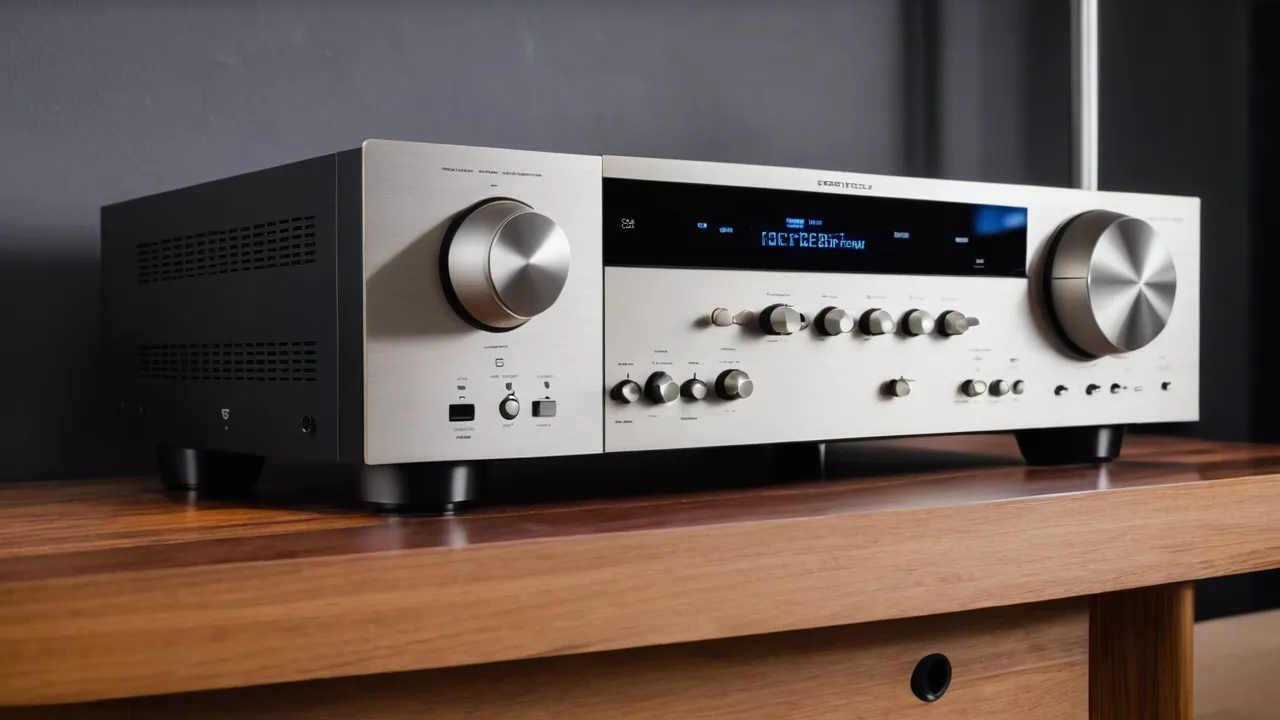
An AV receiver’s headline watts per channel is only meaningful when you know the load, the frequency range, the distortion level and how many channels were driven at once. Two receivers with different numbers on the box may deliver similar real power, and two with the same number may not. To compare fairly, find the rating with the same conditions for both and ignore any figure that does not state them.
What a watts per channel rating means
Power ratings describe how much electrical power the amplifier can deliver into a speaker load under defined conditions. The unit is the watt. The conditions matter because amplifier output changes with them. A rating usually states these things:
- Load impedance, such as eight ohms or six ohms.
- Frequency range, such as a narrow band or the full 20 Hz to 20 kHz.
- Total harmonic distortion at that power level.
- How many channels were driven.
If a manufacturer lists a number without these details, you cannot tell what it means. A number for a single channel at one frequency can look far better than a full range, all channels driven rating.
One channel driven versus all channels driven
This is the most important distinction. A surround receiver has five, seven, nine or more amplifier channels sharing a single power supply. When one channel plays alone, the power supply can concentrate its energy there and the output can be quite high. When all channels play at once, as in a loud movie scene, each channel gets a smaller share, and the available power per channel drops.
Therefore a number given for two channels driven or one channel driven overstates what the receiver delivers during a busy surround mix. Ratings with all channels driven are closer to real life, though they are not common in marketing. Check the specification page or manual, where manufacturers often list more detail than on the box.
Impedance and what it does to power
Speaker impedance, measured in ohms, changes the power an amplifier delivers. Lower impedance usually draws more current. Many receivers list a rating at eight ohms and a different one at six or four ohms, and some tell you to use speakers of a certain minimum impedance. Our guide to impedance and sensitivity explains how your speakers affect the choice. If your speakers are four ohm models, read the manual for the receiver’s recommended minimum, and be cautious with very demanding speakers on a light receiver.
Why box numbers mislead
Packaging sometimes uses a peak or maximum number that is not a continuous rating, or a rating measured at one frequency, or with distortion much higher than any listener would accept. Without the conditions you cannot compare. Some regions and standards require specific measurement conditions, and the claimed numbers for the same product can differ by market. When a product page lists several figures, prefer the one with the most complete conditions.
A related point: the weight of the receiver is not a reliable indicator, but a large power supply and robust heat sinks can suggest more capability. Do not rely on weight alone.
A method for comparing two receivers
Follow these steps.
- Gather the full specifications for both models from the manufacturers’ pages or manuals.
- Find the rating with load, frequency range, distortion and channels driven stated.
- Compare ratings under the same conditions. If only one has all channels driven and the other has two channels driven, you cannot compare directly.
- Check the impedance range supported and your speakers’ nominal impedance.
- Note the number of amplifier channels you actually need now and later, since extra channels add heat and cost.
- Check whether the receiver has pre outs so you can add outside amplification later, as in our pre outs explainer.
If the specs do not allow a fair comparison, rely on independent measurements where they exist, and be wary of marketing material.
A worked example in words
Imagine two receivers. The first lists a rating at eight ohms across the full audio band with two channels driven. The second lists a smaller number at eight ohms with all channels driven. The first looks stronger, but it describes a lighter load on its power supply. If your system plays a busy surround mix, the second may deliver comparable real world output.
To compare the two fairly, look for the first model’s all channels driven rating in its manual. If it is not published, assume that the number will be lower than the headline. Then compare what you can compare, such as channel count, supported impedance, and thermal design. If the information is not available at all, treat it as a reason to be careful rather than to assume the best case.
Reading a manual specification page
Look for a table titled specifications or technical data. It usually lists the rated output with its conditions in a footnote. Read the footnotes. They tell you the measurement standard, the load and the distortion level. If a footnote says that the rating applies with a reduced number of channels driven, mark it down. Also check that your speakers’ impedance falls inside the range the receiver supports.
How much power do you need
It depends on speaker sensitivity, room size, listening level and music or movie dynamics. Efficient speakers in a small room need little power, and low sensitivity speakers in a large room need more. There is no single number that suits every setup. Doubling amplifier power adds about 3 decibels, a small increase in perceived loudness, and it takes roughly ten times the power to sound about twice as loud, so the difference between two close ratings is often small in practice. Quality of the amplifier design, heat handling and speaker matching matter more than a modest gap in watts.
Heat, ventilation and headroom
A receiver that runs hot may reduce output or shut down under heavy load. Give it space and ventilation, as explained in our article on receiver ventilation and overheating. Headroom is the reserve that lets the amplifier handle sudden peaks without strain. A receiver that works well below its limits will usually sound cleaner and run cooler.
What matters more than a few watts
Many buyers focus on power and overlook the more practical features. Room correction quality, HDMI inputs and outputs, the number of channels, and the layout flexibility often have a bigger daily effect than a small difference in watts. Reliability and warranty support matter too. A receiver with slightly lower power but better cooling and a clear service network is a better long term purchase than one that wins a spec sheet contest.
Also look at how the receiver assigns its amplifier channels. Some units let you use channels for zone two or bi-amping instead of heights, and each choice has trade-offs. The manual lists supported configurations. If you plan a layout with heights now or later, confirm the number of channels that remain active in that layout.
Class of amplifier and efficiency
Receivers use different amplifier designs, and some use designs that run cooler and waste less power. Efficient designs generate less heat for a given output, which can help in a cramped cabinet. The name of the class on its own does not determine sound quality, and each design has examples that sound very good and others that do not. Compare real specifications and reviews of sound rather than the class label.
Verdict by Buyer Type
- Owners of large rooms or low sensitivity speakers: look for all channels driven data, robust power supplies and good ventilation.
- Owners of small rooms with efficient speakers: do not overpay for extra watts, and focus on channel count and HDMI features.
- People who plan to add outside amplifiers: prioritize pre outs.
- People who compare similar priced receivers: use the comparison method above.
See our AV receivers section and the best AV receiver roundup for context.
Frequently Asked Questions
What is the difference between one channel driven and all channels driven?
One channel driven measures a single amplifier channel while the others idle, so the shared power supply can concentrate its output there. All channels driven measures every channel at once, which is closer to a busy surround scene and usually gives a lower number per channel. Prefer ratings that state all channels driven.
How many watts per channel do I need for home theater?
It depends on speaker sensitivity, room size, and listening level, so no single number fits everyone. Efficient speakers in a small room need little. Large rooms and low sensitivity speakers need more. Compare ratings with the same conditions and check the manual for your speakers’ impedance range.
Does a higher watts rating always sound louder?
No. Doubling amplifier power adds about 3 decibels, which is a modest step in perceived loudness. Conditions behind the rating, the power supply, heat handling, and speaker matching often matter more than a small gap in watts. Treat any rating without stated load and distortion as a marketing figure.
Where do I find a receiver’s real power specification?
Open the manufacturer’s manual or specification page and look for a technical data table. The rated output usually appears with its load, frequency range, distortion level, and number of channels driven in a footnote. Read the footnote, since it explains how the figure was measured.
Final Thoughts
Treat any power number without conditions as marketing. Compare watts per channel with the same load, distortion and channels driven, and let your speakers and room decide how much you really need. For how we evaluate such specifications, read How We Review, and always confirm figures on the manufacturer’s own specification page.
Related buying guides
- AV Receiver Streaming Features: What Is Worth It
- AV Receiver Ventilation and Overheating Checklist
- Receiver vs Separates: Do You Need a Preamp and Amp?
About the author

The BuyOnceChoice Editorial Team researches durable products worth buying once. Our guides compare published specifications, warranty terms, expert review consensus, and verified owner feedback. We do not conduct our own product trials. See How We Review and our Editorial Policy for our standards.