Air Fryer vs Convection Oven: Which Should You Buy
Both use moving hot air, but they differ in size, speed, and capacity. Here is how to decide which one earns a place in your kitchen.
 By BuyOnceChoice Editorial Team
Updated November 16, 2026
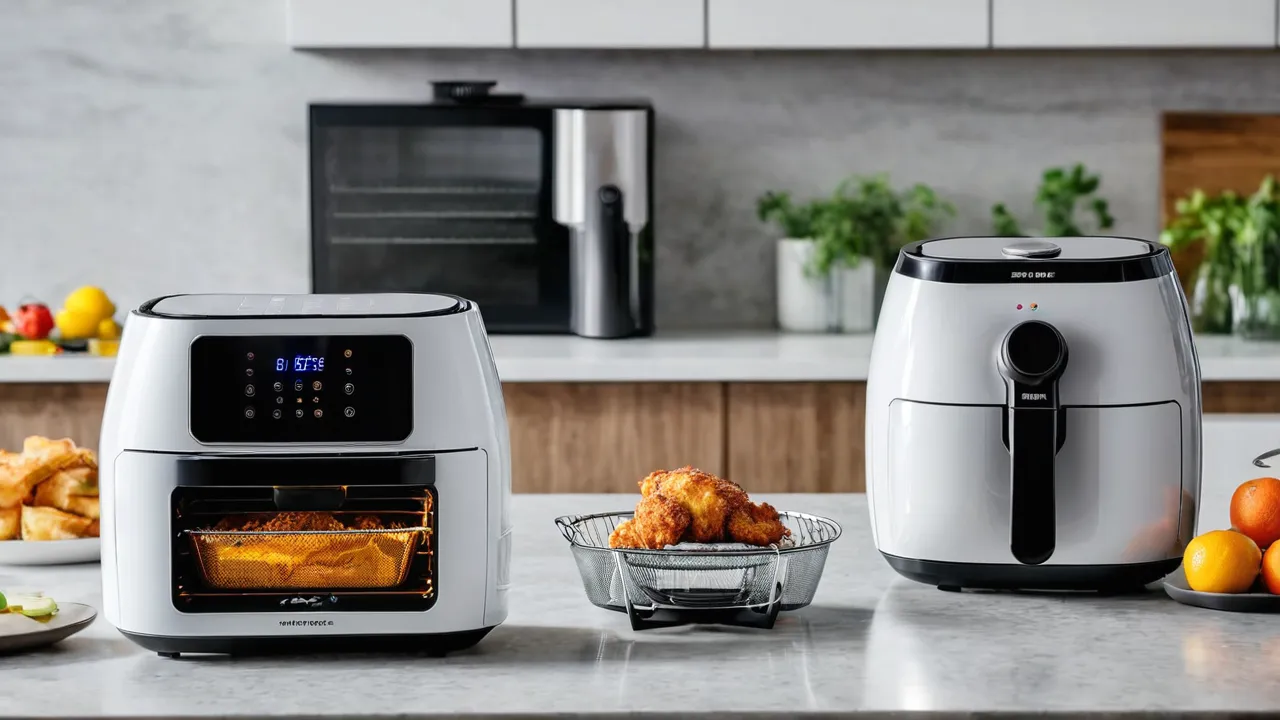
An air fryer vs convection oven comparison comes down to batch size and space. An air fryer is a compact, high-airflow cooker that suits one to three servings and quick crisping, while a convection oven (a full-size range or a countertop model) handles large trays, baking, and roasting for a crowd. Most households need only one of them as their main tool.
The Technology Is Similar, the Kitchen Role Is Not
Both appliances move heated air around food with a fan. That is why many articles call an air fryer a small convection oven, and the description is mostly fair. What differs is the scale and the design. An air fryer packs a heating element and a strong fan into a small chamber, so air moves fast over a short distance. A convection oven has a much larger cavity, so the same fan has more volume to circulate through and less airflow per square inch of food.
The practical result is that small portions crisp quickly in an air fryer, while a convection oven shines when you need volume or want to bake, because racks, sheet pans, and even heat matter more than airflow speed. Neither replaces the other entirely, and this is why the choice depends on what you cook rather than which one is newer or more fashionable.
Terminology also muddies things. A countertop convection oven is sometimes sold as an air fryer toaster oven, and the label depends on marketing. Check the manual and product page for the fan, the rack positions, and the stated maximum temperature, because those describe what the machine can do.
Counter Footprint and Storage
Space is where the argument often ends. A basket air fryer takes a modest square on the counter, but it still needs clearance behind and above for the exhaust. A countertop convection oven is wider and deeper, and a full-size range oven takes no extra space because it is already built in.
Measure before you buy. Note the width and height of the spot, leave the clearance the manual specifies, and consider whether you can store it when not in use. A unit that must be lifted from a cabinet each time gets used less. If you already have a built-in convection oven, an air fryer is an add-on that must justify the counter it occupies.
Preheat Time and Energy Use
Full-size ovens need several minutes to heat a large cavity, and the energy they draw to do so is wasted if you only cook a small portion. Air fryers heat a small chamber quickly, so for a single tray of fries or a few pieces of chicken, they commonly use less energy and time. We cannot give you precise energy numbers, because they depend on the model and the manufacturer does not always publish them. As a general rule, the smaller the portion, the more an air fryer saves.
That advantage reverses as the load grows. If you cook in several rounds because the basket is too small, the total time and energy can match or exceed a single oven load. Count rounds as well as minutes.
Batch Size Limits
This is the most important practical limit. Air fryers work best in a single layer. A basket holds roughly what one or two plates of food would, and overfilling blocks airflow and produces uneven results. Convection ovens, with multiple racks and pans, handle a full family dinner or a holiday side dish in one go.
- Cooking for one or two: an air fryer is faster and easier.
- Cooking for four with a main and sides: a large basket or two-compartment unit can work, see our dual air fryer guide, but a convection oven handles it in one pass.
- Cooking for a crowd: choose the oven.
- Baking cakes, bread, or casseroles: choose the oven. An air fryer’s small pan limits what you can bake and the strong fan can dry surfaces.
How to Do the Batch Check
Lay the food you cook most often on a sheet pan in one layer and note how much room it takes. Compare that to the basket floor or the oven rack area in the product specs. If the food fits in one layer with space between pieces, either appliance works. If it does not, count how many rounds you would need in a basket. More than two rounds on a regular basis points to the oven.
Food Types and Crisp Quality
Different foods respond differently to each tool. Frozen fries, chicken wings, breaded cutlets, and roasted vegetables in small amounts do well in a basket, because the strong airflow strips surface moisture fast and the metal basket lets fat drain away. Large roasts, whole poultry, layered casseroles, and anything that needs a long, gentle cook fit the oven better. Long cooks in a small chamber can dry out food, and a pan full of sauce can splatter onto the heating element.
Baking sits in the middle. Some air fryer models include a baking pan accessory, and small batches of cookies or muffins can work, yet the fan can brown tops before centers set. A convection oven lets you lower the fan or the temperature and gives you full-size pans. If baking is a core hobby, the oven is the safer pick.
Reheating is another daily use. Leftover pizza, fried chicken, and roasted potatoes regain crispness in a basket far faster than in a microwave, and faster than in a cold oven that needs preheating. Many owners say this is the job that keeps the air fryer in regular use, while the oven handles planned meals. Count your own habits honestly: if you reheat and snack more than you plan big dinners, the smaller tool wins.
A Verdict by Buyer Type
- Solo cooks and couples: an air fryer covers most weeknight meals and reheating, so a full convection oven adds little unless you bake regularly.
- Families of four or more: a convection oven or a large oven-style air fryer handles volume in fewer rounds, and a basket unit works as a side helper.
- Bakers: convection ovens win, because sheet pans, multiple racks and steady heat suit cookies, rolls and roasts.
- Renters and small kitchens: a basket air fryer is easier to fit and move, and you may not control the built-in oven anyway.
- Meal preppers: look at wide oven-style units or a convection oven, since single layer baskets slow batch cooking.
Cleaning, Maintenance, and Safety
An air fryer basket and tray usually wash by hand or in a dishwasher, as the manual allows, and the nonstick coating needs gentle handling. Grease builds up around the heating element and fan, so wipe it down regularly and follow the manual’s guidance on cleaning the unit’s interior. A convection oven has more interior surface to clean, though self-clean modes on full-size ranges handle that, and you should follow the manual’s instructions and ventilate the kitchen while the cycle runs.
Plug a countertop appliance into a grounded outlet and avoid sharing the circuit with other high-draw appliances. Keep cords off hot surfaces and away from the exhaust vent. Never submerge the base of an air fryer or countertop oven in water. Allow clearance around the vents as the manual directs, and do not place either appliance under cabinets that could be damaged by exhaust heat. If you are unsure about your kitchen’s wiring, consult a licensed electrician.
Who Needs Both, and Who Needs One
Use this quick rule set:
| Your situation | Buy | Reason |
|---|---|---|
| Small household, small kitchen | Air fryer | Faster for small portions, lower counter cost |
| Large household, frequent baking | Convection oven | Capacity and rack space |
| Weeknight cooking plus weekend roasting | Both | Air fryer for quick meals, oven for volume |
| Built-in convection already works well | Probably neither | Little gain from a second appliance |
Needing both is common among households that cook two or three different sizes of meal. If most of your meals are for one or two people, the air fryer pays off quickly. If you cook large meals and bake often, the oven is the better investment. If you do neither often, skip both and use the oven you have. For the next step, see our air fryer category, and our how we review page explains how we weigh durability in guides.
Frequently Asked Questions
Is an air fryer the same as a convection oven?
They use the same principle, a fan moving heated air, but the build differs. An air fryer has a small chamber and a strong fan close to the food, so small batches crisp quickly. A convection oven has a larger cavity, racks and sheet pans, so it handles volume and baking better. Some countertop ovens are sold as both.
Can an air fryer replace a convection oven?
For one to three servings, yes, most weeknight meals work fine. It cannot replace an oven for large roasts, several pans at once or serious baking. Many households keep both. If you have only one oven and a small family, an air fryer can cover most daily cooking.
Which uses less energy, an air fryer or a convection oven?
For small portions, an air fryer usually uses less energy because it heats a small chamber and preheats quickly. For large batches, a single oven load can be as efficient as several rounds in a basket. Compare wattage on the nameplate and consider how often you cook small meals.
Do you still need an oven if you have an air fryer?
Usually yes, if you bake, roast large cuts or cook for a crowd. An air fryer cannot hold sheet pans or big dishes. Skip the extra oven only if your meals are small, you rarely bake, and you have a countertop unit with enough interior room for your pans.
Final Thoughts
Do not pick by trend. Pick by batch size, counter space, and how often you cook small portions. An air fryer adds convenience for small meals; a convection oven adds capacity and baking. If your cooking spans both, owning both is reasonable, and the reasonable amount to spend on each is whatever lets it last for many years of regular use.
Related buying guides
- Air Fryer Wattage and Breaker Load: Avoid Tripped Circuits
- Basket Air Fryer vs Air Fryer Toaster Oven
- Dual Zone vs Single Basket Air Fryer: Who Needs Two
About the author

The BuyOnceChoice Editorial Team researches durable products worth buying once. Our guides compare published specifications, warranty terms, expert review consensus, and verified owner feedback. We do not conduct our own product trials. See How We Review and our Editorial Policy for our standards.