Air Fryer Noise and Ventilation: Buying for Small Kitchens
What to check when buying an air fryer for a small kitchen: footprint, exhaust clearance, fan noise, cord reach and where it lives when not in use.
 By BuyOnceChoice Editorial Team
Updated November 16, 2026
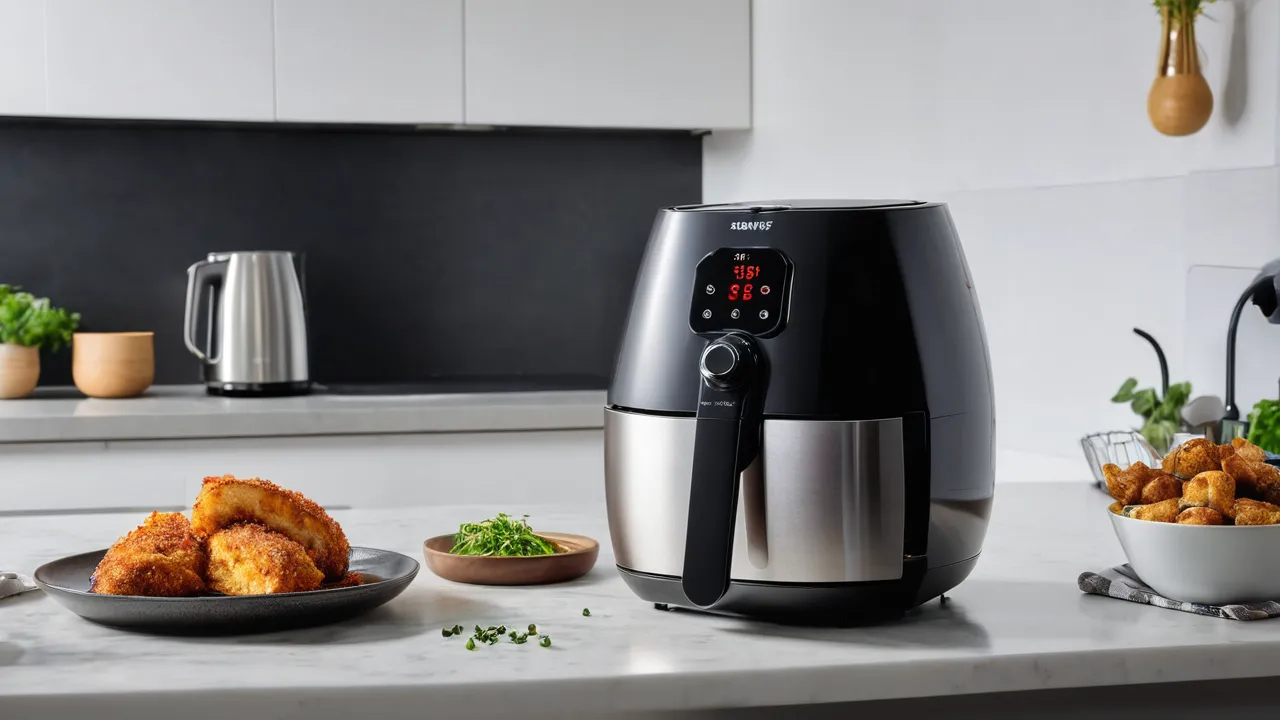
For a small kitchen, choose an air fryer by footprint and exhaust clearance first, then capacity. Measure the counter space including the area behind and above the unit, since hot air exits through vents, often at the back. Check cord reach, door or drawer swing and where you will store it when not in use. Fan noise matters in apartments and open plans, though manufacturers rarely publish consistent figures. A compact basket model with a front exhaust or a clear manual on clearance usually fits small kitchens best.
Small kitchens magnify every inch and every decibel. An air fryer that crowds the counter, vents hot air onto a wall or whirs through an open plan space gets stored and forgotten. This guide covers the checks that matter before you buy.
Measure Footprint, Height and Door Swing
Start with the exterior dimensions on the product page. Compare the width and depth with the counter space you can dedicate, and then add the clearance the manual requires.
- Width and depth: the base footprint, plus handle room for baskets and drawers that pull forward.
- Height: check that the unit fits under any wall cabinet with room for steam to rise. Do not place an air fryer under a cabinet unless the manual allows it.
- Door or drawer swing: a drawer style basket needs front space to pull out fully, and an oven style door needs room to swing down or open.
- Cord length: a short cord limits where you can place the unit, and extension cords are not recommended for high draw appliances.
Remember the handle. A basket with a long handle can add several inches to the depth when it is pulled out. Measure that extended depth against the front of your counter, and think about whether it will hit the sink, a faucet or a neighbor appliance.
A Clearance Worksheet With Made-Up Numbers
Say the product page lists a footprint of 14 inches wide and 15 inches deep. The manual asks for 5 inches of clearance behind the unit and 4 inches above, and the pulled out basket adds 7 inches in front. You need a space at least 14 inches wide, with 15 plus 5 plus 7, or 27 inches of depth in total when the basket is open, and at least 4 inches above the highest point. Compare that with your counter depth and the gap to the wall cabinet. If the counter is 24 inches deep, the basket will hang over the front edge, so pick a smaller unit or a different spot. Use your own manual figures.
Rear Exhaust and Clearance
Air fryers push hot air out through vents, and where those vents are matters in a small kitchen. Many models exhaust at the rear, which means the back of the unit must stay clear of walls, backsplashes and cabinets by the distance in the manual. Some models exhaust from the top or sides. If your counter sits tight against a wall, a rear exhaust unit may need to be pulled forward, which uses counter depth.
Hot exhaust can discolor a wall, warp nearby plastic and heat a cabinet. Keep paper towels, curtains and other flammables away. Read the manual for the stated clearance, and plan the spot before buying. If the manual does not state a distance, ask the maker.
Ventilation of the room also matters. Cooking fatty foods can produce smoke and odor, and a small kitchen with no range hood fan or window will hold smells. Consider using the range hood, opening a window or cooking fatty items at a lower temperature. Smoke that thickens means stop, unplug and let the unit cool.
Noise: What to Expect
Air fryers use a fan to move air, and the motor and airflow produce noise. Perceived loudness depends on fan speed, the housing, where the unit sits and the room. In a small apartment, even moderate noise can be bothersome.
Manufacturers do not publish noise in a standard way, and decibel claims, where present, may not be comparable across brands. Read owner reviews on the product page for descriptions, and treat them as anecdotes. Some common patterns: larger oven style units tend to have bigger fans, drawer style units are compact, and units with a high maximum wattage may run the fan harder during preheat.
Practical ways to cope: place the unit on a stable mat to reduce vibration and rattle, keep it away from hard reflective surfaces, and avoid placing it on a thin counter that resonates. Do not cover the vents to muffle sound.
Storage When Not in Use
In a small kitchen, a unit that must live in a cabinet needs a spot that is easy to reach. Measure shelf depth and height, and consider weight and the handle shape. Air fryers can be heavy, and lifting one onto a high shelf is awkward. Leaving it on the counter is convenient, but it uses permanent space, and grease can collect on the housing.
Options include a dedicated corner of the counter, a rolling cart, an appliance garage or a shelf near the outlet. Whatever you choose, let the unit cool fully before storing. Store the basket and the accessories with it, in a bin so they do not get lost.
Choose Capacity That Fits Your Space
Capacity matters less than usability in a small kitchen. A compact unit that suits one or two people may be the right size, and a larger family size unit may not fit. Dual basket models add width, and oven style units add height and depth. Compare dimensions against capacity, not quarts alone. If you cook for several people, you might cook in batches in a smaller unit, which takes more time but saves space.
Think about multitasking. If you do not own a toaster oven, an oven style air fryer can replace it and save counter space overall. If you do own one, a compact basket unit adds less clutter. See the best dual air fryer roundup for how larger formats differ.
A Layout Walkthrough
Picture the usual small kitchen: a counter run of about six feet between the sink and the stove, a microwave on one end and a kettle near the outlet. Where does an air fryer go? The spot beside the stove is tempting but risky, because heat and grease from the burners add to the unit’s own heat. The spot under the cabinet is out for steam and exhaust reasons. The spot beside the sink gets splashed.
Often the best option is the end of the counter or a section of a separate cart, with an outlet on a circuit that does not also feed the kettle and toaster. If your kitchen has only one usable outlet, you may need to unplug the kettle while the air fryer runs, or use the air fryer at a different time. Do not solve this with a power strip.
Next, think about ritual. Pulling the unit out each time costs effort, so you will use it less. If it lives on the counter, wipe it down regularly, since grease and dust settle on the housing. A small silicone mat under it protects the counter from heat and keeps it from sliding.
If counter space is truly absent, consider a unit that stores vertically or a model with a smaller footprint, and check whether your oven’s air fry mode could substitute. Some ranges include an air fry setting, which uses no counter space, though capacity and results differ from a countertop unit.
Lastly, remember the people you share the space with. A loud fan at six in the morning wakes a studio apartment. If noise is a concern, cook at times that suit you, and choose a model with a reputation for quiet operation from owner descriptions.
Quick Ways to Reduce Noise and Heat Annoyance
- Run the air fryer on a flat, stable mat so it does not rattle.
- Leave the vents clear and keep the unit away from reflective walls.
- Cook fatty foods with the hood fan or a window open.
- Pick a time of day that suits your household when you can.
- Wipe vents and the housing so dust does not collect around the fan.
- Check the manual for the stated clearance and measure it once with a tape.
Who Should Choose What
- Choose a compact basket model if you cook for one or two and have little counter space.
- Choose an oven style unit if it replaces a toaster oven and you can spare the footprint.
- Choose a model with a front or top exhaust if your counter is tight against a wall, if the manual describes safe clearance.
- Skip a large dual basket unit if you cannot leave it on the counter.
- Skip a unit with unclear clearance guidance.
- Keep it off a stove top and away from cabinets above.
Safety Notes
Keep exhaust clearance per the manual. Plug directly into a grounded outlet, and avoid sharing the circuit with a kettle or toaster. Do not place the unit under wall cabinets, near curtains or on a stovetop. Exterior surfaces can burn. Let the unit cool before storage, and keep children away while it runs.
Frequently Asked Questions
How much space does an air fryer need around it?
Follow the clearance in the manual, which usually asks for open space behind the exhaust vents and above the unit, plus front room to pull out a basket or open a door. If the manual is silent, ask the maker. Do not place it under wall cabinets unless the manual allows it.
Are air fryers loud?
They use a fan, so there is some noise, and how loud it feels depends on the model, fan speed, and where it sits. Manufacturers rarely publish comparable decibel figures. Read owner descriptions, place the unit on a stable mat, and never cover the vents to muffle sound.
Can I use an air fryer in a small apartment kitchen?
Yes if you can place it safely. Measure the footprint, handle extension, and exhaust clearance, plug directly into a wall outlet, and ventilate when cooking fatty foods. A compact basket model usually fits best, and you need a spot to store it when it is cool.
Where should I put an air fryer in a small kitchen?
Choose a stable counter spot with clearance from walls and cabinets, near an outlet that does not share a circuit with a kettle or toaster. Avoid the stovetop, areas under cabinets, and spots next to the sink. Keep flammables such as towels and curtains away.
Final Thoughts
In a small kitchen, buy the air fryer you can place, vent and store, not the biggest one. Measure footprint, handle extension and exhaust clearance, think about noise in your space and decide where it lives. Browse the air fryers category for formats, and read how we review for how we weigh practical fit.
Related buying guides
- Air Fryer Oil Guide: Smoke Points and When to Skip Oil
- Air Fryer Safety Basics: Clearance, Oil and Fire Risks
- Air Fryer Size Guide: Quarts by Household Size
About the author

The BuyOnceChoice Editorial Team researches durable products worth buying once. Our guides compare published specifications, warranty terms, expert review consensus, and verified owner feedback. We do not conduct our own product trials. See How We Review and our Editorial Policy for our standards.