Packing Cubes vs Compression Cubes: Which to Buy
Cubes only help when they fit your suitcase. Compare standard and compression cubes by dimensions, weight and how they behave inside a typical carry-on.
 By BuyOnceChoice Editorial Team
Updated November 16, 2026
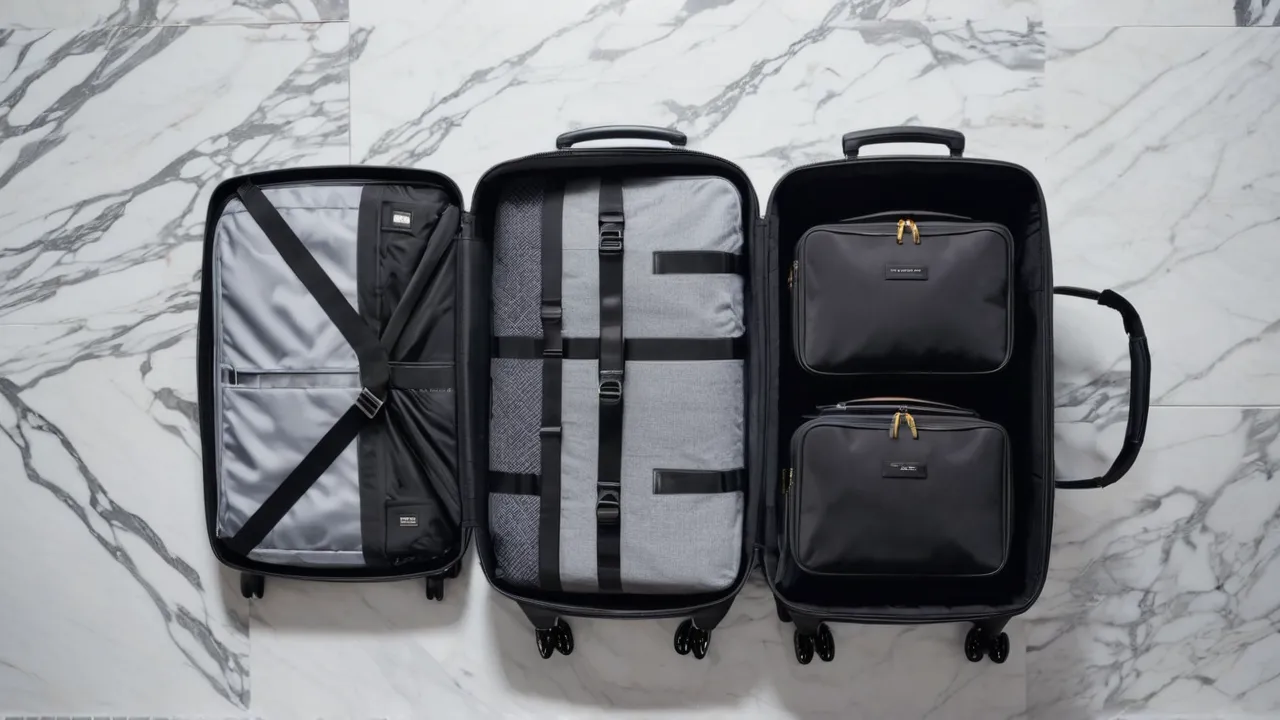
Standard packing cubes organize clothes into rectangular blocks, while compression cubes add a second zipper or strap that squeezes air out. Both can help, but only if their dimensions match the interior width of your suitcase. Measure your case first, then choose cubes that divide that width cleanly.
How Standard Cubes Work
A standard packing cube is a zippered fabric box, often with a mesh panel so you can see inside. It does not shrink your clothes. Its value is organization: you pack by category, move whole sets between bags and keep clean items separate from used ones. At the end of a trip, pull the dirty cube out and leave the rest.
Cubes also impose structure. Loose clothes fill awkward gaps, while a firm cube stacks in a grid. That predictable shape lets you plan a case layout and keeps contents from shifting when the bag is rolled.
How Compression Cubes Work
A compression cube has a second zipper that runs around the cube, or a strap system, which reduces its height after you fill it. You press out air, close the main zipper and then tighten the compression zipper. The cube becomes thinner, which lets you fit more into a limited depth.
The trade-off is wrinkles. Compressed clothes pack down firmly and creases set. Bulky items such as sweaters benefit most, because they hold more air. Shirts that wrinkle easily gain less. Compression cubes also add weight, since the extra zipper and fabric layers weigh more than a basic cube, and the extra zipper is another point of failure.
The Fit Math: Cubes Versus Suitcase Interior
This is where most buyers go wrong. A cube that is a little too narrow leaves a gap and wastes space; one that is too wide jams and bows the case lid. Use this method.
- Open your suitcase and measure the interior width, length and depth in inches. Many carry-on interiors are somewhat narrower than the outside dimensions because of walls and a divider.
- Subtract any fixed obstacles such as a handle tunnel or a zippered divider panel.
- Divide the usable width by the width of the cube you want. Two cubes side by side should total no more than the width. If three cubes do not divide neatly, consider a different size.
- Check the cube depth against the case depth. A cube taller than half the case depth prevents the case from closing when you stack two.
- Pack one cube, close the case and check for bulge.
Use manufacturer dimension figures when buying, and compare them to your measurements. Our luggage set category includes carry-on sizes you can measure against.
A worked fit example
Suppose a carry-on interior measures 14 inches wide, 20 inches long and 8 inches deep after you subtract the handle tunnel. Two cubes that are 7 inches wide fit side by side exactly, but they leave no slack and will strain the lid when full. Two cubes that are 6.5 inches wide leave a small gap you can fill with a flat pouch. Stacked two high, cubes that are 4 inches tall would total 8 inches and fill the depth entirely, so choose a 3.5 inch cube or use compression to bring the stack down. The method is the same for any bag: width divided by cube width, then depth divided by cube height.
Verdict by buyer type: a shirt-and-trousers business traveler should lean standard cubes; a cold-weather or family packer should add compression cubes for bulky layers; a minimalist who packs a few items does not need either.
Side-by-Side Comparison
| Factor | Standard cube | Compression cube |
|---|---|---|
| Main benefit | Organization | Organization plus size reduction |
| Best for | Shirts, underwear, accessories | Bulky knits, jackets, kids’ clothes |
| Wrinkle impact | Low | Higher when compressed |
| Weight | Lighter | Slightly heavier |
| Failure points | One zipper | Two zippers |
| Price | Often lower | Often higher |
Mixing Both in One Trip
Most travelers do well with a mix. Use standard cubes for wrinkle-prone dress shirts and trousers, and compression cubes for fleece, sweaters and sleepwear. Keep a small flat pouch for socks and underwear. A single large compression cube can hold winter layers, while smaller standard cubes stack on top.
Do not overstuff. A compression cube packed to the limit can split a seam, and a packed case that bulges will not fit a carry-on sizer. Weigh the full case before leaving, because squeezing in more means more weight, not less. Airlines enforce weight limits independent of volume, so confirm the carry-on policy on your carrier’s site. Our best travel luggage set roundup is a good place to look at interior layouts.
Typical Cube Sizes and What They Hold
Cube sizes are usually sold as small, medium and large, sometimes with slim and extra-large variants. Brands do not agree on exact dimensions, so read the numbers on each listing rather than the size label. A small cube generally holds underwear, socks and a few tee shirts, a medium holds several shirts or a pair of trousers, and a large holds sweaters, jeans or a week of casual layers. Slim cubes suit narrow carry-ons and the sides of a duffel.
When you compare sizes, note that a cube listed by outer dimensions includes seams and a zipper, while usable volume is slightly smaller. If a listing gives only liters, convert by checking the length, width and height too, since a cube that is the right volume but the wrong shape will not fit your case.
Soft Cubes Versus Structured Cubes
Soft cubes flex, which lets you push them into gaps. Structured cubes keep their shape, which helps with stacking and reduces creasing in folded shirts. Structured cubes weigh slightly more and do not squeeze into odd corners. If your case has a dividing panel and a handle tunnel, soft cubes may fit the odd spaces better, while a clean rectangular interior suits structured ones.
Packing Order Inside the Case
Place the heaviest cube, usually jeans or shoes in a bag, near the wheels so the case stays balanced when rolled upright. Put delicate or wrinkle-prone cubes on top where nothing crushes them. Use a flat pouch against the lid for documents and chargers. Keep a small cube for items you may need en route, such as a sweater, so you can open the case briefly without unpacking everything. After the trip, empty cubes fully and let them air out, since damp fabric stored in a closed cube picks up odors.
Common Fit Problems and Fixes
Three problems come up often. First, cubes that are slightly too long for the case, so the lid will not close flat. The fix is to turn the cube on its side, or choose a slimmer size. Second, a compression zipper that jams when the cube is overfilled. Remove an item, and zip the main closure fully before engaging the compression track. Third, dead space at the edges because the cube widths do not add up to the interior. Fill that gap with a flat pouch, a rolled belt or a pair of shoes stuffed with socks.
For family trips, give each person a different color so a shared case stays sorted, and keep one cube as a laundry bag. Hand-wash or machine-wash cubes only if the care label allows it, and let them dry fully before storage.
Finally, remember that cubes add their own weight, and a case that holds many cubes can quietly climb toward an airline limit. Weigh the packed case on a home scale and remove the least useful cube if you are close, instead of hoping the counter agent will not check.
Who Should Choose Which
Choose standard cubes if you pack mostly shirts and trousers and want light, low-wrinkle organization. Choose compression cubes if you travel in cold weather or carry bulky layers and have a hard depth limit. Choose a mix for long trips. Skip compression cubes if you rarely overpack, if you hate creases or if your case is already near its weight limit. See how we assess these gear choices on our how we review page.
Many owners find it easier to attach the routine to an existing habit, for example doing it while the suitcase is empty on the day after returning home. A bag that is cleaned and checked while the trip is fresh in mind rarely goes into storage with a hidden problem.
Frequently Asked Questions
Do compression cubes really save space?
They reduce the height of a filled cube, which helps with bulky items such as sweaters and fleece. The savings are smaller with thin clothing, and compression sets wrinkles. They also add weight, so weigh the packed case before you leave.
Do packing cubes cause wrinkles?
Standard cubes cause few wrinkles because they only organize. Compression cubes press clothes together, so creases set, especially in dress shirts. Use standard cubes for wrinkle-prone items and compression cubes for bulky knits. Dress shirts and trousers gain the least from compression, so keep them in standard cubes or fold them flat.
What size packing cubes fit a carry-on suitcase?
Measure the interior width, length and depth of your case, subtract obstacles such as a handle tunnel and divide the usable width by the cube width. Read the manufacturer’s dimensions rather than the size label, since small, medium and large differ between brands.
Final Thoughts
The best cube is the one that fits your case. Measure the interior, divide the width and choose sizes that fill it without bulging. Standard cubes organize and compression cubes also reduce depth at the cost of wrinkles and weight. Combine them according to what you pack and your trip’s weather.
Related buying guides
- Polycarbonate vs ABS vs Aluminum Luggage Shells
- Pre-Trip Luggage Checklist: Weigh, Measure, Inspect
- Signs It Is Time to Replace Your Suitcase
About the author

The BuyOnceChoice Editorial Team researches durable products worth buying once. Our guides compare published specifications, warranty terms, expert review consensus, and verified owner feedback. We do not conduct our own product trials. See How We Review and our Editorial Policy for our standards.