Bamboo vs Laminate vs Solid Wood Desk Tops
Compare bamboo, laminate, and solid wood standing desk tops by wear, edge chipping, weight, and refinishing, and learn which material suits heavy daily use.
 By BuyOnceChoice Editorial Team
Updated November 16, 2026
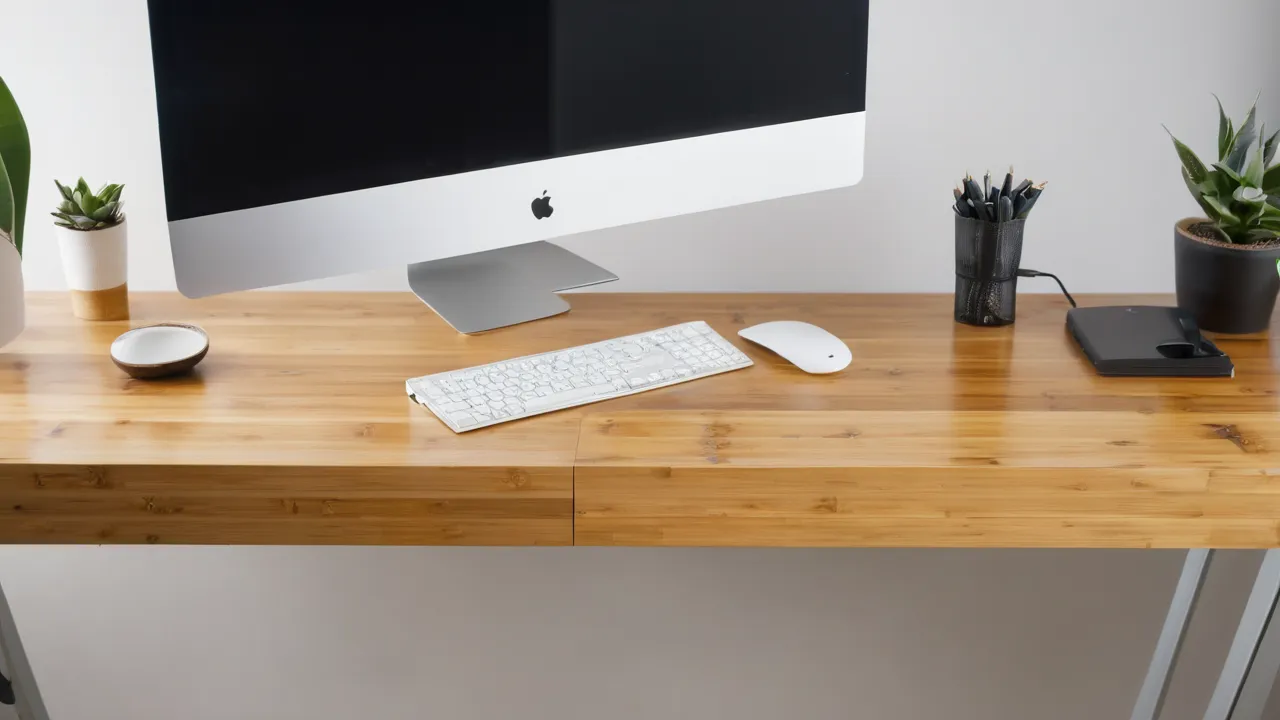
The best standing desk top material depends on how you treat the desk. Laminate is the lightest and cheapest, and it resists stains but chips at the edges. Bamboo is hard, fairly light and can be refinished lightly. Solid wood is the heaviest and the most repairable, but it needs the strongest frame and more care. Match the top to your frame’s capacity.
Laminate Tops
A laminate top is usually a core of particleboard or medium density fiberboard covered with a thin decorative surface, often melamine or high pressure laminate. It is the most common top on standing desks, because it is cheap, light and available in many colors.
Strengths:
- Light weight, which is easy on the frame and the motor.
- Stain and moisture resistance on the surface, as long as the edges are sealed.
- Consistent color and flat surface, with little variation between desks.
- Low cost and wide availability.
Weaknesses:
- Edges can chip, especially at corners, since the surface layer is thin.
- If water reaches the core through a damaged edge, the core can swell.
- Deep scratches and gouges cannot be sanded out, since the pattern is a printed layer.
- Heavy loads in the middle can make a long top sag over time, if it is unsupported.
Look for edge banding, which is a strip of plastic or similar material that seals and protects the edge. Thick, well fitted banding resists chipping better than thin tape.
Bamboo Tops
A bamboo top is made from strips of bamboo that are glued together into a panel. The surface can be vertical grain, horizontal grain or woven, and the finish is typically a clear coat. Bamboo is a grass, not a wood, though it works similarly in a desk top.
Strengths:
- A hard surface that resists dents better than many softwoods.
- Moderate weight, usually between laminate and solid wood for a given size.
- A natural look with a clear finish.
- Lighter refinishing is possible, such as sanding and recoating the surface layer.
Weaknesses:
- Glue joints between strips can open at the edges if the top is exposed to humidity swings.
- Quality varies by maker, and thin or poor quality glue lines can fail.
- The finish can wear, particularly where your forearms rest.
- Adhesives matter. Check the product page for formaldehyde emission information, such as a stated low emission standard, if indoor air quality matters to you.
If the maker names the construction, such as strip width and glue type, that is a good sign. A vague page tells you little.
Solid Wood Tops
A solid wood top is a panel of real wood, often several boards edge glued together. Common choices include oak, maple, walnut and rubberwood. The wood type determines hardness, weight and look.
Strengths:
- Repairable surface, since scratches and dents can be sanded and refinished many times.
- Strong, solid feel and a long life when cared for.
- Edges are the same material as the top, so there is no thin layer to chip off.
- A natural grain that varies from piece to piece.
Weaknesses:
- Heavy, which asks more of the frame, the motor and your floor.
- Wood moves with humidity, so a top can warp or cup if one side dries faster than the other. A good finish on all sides reduces this.
- Higher cost.
- Softer woods dent more easily, so choose the species with that in mind.
Ask where the wood comes from, how it was dried and whether the finish covers all faces. Boards that are properly dried and finished on both sides are more stable.
Wear, Edges, and Scratches
| Question | Laminate | Bamboo | Solid wood |
|---|---|---|---|
| Edge chipping | Most likely | Less likely | Least likely, may dent |
| Scratch repair | Not possible | Light sanding and recoating | Sand and refinish |
| Moisture on the surface | Resistant if edges are sealed | Resistant if the finish is intact | Needs a good finish |
| Dents | Resist well | Resist well | Depends on species |
| Look over time | Stays uniform, may show wear | Warm, may show finish wear | Develops character |
Edges take the most abuse. Chair arms, bags and cables hit the corners. Rounded corners and thick banding help. If you plan to attach a monitor arm or a cable tray by clamping, check that the top material and thickness can take the clamp pressure. Thin laminate over particleboard can crush under a tight clamp.
Use coasters and avoid dragging heavy objects across the top. Keep a mouse pad or desk mat in the place where you work, which protects the surface and reduces wear on bamboo and wood finishes.
Weight and Frame Capacity
A standing desk frame has a weight rating, and the top counts toward it. Check the rating in the manual. It states how much the frame can lift, and that figure includes the top plus everything on it. A heavy top leaves less capacity for your monitors and equipment. Follow the manual and stay within the load rating, since an overloaded frame can strain the motor, wobble and wear faster.
Weight also affects shipping and setup. A solid wood top is heavy for one person to carry or flip, so plan to have help. Do not lift beyond what is safe. Place the top on a clean surface when you attach the frame, to prevent scratches.
Size matters. A longer top is heavier, and it needs more support. If a top is long, look for frames with a center support or a crossbar. Our standing desks category lists frames and tops with their stated capacities.
Refinishing and Repair
Laminate can be cleaned and the edge banding can sometimes be repaired with filler, though the surface itself cannot be refinished. Bamboo can be lightly sanded and recoated, though deep damage may show. Solid wood can be sanded, filled and refinished many times, which is the main reason people choose it for a desk they plan to keep.
If you plan to refinish, check the existing finish and choose a product compatible with it. Follow the maker’s advice on cleaners and oils. Do light work in a ventilated space, and wear a mask when sanding.
A top that has failed in a way that cannot be repaired, such as swollen laminate or a split core, needs replacement. Many frames accept a replacement top of a similar size, so check the mounting hole pattern and the frame’s width range before you buy.
Who Should Choose What
- You want low cost and light weight: laminate, with thick edge banding.
- You want a natural look and good wear at a moderate weight: bamboo from a maker that names its construction.
- You want a desk to keep for many years and can handle the weight: solid wood, with a frame rated for it.
- You use a manual crank desk: a lighter top, so that the crank is easy.
- You clamp accessories to the top: check the thickness and the material.
See our best manual standing desk roundup for lighter combinations, and read the how we review page for the way we weigh construction details.
A Worked Example
Imagine a home office with two monitors on arms, a laptop and a lamp. The frame is rated for a moderate load. A laminate top leaves plenty of capacity and is cheap to replace. A thick solid wood top could use most of the capacity before you add equipment, so the frame would need a higher rating. A bamboo top sits in between. If the desk gets heavy daily use by several people, edge chipping on laminate becomes the likely complaint, and bamboo or wood handles that better.
What to Check on the Product Page
Look for the thickness, the core material, the edge treatment, the finish, the weight of the top and the frame’s load rating. Look for care instructions, the warranty and any statement about emissions. If a page does not name the core or the thickness, ask the seller before buying, because those details decide how the top ages.
Frequently Asked Questions
Is bamboo or laminate better for a standing desk?
Bamboo is harder, repairable by light sanding and often looks warmer. Laminate is lighter, cheaper and uniform, but chips at the edges. For heavy daily use, bamboo wears better. For low cost and low weight, laminate is fine, provided the edges are well sealed.
Is a solid wood top too heavy for a standing desk?
It can be, if the frame is not rated for it. A solid top uses part of the frame’s capacity, leaving less for your equipment. Check the load rating and include the top’s weight. A frame with a higher rating and a center support suits solid wood.
Can I refinish a laminate desk top?
Not the surface. The decorative layer is thin, so sanding removes it. You can clean it and fill small edge chips. Bamboo and solid wood can be sanded and recoated, which is the main reason people choose them for long term use.
What thickness should a standing desk top be?
It depends on the material and the span. Thicker tops resist sagging and take clamps better. Check the maker’s stated thickness and the frame’s recommendation. Long tops need extra support, so look for a center crossbar or a thicker panel.
Final Thoughts
Choose laminate for light weight and low cost, bamboo for hard wear at moderate weight and solid wood for repairability and a long life. Include the top’s weight in the frame’s load rating, check the edges and ask for the construction details. The right top matches your frame and how you actually use the desk.
Related buying guides
- Dual Motor vs Single Motor Standing Desks
- Electric vs Manual Standing Desks: Which Lasts
- How to Choose a Standing Desk: Complete Guide
About the author

The BuyOnceChoice Editorial Team researches durable products worth buying once. Our guides compare published specifications, warranty terms, expert review consensus, and verified owner feedback. We do not conduct our own product trials. See How We Review and our Editorial Policy for our standards.