Braiser vs Dutch Oven: Which Do You Need
The two pots overlap more than the marketing suggests. See where a braiser earns its shelf space and who can safely skip it.
 By BuyOnceChoice Editorial Team
Updated November 16, 2026
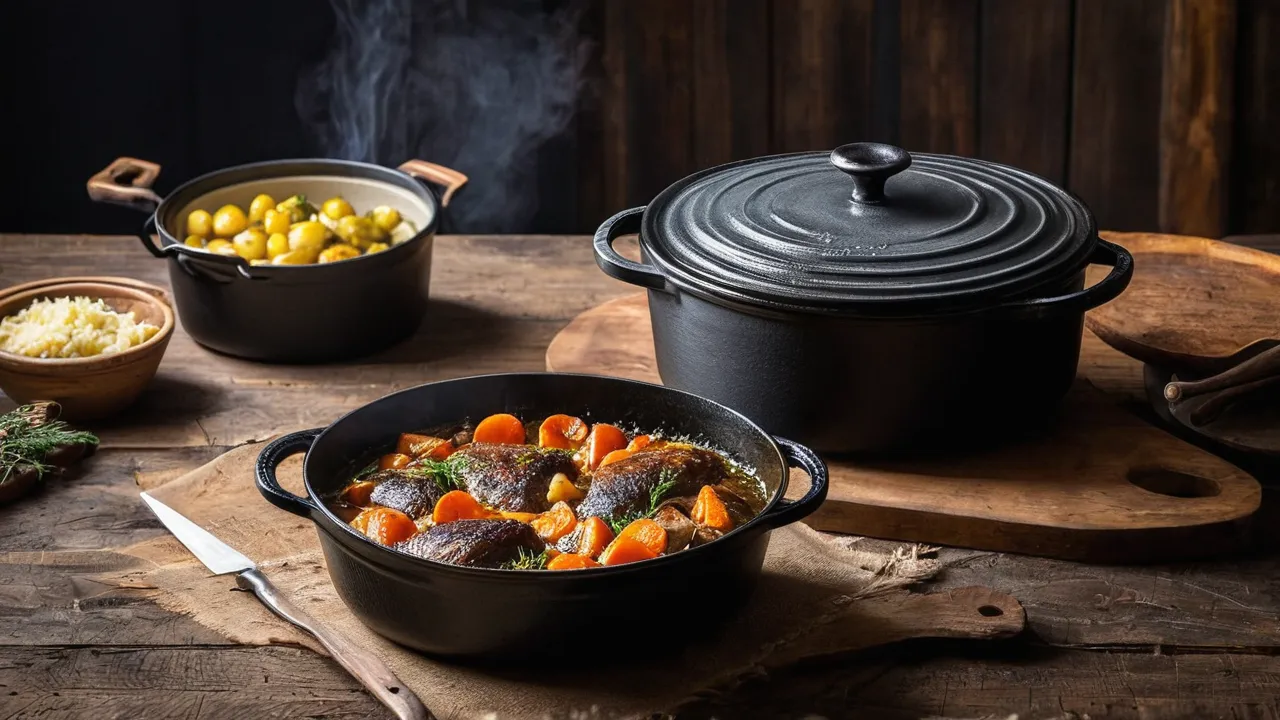
A braiser is a wide, shallow, lidded pot, while a Dutch oven is a tall, deep, lidded pot, and for many cooks the Dutch oven covers nearly everything a braiser does. Choose a braiser if you braise pieces of meat or vegetables in a single layer, sear a lot and want a lower, easier-to-reach pan. Choose a Dutch oven if you make soups, stews, bread and large batches, and want one pot to do most jobs.
How the Two Pots Differ
The core difference is shape. A Dutch oven is tall with straight or slightly curved sides, which holds more liquid, keeps steam in and suits long, wet cooking. A braiser is wide with low sides, usually two to three inches high, with a large flat base that gives food more contact with the pan, so you can brown a lot of meat at once and then add liquid for a braise in the same pan.
Both are often made of enameled cast iron and come with heavy lids that trap moisture. Some braisers use stainless steel or aluminum with a non-stick or enamel interior. Both can go from stovetop to oven, with temperature limits that depend on the lid knob and the coating, so check the manual. Our Dutch ovens page covers the tall pot in more depth.
Capacity is expressed in quarts for both, but the same number means different things. A 3.5 quart braiser is wide and shallow, with a lot of surface area, while a 3.5 quart Dutch oven is taller and narrower. The braiser holds a single layer of chicken thighs, and the Dutch oven holds the same food stacked up.
What a Braiser Does Better
- Browning in a single layer: the wide base lets you sear more pieces without crowding.
- Braising pieces that need to stay partly above the liquid: short ribs, thighs and chops.
- Dishes where reduction matters: the large surface area evaporates liquid faster, making sauces that thicken quickly.
- Easier access: the low sides make it easy to turn, taste and baste.
- Serving: a braiser often looks good enough to go from stove to table.
- Shallow baking: gratins, baked pasta and casseroles with a crisp top.
If you often cook meat in pieces and want sauce built in the same pan, a braiser gives a good result without extra steps.
What a Dutch Oven Does Better
- Soups, stews and stock: more depth for volume.
- Boiling pasta or blanching vegetables, if the pot is large enough.
- Bread baking: the tall lid traps steam, and many bakers use a Dutch oven for crusty loaves.
- Deep frying: the high sides and heavy walls hold heat, though check the manual for limits.
- Large roasts and whole birds, if the pot is big enough.
- Batch cooking and leftovers.
The Dutch oven is the more flexible pot. If you can own only one lidded pot, most kitchens do better with the Dutch oven.
Where They Overlap and Who Can Skip the Braiser
Both pots braise, simmer, roast and bake. A Dutch oven can braise short ribs, and a braiser can make a small stew. The difference is the shape of the result: in a braiser, you get a wider browning area and faster reduction, and in a Dutch oven you get a deeper pot that holds more.
Skip the braiser if you already own a Dutch oven and a large, deep skillet or sauté pan with a lid, since this combination covers most braising. Skip the braiser if your kitchen is small, if you rarely braise pieces of meat or if you want one lidded pot. Buy a braiser if you braise often in small batches and you find your Dutch oven too deep for browning.
A Worked Example
A cook makes chicken thighs with olive and lemon twice a month, plus a big pot of chili in winter. In a Dutch oven, six thighs must be seared in two batches, since the base is narrow, and the sauce takes a while to reduce. In a braiser, all six thighs fit in one layer, the sear is quicker and the sauce reduces in minutes. The chili, though, would overflow a shallow braiser and needs a tall pot. If this cook can have only one, the Dutch oven wins for chili, and a heavy lidded skillet can handle the thighs. If the cook braises weekly and makes chili rarely, a braiser might be the better pick.
Size, Weight and Handling
Enameled cast iron braisers and Dutch ovens are heavy, and weight rises with size. A full pot can be hard to lift from the oven, so check the handles and make sure you can grip them with oven mitts. A wide braiser has two short handles that can be easier to grasp than a Dutch oven’s loops, but a full wide pan is awkward to carry. Measure your oven and cabinet space, and check that the pot fits on your burner. A big base on a small burner will heat unevenly.
Consider material. Cast iron holds heat very well but is heavy, and lighter materials such as stainless steel clad pans respond faster. See our cast iron cookware and stainless steel pages for how the materials compare. Check the lid for a tight fit and the interior for a light color, which makes it easier to see browning.
Care, Cleaning and Cost Over Time
Both pots need the same basic care if they are enameled cast iron. Let them cool before washing, use non-scratch tools, and avoid sudden temperature changes that can crack enamel or the iron. Wide, shallow braisers often show more browned residue on the large base, so a soak in warm water and a soft brush helps. Do not use metal utensils that can chip the enamel, and check the manual for dishwasher advice, since many makers recommend hand washing. If the interior enamel chips, stop using the pot for acidic dishes and check the maker’s warranty.
On cost, the two usually sit in similar price ranges for the same material and size, so the choice rarely turns on price. The more important cost is the cost of being wrong. A braiser bought for a job it does not do well sits in a cabinet, and the same is true of an oversized Dutch oven that is too heavy to lift. Match the pot to the dishes you cook most.
Matching the Pot to Common Dishes
- Coq au vin, short ribs, pot roast: either, with the Dutch oven for large cuts and the braiser for smaller pieces.
- Chili, stew, soup and stock: Dutch oven.
- Chicken thighs, pork chops and sausages with a pan sauce: braiser.
- Crusty bread: Dutch oven.
- Baked pasta, gratins and one-pan rice dishes: braiser.
- Braised greens and vegetables: braiser, for quick cooking and reduction.
- Large roasts: Dutch oven, if it fits the oven.
If your list leans in one direction, choose that pot. If it is evenly split, buy the Dutch oven first.
What to Check Before You Buy
Look at the interior color, the lid fit, the handle size, the oven safe temperature of the lid knob and the weight listed on the product page. A lid that does not sit tightly lets moisture escape, and a plastic or phenolic knob may have a lower temperature limit than the pot. Confirm the pot is compatible with your cooktop type, and read the warranty for what it covers on enamel. Measure your oven rack position, because a tall Dutch oven may not fit with the rack in the usual place.
Should You Buy Both
If you cook often and have the space, owning both is reasonable, because the shapes complement each other: the Dutch oven for volume and bread, the braiser for searing and reduction. Do not buy both at once if budget is tight. Start with the Dutch oven, learn what you cook, and add a braiser if you keep wishing for a wider base. For how we judge such recommendations, see how we review, and browse the cookware and kitchen tools hub for related guides.
Frequently Asked Questions
Can a Dutch oven replace a braiser?
Mostly yes. A Dutch oven can braise, simmer and roast, though its narrower base browns fewer pieces at a time and reduces sauces more slowly. If you braise often in small batches, a braiser is nicer, but most cooks do fine with a Dutch oven.
Is a braiser the same as a sauté pan?
No. A braiser is a heavy, lidded pan, often enameled cast iron, with a wide base and low sides designed for searing and slow cooking. A sauté pan is lighter, usually metal, with straight sides and a lid, and is designed for faster stovetop cooking.
What size braiser should I buy?
Check the quart size and the diameter. A smaller one around 3 to 4 quarts suits one to three people, and larger sizes suit families. Look at how many pieces of meat fit in one layer, and make sure the pot fits your oven and burner.
Can I bake bread in a braiser?
It is possible, but a Dutch oven is the usual choice because the tall lid traps steam and gives loaves room to rise. If you try a braiser, check the lid and the temperature limit in the manual, and expect a flatter loaf.
Final Thoughts
A Dutch oven is the more versatile first pot, and a braiser is a specialist for searing and reducing in a wide pan. Buy the Dutch oven first, add a braiser only if you braise in small batches often, and check size, weight and temperature limits before you commit.
Related buying guides
- Chipped Enamel on Cast Iron: Is It Still Safe?
- Dutch Oven for Bread: Size and Shape Checklist
- Dutch Oven Size Guide: How Many Quarts You Need
About the author

The BuyOnceChoice Editorial Team researches durable products worth buying once. Our guides compare published specifications, warranty terms, expert review consensus, and verified owner feedback. We do not conduct our own product trials. See How We Review and our Editorial Policy for our standards.