kW vs kWh: Home Battery Power and Energy
A home battery has two ratings that answer different questions. kW sets what can run together, and kWh sets how long it runs. Here are runtime examples.
 By BuyOnceChoice Editorial Team
Updated November 16, 2026
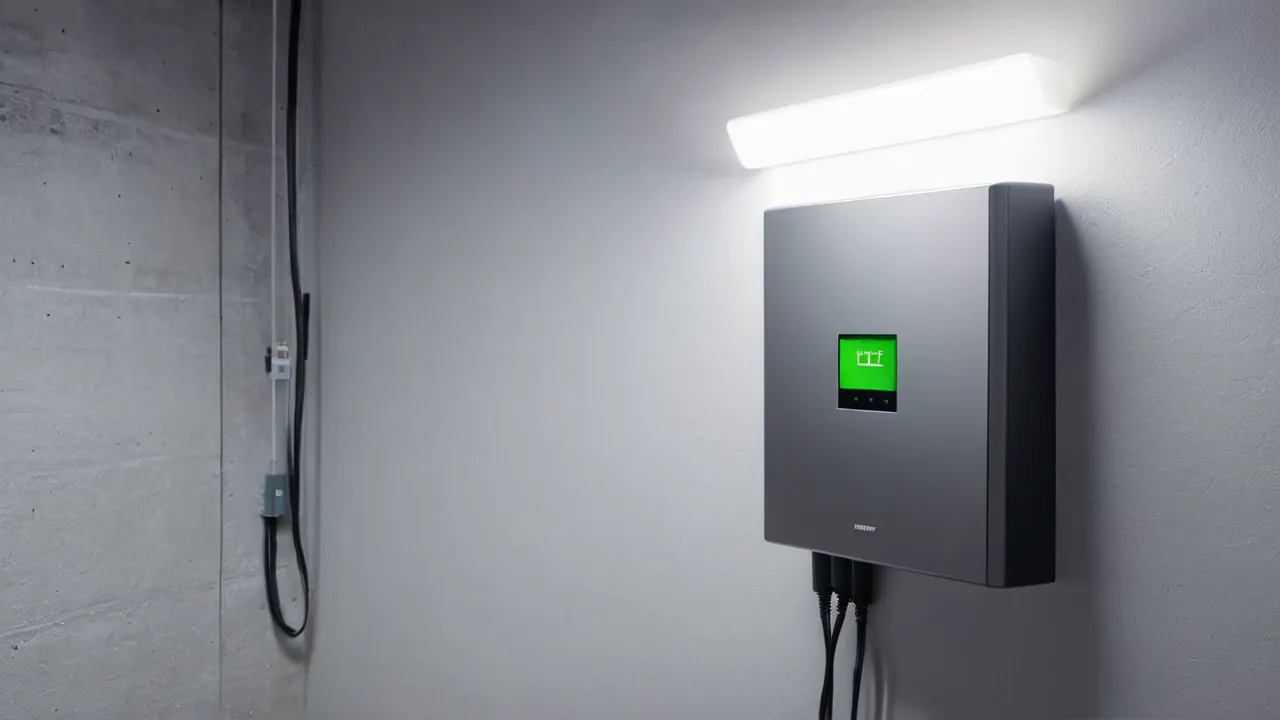
In a home battery, kilowatts (kW) measure how much power the battery can deliver at one moment, which decides what you can run at the same time, while kilowatt-hours (kWh) measure how much energy it stores, which decides how long you can keep running. You need both numbers to be right: enough kW for your biggest simultaneous loads and enough kWh for the hours you want to cover.
Think of kW as the width of a pipe and kWh as the size of the tank. A wide pipe on a small tank empties quickly, and a big tank behind a narrow pipe cannot run your heavy appliances together. This guide shows how to judge each number on a spec sheet, with runtime examples and the questions to ask before you buy. Browse the home battery backup category for systems, read how we review for how we handle specifications, and see our power and energy section for related guides.
Two Ratings, Two Jobs
Most home battery spec sheets list a nameplate capacity in kWh and an output rating in kW. Nameplate capacity is the total; usable capacity is what the system lets you draw, which is often a little lower because the battery management system protects the cells from full discharge. Look for the word usable, and if the sheet does not say, check the datasheet or ask the installer.
Output usually comes in two forms: continuous, which the battery can hold for hours, and peak, which it can hold briefly, often for several seconds, to start motors. Continuous kW is the one that determines whether your selected loads can run at the same time. Peak kW matters for the moment a compressor or pump starts.
One more detail trips up buyers. A system’s output may be limited not by the battery but by the inverter that connects it, so the kW rating can apply to the whole package rather than one battery module. Adding a second module often adds kWh and sometimes kW, but not always. Read what changes when you stack units.
Why Output Limits Catch Owners Off Guard
Owners who buy by kWh alone often discover the limit the first time they run the air conditioner, a dryer, and an oven during an outage. The system trips, or the installer has wired it so only some circuits are backed up. A battery rated for a few kW cannot run a loads list that adds up to more, no matter how much energy it stores.
A typical household has a few loads that dominate: central air conditioning, an electric dryer, an electric range, an electric water heater, a well pump, and an electric vehicle charger. These are the ones to count first. Lights, a refrigerator, a router, and a laptop add up to a small fraction of one kW.
Add up the running watts of the loads you want during an outage, divide by 1,000, and compare the total to the continuous kW rating. Then check the startup surge of any motor against the peak rating. If the total exceeds the rating, your options are a larger or paralleled system, a load management device that turns off lower-priority loads, or a shorter list of backed-up circuits.
Runtime Math You Can Do at the Kitchen Table
Runtime in hours equals usable kWh divided by the average kW you draw. The table below uses a hypothetical battery with ten kWh of usable energy and ignores conversion losses, so treat the results as upper bounds. Real systems lose a few percent in the inverter, and your draw changes over the day.
| Average draw | Runtime from 10 kWh usable | Typical example |
|---|---|---|
| 0.5 kW | About 20 hours | Refrigerator, router, lights, phone charging |
| 1 kW | About 10 hours | Essentials plus a TV and a small fan |
| 2 kW | About 5 hours | Essentials plus a window air conditioner |
| 5 kW | About 2 hours | Many loads at once, including a large appliance |
Notice that the same battery gives a 10 times difference in runtime depending on what you run. That is why output limits and load choices matter as much as capacity. If you add solar, the battery recharges during the day and the runtime can stretch well beyond the table, subject to the weather.
What Surge Does to the Picture
Motors draw more power when they start than when they run. A well pump or a central air conditioner compressor can pull several times its running watts for a moment. If the battery or inverter cannot supply the surge, the load will fail to start or the system will shut down. The manual or datasheet for the appliance often lists locked-rotor amps, which you can multiply by the voltage to estimate the surge. Soft starters, which some air conditioners accept as an add-on, reduce the surge and may let a smaller battery do the job. Ask an installer whether your equipment qualifies.
Do not assume a larger capacity solves a surge problem. Surge is a power question, not an energy question. A battery with plenty of kWh and a modest peak rating can still fail to start a pump.
A Worked Example With Two Households
Household A wants to keep a refrigerator, a freezer, a router, lights, phone chargers, and a gas furnace blower running. Add the running watts and the total might sit near one kilowatt with a surge from the refrigerator compressor of a few kilowatts. A battery with a modest continuous rating can handle this, and the question becomes kWh: at one kW average, a ten kWh system covers roughly ten hours before solar recharging, and more if the fridge cycles off and the real average is lower.
Household B wants the same essentials plus a central air conditioner and a well pump. The air conditioner may draw several kW while running and more at startup, and the pump adds its own surge. Here the first question is kW. If the system’s continuous rating cannot carry the air conditioner and the pump together, the answer is a larger or paralleled system, a soft starter, or a rule that the air conditioner runs only when the pump is idle. Only after output is settled does kWh decide the hours.
The comparison shows why two homes with the same bill can need different batteries. One is shopping for stored energy and the other for deliverable power. Start with the household you resemble, and write down the one number that would make your plan fail.
Reading Temperature and Age Into the Ratings
Ratings are stated at specific conditions. Cold weather can reduce what a battery delivers and may limit charging, and as the battery ages, usable capacity declines. Some warranties promise a minimum percentage of capacity at the end of a term, or a total energy throughput, so read the terms. If your installation will be in an unheated garage, ask the installer what the manufacturer says about operating temperature and what the system does when it gets too cold or hot.
Questions to Ask Before You Buy
- What is the continuous kW rating, and is it for the whole system or one module?
- What is the peak kW, and for how many seconds?
- What is the usable kWh, and does it change with temperature or age?
- Which circuits will the installer back up, and can I change that later?
- What happens to the ratings if I add more modules?
- How long is the warranty, and does it guarantee a minimum capacity at the end of the term?
Ask for the answers in writing, and compare them against your load list rather than against a competitor’s brochure. Safety and installation matter too: a home battery connects to your electrical service panel, so it must be designed, permitted, installed, and inspected by licensed professionals. Follow the manufacturer’s manual for placement, clearances, and temperature limits, and do not attempt wiring yourself.
Who Should Prioritize Which Number
- Prioritize kW if you want to run central air conditioning, a well pump, an electric range, or several large loads at once.
- Prioritize kWh if your goal is to cover long outages with a short list of essentials, or to shift solar energy into the evening.
- Balance both if you want whole-home coverage, and plan to add load management so the two numbers work together.
- Be cautious if you plan to run an electric vehicle charger from the battery; charging draws kilowatts for hours and drains a modest battery quickly.
Frequently Asked Questions
Is a higher kWh battery always better?
No. Higher kWh means more stored energy and longer runtime, but it does not raise how many loads you can run at once. If the continuous kW rating is too low for your appliances, a bigger tank will not help. Match kW to your simultaneous loads first, then choose kWh for the hours you need.
How many kW do I need to run a whole house?
It depends on what runs at the same time. A home with central air conditioning, an electric range, and a dryer can need well over ten kW of continuous output, while essentials alone may need only a few. List your loads, add their running watts, and check surge. A licensed installer can confirm using your panel.
How long will a 10 kWh battery last?
Divide usable kWh by your average draw in kW. At a steady one kW it lasts about ten hours, and at two kW about five hours, before conversion losses. The real figure is somewhat lower. Solar recharging, load management, and careful use of big appliances can stretch it considerably.
Final Thoughts
Kilowatts tell you what you can run together, and kilowatt-hours tell you how long you can run it. Count your biggest loads for kW, divide usable kWh by your average draw for hours, and check surge on any motor. Ask what changes when you add modules, and rely on a licensed installer for design and wiring.
Related buying guides
- LiFePO4 vs NMC for Home Battery Storage
- Solar Plus Battery vs Battery Only Backup
- Sump Pump Battery Backup: How to Choose a System
About the author

The BuyOnceChoice Editorial Team researches durable products worth buying once. Our guides compare published specifications, warranty terms, expert review consensus, and verified owner feedback. We do not conduct our own product trials. See How We Review and our Editorial Policy for our standards.