Robotic vs Suction vs Pressure Pool Cleaner
Compare how robotic, suction side and pressure side pool cleaners work, what they cost to run and which pool surface and debris each one handles best.
 By BuyOnceChoice Editorial Team
Updated November 16, 2026
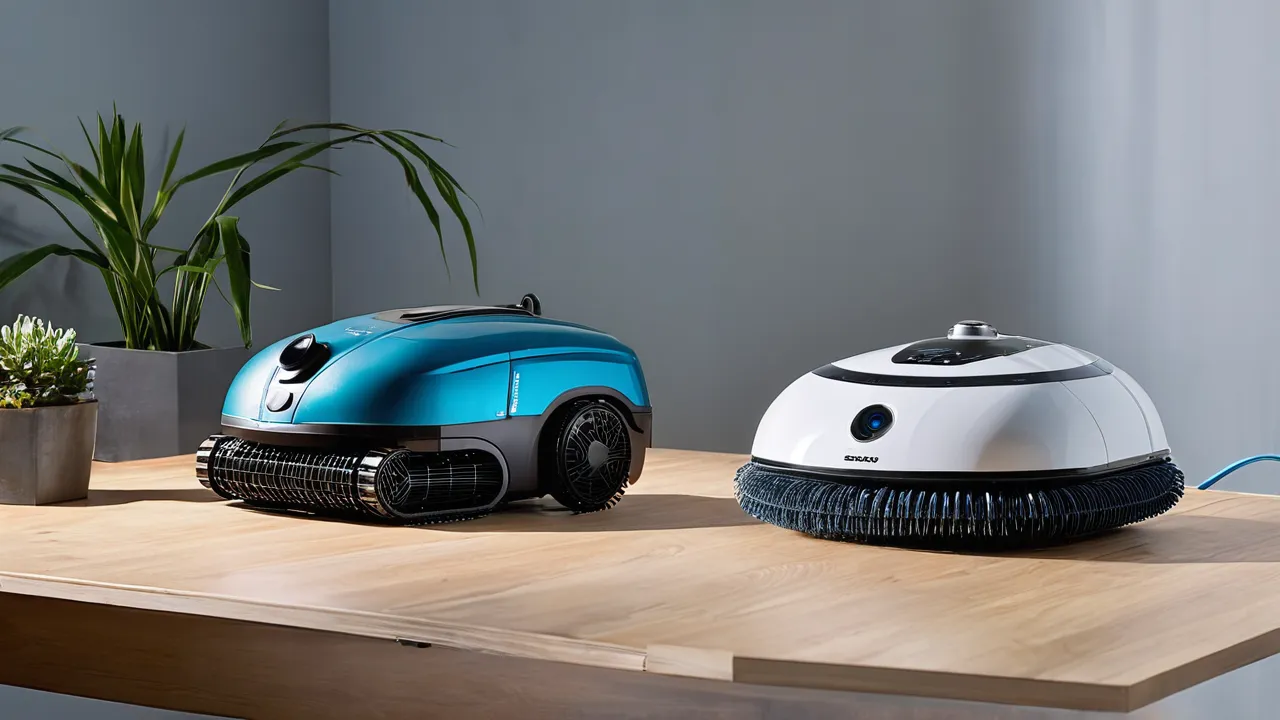
A robotic pool cleaner is a self contained, motorized unit with its own filter and drive, a suction cleaner runs off your pool pump and filter system, and a pressure cleaner uses returned water, often with a booster pump, to push debris into its own bag. Robotic cleaners usually give the best coverage with the least load on your pump, suction cleaners cost less, and pressure cleaners handle large debris well.
How Each Type Works
Robotic cleaners plug into a low voltage power supply and run on their own motor. They drive tracks or wheels, scrub with brushes and filter water through an internal basket or cartridge. They do not use your pump, so your filtration continues separately. Many climb walls and clean the waterline, and the better ones follow a programmed route.
Suction cleaners connect by hose to the skimmer or a dedicated suction line. The pump draws water through the cleaner, and debris goes to the pump basket and filter. They are simple, with few moving parts, and they are the cheapest to buy.
Pressure cleaners connect to the return line, sometimes with a dedicated booster pump. Water pressure drives the cleaner and debris collects in a bag on the unit. They cope with leaves and larger debris because the bag is large.
Filtration and the Debris You Have
Match the cleaner to the mess. Fine dust and algae film do best with a robot using a fine filter or cartridge, because it captures them rather than sending them to your system. Leaves, twigs and acorns suit pressure cleaners, whose bag is large and does not clog your main filter. Suction cleaners handle light to moderate debris, and a heavy load can clog the pump basket and strain the system.
If your pool sits under trees, a pressure cleaner or a robot with a large top load filter is a better fit. If you mostly fight dust and pollen, a robot with fine filtration will do the best job.
Energy Use and Running Cost
Robots run on their own small motor, so they use relatively little power per cycle and do not require running the pool pump longer. Suction cleaners use your main pump while running, which can mean more hours of pump power. Pressure cleaners with a booster pump add an extra motor to your electric bill. Compare the wattage of the robot’s power supply or the booster pump with your pump’s draw and local electric rate to estimate, and check each manual for the cycle length.
Here is a worked comparison method. Find the watts your pump draws, which is on the pump label or in its manual. Multiply by the hours the cleaner makes the pump run, then by your electric rate per kilowatt hour. A suction or pressure cleaner makes the pump run during the cleaning cycle, and if you would otherwise run the pump fewer hours, that is extra cost. For a robot, use the power supply wattage on its label, multiply by the cycle hours and your rate. Because a robot runs for about two to three hours per cycle on a small motor, the figure is usually small compared with a pump running for the same time. If you have a variable speed pump, a suction cleaner may need a specific speed to work, so check the cleaner manual before assuming the pump can run slow.
Pool Surface and Shape
Robots suit a wide range of surfaces and shapes, and many climb walls and cove. Check the product page for the pool surface it supports, such as vinyl, plaster, tile or fiberglass, and the maximum pool length for the cable. Suction and pressure cleaners may leave patches on irregular shapes or fail to climb steep walls. Large or complex pools may need a robot, while a simple rectangle with a good return setup works with any type.
Walk the pool and note features that affect any cleaner: steps and benches, a sloped floor, a deep end, a swim out, tile ledges and a dark or light finish. Robots that climb walls cover the waterline and steps, while suction and pressure units mostly clean the floor and lower walls. If your pool has a lot of steps or a vanishing edge, check the manufacturer’s notes. Cable length limits robot reach, so measure the pool’s longest dimension and compare it with the cable listed. Pressure and suction cleaners need the hose length to reach every area, and extra hose sections add drag.
Maintenance and Durability
Robots need the filter rinsed after each run, brushes and tracks replaced when worn, and the cable kept untangled. Suction cleaners need hose checks, diaphragm or disc replacement and care with skimmer connections. Pressure cleaners need bag replacement, a check of the booster pump and occasional wheel changes. The simple designs have fewer parts to break, and the robots are more complex but easier to remove and store.
Plan on a few recurring parts for each type. Robots: brushes, tracks or wheels, filter media and the cable swivel. Suction cleaners: the diaphragm, hoses, wheels and skimmer plate or hose adapters. Pressure cleaners: the bag, the tail sweep, wheels and the booster pump seals. Ask whether the maker sells these parts directly, because availability, not price, is what usually decides how long a cleaner stays in service. Cleaners that lose parts support after a few years become disposable even if the motor still runs. Keep a spare filter or bag so a clog never delays a cycle.
Also compare how each type behaves when something goes wrong. A suction cleaner that stalls can starve the pump, so check the pump basket if flow drops. A pressure cleaner that stops moving usually has a clogged bag or a weak return flow. A robot that stops will usually show an error and sit in place, which you can fish out with the cable or a pole.
Power Safety for Robotic Cleaners
Robotic cleaners run on a low voltage power supply that must stay dry and away from the water. Keep the power supply on a protected outlet, as the manual directs, and place it at the distance from the pool edge listed. Never operate a cleaner while people are swimming unless the manual allows it. Unplug it before handling, do not repair electrical parts yourself and use a licensed electrician or qualified pool technician for any outlet or wiring changes.
Who Should Choose Which
- Choose robotic: for the best coverage, wall and waterline cleaning, and low load on your pump.
- Choose suction: on a modest budget with a simple pool and light debris.
- Choose pressure: for lots of leaves, large debris and a pool with a return line or booster pump.
- Consider pool size, shape and surface, plus how much you want to lift and store the unit.
Find more at the pool cleaners category, the wider lawn, garden and outdoor guides and How We Review.
Common buyer regrets are worth knowing. People who buy a suction cleaner for a leafy pool find it clogs the pump basket. People who buy a robot without checking cable length find it cannot reach the far end. People who buy a pressure cleaner without a return line or booster pump find that the weak flow leaves it stalling. Choose by checking the manual or product page for pool length, surface type, debris type and the equipment required. Also consider handling: a robot weighs about as much as a full bucket when wet, so make sure you can lift it from the pool.
Cost is the last thing to settle. Compare the purchase price with expected years of service, then add parts and electricity. A low priced suction cleaner may be the best value in a small pool with a strong pump, while a robot often wins for owners who want less equipment to manage, since it needs no hose, no booster pump and no changes to plumbing. If you rent the home or plan to move, a robot is portable and can go with you, whereas pressure and suction setups depend on the pool’s plumbing.
Frequently Asked Questions
Is a robotic pool cleaner better than a suction cleaner?
For coverage, filtration and pump load, usually yes. A robot cleans walls and waterline and does not strain the pump, though it costs more upfront. A suction cleaner is cheaper and simple, and it works well on small pools with light debris.
Which pool cleaner is best for leaves?
A pressure cleaner with a large bag or a robot with a big top load basket handles leaves best. Suction cleaners can clog on large debris, so for a pool under trees, choose a model rated for leaves and empty the bag or basket often.
Do robotic pool cleaners use a lot of electricity?
Not much compared with your pump, because they use a small motor and run for a few hours per cycle. Check the wattage in the manual and multiply by hours and your electric rate for an estimate for your own pool.
Can I leave a robotic pool cleaner in the pool all the time?
It is better not to. Constant exposure to chlorine, sun and salt wears seals, brushes and plastic faster, and a cord left in the water can tangle. Remove it after each run, rinse it with fresh water, let it drain and store it in shade, as the manual suggests.
Final Thoughts
Pick a robot for coverage and low pump load, a suction cleaner for a simple budget setup and a pressure cleaner for leafy pools. Keep the power supply dry, follow the manual for placement and leave electrical work to a licensed professional.
Related buying guides
- Cordless vs Corded Robotic Pool Cleaner: Trade Offs
- Pool Cleaner Buying Mistakes: Filters, Surfaces, Pump Fit
- Pool Cleaner Size Guide: Pool Shape and Cable Reach
About the author

The BuyOnceChoice Editorial Team researches durable products worth buying once. Our guides compare published specifications, warranty terms, expert review consensus, and verified owner feedback. We do not conduct our own product trials. See How We Review and our Editorial Policy for our standards.