Basket Air Fryer vs Air Fryer Toaster Oven
Choose between a basket model and an oven-style air fryer by cleaning effort, crisping on racks, counter height, and how the door and hinges hold up.
 By BuyOnceChoice Editorial Team
Updated November 16, 2026
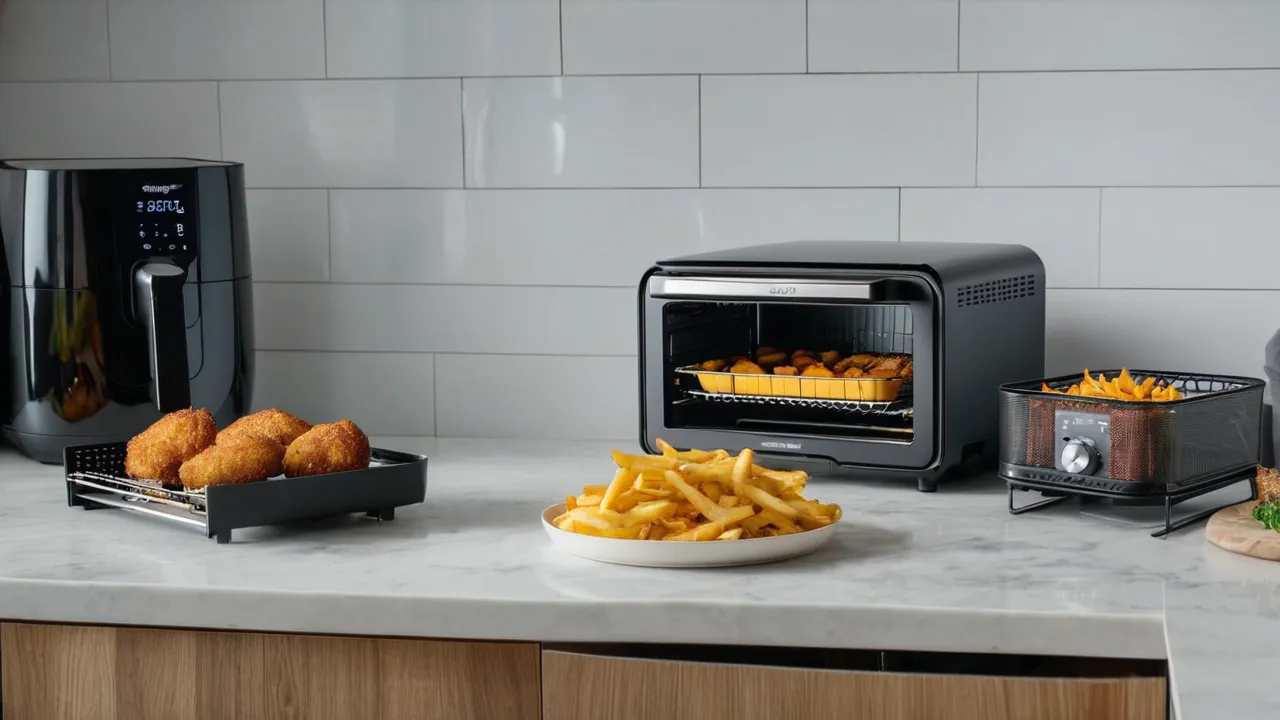
A basket air fryer vs toaster oven air fryer decision comes down to how you cook and clean. A basket model crisps a single loose layer fastest and tucks under most cabinets, while an oven-style unit holds more food across racks, doubles as a toaster oven, and takes more counter space and more cleaning.
Two Designs Sold Under One Name
Both appliances push hot air past food with a fan, which is why the same label covers them. The difference is the body. A basket model is a compact pod with a pull-out drawer, and the food sits in a perforated basket close to the fan and element. A toaster oven air fryer is a small oven with a door, a wire rack or two, and a crumb tray, and it adds an air fryer mode to the usual bake, broil, and toast functions.
Because the two designs share a name, shoppers often assume they perform the same. They do not. Distance from the fan, the layout of the cooking surface, and the number of food layers shape results, cleaning, and long-term wear. This article focuses on those practical differences rather than brand claims, which are best checked in the product manual.
Crisp Quality: One Layer Versus Racks
A basket forces food into a small, tight space with strong airflow around it. When you cook one loose layer of fries or wings, that setup crisps quickly. Shaking or flipping the basket midway helps, and the compact chamber heats fast.
An oven-style unit spreads food across wider racks. A single rack with a single layer can crisp well, but loading two racks changes things, because the upper layer shields the lower one and airflow is less uniform. Many owners rotate trays partway through. That is a minor inconvenience if you accept it, and a deal breaker if you want hands-off cooking.
So the rule is simple. If you cook small batches of one food at a time, the basket has an edge on crisp speed. If you cook larger batches or mixed items, the oven-style unit offers more surface, but you may need to rotate and give crisp results a little more time.
Cleaning Effort
Cleaning is where owners most often change their minds. A basket model usually has one removable basket and a drawer that can be washed in the sink, while the interior cavity is small. The coating on the basket is the weak point, so cleaning with a soft sponge matters. Coatings differ by model, so check the care section of the manual.
An oven-style unit has more surfaces to wipe: the interior walls, the door glass, the racks, and the crumb tray. Grease splatter lands on walls and the heating elements near the top, and those are harder to reach. If you cook fatty foods, expect more frequent wiping. Some models have removable parts that make the job easier, so check whether the tray and racks are removable and dishwasher safe in the manual.
If you dislike cleaning, a basket with a removable drawer is usually the lower effort choice. If you accept more wiping in return for versatility, an oven-style model is fine.
Cabinet Height and Counter Footprint
Measure the vertical space first. A basket air fryer is typically compact, but it still needs clearance above for exhaust heat, and the pull-out drawer needs room in front. An oven-style unit is wider and deeper, and the door swings down or lifts up, which affects how much room you need in front.
Check the manual for the clearance behind and above the unit. Under-cabinet placement is a common mistake, since hot exhaust can discolor or damage surfaces over time. If your counter is small, the basket model almost always wins on footprint. If you have the space and want to retire a toaster, an oven-style model can save a second appliance.
Door Hinges and Long-Term Durability
A basket model has few moving parts apart from the drawer slide and latch. An oven-style unit has a door with hinges, springs, and a glass panel, and those components handle repeated opening and heating. Owners often report loose or sagging doors as a long-term wear point, though how soon it appears varies by build.
Look at the product page for details on door construction, such as metal hinges, a spring mechanism, and glass thickness, and read the warranty terms. A longer warranty signals that the maker expects the door and controls to hold up. Also check whether replacement racks and trays are available, since those are the parts you are most likely to lose or damage.
What to Check on the Product Page
- Interior width, depth and height in inches, not just quarts.
- Number of rack positions and whether a basket or tray is included.
- Whether the basket, drawer or racks are listed as dishwasher safe in the manual.
- Door construction, including hinge material and glass description.
- Cord length, clearance requirements and nameplate wattage.
- Warranty length and whether replacement baskets or racks are sold separately.
Writing these down for two or three candidates turns a vague style choice into a comparison you can defend.
Common Owner Regrets
Basket buyers most often regret size, finding that two people’s dinner needs two rounds. Oven-style buyers most often regret footprint and cleaning, discovering that the unit is hard to store and the interior needs frequent wiping. Both regrets are predictable, so match the style to your most frequent meal and counter space before you pick on features.
A Quick Scenario Check
Picture two kitchens. In the first, one person reheats leftover pizza, crisps frozen snacks, and roasts a single chicken breast most weeknights. A basket model handles all of that with a short preheat and a ten second rinse of the drawer. In the second, a family bakes sheet-pan dinners, toasts bread for four every morning, and wants one machine to replace a tired toaster. The oven-style unit saves a second appliance and fits a sheet pan, even though wiping it takes longer.
Now flip the situations. The single person who buys an oven-style unit may leave it on the counter unused because it is bigger than necessary. The family that buys a small basket may spend each evening cooking in rounds. Neither outcome is a failure of the product. It is a mismatch between design and routine, which is why we recommend writing down what you cooked in the last two weeks before you shop.
Also consider what happens to your old appliance. If you plan to keep a toaster or small oven anyway, an oven-style air fryer duplicates it, and the basket model adds a distinct function. If you are replacing one, the oven-style unit makes more sense.
Who Should Choose Which
Use these rules to decide.
- **Choose a basket air fryer** if you cook for one to three people, mostly one food at a time, have limited counter space, and want the easiest cleaning.
- **Choose a toaster oven air fryer** if you want to replace a toaster or small oven, bake or broil often, cook multiple items at once, and have the counter room.
- **Skip an oven-style unit** if you rarely use baking functions, since you would pay for versatility and storage space you will not use.
- **Skip a basket model** if you regularly cook for four or more people, since batches will cost you time, or consider a dual basket model such as those in our dual air fryer roundup.
Energy and Preheat Considerations
A small basket machine preheats quickly and heats a small chamber, so it tends to use less energy for small meals than a full-size oven. An oven-style unit sits in between: bigger than a basket, much smaller than a range. Do not trust a general claim that one saves a specific amount, because it depends on the model and how long you cook. The manual and product page list wattage, which tells you the maximum power draw, but actual energy use depends on cooking time.
Safety Notes
Plug either style into a grounded outlet that is not shared with other high-draw appliances, keep cords away from hot surfaces, and never submerge the base. Leave the clearance the manual specifies around the exhaust. Oven-style units get hot on the outside and the glass can burn, so keep children away. If you see sparking, a damaged cord, or repeated breaker trips, stop using the unit and call a licensed electrician or the manufacturer. Follow the manual for approved cookware, liners, and temperature limits.
Frequently Asked Questions
Is a basket air fryer or a toaster oven air fryer better?
Neither wins everywhere. A basket model is better for small batches, quick crisping, simple cleaning and tight spaces. A toaster oven air fryer is better for larger batches, baking, toast and replacing a second oven. Choose by how many people you cook for and how much counter space you have.
Can a toaster oven air fryer crisp as well as a basket?
It can, with a single loose layer on one rack, but crisping is usually faster in a basket because food sits closer to the fan. Loading two racks can leave the lower tray less crisp unless you rotate trays. Check the manual for rack suggestions.
Which type of air fryer is easier to clean?
A basket model is usually easier because it has one removable basket and drawer. An oven-style unit has interior walls, door glass, racks and a crumb tray to wipe. Check whether the parts are dishwasher safe in the manual, and avoid abrasive pads on nonstick surfaces.
Does an air fryer toaster oven take up more counter space?
Yes, usually. Oven-style units are wider and often taller, and they need clearance for the door swing and exhaust. Measure your spot, including height under cabinets, and compare it with the exterior dimensions on the product page before you buy.
Final Thoughts
Choose a basket air fryer for compact size, quick crisping of small batches, and simpler cleaning. Choose a toaster oven air fryer for larger batches, baking, and replacing another appliance, accepting more cleaning and a bigger footprint. Check the manual for cabinet clearance, the product page for door and rack details, and the warranty for coverage. Browse the air fryer category to compare types, and read how we review to see how we weigh durability and cleaning.
Related buying guides
- Dual Zone vs Single Basket Air Fryer: Who Needs Two
- How Long Do Air Fryers Last and When to Replace
- How to Choose an Air Fryer: A Buy Once Checklist
About the author

The BuyOnceChoice Editorial Team researches durable products worth buying once. Our guides compare published specifications, warranty terms, expert review consensus, and verified owner feedback. We do not conduct our own product trials. See How We Review and our Editorial Policy for our standards.