Oven Safe Temperatures for Cookware and Lid Knobs
The oven rating belongs to the weakest part of a pan, often the lid knob or handle. Here is a materials table and a way to read the maker's limits.
 By BuyOnceChoice Editorial Team
Updated November 16, 2026
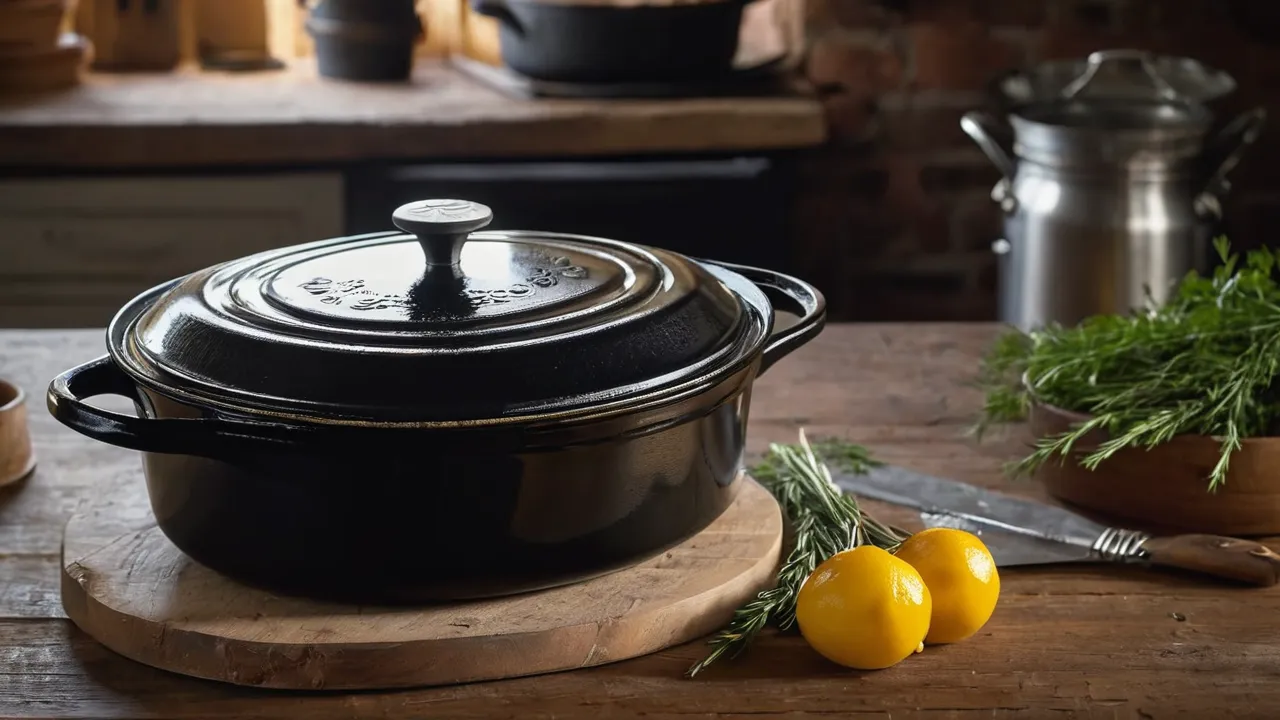
The cookware oven safe temperature is set by the weakest part of the piece, not the pan body. A stainless pan may tolerate very high heat, but a plastic knob, a silicone grip, a glass lid, or a nonstick coating usually sets a lower limit. Always use the lowest figure printed in the manual or on the product page, and when no figure is given, do not put the piece in the oven.
Why the Weakest Part Sets the Limit
A pan is an assembly: body, coating, handle, lid, knob, and sometimes a rivet cover or grip sleeve. Each part is made of a different material, and each material fails at a different temperature. Metal bodies tolerate very high heat, but the plastic or rubber parts attached to them soften, melt, crack, or release fumes long before the metal does. Glass can shatter when it is heated unevenly or rapidly. A nonstick coating can degrade at temperatures lower than the pan body can handle.
The rating you need is therefore the lowest among all the parts you put in the oven. If the pan is rated for a high temperature but the lid knob is rated lower, the lid is the limit. Taking off a lid and cooking uncovered is often the answer, as long as the recipe allows it.
Safety First
Exceeding rated temperatures can melt handles, crack glass, damage coatings, and release fumes, and it can cause burns when a failing part drops hot food.
- Read the manual or product page for the temperature rating of each part, and use the lowest.
- Never assume a handle is oven safe. A handle that looks like metal may have a plastic sleeve.
- Use dry oven mitts and keep a firm grip, since handles reach oven temperature.
- Do not place cold glass lids into a hot oven or hot lids on a wet surface. Rapid temperature changes can crack glass.
- Do not use cookware under a broiler unless the maker says so, since broilers run hotter than the oven setting.
- Keep pet birds out of the kitchen when heating nonstick cookware, since fumes can be harmful to them.
- If a part smokes, smells of burning plastic, or begins to melt, turn off the oven, ventilate, and let it cool before removing anything.
Typical Ranges by Material
These are general patterns, not guarantees. Always follow your own product’s stated limits.
| Part or material | Typical range | Notes |
|---|---|---|
| All-metal stainless pans and handles | Often to 500 degrees F or higher | Check the maker’s figure |
| Bare cast iron | Very high, often limited only by your oven | Seasoning can smoke at high heat |
| Enameled cast iron, metal knob | High, often 500 degrees F or more | Check the manual for the lid |
| Enameled cast iron, phenolic knob | Lower, often around 400 degrees F | Some makers sell metal replacement knobs |
| Nonstick coated pans | Often 350 to 500 degrees F | Depends on the coating and handle |
| Silicone grips and sleeves | Often around 400 to 450 degrees F | Check the stated limit |
| Phenolic, plastic, or Bakelite handles | Often lower, around 350 to 400 degrees F | Do not use in a broiler |
| Tempered glass lids | Often around 350 to 450 degrees F | Avoid thermal shock |
| Wooden handles | Not oven safe | Never place in an oven |
These ranges vary by maker and model, so treat them as hints about what to look for, not as numbers to rely on.
Lid Knobs: The Common Surprise
Lid knobs are often the first part to fail, because many are made of phenolic plastic or have plastic inserts. A Dutch oven that tolerates high heat in its body may have a knob rated lower, which matters for recipes like no-knead bread baked at high temperature. Options include:
- Check the manual for the knob’s stated limit.
- Replace a plastic knob with a stainless steel knob sold by the maker or a compatible third party, if the maker states that the part is rated for higher heat.
- Bake with the lid off for part of the cooking time if the recipe allows.
- Use the pot without the lid and cover with foil if heat is a concern.
Never remove a knob and leave a bare hole without checking the maker’s guidance, since a hole can let steam escape and can be a burn risk.
Handles and Rivets
Stainless riveted handles are the most heat tolerant. Handles with silicone sleeves are comfortable on the stove, but the sleeve sets the oven limit. Screwed-on handles can loosen with temperature changes, so check them occasionally. Cast iron handles are very high-heat tolerant, though they get extremely hot. Coated handles may chip under heat. If a handle is wooden, never use it in the oven.
Coatings and Special Finishes
Nonstick coatings should be kept under the maker’s stated limit. Overheated PTFE coatings can degrade and release fumes, and ceramic coatings can lose their release properties. For roasting at high heat, choose stainless, cast iron, or enameled cast iron instead of nonstick. Enamel tolerates high heat but can crack under thermal shock, so avoid plunging a hot pan into cold water.
How to Find the Rating When It Is Not Obvious
1. Check the product page, the box, the stamp on the pan, or the care leaflet. 2. Search the maker’s website for the model name and care instructions. 3. Contact the maker’s support with the model number if the rating is not published. 4. If you cannot find it, treat the piece as stovetop only.
Our Dutch oven guides and stainless steel cookware guides explain what to check on each type. Our How We Review page explains how we evaluate products using research and specifications rather than claims of our own trials.
A Worked Example
A recipe calls for baking bread in a covered pot at a high temperature. The pot body is rated high, but the manual states the knob is rated lower than the oven setting. The owner has three options: swap in a metal knob rated for high heat, bake with a different pot, or follow a recipe adapted to a lower temperature. Checking the manual first avoids a melted knob and a wasted loaf.
Quick Checklist Before the Oven
- Is every part of the piece rated for the temperature you plan to use?
- Is the lid or knob rated, or should you leave the lid off?
- Does the handle have a plastic sleeve or wooden part?
- Are you using the broiler? Check that the maker allows it.
- Is the pan clean, dry, and free of cracks?
- Do you have dry mitts ready?
Cooking Situations Where Ratings Matter Most
Some recipes push cookware harder than everyday cooking. Bread baked in a covered pot, roasts started at high heat, pizzas finished in a skillet, and pan-seared steaks finished in the oven all call for sustained heat. Searing a steak on the stove and then moving the pan to a hot oven means the handle sees both the burner and the oven, so the handle needs a rating for the oven temperature. Broiling to finish a dish can send surface temperatures well above the dial setting, which is why broiler use is called out separately by many makers.
In contrast, braising at moderate heat, slow-roasting, and baking casseroles rarely approach the limits of quality cookware, so the main check is whether a plastic knob or grip is present. Keep a short list of the ratings for your most-used pieces, taped inside a cabinet or saved in your phone, so you do not have to hunt for the manual every time a recipe calls for the oven.
Replacement Knobs and Aftermarket Parts
Some makers sell replacement stainless knobs for their Dutch ovens and pots. Use a part the maker states is compatible with your model and rated for the temperature you need, and follow the maker’s guidance on screw size and tightening. Generic aftermarket knobs may not fit well or may carry a lower rating, so check the product listing. Tighten knobs only enough to hold them, since overtightening can crack enamel or lids. Inspect knobs now and then for looseness, because a knob that gives way when you lift a hot lid can cause burns.
Frequently Asked Questions
What temperature is stainless steel cookware oven safe to?
Many all-stainless pans are rated to roughly 500 degrees F or higher, but the handle, lid, and any rivets or coatings may set a lower limit. Check the manual or product page, and use the lowest figure listed for any part of the pan.
Can I put a Dutch oven lid with a plastic knob in the oven?
Only up to the temperature the maker states for the knob, which is often lower than the pot body. For high-heat baking, look for a metal knob from the maker or choose a pot with a stainless knob. Follow the manual rather than guessing.
Can I use cookware under the broiler?
Only if the maker says it is broiler safe. Broilers run hotter than the oven setting and sit close to the food, which can damage handles, coatings, and glass. If the product page does not mention broiler use, do not use it.
Why did my glass lid shatter in the oven?
Tempered glass can fail from thermal shock, sudden temperature change, or a hidden flaw, and some lids have limits lower than the pan. Do not put a cold lid in a hot oven or a hot lid in cold water, and check the stated limit before using it.
Final Thoughts: The Lowest Rating Wins
The safe oven temperature for any piece is the lowest rating of any part. Read the manual, watch for plastic knobs, grips, and glass, and avoid the broiler unless it is stated. When no rating is available, treat the cookware as stovetop only.
Related buying guides
- Round vs Oval Dutch Oven: Which Shape Fits You
- Braiser vs Dutch Oven: Which Do You Need
- Chipped Enamel on Cast Iron: Is It Still Safe?
About the author

The BuyOnceChoice Editorial Team researches durable products worth buying once. Our guides compare published specifications, warranty terms, expert review consensus, and verified owner feedback. We do not conduct our own product trials. See How We Review and our Editorial Policy for our standards.