Full Grain vs Top Grain vs Genuine Leather Work Boots
Learn what full grain, top grain and corrected grain mean on boots and bags, the signs that give a surface finish away, and who should pay for which.
 By BuyOnceChoice Editorial Team
Updated November 16, 2026
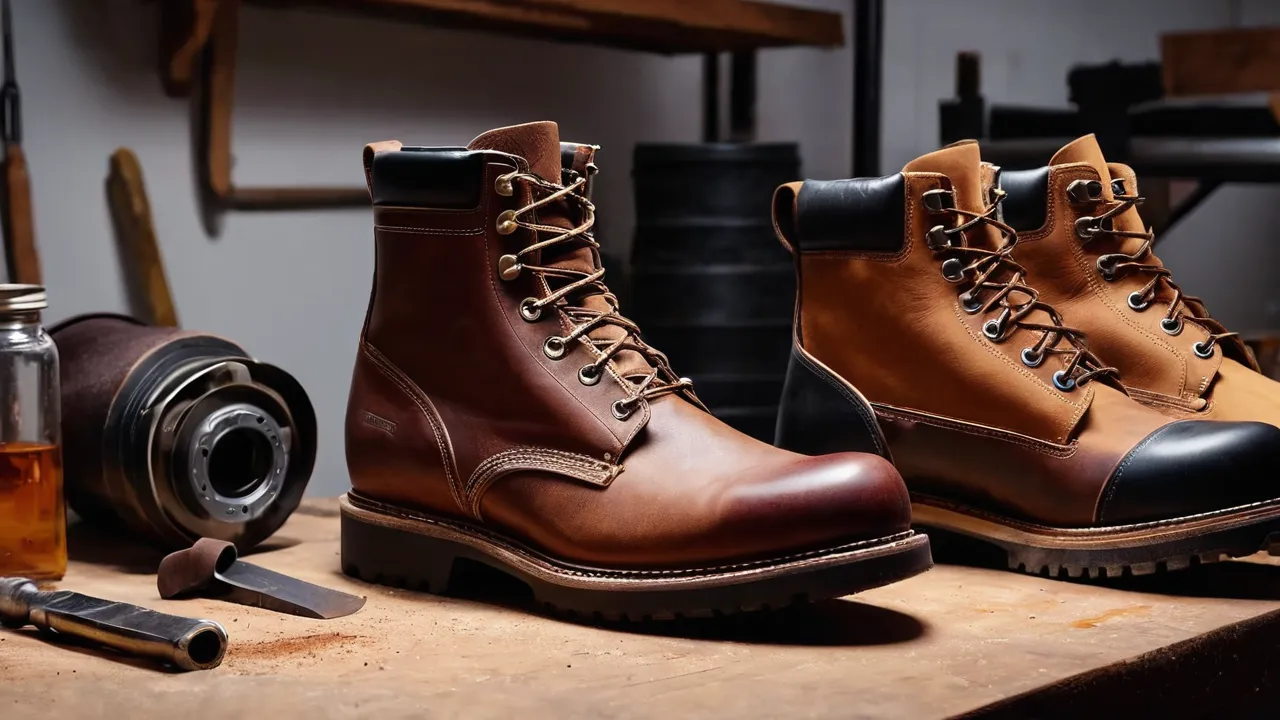
Full grain vs top grain leather comes down to how much of the hide’s natural surface is left. Full grain keeps the original outer layer with its natural marks, so it breathes and develops a patina. Top grain has the surface sanded or buffed to remove marks and is then usually finished with a coating, so it looks more uniform and resists stains but gives up some breathability and character. Neither is automatically better for every job.
How a hide is built
A hide has layers. The top layer, called the grain, is the tightest and strongest part of the skin. Below it are looser fibers, which are split off in many manufacturing processes and sold as split leather or used for suede. How much of the grain a maker keeps, and what is done to its surface, creates the grades you see on labels.
Labels are not used in a consistent way across every product, and some terms are used loosely in marketing. The sections below describe the common meanings, which can vary by maker. When a term matters to your purchase, ask the seller to explain it in writing.
Full grain: the natural surface
Full grain leather keeps the outer surface intact, including its natural pores and marks. Makers may leave the surface bare, dye it or apply a light finish. Because the surface is not sanded away, the grain stays dense, which tends to give strength, breathability and a look that changes with wear.
- Advantages: it ages well and develops a patina, it can be conditioned and refinished, and it tends to take repair well.
- Drawbacks: it shows scars, insect marks and variations, so makers must choose good hides, which raises cost. Lightly finished leather can stain and scratch more readily, and a new full grain boot can be stiff before it softens.
Top grain: sanded and finished
Top grain starts from the same outer layer, but the surface is sanded or buffed to remove marks, then often finished with a coating or embossed to produce a uniform look. The result is thinner at the surface, smoother and often easier to clean.
- Advantages: a consistent look, better resistance to stains and water on the surface, and often a softer feel out of the box.
- Drawbacks: sanding removes some of the strongest fibers, a heavy finish can feel plastic like, and it may crack or peel at flex points if the coating is thick. It does not develop the same patina, and refinishing can be harder.
Many well made products use top grain, and a good top grain boot can outlast a poor full grain one. The grade is not the only measure of quality.
Corrected grain and other labels
Some leather has had the grain heavily sanded, then a pattern pressed in to imitate a natural surface. This is often called corrected grain or embossed leather. It can be a legitimate choice for stain resistance but should not be sold as full grain. Other labels include:
- Genuine leather: a label that means the product contains real leather, but often indicates a lower grade, such as a split layer with a finish. It does not mean high quality.
- Split leather: made from the lower layers of the hide. Suede and some coated products are split.
- Bonded leather: scraps ground and combined with a binder, then coated. It tends to peel and is not comparable to hide leather.
- Vegetable tanned and chrome tanned: these describe the tanning method rather than the grade. Both can be used for full or top grain.
How to spot the difference
You can often check by looking and feeling, but nothing replaces a clear description from the maker.
Look at the surface
Natural leather has an irregular grain with tiny pores and small variations in pattern. A surface that looks perfectly repeating, like a printed pattern, often indicates embossing. Marks, wrinkles and scars suggest a less processed surface.
Flex it
Bend a corner or a flex point. Natural leather forms fine wrinkles, much like skin, while heavily coated leather may form a sharp crease or show a different color at the fold. Cracking or peeling at the flex point suggests a thick coating.
Check the edge
On a cut edge, look at the fibers. Natural leather shows dense fibers that look like fibrous layers. A surface that looks like a film peeling over a different material suggests a coating.
Smell and read the description
Real leather smells like leather rather than chemicals. Read the product page for terms like full grain, top grain, genuine and corrected, and ask the seller if the wording is vague.
What this means for boots and bags
On boots, full grain is a good choice for work and heavy use where you want to condition the leather and possibly resole the boot. It breathes better than a heavily coated surface, which helps comfort. Top grain boots can be more water resistant and easier to wipe clean, which suits wet or dirty jobs if you do not mind a different aging process.
On bags, full grain suits people who like a worn in look and plan to care for the leather. Top grain suits those who want a clean, uniform appearance and less maintenance. Check stitching, edges and hardware, since a bag with strong leather and weak stitching will still fail. Our guide to leather goods covers wallets and bags, and our work boots guides cover how leather interacts with construction.
Reading a boot listing
Boot listings use the same words loosely, so read them in a set order. Start with the leather description, then the construction, then the finish. A listing that says “full grain leather upper” and names the tanning method, the thickness and the sole attachment is giving you specifics. A listing that says “premium leather” or “genuine leather” and shows only a polished photo is not.
Look at close photos of the vamp and the flex crease near the toe. Real grain shows tiny irregularities, and the crease forms soft wrinkles. A uniform, repeating pattern and a sharp, shiny crease suggest a coated or embossed surface. Check the inside too: a suede like backing suggests a split or a lining of the lower layers, and fabric lined boots may hide the back of the leather entirely.
If the boot is for a job with chemicals, welding spatter or frequent washing, ask the maker which finish is designed for that exposure, since a plain full grain surface may stain or darken. For mixed use, a lightly finished full grain boot gives you the conditioning and repair benefits without the heavy film of a coated surface.
Care differs by grade
Full grain responds well to conditioning. A light, maker approved conditioner keeps fibers supple, and scuffs often buff out as the surface darkens with use. Top grain with a finish coat usually needs only wiping with a damp cloth and an occasional product made for finished leather, because conditioners may not penetrate the coating. Heavy oils can darken or stain some finishes, so try any product on a hidden spot first, and follow the maker’s instructions. Keep both types away from direct heat, which dries and cracks leather.
Price and value
Full grain usually costs more because makers need cleaner hides, and top grain costs less for similar looking products. Price alone is not proof of grade, though. A high price on a vague label is a warning, and a modest price on a clearly labeled product can be fair. Ask what the maker is willing to state in writing.
Who should choose which
Choose full grain if you want a product that ages, can be conditioned and repaired, and you are willing to accept marks. Choose top grain if you want uniform looks, easier cleaning and better stain resistance, and you do not mind a heavier finish. Avoid bonded leather for anything you want to last, and be cautious about “genuine leather” as a quality claim. If you work in wet, dirty or chemical conditions, favor a finish designed for them and follow the maker’s care instructions.
Here is a short decision path. If the boots will be resoled and conditioned for years, lean full grain. If you need a clean wipe down finish for muddy or messy work and accept that it will age differently, top grain is reasonable. If the listing only says genuine leather, ask for the grade before you buy. For how we weigh material claims, see our review approach.
Frequently Asked Questions
Is full grain leather better than top grain?
Not always. Full grain keeps the strongest outer layer and ages with character, which suits boots you plan to condition and resole. Top grain gives a uniform, easier to clean surface. The better choice depends on your work, your care habits and how the product is built.
Is top grain leather good for work boots?
Yes, if it is well made. Top grain can resist stains and wipe clean easily, which helps in dirty or wet jobs. The trade-offs are a surface finish that can crack at flex points and less patina. Check the stitching, sole attachment and care instructions.
What is corrected grain leather?
Corrected grain has had its surface heavily sanded, then a pattern is pressed in to imitate natural grain. It can resist stains but should not be sold as full grain. If a listing uses the term, expect a coated, uniform look and ask what the finish is.
Does genuine leather mean full grain?
No. Genuine leather means the product contains real leather, but it often refers to a lower grade such as a finished split layer. It says nothing about grain. Ask the seller for the grade in writing before you pay a premium.
Final Thoughts
Full grain keeps the strongest outer layer and ages with character, top grain trades some of that for a clean, uniform finish, and corrected grain, split and bonded leather sit lower in the hierarchy. Ask for the grade in writing, check the surface and the edges, and choose by how you will use and maintain the product.
Related buying guides
- Goodyear Welt vs Cemented Construction: Which Lasts Longer
- Hot Weather Work Boots: Stay Cool and Protected
- How Long Do Work Boots Last? Lifespan by Construction
About the author

The BuyOnceChoice Editorial Team researches durable products worth buying once. Our guides compare published specifications, warranty terms, expert review consensus, and verified owner feedback. We do not conduct our own product trials. See How We Review and our Editorial Policy for our standards.