How Many Solar Panels Do You Need for a Home
A bill-to-panel formula plus a sun hours table by climate, with a rule for choosing full offset or a smaller array when roof space or budget is limited.
 By BuyOnceChoice Editorial Team
Updated November 16, 2026
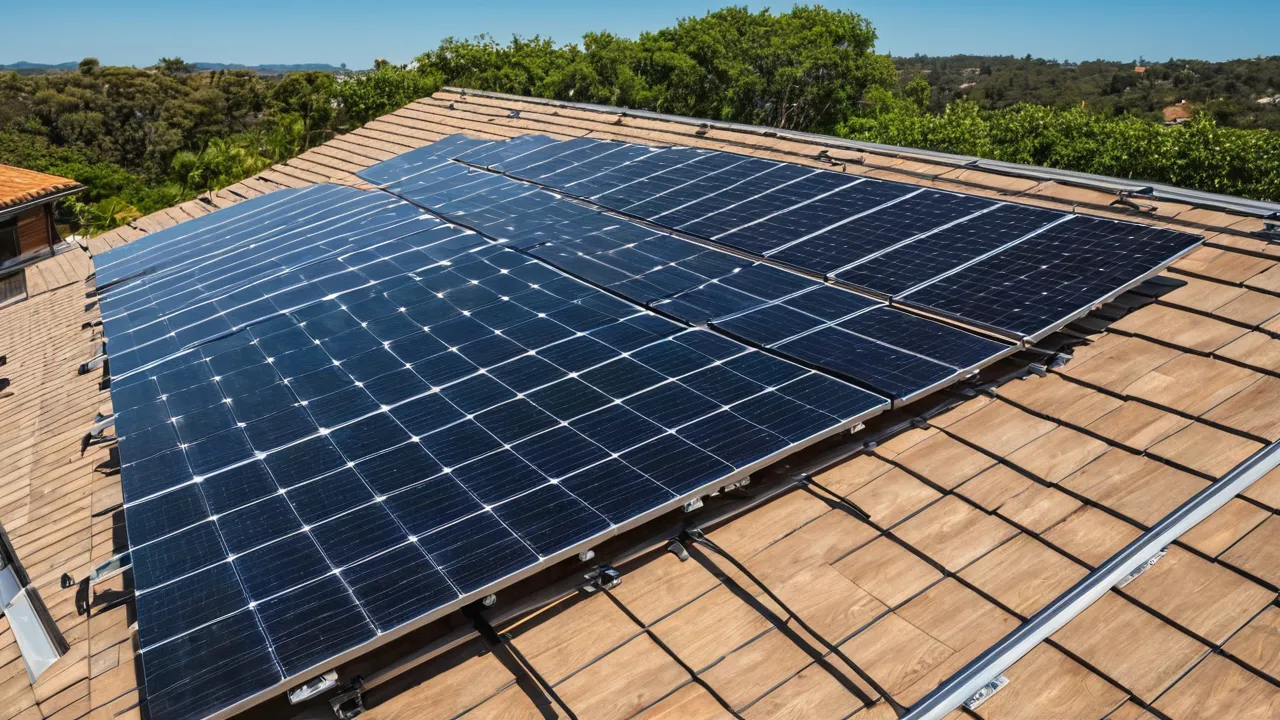
The number of solar panels you need for a home equals your annual electricity use divided by what one panel produces in a year where you live. Take your yearly kilowatt-hours from your bills, divide by the sun hours in your climate and a loss factor to get the system size, then divide by the wattage of one panel and round up. A smaller system makes sense when roof space, budget, or net metering rules limit the benefit of a larger one.
This article gives the formula, explains each input, shows how climate shifts the answer, and ends with a rule for choosing between a full and partial offset. Installed systems must be designed and wired by licensed professionals, so treat the result as a planning estimate to bring to installers. Our solar panels category covers panels, and our home battery backup category covers storage. See how we review for our approach to specifications.
Step One: Find Your Annual Usage
Gather twelve months of electric bills, or download the usage history from your utility’s website. Add up the kilowatt-hours for the year. Use a full year, because heating and cooling swing usage by season, and a single summer month overstates or understates your needs.
If you expect changes, adjust the figure. An electric vehicle, a heat pump, an electric water heater, or a pool adds usage, and an efficiency upgrade subtracts it. Size for the usage you expect over the next several years, not the usage you had before a big change. Also note whether your bills show total kilowatt-hours imported only. If you already have panels, you need consumption, which is imported plus self-used solar, not the import figure alone.
Step Two: Estimate Production Per Kilowatt of Panels
Production depends on your location, roof direction and tilt, and shade. A rough way to compute it is to multiply the system’s rated kilowatts by the average daily peak sun hours for your location, by 365 days, then by a loss factor that accounts for the inverter, wiring, temperature, dust, and shading. A common planning loss factor falls in the range of 0.75 to 0.85, though installers use their own design software and you should ask which figure they assumed.
Peak sun hours are not the same as daylight hours. One peak sun hour means sunlight energy equal to one hour at full intensity. Sunny desert regions may average high single digits in summer, while cloudy northern regions may average several in summer and only a couple in winter. Use the solar resource data published by the National Renewable Energy Laboratory, whose PVWatts calculator is free, or let an installer’s design software do it. Roof orientation matters: south-facing roofs usually produce the most in the northern hemisphere, with east and west roofs producing somewhat less.
Step Three: Compute System Size and Panel Count
Divide your annual kilowatt-hours by the annual production of one kilowatt of panels in your location. That gives the system size in kilowatts. Multiply by 1,000 to get watts, divide by the wattage of a single panel, and round up for the panel count.
Panel wattage varies. Many residential panels are rated a few hundred watts each, and higher-wattage panels need fewer units to reach the same total. Fewer, larger panels help if roof space is tight. Remember that rated watts describe standard conditions, and field output sits below the rating, which the loss factor already covers.
A Quick Illustration
If a household uses ten thousand kilowatt-hours a year and a kilowatt of panels produces about thirteen hundred kilowatt-hours a year in their area, they need a system of roughly seven to eight kilowatts. With four-hundred-watt panels, that comes to about nineteen panels. In a sunnier location, where a kilowatt produces more, the same household needs fewer panels, and in a cloudier one, more. These numbers show the method, so replace them with your own.
A Worksheet You Can Copy
- Line A: annual kilowatt-hours from twelve months of bills, adjusted for planned changes.
- Line B: annual kilowatt-hours produced by one kilowatt of panels at your address, from a solar resource calculator or an installer design.
- Line C: A divided by B, which is the system size in kilowatts.
- Line D: C times 1,000, divided by the watts of one panel, rounded up, which is the panel count.
- Line E: panel count times the panel’s footprint, compared against the usable roof area after setbacks.
How Climate Changes the Answer
Climate affects both production and demand. In sunny, hot regions, panels produce a lot but air conditioning uses a lot, so the system size can still be large. In cloudy, cool regions, panels produce less per kilowatt, so you need more of them to offset the same usage, although heating loads may be fueled by gas. Snow, shade from trees, and the angle of the roof all change the result.
Seasonality matters too. Production peaks in summer and dips in winter, while your usage may peak in a different season. If your utility pays a lower rate for exported energy than it charges for imports, a system sized to cover only your own daytime use may be better than one sized to export a lot. Check your utility’s net metering or net billing rules, which differ by location and change over time.
Full Offset or Partial: A Decision Rule
- Choose a full offset system if your utility credits exports at close to the retail rate, your roof has room, and you plan to stay in the home for a long time.
- Choose a partial system if exports are credited at a low rate, your roof is small or shaded, or your budget is limited. Cover the usage you consume in daytime and stop there.
- Choose a larger system with a battery if outages are an issue or if time-of-use rates make stored solar valuable.
- Skip oversizing for a future electric vehicle that you have not bought. You can often add panels later if the roof has room, though adding to an existing array may need a new inverter or a permit amendment.
Roof, Inverter, and Practical Limits
Once you have a panel count, check whether it physically fits. A typical residential panel is a little over five feet by about three and a half feet, so a roof plane holds only so many. Obstructions such as chimneys, vents, skylights, and dormers cut usable area, and many local codes require setbacks along edges and ridges so firefighters can access the roof. Installers draw the layout before quoting, and it is common to find the ideal count will not fit on the best roof plane. In that case you may spread panels over two roof planes, use higher-wattage panels, or accept a partial system.
Roof condition matters, since panels last for decades and replacing a roof under them is costly. Check roof age and structure before installing. The inverter, which converts the panels’ direct current to household alternating current, usually has a ratio to the array, and installers will size it. Your electrical service panel may also limit the size of the system you can connect, and some utilities restrict system size relative to your usage.
Common Mistakes When Counting Panels
The first is sizing by square feet of house rather than kilowatt-hours of use. House size is a poor predictor. The second is using a summer bill alone. The third is ignoring future loads, such as a heat pump or electric vehicle, which can raise usage sharply in some homes. The fourth is accepting a quote without seeing the production estimate and its assumptions. Ask for the estimated annual kilowatt-hours, the loss factor assumed, and the shade and orientation inputs, then compare bids on the same basis. The fifth is assuming the panel count is fixed: with the same roof, a different panel wattage changes the count.
Safety and Professional Work
Rooftop work carries fall and electrical risks. Panels produce voltage whenever there is light. Connecting a system to your home panel is electrical work that requires a licensed electrician, local permits, and utility approval. Do not attempt to backfeed power through an outlet. Follow the manufacturer’s manual for any equipment you do handle, and use a qualified professional for structural, electrical, and roof work.
Frequently Asked Questions
How many solar panels does an average house need?
There is no single count, because it depends on your usage, sun hours, and panel wattage. A home using about ten thousand kilowatt-hours a year in a moderately sunny area may need roughly twenty panels of a few hundred watts each. Use your own bills and a solar resource calculator instead of an average.
How many panels do I need to run my house without the grid?
More than a grid-tied system, because you also need batteries sized for nights and cloudy stretches, plus a backup plan for winter. Off-grid designs often add a large margin to the panel count. A licensed designer should size the array, battery, and inverter together for your worst month.
Can I use fewer panels than my bill suggests?
Yes. A partial system that covers daytime use makes sense when roof space, shade, or low export credits limit the benefit of more panels. You will keep buying some grid power, but each added panel after that point often saves less than the one before it, so compare the payback.
Final Thoughts
Annual usage, local sun, a loss factor, and a panel wattage are all you need for a planning estimate. Decide between full offset and partial by looking at your utility’s export credit, your roof space, and your budget. Then bring the numbers to a licensed installer and compare designs, rather than treating the estimate as a quote.
Related buying guides
- Monocrystalline vs Polycrystalline Solar Panels
- MPPT vs PWM Charge Controllers: Which to Choose
- Rigid vs Flexible vs Foldable Solar Panels
About the author

The BuyOnceChoice Editorial Team researches durable products worth buying once. Our guides compare published specifications, warranty terms, expert review consensus, and verified owner feedback. We do not conduct our own product trials. See How We Review and our Editorial Policy for our standards.