Solar Generator Sizing for Home Backup
Size home backup from a short list of essential loads, not the whole house. A worksheet, honest limits for HVAC and well pumps, and when to step up.
 By BuyOnceChoice Editorial Team
Updated November 16, 2026
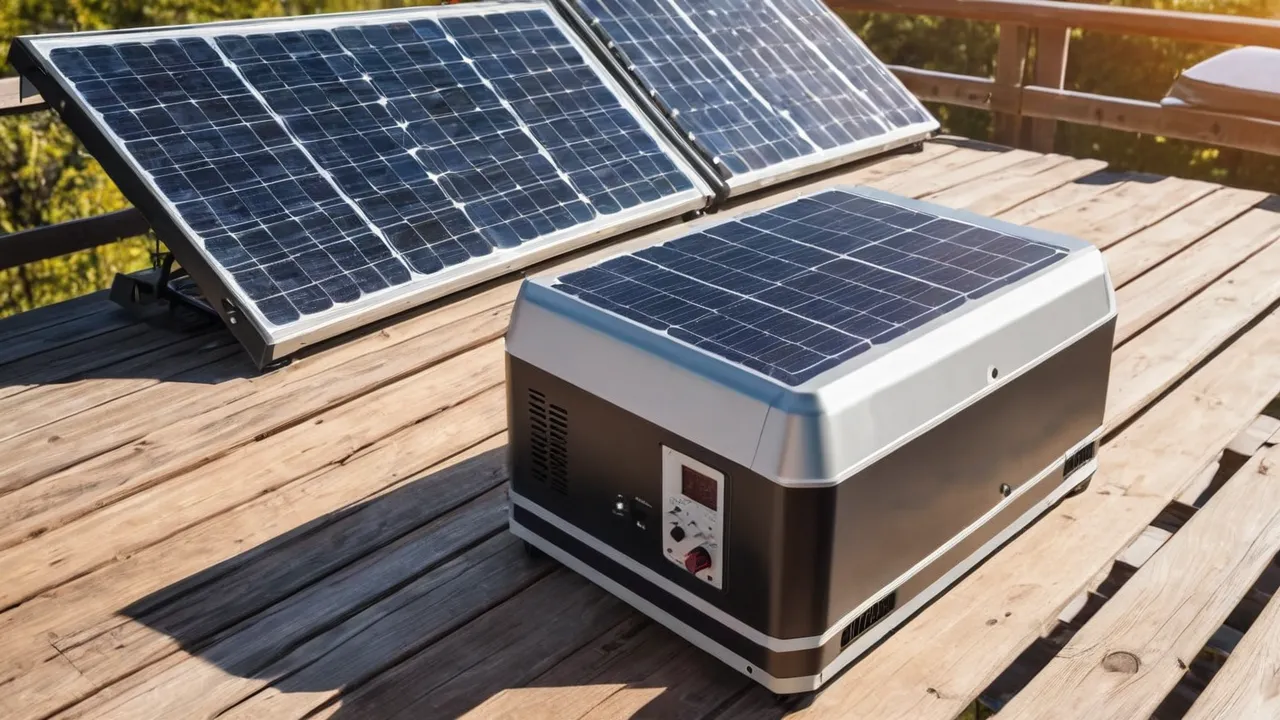
To size a solar generator for home backup, choose the essential loads you want to keep running, record each one’s running watts, surge, and daily hours, add the daily watt-hours, divide by 0.85 for losses, and add a margin. That gives the battery capacity. Then pick an inverter that covers the watts running together plus the biggest surge, and add enough panels to recover each day’s use. Heating, central air conditioning, and well pumps are usually beyond a portable system.
This guide gives an essential loads worksheet, honest limits for large loads, and practical workarounds, along with the safe way to deliver power to the circuits. All numbers are illustrations, so replace them with the labels on your appliances. Browse our solar generator category for systems, see home battery backup for permanent alternatives, and read how we review for how we handle specifications.
Step One: Choose What Counts as Essential
Essentials are the loads that protect health, food, and safety: the refrigerator and freezer, a few lights, a router and phone charging, medical devices, a furnace blower or a fan, and a sump pump if you have one. Everything else waits. A short list keeps the system small and affordable, and a long list quickly becomes a whole-house project.
Rank the list by importance, because ranking tells you what to drop first when the battery runs low. Ask each household member what they cannot do without, and check the answers against safety: medical equipment, heating or cooling in dangerous weather, and food storage rank above entertainment. Write the final list on one page and date it, since households change and the list should change with them.
Step Two: Record Running Watts, Surge, and Hours
Read the label or manual on each essential device for running watts, and starting watts for motors. A refrigerator might run near 150 watts and start at several times that. Estimate daily hours of use, using the duty cycle for appliances that cycle, such as a refrigerator that runs perhaps a third to half of the time. Multiply watts by hours for watt-hours.
| Load | Running watts | Hours per day | Watt-hours |
|---|---|---|---|
| Refrigerator (cycling) | 150 | 10 | 1,500 |
| Freezer (cycling) | 100 | 8 | 800 |
| LED lights | 40 | 5 | 200 |
| Router and modem | 20 | 24 | 480 |
| Phones and laptop | 80 | 4 | 320 |
| Furnace blower or fans | 100 | 6 | 600 |
Daily total here is about 3,900 watt-hours. Divide by 0.85, giving roughly 4,600, and add twenty to thirty percent margin for a target near 5,500 to 6,000 watt-hours for one day, before any solar.
Step Three: Pick Inverter and Battery
The inverter must cover the sum of the running watts of everything that runs at the same time, plus the largest motor’s surge. In the example, simultaneous running watts could be around 400 to 500, and the refrigerator’s surge perhaps 1,000 watts, so an inverter of 2,000 watts is comfortable. The battery sets the duration, so choose capacity for the number of days you want without sun, from the daily total with margin. Expansion batteries add capacity, but check that the inverter and the expansion are compatible.
Step Four: Add Panels to Recover Each Day
Divide daily watt-hours by the peak sun hours and about 0.75. With 3,900 watt-hours and four peak sun hours, that is roughly 1,300 watts of panels, which is a large array for a portable system, and may exceed the unit’s solar input limit. Many households accept a partial recovery, run fewer loads, and charge from the wall or a generator when needed. Check the unit’s solar input voltage and watt limits, and match your panels to them.
Honest Limits for HVAC and Well Pumps
Central air conditioners and electric heating use several thousand watts, often at 240 volts, which most portable systems cannot supply or sustain. Heat pumps and furnaces with electric strips face the same issue. A well pump has a large surge, and 240 volt submersible pumps need a unit that supports that voltage. If these loads are essential, a standby generator or a professionally installed battery system fits better. For a solar generator, the realistic scope is a furnace blower, a window air conditioner in a small room, or a small 120 volt pump.
Practical Workarounds
- Heat or cool one room, and close doors.
- Use a window air conditioner or a small space heater only if the inverter and battery clearly support it, and never leave a heater unattended.
- Stagger loads, running the pump or the microwave only when the refrigerator is off its cycle.
- Pre-cool or pre-heat before the outage, and use blankets and shading.
- Keep a plan for a few hours at a time, not all day, for heavy loads.
Getting Power to the Loads Safely
The safest approach is to plug appliances directly into the power station with correctly rated extension cords, with the unit placed outside the hazard areas. For circuits wired into the home, such as a furnace or a sump pump, a licensed electrician can install a transfer switch or an interlock and an inlet that isolates the house from the utility. Never plug the power station into a wall outlet to feed the house, because it can backfeed the grid and injure line workers. Keep the unit dry and ventilated, and follow the manual’s limits.
A Sample Result in Words
Using the worksheet above, the household needs about 3,900 watt-hours a day. It decides to plan for two days without solar, which is about 7,800 watt-hours, divides by 0.85 for roughly 9,200, and settles on a system with around 10,000 watt-hours of battery, which may mean a large unit plus an expansion battery. The inverter must cover roughly 500 watts of simultaneous load and a surge near 1,000 to 1,500 watts, so a 2,000 watt inverter is plenty. For panels, the household accepts partial recovery: 800 watts of panels, within the unit’s input limit, gives about 2,400 watt-hours on a four-sun-hour day, which stretches the battery to three or four days with careful use.
The household also keeps a second plan. A small inverter generator or a vehicle charging path covers a long cloudy stretch. This is the pattern: size the battery for the days you want, the inverter for the surge, the panels for what the roof or the yard allows, and keep a backup source for the rest.
Margin and the Reserve You Should Not Spend
Batteries should not be run to zero. Many units shut off at a low state of charge to protect the cells, and leaving a reserve for the end of an outage gives you phone charging and light when you need them most. Aim to ration the system so that you use roughly eighty percent of the capacity before the next recharge. Cold weather reduces usable capacity, as does a hot room, so add margin if the unit will live in a garage. Treat the margin as a safety feature, not as waste.
Maintenance Between Storms
A backup system that sits unused for months can fail when it matters. Charge the unit to the level the manual recommends, check the charge every couple of months, inspect cables and ports, and keep panels clean and stored dry. Once a season, run a few essential loads from the unit for an hour to confirm that the outlets, cords, and inverter behave as expected, and note the runtime. Update the worksheet whenever you buy a new appliance or change the household.
Who Should Choose This, and Who Should Skip
- Choose a solar generator for essentials, short outages, and renters who cannot install equipment.
- Choose a larger battery system for long outages and for a house with many circuits to back up.
- Choose a generator for heavy loads and long events.
- Skip a solar generator if your must-run loads are central air, electric heat, or large pumps.
A sample worksheet in words helps. Write each load, its watts, hours, and watt-hours, then add margin, check the inverter against the largest simultaneous load, and compute panels from sun hours. Keep the sheet with the unit.
Frequently Asked Questions
What size solar generator do I need to back up my house?
It depends on your essential loads. A refrigerator, lights, router, and electronics may total three to five kilowatt-hours a day, which suggests a battery of several kilowatt-hours and an inverter of one to two kilowatts. Whole-house backup, central air, and heating need much more, and a professionally installed system.
Can a solar generator power a refrigerator during an outage?
Yes, in most cases. A typical refrigerator runs on the order of 100 to 200 watts and uses about a kilowatt-hour a day, with a startup surge several times higher. Check the unit’s surge rating and capacity, and keep the door closed to save energy.
How many panels do I need for home backup?
Divide your daily watt-hours by peak sun hours and about 0.75. A daily use of 3,000 watt-hours with four sun hours calls for roughly 1,000 watts of panels. The unit’s solar input limit may cap what you can use, so check the manual and plan wall or vehicle charging as backup.
Final Thoughts
Size from essential loads, not from the biggest unit you can find. Convert watts and hours to watt-hours with margin, match the inverter to simultaneous loads and surge, and add panels for realistic recovery. Be honest about large loads, and use a licensed electrician for any connection to your home.
Related buying guides
- Solar Generator for Van Life: Sizing and Mounting
- Solar Generator vs Gas Generator: Real Trade Offs
- Solar Generator vs Home Battery: Pick the Right One
About the author

The BuyOnceChoice Editorial Team researches durable products worth buying once. Our guides compare published specifications, warranty terms, expert review consensus, and verified owner feedback. We do not conduct our own product trials. See How We Review and our Editorial Policy for our standards.