Solar Generator vs Home Battery: Pick the Right One
Competitors treat these as separate topics. This guide compares portability, output, installation and warranty side by side so you can pick the right class.
 By BuyOnceChoice Editorial Team
Updated November 16, 2026
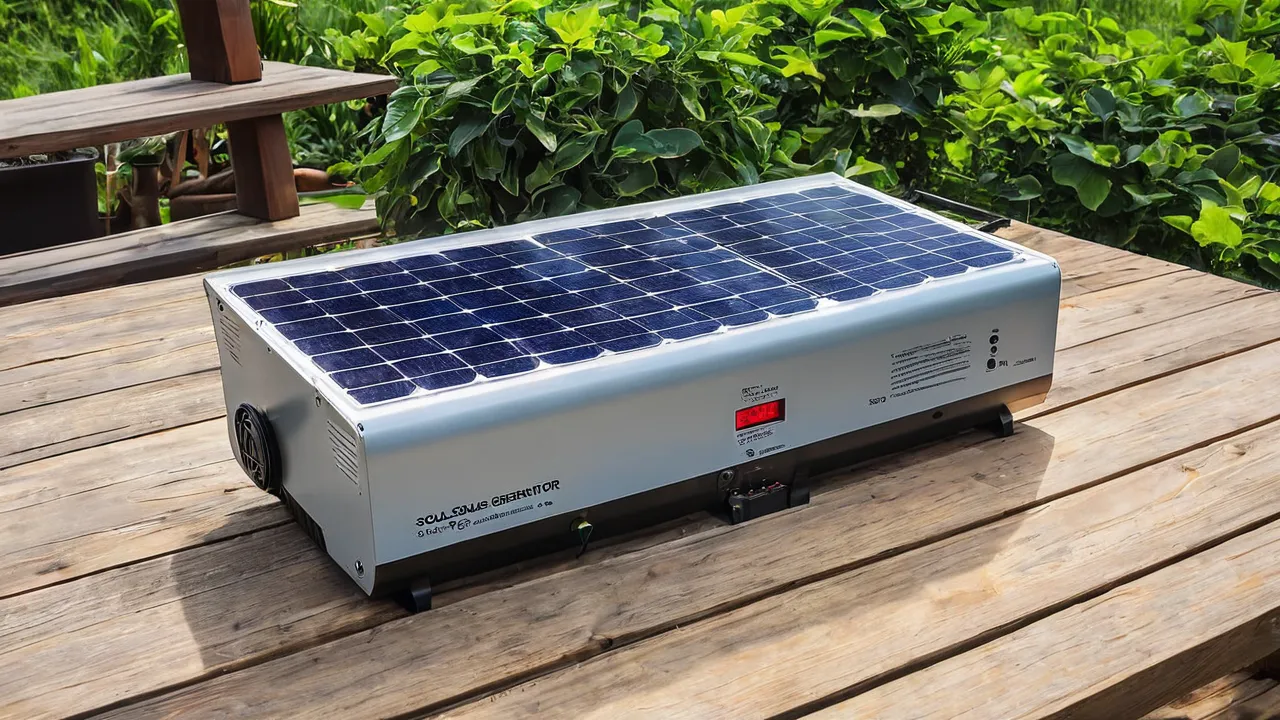
A solar generator is a portable battery with an inverter that you move, plug devices into, and recharge from solar panels or an outlet, while a home battery is a permanently installed system wired into your electrical panel that backs up selected circuits automatically. Choose a solar generator for portability, essentials, and no installation. Choose a home battery for whole-circuit backup, higher output, and hands-free operation during outages.
Many pages treat these two as the same product at different sizes, but they differ in output, installation, permits, warranty, and what they back up. This guide contrasts portability, output in kilowatts, install effort, and warranty length. Browse our solar generator category and home battery backup guides to compare models, and read how we review for how we treat specifications.
Two Different Kinds of Product
A solar generator is a consumer appliance. You carry it, plug in a cord, and run devices from its outlets. It has a charger and inverter in one case, with a fixed output that is usually in the range of a few hundred to a few thousand watts, and a capacity in watt-hours that is typically in the range of hundreds to a few thousand. Some units expand with extra batteries.
A home battery is part of the house’s electrical system. A licensed installer connects it to the main panel or a critical loads panel, with a transfer device that isolates the home from the grid during outages. Output is usually quoted in kilowatts, often several, and capacity in kilowatt-hours, often ten or more, with the option to add modules. It may include an inverter that works with solar.
Output Power: The Biggest Gap
Output decides what you can run at once. Portable units commonly supply enough for a refrigerator, lights, and electronics, and larger models can handle a window air conditioner or a small pump. A home battery’s output can run multiple large loads together, such as a well pump and an air conditioner, depending on the model and the circuits selected. Even so, whole-house loads like electric heat and ovens may need load management.
Compare continuous kilowatts and surge on both, and match them to your appliances. A portable unit with a high capacity but modest output cannot start a large motor, and capacity does not substitute for output.
Capacity: How Long the Power Lasts
Capacity decides runtime. A mid-sized solar generator holds around one to three kilowatt-hours, enough for essentials for a day, and with expansion batteries more. A home battery typically holds around ten to fifteen kilowatt-hours per unit and can be stacked. Divide usable capacity by your average load to estimate hours. A refrigerator and essentials averaging 400 watts would run about twenty-five hours on ten kilowatt-hours, and about five on two.
Portability and Flexibility
A solar generator leaves the house with you. It powers a campsite, a job site, or a neighbor’s outage, and it works in a rental where you cannot modify the electrical system. A home battery stays put, and when you move it must be uninstalled, or left behind. For many buyers the ability to use the same product for camping and outages is the deciding factor.
Installation, Permits, and Effort
A solar generator is plug and play. A home battery requires design, permits, utility interconnection if solar is involved, and professional installation, sometimes with panel upgrades. Costs vary widely and depend on the site, so get itemized quotes. Local code may restrict where the battery can go. Do not attempt to wire either into a house without a licensed electrician, and never backfeed through a wall outlet.
Warranty and Lifespan
Home batteries commonly carry longer warranties, often stated in years with a minimum capacity at the end, because they are installed to cycle daily. Portable units vary: some offer multi-year warranties, and cycle ratings differ by chemistry. Compare the warranty terms, the chemistry, the cycle rating and its endpoint, and what the maker says about daily cycling. A portable unit used as a daily self-consumption battery may wear faster than designed.
Side by Side Summary
| Feature | Solar generator | Home battery |
|---|---|---|
| Installation | None, plug and play | Licensed electrician, permits |
| Portability | Carry and move | Fixed in place |
| Typical output | Hundreds to a few thousand watts | Several kilowatts |
| Typical capacity | Hundreds to a few thousand watt-hours | Often ten or more kilowatt-hours |
| Switchover | Manual, plug in devices | Automatic for backed-up circuits |
| Best for | Essentials, camping, renters | Selected or whole circuits, solar storage |
Daily Life During an Outage
With a solar generator, someone sets up the unit, runs cords to the refrigerator, router, and lamps, and watches the charge. Moving cords is a small chore, but the plan is simple, and you control exactly what runs. With a home battery, the house switches over within moments, outlets and lights on the backed-up circuits keep working, and you may not notice the outage. The trade-off is that the installer decides which circuits are covered, and you may be unable to power circuits that were left off. Ask which circuits are on the backup panel before you buy.
Solar Charging in Each Case
A solar generator recharges from portable or roof panels within its input limit, which is often a few hundred watts to over a kilowatt. A home battery with a solar inverter charges from the roof array, and it can keep recharging during the day while powering the house, subject to the system’s design. Some home batteries cannot charge from solar during an outage unless the system is configured for it, so ask. Grid charging is possible in both, and rate plans may reward charging at cheap hours and using the battery at expensive ones.
Cost Thinking Without Quoting Prices
A solar generator’s price is mostly the product. A home battery’s price includes the unit, the installation, electrical work, permits, and sometimes a panel upgrade. Compare cost per kilowatt-hour of usable capacity and per kilowatt of output, and include installation in the home battery. Think also about what you lose if a system is not in place: spoiled food, a flooded basement, or a missed workday. Get itemized quotes, compare warranty terms, and match the product to a clear purpose.
Safety Notes
Both contain lithium batteries. Keep them within the manual’s temperature range, out of direct sun and moisture, and away from flammables. Do not charge damaged units. A home battery needs clearances, a suitable location, and an inspection, and the installer should explain the shutoff procedure. Never connect either to household wiring without the right transfer equipment installed by a licensed electrician.
A Worked Example for the Same Household
Consider a household whose essentials are a refrigerator, a freezer, lights, a router, a furnace blower, and electronics, about 4,000 watt-hours a day with a surge from the refrigerator near 1,000 watts. A large solar generator with an expansion battery and an inverter around 2,000 watts could cover a day of this and more with panels, but someone has to run cords and move the unit. A home battery of ten kilowatt-hours with a few kilowatts of output covers about two and a half days at that rate, with no cords, and can also run a well pump if its output allows. For a rarely used backup, the first costs less and installs in minutes. For a household with frequent outages or time-of-use rates and rooftop solar, the second fits better. Replace each figure with your own appliances before deciding.
Also ask what happens in a year or two. If you move, the portable unit comes with you. If you add an electric vehicle or a heat pump, the home battery may need more modules. Think about the next few years, not only the next storm.
Questions to Ask Before You Choose
- What is the continuous output, and what is the surge rating?
- How many usable kilowatt-hours does it store, and how can I add more?
- Which circuits or devices will it power, and can I change that later?
- What does the warranty cover, for how long, and what capacity does it guarantee?
- Who installs it, who services it, and what permits apply?
Decision Rules by Buyer Type
- Renters, campers, and people who want one device for many uses: solar generator.
- Homeowners wanting automatic backup of selected circuits: home battery.
- Households with a well pump or central air to back up: home battery or generator.
- Short outages with essentials and a limited budget: solar generator.
- Frequent outages and solar owners who want to store energy: home battery.
- Medical needs: either, with a written backup plan, and manufacturer guidance.
Frequently Asked Questions
Can a solar generator power a whole house?
Not usually. Portable units can back up essentials, but a whole house with central air, electric heat, and an oven needs much higher output and capacity. A professionally installed home battery or a standby generator is the better fit for whole-house or large circuit backup.
Is a home battery worth it compared with a solar generator?
For homeowners who want automatic backup, daily solar storage, and higher output, yes. For renters, campers, and light essentials, a solar generator is simpler and cheaper. Compare output, capacity, installation, and warranty to your needs.
Can I connect a solar generator to my house?
Only through a properly installed transfer switch or interlock with an inlet, done by a licensed electrician and permitted where required. Never plug it into a wall outlet to feed the house. Check that the unit’s manual allows this use.
Final Thoughts
A solar generator is portable, simple, and flexible, and a home battery is permanent, powerful, and automatic. Pick by output, capacity, portability, installation, and warranty, match both to your essential loads, and use licensed professionals for anything wired into your home.
Related buying guides
- How Many Solar Panels to Charge a Power Station
- What Is a Solar Generator and How Does It Work
- Series vs Parallel Solar Panels Explained
About the author

The BuyOnceChoice Editorial Team researches durable products worth buying once. Our guides compare published specifications, warranty terms, expert review consensus, and verified owner feedback. We do not conduct our own product trials. See How We Review and our Editorial Policy for our standards.