How Many Solar Panels to Charge a Power Station
Panel count follows from battery size, sun hours and the unit's input limits. Learn the math, the voltage and amp ceilings, and series or parallel wiring.
 By BuyOnceChoice Editorial Team
Updated November 16, 2026
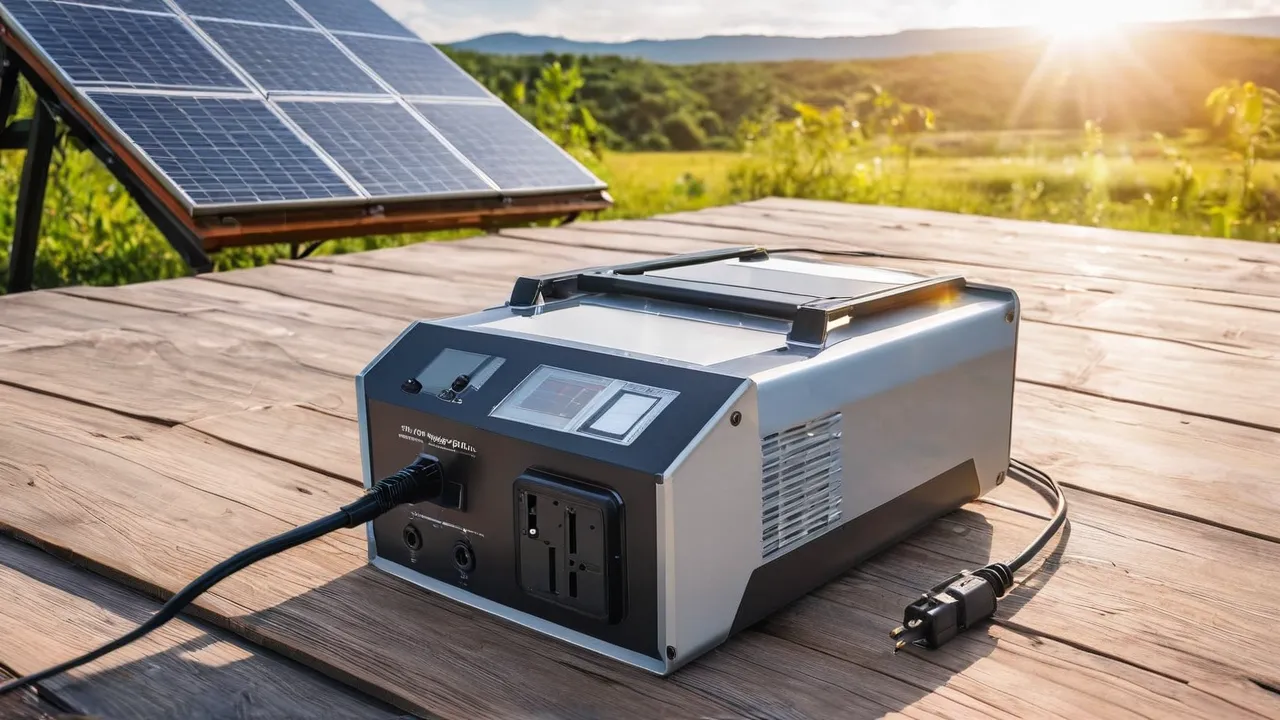
The number of solar panels needed to charge a power station depends on how fast you want it to fill and on the station’s solar input limit. Divide the battery’s watt-hours by the usable sun hours and by about 0.75 for losses to get the panel watts, then divide by one panel’s watts and round up. The station’s maximum solar input in watts, volts, and amps caps how many panels it can use.
This guide gives the formula, shows how to read the input limits, and explains series versus parallel wiring, shade, and charge-time expectations, with a worked example in round numbers. Always check your station’s manual for the real limits. Browse our solar generator category and portable power station category for equipment, and read how we review for how we treat specifications.
Start With the Energy You Need to Replace
First decide what you want the panels to do. If you want to refill a fully empty battery in one day, you need a lot of panel watts. If you want to replace only what you use in a day, you need far less. Write down your daily watt-hours from your devices, or use the station’s capacity for a full recharge.
A station labeled 1,000 watt-hours takes more than 1,000 watt-hours of solar energy to fill, since charging has losses. A rough planning figure is to add fifteen to twenty percent. If you use 600 watt-hours a day, plan on about 700 watt-hours of recovery per day.
The Panel Count Formula
Panel watts needed equals the energy you want to recover per day, divided by the peak sun hours for your location, divided by about 0.75 to cover real-world losses. Panel count equals that number divided by one panel’s rated watts, rounded up. Peak sun hours vary by location and season, from two or three in winter in cloudy regions to six or more in sunny summers.
Worked Example With Round Numbers
Suppose you want to recover 700 watt-hours a day with four peak sun hours. Divide 700 by 4 to get 175 watts, then divide by 0.75 to get about 233 watts. With 100 watt panels, you need three, and with 200 watt panels, two give a margin. To refill an empty 1,000 watt-hour station in one day, with a 1,200 watt-hour target, divide 1,200 by 4 and by 0.75 to get 400 watts, so two 200 watt panels fit that goal only if the station can accept 400 watts. These numbers show the method. Replace them with your own.
Portable Panels Versus Fixed Panels
Portable foldable panels suit camping and short outages, since you can carry them, aim them, and store them. Their output depends on your aiming and the weather. Fixed panels on a roof or a rack deliver more consistent output and usually cost less per watt, but they need installation and cannot follow the sun. For home backup, a fixed array that feeds the station through a proper connection may be better, with a licensed electrician if it connects to the house.
Respect the Input Limits
A station’s solar input has three limits: maximum watts, a voltage window, and maximum current. Panels beyond the watt limit add nothing at best, and exceeding the voltage limit can trip protection or damage the input. Check the open-circuit voltage of your panels, adjusted for cold weather, against the maximum input voltage, and the short-circuit current against the maximum current. Check the minimum input voltage too, since panels in weak light must still be above it for the station to start charging.
Connector type matters. Many stations use a specific connector, and adapters or Y cables may combine panels in series or parallel. Confirm which one the adapter does, and recompute voltage and current for that layout.
Series Versus Parallel Wiring
Series wiring adds voltage and keeps current the same. Parallel wiring adds current and keeps voltage the same. If your station has a high voltage window and a low current limit, series fits. If its voltage window is low and its current limit is high, parallel fits. Many stations accept either, within limits.
Shade and Mismatch
In series, shade on one panel cuts the whole string. In parallel, shade on one panel cuts only that panel. Mismatched panels, with different voltages or currents, waste output in series. Use identical panels where you can, and keep them in full sun. A good habit is to check the station’s display for input watts, and compare with the panels’ rating.
Using the Manual’s Input Table
Most manuals list the solar input in a small table or a line of specifications, with a voltage range, a maximum current, and a maximum wattage. Copy those numbers onto a card. Then copy your panel’s open-circuit voltage, short-circuit current, maximum-power voltage, and rated watts. For one panel, check that the open-circuit voltage is below the maximum input voltage and the maximum-power voltage is inside the range. For two panels in series, add the voltages. For two in parallel, add the currents. If either layout fails a limit, pick the other, or choose different panels. Write down which layout you chose and the numbers, since adapters and connectors can hide the wiring.
Cable Length and Wire Gauge
Panels in the sun may sit far from the station, and long cables lose power. Voltage drop grows with length and current, and shrinks with thicker wire. For a short run of a few feet, the cable that came with the panel is usually fine. For a longer run, use a thicker gauge or a higher-voltage series layout to cut the current. Keep extra cable coiled loosely, not tightly, and use connectors that lock together. Never run bare wire, and protect the cable from foot traffic and sharp edges.
A Second Worked Example
Take a station that accepts up to 400 watts, 12 to 50 volts, and 10 amps, and two 200 watt panels, each with an open-circuit voltage near 24 volts and a short-circuit current near 9 amps. In series, the voltage is near 48 volts at open circuit, close to the 50 volt limit, and with a cold correction it could exceed it, so series is risky. In parallel, the voltage stays near 24 volts, but the current is about 18 amps, which exceeds the 10 amp limit. Neither layout works as is. The fix is one panel, or different panels with a higher voltage and lower current, or a station with a higher limit. This is a good example of why the check comes before the purchase.
Charge Time Expectations and Rules of Thumb
Charge time in hours equals the battery’s watt-hours, plus losses, divided by the real watts the panels deliver. With 1,000 watt-hours and 300 real watts, that is a bit under four hours of strong sun, and about two sunny days at four productive hours a day with weaker output. Real output in the morning, late afternoon, haze, or heat is lower than the panel label.
- Expect roughly half to three quarters of the panel rating in good conditions.
- Expect a lot less in clouds, shade, snow, or with a poor aim.
- Cold air helps panels, but cold batteries may refuse charge, so check the manual.
- Have a backup charging path, such as the wall or a vehicle.
Decision Rules, Cables, and Safety
- Weekend camping: one or two portable panels within the input limit.
- Short outage backup: enough panels to recover a day’s use, plus wall charging.
- Long outage or off-grid: larger arrays, within limits, and a plan for cloudy days.
- Fast refills: panels near the station’s maximum input.
Cable length and gauge matter. Long, thin cables lose power as heat, especially at low voltage. Use cables of the gauge the manual or panel maker recommends, keep runs short, and keep connectors dry. Panels produce voltage whenever there is light, so handle them carefully. Do not connect panels to a house outlet to feed the house, and use a licensed electrician for any permanent installation.
Frequently Asked Questions
How many solar panels do I need to charge a 1,000 watt-hour power station?
To refill it in one sunny day, you need roughly 300 to 400 watts of panels, depending on sun hours and losses, if the station accepts that much. With 100 watts of panels, expect several days. Check the maximum solar input in the manual, because extra panel watts will not be used.
Can I connect more solar panels than the power station’s limit?
You can only if the voltage and current stay within limits, and the extra watts will be wasted. Never exceed the maximum input voltage. Check the open-circuit voltage corrected for cold, and the manual’s guidance on combining panels with adapters.
How long does it take solar panels to charge a power station?
Divide the station’s watt-hours, plus about fifteen to twenty percent for losses, by the watts your panels actually deliver. In good sun, panels might deliver half to three quarters of their label. A 1,000 watt-hour station on 200 watts of panels can take a day or more.
Final Thoughts
Size panels from the energy you want to recover and your sun hours, stay within the station’s watt, voltage, and current limits, choose series or parallel for your shade and the input window, and expect real output below the label. Keep a backup charging path, and use a licensed electrician for any home connection.
Related buying guides
- What Is a Solar Generator and How Does It Work
- Series vs Parallel Solar Panels Explained
- Solar Generator Buying Mistakes to Avoid
About the author

The BuyOnceChoice Editorial Team researches durable products worth buying once. Our guides compare published specifications, warranty terms, expert review consensus, and verified owner feedback. We do not conduct our own product trials. See How We Review and our Editorial Policy for our standards.